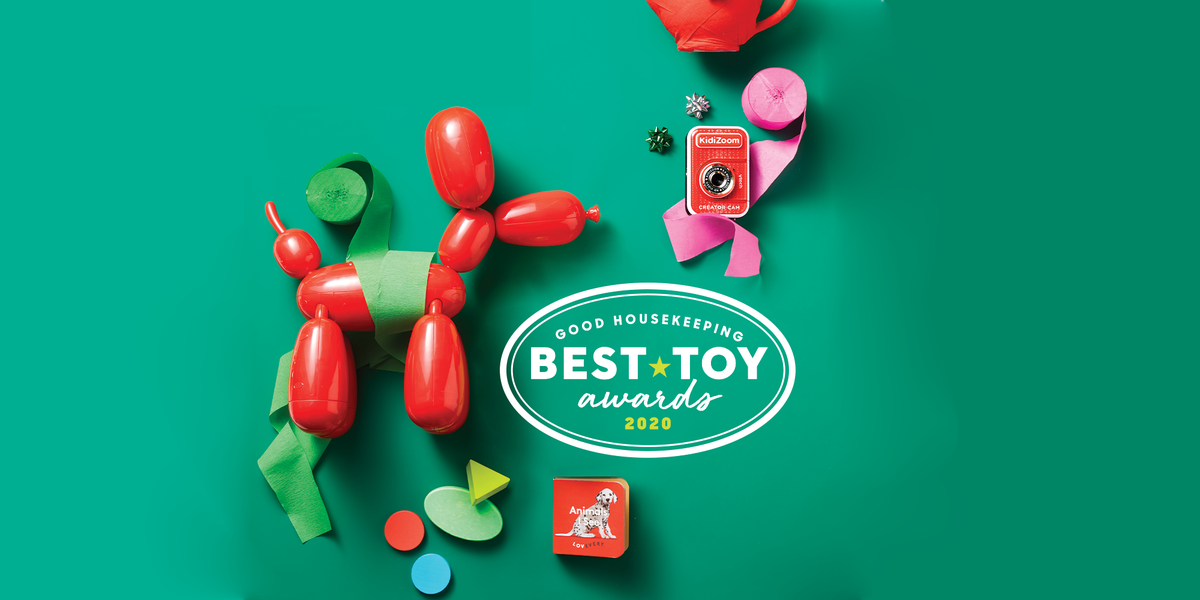
The year 2020 was not exactly a normal year for toy shopping. Kids were spending more time at home, parents were suddenly running unofficial schools from kitchen tables, and living rooms had to become classrooms, playgrounds, video studios, art corners, and emotional-support zones. In that unusual setting, the 2020 Good Housekeeping Best Toy Awards landed at exactly the right moment: families needed toys that were not just shiny in a commercial, but useful, durable, safe, age-appropriate, and actually fun after the box was opened.
That is why the Good Housekeeping Best Toy Awards mattered. They were not simply a list of hot holiday toys. They were a practical filter for overwhelmed parents staring at endless shelves, online carts, and the terrifying phrase “some assembly required.” The 2020 winners reflected the biggest needs of the year: sensory play for toddlers, STEM kits for curious kids, character-based toys for pretend play, inclusive dolls, screen-adjacent creativity tools, and toys that made staying home feel a little less like being trapped in a group project with tiny roommates.
What Made the 2020 Good Housekeeping Toy Awards Different?
The Good Housekeeping Institute has a long history of product testing, and its toy awards are built around more than “this looks cute.” For the 2020 awards, the evaluation process leaned heavily on safety, ease of use, durability, and real kid feedback. Engineers and product analysts looked for obvious hazards such as sharp edges, pinch points, breakable parts, and choking risks. Parents assessed assembly, cleanup, value, and whether a toy could survive the kind of play that includes dropping, dragging, stepping on, and possibly feeding it a cracker.
The most important judges, however, were children. Nearly 100 kid testers, ranging from toddlers to young teens, helped determine which toys had true staying power. That matters because adults are notoriously bad at predicting what children will love. A parent may admire a beautifully designed learning toy, while the child may prefer the box, the twist tie, or a spoon. Good toy testing asks a better question: does the toy invite kids back again and again?
The Big Toy Trends Behind the 2020 Winners
The 2020 toy market was shaped by pandemic-era family life. Toy industry reports showed strong growth that year, especially in categories like building sets, puzzles, arts and crafts, games, outdoor play, and educational toys. Families were not just buying gifts; they were buying boredom insurance. A toy that could occupy a child for more than twelve minutes deserved a small parade.
The Toy Association’s 2020 trend themes also lined up with many of the Good Housekeeping winners. Toys that encouraged real-world, hands-on play were especially relevant. So were “kid-powered” toys that let children build, customize, create, perform, and invent. Collectibles and surprise reveals remained popular, but the strongest winners did more than hide tiny objects inside plastic. They created a moment of excitement and then offered actual play afterward.
Standout Winners From the 2020 Good Housekeeping Best Toy Awards
Best for Toddlers: Sensory, Counting, and Early Language Toys
For very young children, the winning toys focused on touch, sound, color, repetition, and simple discovery. Fat Brain Toys Dimpl Digits was a strong example. Its poppable silicone bubbles helped children practice numbers, counting, colors, and even Spanish words. It was portable, easy to clean, and satisfying in the way only a bubble-popping toy can be. In parent language, that means it had “bring this to the restaurant” energy.
The LeapFrog 100 Animals Book offered another smart toddler-friendly format. It introduced animal names, sounds, facts, songs, and bilingual English-Spanish learning through interactive pages. Animal sounds are basically toddler comedy, so this kind of toy works because it combines education with something children already love: making a cow noise at full volume in the wrong setting.
For babies and toddlers, Good Housekeeping also highlighted toys such as Lovevery Play Kits, GUND My First Soft Drum and Guitar, Crayola Easy-Clean Fingerpaint Set, and HABA Musical Drumfish. These winners shared a theme: they encouraged development without asking a one-year-old to behave like a tiny office intern. The best early-childhood toys support sensory exploration, fine motor skills, music, movement, and caregiver interaction.
Best Social-Emotional Learning Toys
One of the most interesting parts of the 2020 list was the attention to feelings. The hand2mind See My Feelings Mirror helped children recognize and label emotions by mimicking facial expressions. That may sound simple, but emotional vocabulary is powerful for preschoolers. A child who can say “I feel frustrated” may still throw a sock, but at least the sock now has context.
The Barbie Breathe With Me Meditation Doll also stood out because it brought mindfulness into classic doll play. Barbie could guide children through breathing and meditation exercises, while accessories connected the play pattern to emotions. It was not a substitute for parenting, therapy, or a quiet house, but it showed how mainstream toy brands were beginning to treat calmness and emotional awareness as part of play.
Best Building and STEM Toys
Building toys were especially valuable in 2020 because they offered hands-on challenges and a sense of accomplishment. The PLUS-PLUS Learn to Build Set introduced children to creative construction through simple interlocking pieces, project guides, base plates, and open-ended design options. It was approachable for kids who like instructions and flexible enough for kids who prefer to build a spaceship, a sandwich, or a mysterious object named “Don’t Touch It.”
Thames & Kosmos Creatto Light-Up DIY Kits brought together construction, design, and room décor. Kids assembled flexible plastic tiles and added LED lights to create glowing animals and objects. The appeal was not just the making; it was the pride of displaying the finished project. That “I made this” feeling is one of the best parts of STEM play.
The Professor Maxwell’s VR Science Lab represented another 2020 direction: blending physical experiments with virtual or augmented reality. What made it notable was that it did not abandon hands-on learning. Children still used lab tools and followed experiments, while the digital layer added guidance and excitement. The lesson for parents is clear: technology works best when it expands play instead of replacing it.
Best Creative and Pretend-Play Toys
Pretend play had a big year because kids needed worlds bigger than the four walls around them. Hasbro Play-Doh Builder Treehouse Kit allowed children to construct and decorate a treehouse using Play-Doh compound and accessories. It invited building, storytelling, and the inevitable moment when a child gleefully destroys the whole thing. That is not failure; that is the demolition phase of creativity.
Lakeshore Under-the-Sea Mermaid Palace delivered classic fantasy play with interactive details such as moving gates, a swing, a clamshell bed, a throne, and posable mermaids. KidKraft Taverna Play Kitchen turned pretend cooking into a more stylish home experience, complete with realistic touches like running-water sounds and an ice maker. Parents may have appreciated that it looked less like a plastic rainbow exploded in the family room.
Character toys also performed well. The Disney Princess Comfy Squad Sweet Treats Truck expanded princess play beyond gowns and castles, while Paw Patrol Dino Rescue Dino Patroller combined two nearly unstoppable kid obsessions: puppies and dinosaurs. The Playmobil Scooby-Doo! Adventure in the Mystery Mansion gave children a haunted-house playset full of trapdoors, spooky features, and mystery-solving opportunities. In toy math, trapdoor plus Scooby equals success.
Best Collectibles and Surprise Toys
Surprise toys were still a major force in 2020, but the strongest examples gave children more than a brief unboxing thrill. Skyrocket Blume Petal Pets let kids add water and watch a collectible pet “bloom” from a pot. It was compact, reusable, and easy to open, which is not always guaranteed in the surprise-toy universe. Some toy packaging appears to be designed by people who also build bank vaults.
Barbie Ultimate Color Reveal Slumber Party Fun leaned into mystery with Color Reveal dolls, pets, accessories, and water-based transformations. Zuru Itty Bitty Pretty Tea Party Surprise turned the reveal into a tea-party play pattern with fizzing and dissolving elements. Rainbocorns Sweet Shake Surprise added plush, scent, sound, and repeat-back features. These toys understood that the reveal is the appetizer; the play after the reveal is the meal.
Best Tech-Forward Toys
Not all tech toys are created equal. The best ones let kids make, move, or problem-solve rather than simply stare. The VTech KidiZoom Creator Cam was a standout because it gave children a kid-friendly video camera with built-in effects, a green screen, and editing tools. Importantly, videos could not be uploaded directly from the camera itself, which gave parents more control over sharing.
LEGO Super Mario Adventures Starter Course was another smart hybrid. It combined physical LEGO building with a responsive Mario figure featuring screens, sound, and app-connected challenges. The result was not just a video game toy and not just a building set; it was a bridge between digital logic and hands-on level design.
Moose Toys Squeakee the Balloon Dog brought interactivity into pet play. The toy responded to touch and voice, performed tricks, and delivered a silly robot-pet experience without pretending to be a real animal. Its charm came from being ridiculous on purpose, which is often the safest lane for an electronic toy.
Best Inclusive and Representation-Focused Toys
Representation mattered in the 2020 awards. Healthy Roots Zoe Doll stood out because its hair could be washed, styled, braided, and cared for with real hair products. For many children, especially Black girls, a doll with textured curls is not a small detail. It is a mirror, a teaching tool, and a celebration of beauty that mainstream toy aisles have too often ignored.
American Girl Joss Kendrick Doll & Book also carried significance. Joss, the 2020 Girl of the Year, was a surfer and cheerleader who was hard of hearing and came with a hearing aid. Toys like this help children see disability as part of everyday life, not as a side note or a lesson delivered with a heavy sigh. Inclusive toys can make some children feel seen and help others grow empathy through play.
How Parents Can Use the 2020 Toy Awards Today
Even though the awards were published for the 2020 holiday season, the buying lessons still hold up. First, choose toys by developmental stage, not just age on the box. Age labels are important for safety, especially for choking hazards and small parts, but children also differ in interests, patience, and skill level. A six-year-old who loves building may be ready for a complex construction set, while another may prefer storytelling figures or art supplies.
Second, look for replay value. A toy with one big reveal may create a dramatic first five minutes and then become clutter. A toy that can be rebuilt, restyled, rearranged, performed with, cleaned easily, or used in multiple ways is more likely to survive past New Year’s Day.
Third, consider the parent experience. Does the toy require constant adult help? Is it easy to clean? Are batteries included? Does it make a sound that could legally qualify as a household emergency? Good Housekeeping’s attention to ease of use is valuable because a toy that annoys every adult in the home will eventually “go missing.”
Safety Still Comes First
The best toy is not just entertaining; it is safe for the child using it. Parents should follow age recommendations, inspect toys for loose or broken parts, avoid small pieces for children under three, and be careful with magnets, button batteries, balloons, and toys that can shatter. For younger children, anything small enough to become a choking hazard deserves extra caution.
Cleaning also matters. In 2020, families became much more aware of shared surfaces, germs, and the mysterious stickiness that appears on toys for no clear reason. Washable art sets, wipeable sensory toys, and machine-washable plush toys gained extra points because parents were not merely buying entertainment; they were buying something that could survive real household life.
of Real-World Experience: What the 2020 Toy Awards Teach Us
The most useful lesson from the Top Awards for Toys – 2020 Good Housekeeping Best Toy Awards is that great toys fit into family life instead of demanding that family life reorganize itself around them. In real homes, toys are played with on rugs, kitchen floors, car seats, beds, porches, and occasionally inside laundry baskets because children are creative and furniture is apparently optional. A winning toy has to handle that reality.
One common experience parents had in 2020 was discovering that “educational” does not automatically mean “engaging.” A toy can promise early math, language development, STEM thinking, emotional intelligence, and future college admission, but if the child walks away after three minutes, the promise is mostly decorative. Toys like Dimpl Digits and the LeapFrog 100 Animals Book worked because the learning was built into an action children already enjoyed: pressing, popping, touching, listening, repeating, and laughing. The child did not feel like they had been tricked into homework.
Another experience was the sudden need for independent play. Parents were working from home, helping with school, cooking more meals, and trying to keep everyone sane. Toys that could hold a child’s attention without constant adult management became household heroes. Crayola Color Wonder activity pads, Easy-Clean Fingerpaint, building kits, plush surprises, and pretend-play sets all had a practical advantage: they gave kids something to do that did not require a parent to become a full-time cruise director.
At the same time, the best toys did create opportunities for connection. A parent could help assemble the Play-Doh Builder Treehouse, admire a Creatto light-up project, listen to a child explain a LEGO Super Mario course, or join a pretend meal at the KidKraft kitchen. That balance matters. Independent play is wonderful, but shared play builds language, confidence, humor, and memories. A good toy gives children ownership while still leaving room for adults to join without needing a manual, a password reset, or a second cup of coffee.
The 2020 awards also showed how much families valued comfort. Plush toys, soft instruments, calming dolls, emotion mirrors, and familiar characters all gave children a sense of stability. When routines changed, favorite play patterns became emotional anchors. A Squishmallows Flip-A-Mallows plush was not just a stuffed animal; it was something soft to hold during a confusing year. A Barbie meditation doll or feelings mirror may have opened small conversations about worry, sadness, silliness, and calm breathing.
Finally, these awards remind us that children notice details adults sometimes overlook. They notice when a doll’s hair looks like theirs. They notice when a character wears a hearing aid. They notice when a toy lets them be a scientist, filmmaker, builder, chef, veterinarian, spy, artist, or engineer. Toys are not just objects scattered across the floor. They are scripts children use to practice who they are and who they might become.
Conclusion
The 2020 Good Housekeeping Best Toy Awards captured a unique moment in toy history. Families needed safe, durable, engaging toys that could support learning, creativity, comfort, and joy during an unusually difficult year. The strongest winners were not just trendy; they had genuine play value. They invited children to build, imagine, feel, perform, care, count, create, and laugh. That is what separates a good toy from a toy that becomes a forgotten plastic artifact under the couch.
For parents shopping today, the 2020 list still offers timeless guidance: choose toys that match the child, respect safety labels, prioritize replay value, and remember that the best awards for toys are not only given by experts. They are also awarded quietly, every time a child reaches for the same toy again.
Note: This article synthesizes publicly available information from Good Housekeeping toy award coverage, toy-safety guidance, child-development recommendations, toy-industry reporting, and official product descriptions. Source links are intentionally omitted from the article body per publishing instructions.