A pleasant seafood dinner can become considerably less pleasant when one tiny fish bone decides to park itself in your throat. Suddenly, everyone at the table becomes an amateur emergency physician, offering bread, rice, bananas, vinegar, soda, and enough conflicting advice to open a questionable clinic.
The safest response is much simpler: protect your airway, avoid pushing the bone deeper, and seek prompt medical care when symptoms persist. A fish bone is a sharp foreign object, not an ordinary bite of food. Although it may pass without causing harm, a retained bone can injure the throat or esophagus and should not become a do-it-yourself excavation project.
Is the Fish Bone in the Airway or the Esophagus?
Before trying anything, determine whether the problem is choking or a swallowed bone lodged in the throat or esophagus. The airway carries air to the lungs, while the esophagus carries food to the stomach. The two structures are close neighbors, but they demand different responses.
A person with a bone in the esophagus may still breathe and speak normally but experience a sharp prick, painful swallowing, drooling, chest discomfort, coughing, or the feeling that something is stuck. Someone with a serious airway obstruction may be unable to talk, breathe, or produce a strong cough. Noisy breathing, weak coughing, color changes around the lips, and loss of consciousness are emergency warning signs.
How to Get a Fish Bone Out of Your Throat Safely
Step 1: Stop Eating Immediately
Put down the fork and stop taking additional bites. Do not continue eating in the hope that the next mouthful will sweep the bone into your stomach. That approach sounds logical until you remember that a fish bone has pointed ends. More food may wedge it more firmly into tissue, obscure its location, or push it farther down.
Sit upright and remain as calm as possible. Panic can lead to repeated swallowing, aggressive coughing, or hurried home remedies. Take note of when the discomfort started, what type of fish you were eating, and where the sensation seems strongest.
Step 2: Check Whether the Person Can Breathe and Speak
Ask, “Can you speak?” and “Can you breathe?” If the person can answer clearly and cough forcefully, the airway is probably not completely blocked. Stay nearby and observe closely.
If the person cannot speak, breathe, cry, or cough effectively, call 911 and begin appropriate choking first aid. For a conscious adult or child older than one year, trained rescuers generally use cycles of back blows and abdominal thrusts. Pregnant people and people whose abdomen cannot be encircled may need chest thrusts instead. If the person becomes unresponsive, begin CPR and follow emergency-dispatch instructions.
Do not perform abdominal thrusts merely because someone feels a prick in the throat while breathing and talking normally. Thrusts are for choking emergencies, not for every suspected fish bone.
Step 3: Allow a Natural, Forceful Cough
If the person is breathing and already coughing strongly, encourage the cough rather than interrupting it. A strong cough may expel an object near the airway. Avoid pounding the back of someone who is standing upright, speaking normally, and coughing effectively, because unnecessary intervention may make matters worse.
Do not spend ten minutes producing theatrical, violent coughs if the sensation is clearly triggered by swallowing rather than breathing. Repeated forced coughing can further irritate scratched tissue. A few natural coughs are reasonable; an extended coughing marathon is not.
Step 4: Do Not Perform a Blind Finger Sweep
Do not reach deep into the mouth with your fingers, chopsticks, tweezers, a spoon, or any other improvised instrument. Your throat is not a junk drawer, and kitchen tools are not medical equipment.
If a loose bone is sitting at the front of the mouth and can simply be spit out, do so. Otherwise, do not probe for it. A blind finger sweep can push an object deeper, injure sensitive tissue, trigger vomiting, or move the bone toward the airway. Even during a choking emergency, an object should be removed from the mouth only when it is clearly visible and easily reachable.
Step 5: Skip the Bread, Rice, Banana, and Marshmallow Tricks
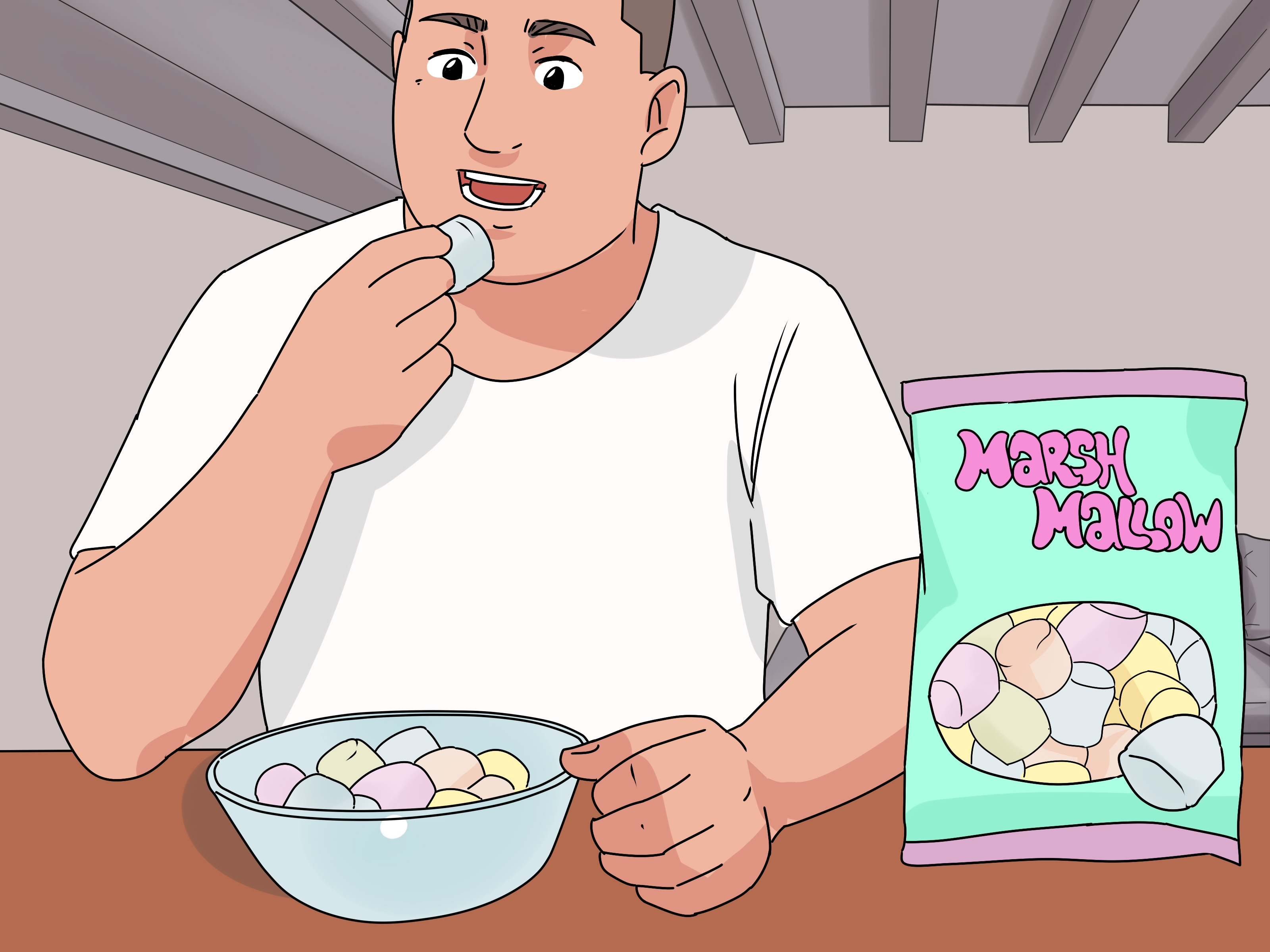
Traditional advice often recommends swallowing a large lump of rice, bread, tortilla, banana, potato, or marshmallow. The theory is that dense food will grab the bone and escort it downward. Unfortunately, it may instead press a sharp bone more deeply into the throat or esophageal wall.
Do not gulp vinegar or lemon juice in an attempt to dissolve the bone. Fish bones do not conveniently disappear during a brief acid bath, and acidic liquids can sting injured tissue. Similarly, advice about carbonated drinks sometimes applies to certain soft food impactions, but it should not be used as a strategy for forcing down a pointed bone. Sharp objects such as bones may require prompt professional removal.
Step 6: Do Not Induce Vomiting
Trying to vomit can pull the bone across the same tissue a second time. It may create additional scratches, cause bleeding, or move the object into the airway. Avoid gagging yourself with a finger or drinking large amounts of salt water, oil, or other homemade mixtures.
If swallowing is painful or you believe the bone is still present, stop eating and drinking until you have received medical advice. This is especially important when saliva, food, or liquids will not stay down.
Step 7: Arrange Prompt Medical Evaluation for Persistent Symptoms
A suspected sharp fish bone deserves prompt attention when the sensation does not quickly and completely disappear. Contact urgent care, an ear, nose, and throat specialist, or an emergency department, depending on the severity and availability of care.
Seek same-day evaluation for localized sharp pain, painful swallowing, repeated coughing, a persistent stuck sensation, blood-streaked saliva, vomiting, or discomfort in the lower neck or chest. Mayo Clinic guidance recommends seeing a healthcare professional right away after swallowing a sharp or pointed object because it can harm the esophagus.
Children, older adults, people with swallowing disorders, and anyone unable to describe their symptoms clearly should be evaluated with a lower threshold for urgent care.
Step 8: Recognize the Red Flags That Require Emergency Care
Go to an emergency department immediatelyor call 911 when breathing is affectedif any of the following occurs:
- Difficulty breathing, noisy breathing, or wheezing
- Inability to speak or cough effectively
- Blue, gray, or unusually pale lips or skin
- Inability to swallow saliva or continuous drooling
- Food or liquids repeatedly coming back up
- Increasing neck, throat, or chest pain
- Vomiting or coughing up blood
- Neck swelling, fever, or increasing tenderness
- Confusion, extreme weakness, fainting, or unconsciousness
Minor symptoms can occasionally be followed by inflammation or infection later. A delayed increase in pain, fever, swelling, or difficulty swallowing should not be dismissed simply because the original meal happened hours or days earlier.
Step 9: Let a Clinician Locate and Remove the Bone
A clinician may first inspect the mouth, tonsils, tongue base, and back of the throat. An ENT specialist can use a thin flexible scope to examine areas that cannot be seen with an ordinary flashlight. If the bone appears to be lower in the esophagus, a gastroenterologist may perform upper endoscopy.
During an upper endoscopy, a flexible camera is passed through the mouth while the patient receives sedation. Small instruments can then grasp and remove the bone while the doctor checks for scratches, bleeding, or perforation. Pointed objects and items stuck in the esophagus are among the foreign bodies that generally need removal.
An X-ray may be ordered, but a normal result does not always rule out a fish bone because some bones are difficult to see on plain radiographs. Persistent symptoms may lead to CT imaging, laryngoscopy, or endoscopy even when an initial X-ray is negative.
Can Your Throat Feel Scratched After the Bone Has Passed?
Yes. A fish bone can scrape the lining of the throat while passing, leaving a surprisingly convincing “something is still there” sensation. The scratch may hurt in the same location each time you swallow, even though no bone remains.
However, you should not automatically assume that persistent discomfort is merely a scratch. Stable patients who can swallow normally may sometimes be reassessed after a short period, but continuing or worsening symptoms require further evaluation. Esophageal abrasions can mimic a retained object, while an actual bone may still be hidden beyond the visible throat.
What Complications Can a Retained Fish Bone Cause?
Most swallowed objects that reach the stomach pass without intervention, but a fish bone is more concerning than a smooth, blunt object. Its pointed shape can puncture or become embedded in tissue.
Possible complications include local inflammation, infection, an abscess, bleeding, esophageal perforation, and infection in the tissues surrounding the esophagus. These outcomes are uncommon, but the risk is why persistent sharp pain should not be managed with endless rounds of bread and optimism. Delayed diagnosis of an esophageal foreign body can lead to serious complications.
Frequently Asked Questions
Will a fish bone dissolve in the throat?
No reliable home treatment will rapidly dissolve a fish bone lodged in tissue. Stomach acid may eventually break down some material after it reaches the stomach, but that does not help a bone embedded in the throat or esophagus.
Can I drink water to push it down?
Do not repeatedly gulp water to force down a suspected sharp bone. If swallowing water causes pain, coughing, choking, or regurgitation, stop and obtain urgent medical care. Inability to keep liquids down may indicate an obstruction.
How long can a scratchy sensation last?
A minor abrasion may remain uncomfortable while it heals. The sensation should steadily improve rather than become sharper, spread into the chest, or appear with fever, swelling, bleeding, or difficulty swallowing. Persistent symptoms deserve reassessment.
What kind of doctor removes a fish bone?
Bones in the visible throat are commonly evaluated by an emergency clinician or ENT specialist. A gastroenterologist may remove a bone lodged in the esophagus using upper endoscopy.
Can an X-ray miss a fish bone?
Yes. Some fish bones do not show clearly on plain X-rays. A clinician may recommend CT imaging or direct examination with a scope when symptoms continue despite a negative X-ray.
Should children be treated differently?
Children should not be given large bites of food to force an object down. Drooling, refusal to eat, vomiting, breathing changes, fever, persistent crying, or pain after suspected ingestion require prompt medical advice. Sharp objects often need endoscopic evaluation.
How to Prevent Fish Bones From Getting Stuck
- Eat slowly and avoid talking or laughing with food in your mouth.
- Use good lighting when preparing and eating bony fish.
- Flake fish apart with a fork rather than taking large bites.
- Chew carefully before swallowing.
- Check children’s portions by hand instead of relying only on visual inspection.
- Take extra care when eating while distracted, tired, or wearing dentures.
- Choose properly deboned fillets for people with swallowing difficulties.
There is no technique that guarantees every tiny bone will be found. Slowing down remains one of the simplest precautionsand, conveniently, it also prevents you from finishing dinner before everyone else has unfolded their napkins.
Practical Experiences and Lessons From Common Fish-Bone Incidents
The following examples are composite educational scenarios based on commonly described presentations. They are not personal medical stories and should not be used to diagnose an individual case.
The “Phantom Bone” That Was Actually a Scratch
A common experience begins with one unmistakable prick during dinner. The person coughs once, swallows again, and still feels a sharp spot near one tonsil. Every swallow seems to confirm that the bone is still there.
After an examination, however, no bone is found. The clinician explains that the bone probably passed but scratched the throat on its way down. The discomfort gradually improves over the next couple of days.
The lesson is not that every stuck sensation can be ignored. It is that the nerves in the throat are excellent alarm systems but imperfect location trackers. A scratch can feel nearly identical to a retained bone. The safe way to tell the difference is an appropriate examination when symptoms persistnot repeated finger probing in the bathroom mirror.
The Rice-Ball Gamble
Another familiar scenario involves advice from the entire family. Someone suggests swallowing a compact ball of rice. Another person recommends bread crust. A third arrives with a banana, apparently prepared to negotiate directly with the fish bone.
The person swallows several large bites. Instead of disappearing, the pain becomes stronger and more localized. At urgent care, a small bone is found embedded near the tonsil. It is removed with proper lighting and instruments.
The important lesson is that a remedy can be traditional, popular, and still be a poor match for a sharp object. Dense food may occasionally seem to work because the bone had already passed. That does not prove the method is safe. When it fails, it may drive the bone farther into tissue and make removal more difficult.
“I Could Breathe, So I Thought It Was Fine”
In a third scenario, the person can breathe and talk, so they assume there is no urgent problem. They continue eating despite pain lower in the neck. Later, liquids begin coming back up, and swallowing saliva becomes difficult.
This illustrates the difference between an airway emergency and an esophageal obstruction. Breathing normally is reassuring, but it does not prove that the esophagus is clear. A bone lodged in the swallowing tube can still require urgent endoscopic removal.
The most useful question is not only, “Can I breathe?” It is also, “Can I swallow saliva and liquids normally, and are my symptoms improving?” Breathing trouble calls for immediate choking first aid. Swallowing trouble calls for prompt medical evaluation.
What People Usually Wish They Had Done
After a fish-bone scare, people commonly wish they had stopped eating sooner, avoided home remedies, and written down exactly when the incident occurred. Clinicians benefit from knowing the type of fish, the approximate bone size, the location of discomfort, and whether the symptoms occur during breathing, swallowing, or both.
People also tend to underestimate delayed warning signs. A mild scratch that steadily improves is different from pain that intensifies, moves into the chest, or appears with fever, swelling, blood, or difficulty swallowing. The pattern matters.
The final practical lesson is reassuring: professional removal is usually far less dramatic than people imagine. A clinician may find the bone during a careful throat examination or use a flexible scope or endoscope to remove it under controlled conditions. That is considerably safer than inviting bread, tweezers, and gravity to form an unlicensed surgical team.
Conclusion
When a fish bone feels stuck in your throat, the safest response is to stop eating, assess breathing, allow a strong natural cough, and avoid probing or forcing down more food. Call 911 for inability to breathe, speak, or cough effectively. Seek prompt medical evaluation for sharp pain, difficulty swallowing, drooling, bleeding, chest discomfort, or symptoms that do not completely resolve.
A lingering sensation may come from a scratch, but it can also signal a retained bone. When in doubt, let an ENT specialist, emergency clinician, or gastroenterologist perform the fishing expedition. They have cameras, proper instruments, andmost importantlyno intention of prescribing a heroic mouthful of rice.