“`
Note: This article discusses a brief, non-graphic background detail from a 1970s network sitcom in a factual TV-history context.
Classic television has a way of looking innocent until someone invents pause buttons, high-definition screens, and the kind of internet detective work that makes every background prop sweat nervously. That is exactly what happened with Welcome Back, Kotter, the ABC sitcom remembered for Gabe Kaplan’s classroom jokes, John Travolta’s star-making turn as Vinnie Barbarino, and the Sweathogs turning remedial education into a catchphrase factory.
Then came the strange modern discovery: the show’s pilot episode appears to include a brief glimpse of a nude magazine centerfold in the lower corner of the frame. Not a plot point. Not a scandalous scene. Not even a joke the script pauses to underline. Just a quick background detail in a classroom moment that somehow made it through network television in 1975, a period when America was arguing loudly about what counted as “family viewing.”
So how did Welcome Back, Kotter get away with it? The answer is a mix of old TV technology, looser prop oversight, fast-moving sitcom blocking, and the simple fact that nobody in 1975 was watching ABC on a giant 4K screen with one finger hovering over the pause button. In other words: the Sweathogs may have been troublemakers, but the real prank was pulled by standard-definition television.
What Actually Happened in the Welcome Back, Kotter Pilot?
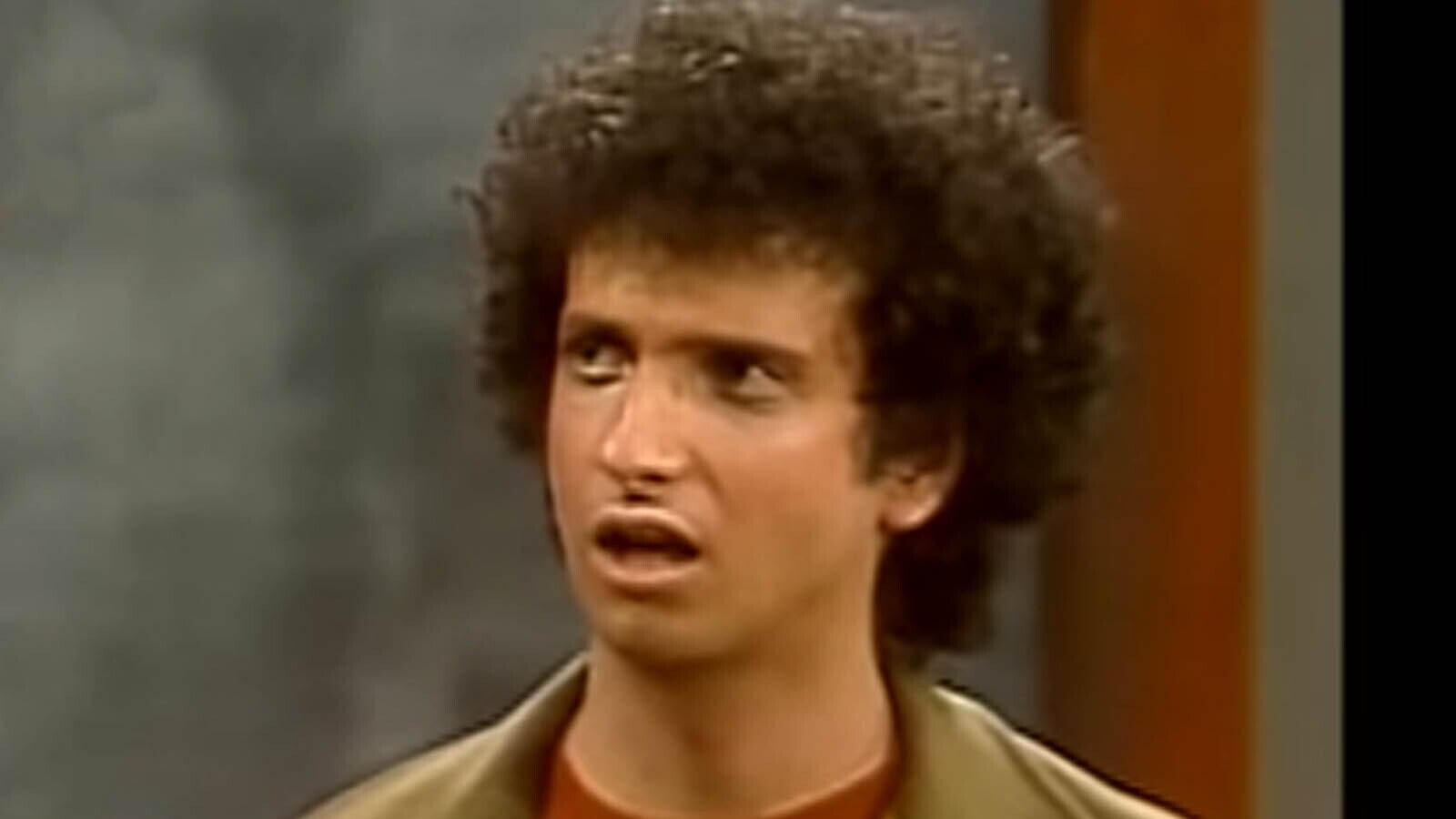
The moment comes from “Welcome Back,” the pilot episode that aired as the third episode of Season 1 on September 23, 1975. In the scene, Gabe Kotter enters the classroom and introduces himself to the Sweathogs, the group of underachieving students he has been assigned to teach at James Buchanan High School in Brooklyn.
While Kotter is the focus, two students are briefly looking at a magazine near the bottom left of the frame. The image inside the magazine is what later viewers noticed: a centerfold-style nude photograph visible only for a short stretch before the camera cuts closer to Kotter. It is easy to miss because the actors, dialogue, and staging are all pushing the viewer’s attention toward the new teacher meeting his class.
That distinction matters. This was not a scripted nude scene, not an actor appearing nude, and not a storyline built around explicit content. It was a background prop that slipped into view. The humor of the scene still comes from Kotter’s awkward first encounter with the Sweathogs, not from the magazine itself. The accidental nature of the moment is what makes it such an odd piece of classic TV trivia.
Why Nobody Noticed in 1975
To understand why the shot survived, picture the average home television in the mid-1970s. No streaming. No replay button. No high-resolution freeze frame. No social media account posting “Did anyone else see that?” five seconds later. Viewers watched the episode once, in real time, on smaller screens with softer picture quality. If something appeared in the corner for a few seconds, it might as well have been hiding behind a couch cushion.
Network review processes also focused heavily on scripts, dialogue, performance, and obvious visual material. A prop inside a prop, seen in the background during a moving classroom scene, was much easier to overlook than a line of dialogue or a central gag. The episode was taped before the show became a fully established hit, and pilots often involve different rhythms, sets, and production choices than later episodes.
That is the funny part: the scene was hiding in plain sight, but “plain sight” meant something very different before modern viewing habits. Today, audiences can zoom, pause, clip, and analyze. In 1975, if you blinked, adjusted the antenna, or got up for a snack, the moment vanished forever.
The Irony of the Family Viewing Hour
The timing makes the story even stranger. Welcome Back, Kotter premiered during the same era when the television industry was dealing with the Family Viewing Hour, a controversial push to keep early prime-time programming suitable for general audiences. Networks were under pressure from public critics, regulators, and advertisers to reduce material considered too adult for children.
That makes this little background accident feel like television history with a whoopee cushion under it. While executives and watchdog groups debated what families should see before 9 p.m., a classroom sitcom aimed heavily at young viewers managed to air a shot that would probably trigger a dozen internal emails today. The mismatch is almost too perfect: official caution on one side, unnoticed prop chaos on the other.
Of course, the standards conversation in the 1970s was complicated. Broadcast rules, First Amendment concerns, advertiser expectations, and network self-regulation all overlapped. But the Kotter incident shows a practical truth: censorship systems can be strict in theory and surprisingly porous in the edit bay. A single background detail can slip through because everyone is looking elsewhere.
Why Welcome Back, Kotter Was Bigger Than One Odd Moment
The nudity trivia is amusing, but it should not shrink the show to a single background mistake. Welcome Back, Kotter was a major 1970s sitcom built around a simple but sticky premise: a former remedial student returns to his old school as a teacher and tries to reach kids everyone else has written off.
Gabe Kaplan, who co-created the series with Alan Sacks, drew on his own stand-up material and Brooklyn school memories. His character, Gabe Kotter, was not a superhero educator. He was a wisecracking mentor who understood the Sweathogs because he used to be one of them. That gave the show its emotional engine beneath the jokes: the students were clowns, but they were not disposable.
The Sweathogs became the show’s pop-culture rocket fuel. Vinnie Barbarino, played by John Travolta, became the breakout heartthrob. Freddie “Boom Boom” Washington brought cool swagger. Juan Epstein delivered fake notes from “Epstein’s mother” with suspicious confidence. Arnold Horshack raised his hand like an overexcited emergency siren. Together, they turned a classroom sitcom into a lunchbox-level phenomenon.
The show ran on ABC from 1975 to 1979, producing four seasons and 95 episodes. It also earned Emmy recognition, including a 1976 nomination for Outstanding Comedy Series. Those details matter because they show that Kotter was not some forgotten oddity. It was a genuine mainstream hit, and that makes the accidental background nudity even more surprising.
The Show Was Never Completely Squeaky Clean
Part of the reason this discovery feels less impossible on second thought is that Welcome Back, Kotter was always a little rougher around the edges than its nostalgic image suggests. The show looked like broad, family-friendly comedy, but its setting allowed writers to brush up against social issues: poverty, school discipline, sexism, reputation, teen relationships, smoking, and the way institutions label certain students as hopeless.
Several episodes pushed into mature territory, though usually through sitcom framing rather than heavy drama. “Epstein’s Madonna,” for example, deals with a nude mural painted as an art assignment, creating a debate over whether the work is art or inappropriate. “X-Rated Education” uses a film mix-up to parody moral panic around sex education. “The Return of Hotsy Totsy” looks at double standards and judgment when a former student is found working in adult entertainment.
These stories were not presented in the style of modern prestige drama. They were delivered with laugh tracks, mugging, and catchphrases. Still, they prove the show had more adult subject matter floating around than a casual memory of “Up your nose with a rubber hose” might suggest. The pilot’s magazine moment was accidental; the show’s interest in boundaries was not.
How the Moment Survived Syndication, DVD, and Streaming
One of the most fascinating parts of this story is not just that the shot aired once. It is that the episode continued to circulate in later formats. Syndication, cable reruns, home video, and streaming all gave the pilot new life. Yet the background detail remained largely unnoticed for decades.
That tells us something about how audiences watch comedy. Viewers usually follow faces, voices, and punchlines. A sitcom scene is designed to guide the eye toward the performer carrying the joke. In this case, the actors did their job too well. Gabe Kaplan enters, the Sweathogs react, and the viewer’s attention goes exactly where the director wanted it to go. The magazine is visually present but narratively invisible.
Modern streaming changes that. Once a show enters the digital archive, every frame becomes searchable by human curiosity. A throwaway prop can become a headline. A continuity error can become a Reddit thread. A background extra can become a meme. The internet did not create the Kotter moment; it created the conditions for people to finally notice it.
Why the Headline Still Works
The headline “Welcome Back, Kotter Somehow Got Away With Full-Frontal Nudity” works because it collides two ideas that do not seem to belong together. On one side: a nostalgic ABC sitcom full of goofy students, old-school jokes, and a theme song that practically wears a cardigan. On the other: a phrase associated with much more adult entertainment.
The surprise is the hook. But the real story is not that Kotter was secretly shocking television. It is that TV history is messy. Production teams miss things. Standards departments focus on the obvious. Viewers remember shows through emotional shorthand, not forensic inspection. A sitcom can be wholesome in memory and still contain a strange production artifact that complicates the picture.
That is why the moment has become such durable classic TV trivia. It is not important because it changed the series. It did not. It is important because it reveals how much old television depended on the limitations of its own medium. The blurry screen was part of the censorship system.
What This Says About 1970s Television
1970s TV was caught between eras. The medium still had old-fashioned network restrictions, but sitcoms were increasingly willing to touch social issues. All in the Family, Maude, Barney Miller, M*A*S*H, and other shows had already expanded what television comedy could discuss. Welcome Back, Kotter was lighter than many of those series, but it lived in the same decade of experimentation.
That tension explains the oddness of the pilot incident. Network television was guarded, but not airtight. A show could be marketed to young viewers and still feature jokes or storylines that now read as surprisingly adult. A standards system could worry about scripts but fail to catch a magazine image sitting in a corner. The result is a time capsule: half family sitcom, half accidental broadcast loophole.
Viewing Experience: Watching the Scene Today
Watching the pilot today is an oddly funny experience because the headline prepares you to expect fireworks, and the actual moment is more like hearing a tiny squeak from a drawer. You sit there waiting for the “scandal,” and the show just keeps being Welcome Back, Kotter: broad delivery, big classroom energy, and Gabe Kaplan trying to win over a room full of teenage wiseguys played by actors with the confidence of nightclub performers.
The first reaction is usually disbelief. Not because the background image dominates the screen, but because it does not. The episode does not wink at it. The camera does not treat it like a joke. The dialogue does not stop and say, “Hey, America, please call the network switchboard.” It is simply there, briefly, while the scene moves on. That makes the discovery feel less like a scandal and more like finding a raccoon in an old family photo. Surprising? Absolutely. Central to the memory? Not really.
The second reaction is appreciation for how different television used to be. A modern production would have multiple review layers, digital cleanup options, streaming thumbnails, social-media clipping, and viewers ready to analyze every pixel by breakfast. In the 1970s, the scene had to survive a completely different ecosystem. Once it aired, it passed into memory. Unless someone recorded it, rewatched it, and knew exactly where to look, it was gone.
The third reaction is that the discovery actually makes the show feel more human. Old television can seem sealed in plastic, especially when nostalgia turns everything into a clean museum exhibit. But production mistakes remind us that real people made these shows quickly, under deadlines, with imperfect tools. Someone chose the prop. Someone framed the shot. Someone reviewed the episode. And somehow, everyone missed the same tiny visual landmine.
For a modern viewer, the best way to approach the moment is not with outrage or exaggerated shock. It is better understood as a weird artifact of analog TV. It says more about attention, technology, and cultural memory than about the moral character of the show. Welcome Back, Kotter remains what it was: a noisy, corny, influential sitcom about a teacher trying to reach students who had been underestimated. The accidental background image is a footnote, but it is a hilarious footnote wearing platform shoes.
That is why the story keeps working. It lets classic TV fans revisit a familiar title from a new angle. It gives younger viewers a reason to discover a show their parents or grandparents might remember. And it proves that even the most carefully remembered television history has a few frames that nobody was ready for. In a strange way, that makes Welcome Back, Kotter more interesting, not less. The classroom still belongs to Kotter and the Sweathogs. The background just happened to sneak in one last lesson: always check the props.
Conclusion
The story of Welcome Back, Kotter and its accidentally visible nude magazine image is less about sensationalism and more about how television used to work. A brief background prop slipped through a system that was supposed to be alert to exactly that kind of thing. Viewers missed it because the technology, viewing habits, and storytelling focus of the time made it easy to miss.
Today, the moment survives as a perfect piece of classic TV trivia: funny, strange, and surprisingly revealing. It reminds us that old sitcoms were not always as tidy as nostalgia makes them seem. They were made fast, watched once, and preserved imperfectly. Sometimes the result was a beloved catchphrase. Sometimes it was a background detail that waited nearly fifty years for the internet to notice.