Note: This article is written in original wording and synthesized from current public information from reputable U.S. health, culture, fashion, legal, and reproductive-rights sources. It is informational content, not medical or legal advice.
Some fashion trends whisper. Others tap you politely on the shoulder. And then there are uterus-shaped necklaces, which stroll into the room wearing tiny gold ovaries and announce, “Yes, we are absolutely talking about bodily autonomy today.”
At first glance, a uterus necklace might look like a quirky piece of anatomy-inspired jewelrysomething a medical student, doula, gynecologist, reproductive health advocate, or delightfully bold aunt might wear. But look again. That small pendant carries a much bigger message about reproductive rights, body literacy, women’s health, fertility journeys, period stigma, pregnancy loss, hysterectomy recovery, and the simple but still surprisingly radical idea that bodies should not be treated like shameful little secrets.
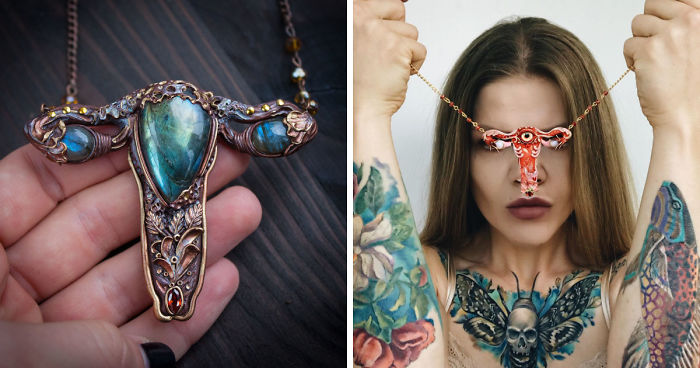
Uterus-shaped jewelry has moved from niche handmade shops into broader conversations about feminist fashion and statement accessories. You can find delicate silver uterus pendants, floral uterus charms, wire-wrapped versions with crystals, “cuterus” designs, pro-choice necklaces, medical anatomy jewelry, and pieces created specifically to raise awareness or funds for reproductive health organizations. It is jewelry, yesbut it is also a tiny wearable billboard. Fortunately, it is much more elegant than wearing an actual billboard, which would be terrible for doorways.
What Is a Uterus-Shaped Necklace?
A uterus-shaped necklace is exactly what it sounds like: a pendant designed to resemble the uterus, often with stylized fallopian tubes and ovaries. Some designs are anatomically inspired and minimalist. Others are playful, floral, mystical, sculptural, political, or intentionally bold. The shape is instantly recognizable to many people, but it can still be subtle enough to pass as abstract jewelry until someone looks closely.
That balancepretty from far away, powerful up closeis part of the appeal. A uterus necklace can function as a conversation starter without requiring the wearer to deliver a full TED Talk in the cereal aisle. It says something, but the wearer gets to decide how much they want to explain.
Common Styles of Uterus Jewelry
Uterus necklaces now appear in many styles, including:
- Minimalist gold or sterling silver uterus pendants
- Crystal and gemstone uterus necklaces
- Floral uterus charms symbolizing growth, healing, or fertility
- Medical anatomy necklaces for doctors, nurses, midwives, doulas, and students
- Reproductive rights jewelry with pro-choice messages
- Personalized pendants honoring hysterectomy, IVF, endometriosis, pregnancy loss, or childbirth experiences
Some are elegant enough for everyday wear. Some are loud enough to make Thanksgiving dinner interesting. Both have their place.
Why the Uterus Became a Symbol
The uterus is a hollow, muscular organ in the female reproductive system. It plays a role in menstruation, pregnancy, and childbirth, and it is central to many conversations about reproductive health. But culturally, the uterus has become much more than anatomy. It represents autonomy, fertility, pain, strength, medical neglect, political debate, family history, and for some people, grief or healing.
That symbolic weight is why uterus-shaped necklaces resonate. The pendant may be small, but the subject is anything but. In American culture, conversations about periods, abortion, contraception, infertility, miscarriage, endometriosis, fibroids, postpartum recovery, and menopause have often been wrapped in embarrassment. Uterus jewelry pushes back by making the hidden visible.
It is not asking permission to exist. It is not blushing in the corner. It is dangling from a chain and catching the light.
The Strong Message Behind Uterus-Shaped Necklaces
The message behind uterus-shaped necklaces depends on the wearer, but several themes show up again and again: body pride, reproductive freedom, health awareness, solidarity, and healing.
1. Reproductive Rights and Bodily Autonomy
In the United States, reproductive rights remain one of the most debated social and political issues. Since the Supreme Court overturned Roe v. Wade in 2022, abortion access and reproductive healthcare have varied dramatically by state. Public opinion research continues to show that many Americans support legal abortion in all or most cases, while lawmakers, courts, and advocacy groups continue to fight over policy.
Against that backdrop, a uterus necklace can become a quiet but unmistakable statement: decisions about reproductive healthcare belong to the person whose body is involved. It is the jewelry version of saying, “My body is not a committee meeting.”
Some reproductive rights jewelry directly references Roe v. Wade, the year 1973, coat hanger symbols, abortion access, or organizations that support reproductive healthcare. Uterus-shaped pieces fit into that same tradition, but they often speak more broadly. They can signal support for contraception, maternal healthcare, period equity, abortion access, fertility support, and better medical treatment for people with uteruses.
2. Body Literacy and Ending Shame
Many people grow up learning surprisingly little about reproductive anatomy. Periods are hidden. Pelvic pain is minimized. Fertility is treated like a mystery. Menopause gets whispered about as if it were a classified government file. A uterus necklace challenges that silence.
Wearing anatomy-inspired jewelry can normalize conversations about health. A teacher might use it to talk about body literacy. A nurse might wear it at work. A parent might use it to answer a teen’s questions honestly and calmly. A friend might point to it and say, “Cute necklace,” accidentally opening a conversation about reproductive health that should never have been taboo in the first place.
That is the magic of symbolic jewelry: it can open a door without kicking it off the hinges.
3. Support for Women’s Health Professionals
Uterus-shaped necklaces are especially popular among people who work in reproductive healthcare. OB-GYNs, labor and delivery nurses, midwives, doulas, fertility specialists, pelvic floor therapists, and medical students often wear anatomy jewelry as a badge of professional pride.
For them, the necklace may say, “This is my field. This is my work. This is the body system I spend my days caring for, explaining, protecting, and occasionally defending from bad internet advice.”
It can also help soften clinical spaces. A patient noticing a uterus pendant on a provider may feel more comfortable asking questions. Small signals matter, especially in healthcare settings where people may feel nervous, embarrassed, or unheard.
4. Healing After Medical Experiences
For some wearers, a uterus necklace is deeply personal. It may symbolize life after a hysterectomy, treatment for endometriosis, recovery from fibroid surgery, infertility, IVF, pregnancy loss, childbirth, or a complicated diagnosis. In these cases, the necklace is not merely political or decorative. It is a personal marker of survival.
A person who has had a hysterectomy might wear a uterus pendant as a way of honoring what their body carried, endured, or lost. Someone living with endometriosis may see it as a reminder that their pain is real. A person who went through fertility treatments might wear it to acknowledge a long, emotional journey that outsiders often do not understand.
Jewelry has always carried memory. Wedding rings, lockets, memorial pendants, class rings, charm braceletshumans have a long history of putting meaning into metal. A uterus necklace simply brings that tradition into the world of reproductive health.
Why This Trend Feels So Modern
Uterus-shaped necklaces fit perfectly into today’s larger movement toward personal, political, and identity-based fashion. People increasingly use clothing and accessories to communicate values. A tote bag can support a bookstore. A pin can signal allyship. A necklace can honor reproductive freedom. Fashion is no longer just about looking good; it is also about saying something before you even open your mouth.
This trend also reflects a growing comfort with anatomy-themed accessories. Brain earrings, heart necklaces, rib cage tattoos, serotonin jewelry, and medical illustration art have all become popular in different circles. The uterus pendant belongs to that family: educational, symbolic, and just odd enough to be interesting.
And honestly, the uterus has a naturally jewelry-friendly shape. The curves are symmetrical. The silhouette is strong. The design can be rendered as delicate, bold, botanical, celestial, or abstract. The organ came prepared for branding, apparently.
Is a Uterus Necklace Only for Women?
No. While uterus necklaces are often discussed in connection with women’s health and feminist jewelry, the meaning can be broader and more inclusive. Not every woman has a uterus, and not everyone with a uterus identifies as a woman. Some trans men and nonbinary people have uteruses and reproductive healthcare needs. Some women have had hysterectomies. Some people wear uterus jewelry not because it represents their own anatomy, but because it represents support for someone they love or a cause they believe in.
The best version of this trend makes room for that complexity. The uterus can be a symbol of womanhood for some people, but it should not be used to define womanhood for everyone. That distinction matters. A necklace can be powerful without flattening people into one story.
From Cute Accessory to Cultural Statement
Part of what makes uterus-shaped necklaces fascinating is the contrast between form and meaning. They can be beautiful, dainty, and charming, yet connected to topics that are serious and emotionally charged. That tension gives the jewelry its power.
A gold uterus pendant on a fine chain might look delicate. But it can represent battles over healthcare access, years of chronic pain, a long fertility journey, a career in medicine, or a refusal to be ashamed of anatomy. In other words, the pendant may be tiny, but it did not come here to play small.
Social media has helped spread this trend. Handmade sellers, feminist artists, medical professionals, reproductive health advocates, and everyday wearers share photos of uterus necklaces as gifts, protest accessories, graduation presents, healing symbols, or “I saw this and immediately needed it” purchases. The internet, for all its chaos, remains very good at helping niche jewelry find its people.
How to Wear a Uterus-Shaped Necklace
The beauty of a uterus necklace is that it can be styled in many ways. A minimalist pendant can pair with a white shirt, blazer, and jeans for a clean everyday look. A larger artistic piece can become the centerpiece of an outfit. A gemstone version can lean spiritual or bohemian. A bold pro-choice design can be worn to rallies, community events, or anywhere the wearer wants to make their values clear.
Styling Ideas
- Everyday subtle: Choose a small gold or silver uterus pendant on a fine chain.
- Professional pride: Pair an anatomy necklace with simple workwear, especially in healthcare or education settings.
- Statement look: Wear a larger pendant over a plain black top so the design stands out.
- Layered jewelry: Combine the uterus necklace with small charms, initials, birthstones, or symbolic pieces.
- Activist style: Match it with reproductive rights pins, T-shirts, or tote bags for public events.
The key is intention. A uterus necklace is not just an accessory; it is a message. Wear it in a way that matches the message you want to send.
When a Necklace Starts a Conversation
One of the most interesting things about uterus jewelry is how often it leads to conversation. Someone might ask, “Is that what I think it is?” The answer can be as simple as “Yes, it’s a uterus necklace,” or as personal as the wearer wants it to be.
For some, that conversation may be about reproductive rights. For others, it may be about medical school, childbirth, infertility, period education, or healing after surgery. The necklace gives people an openingbut not an obligation. The wearer always gets to choose the depth of the discussion.
That matters because reproductive health can be intimate. No one owes strangers their medical history. A symbolic accessory can invite awareness while still protecting boundaries. It can say, “This issue matters,” without requiring the wearer to hand out a full biography between errands.
The Business of Meaningful Jewelry
Uterus-shaped necklaces also show how values-driven shopping has changed the jewelry market. Many buyers now want pieces that feel personal, ethical, handmade, charitable, or politically aligned. A pendant is no longer just a pendant; it can be a donation, a protest sign, a memorial, a professional symbol, or a tiny emotional support object with better lighting.
Independent makers have played a major role in this trend. Platforms that support handmade goods are full of reproductive rights jewelry, anatomy necklaces, uterus charms, IUD pendants, and pro-choice accessories. Some designs support nonprofits. Others are made by artists with personal experiences in reproductive healthcare. Many are purchased as gifts for medical students, nurses, doulas, activists, friends recovering from surgery, or people navigating difficult health journeys.
This is where the trend becomes more than a novelty. The market exists because the meaning exists. People are not buying uterus necklaces only because they are unusual. They are buying them because they recognize themselves, their politics, their work, their grief, or their hope in the design.
What Critics Might Say
Of course, not everyone will love uterus-shaped jewelry. Some may find it too political. Some may think anatomy should stay private. Others may worry that uterus symbolism can unintentionally exclude people who do not fit a simple definition of womanhood.
Those critiques are worth considering. Symbolic fashion works best when it is thoughtful, not lazy. A uterus necklace should not reduce identity to one organ. It should not pressure anyone to disclose medical experiences. It should not turn serious reproductive health issues into shallow trend bait.
But when worn with intention, uterus jewelry can do the opposite. It can create awareness, honor complexity, and push back against shame. Like any symbol, its impact depends on context, design, and the person wearing it.
Why the Message Still Matters
The strong message behind uterus-shaped necklaces is not simply “look at this organ.” It is bigger than that. The message is: reproductive health deserves attention. Bodily autonomy matters. Pain should be believed. Healthcare should be accessible. Anatomy should not be embarrassing. People deserve to understand and make decisions about their own bodies.
That message lands differently for different people. For a doctor, it may be professional pride. For an activist, it may be resistance. For someone recovering from surgery, it may be remembrance. For someone who has spent years feeling dismissed by doctors, it may be validation. For someone who just thinks the necklace is beautiful, it may be the beginning of learning more.
And yes, it can also be cute. A symbol does not lose power because it has good craftsmanship. In fact, beauty can make the message more approachable. Sometimes the most effective protest sign is not cardboard and marker. Sometimes it is a polished pendant resting quietly at the collarbone.
Personal Experiences and Everyday Moments Connected to Uterus-Shaped Necklaces
Imagine someone wearing a small uterus-shaped necklace to brunch. At first, nobody notices. Then a friend leans in and says, “Wait, is that a uterus?” The table laughsnot in mockery, but in surprise. Suddenly, the conversation shifts from pancakes to periods, birth control, doctor appointments, and the strange fact that many adults still learned more about mitochondria than their own reproductive system. The necklace has done its job. It turned awkward silence into honest conversation, and frankly, the pancakes survived.
For many wearers, the experience is not dramatic. It is quiet. A labor and delivery nurse may put on a uterus pendant before a shift as a reminder of the patients she supports through vulnerable moments. A medical student may wear one after passing an anatomy exam, partly as celebration and partly because caffeine alone deserves a coworker. A doula may choose a floral uterus necklace because it represents birth, care, and trust. In these cases, the jewelry becomes a professional talismansmall, personal, and meaningful.
Other experiences are more emotional. Someone who has had a hysterectomy may wear a uterus necklace with complicated feelings: grief, relief, strength, nostalgia, or all of the above before breakfast. The pendant can honor an organ that was once part of them, even if it is no longer physically present. It can say, “This mattered.” That kind of meaning cannot be measured by the size of the charm or the price of the chain.
There are also people who wear uterus jewelry because they have spent years battling conditions like endometriosis, fibroids, painful periods, or unexplained pelvic pain. For them, the necklace can be a small act of visibility. Chronic reproductive health issues are often misunderstood or minimized. A uterus pendant may not fix the healthcare system, but it can help the wearer feel seen. Sometimes symbolism is not a cure; it is a witness.
Then there are the gift-giving moments. A friend gives a uterus necklace to someone starting fertility treatment. A parent gives one to a daughter graduating from nursing school. A partner gives one after a difficult pregnancy loss, not as a solution, but as a gesture of tenderness. A group of friends buy matching reproductive rights necklaces before attending a march. These objects become attached to memory. Years later, the wearer may not remember every outfit they paired it with, but they will remember who gave it to them and why.
The most powerful experiences often happen in ordinary places. A cashier compliments the necklace. A coworker asks about it. A patient notices it and relaxes. A stranger says, “I have one too.” For a moment, the pendant becomes a bridge. It connects people through shared values, shared anatomy, shared struggle, shared humor, or shared curiosity.
And that is the real reason uterus-shaped necklaces have become a thing. Not because everyone suddenly woke up and decided reproductive organs needed better branding, although honestly, they did. The trend exists because people want language for experiences that are often hidden. They want beauty for stories that are often painful. They want a symbol for rights that are still being debated, bodies that are still being misunderstood, and healthcare conversations that still need more honesty.
A uterus-shaped necklace is small enough to fit in your palm, but it can carry a whole universe of meaning. It can be funny, fierce, pretty, political, comforting, educational, rebellious, or deeply personal. That is a lot of work for one little pendant. Luckily, the uterus has always been good at carrying more than people expect.
Conclusion
Uterus-shaped necklaces may look like a playful jewelry trend, but their meaning runs deep. They are part fashion accessory, part feminist statement, part health-awareness tool, and part personal keepsake. For some wearers, they represent reproductive rights and bodily autonomy. For others, they honor medical journeys, professional care, fertility, loss, recovery, or pride in anatomy that society has too often treated as taboo.
The best thing about this trend is not that it is edgy or unusual. It is that it makes space for conversations that matter. A uterus necklace can be beautiful, but it can also be brave. It can be delicate, but it can also be defiant. And in a world where reproductive health is still debated, dismissed, and misunderstood, a tiny pendant can send a surprisingly strong message: bodies are not shameful, healthcare matters, and silence is officially out of style.