When most people hear “hurricane,” they think of roofs, roads, power lines, and a weather map that looks personally offended. They do not usually think of IV saline bags hanging beside hospital beds in Chicago, Dallas, or Boston. But that is exactly what happened after Hurricane Maria tore through Puerto Rico. A storm that hit an island in the Caribbean rippled through the U.S. healthcare system and helped trigger a shortage of one of medicine’s most ordinary-looking essentials: saline bags.
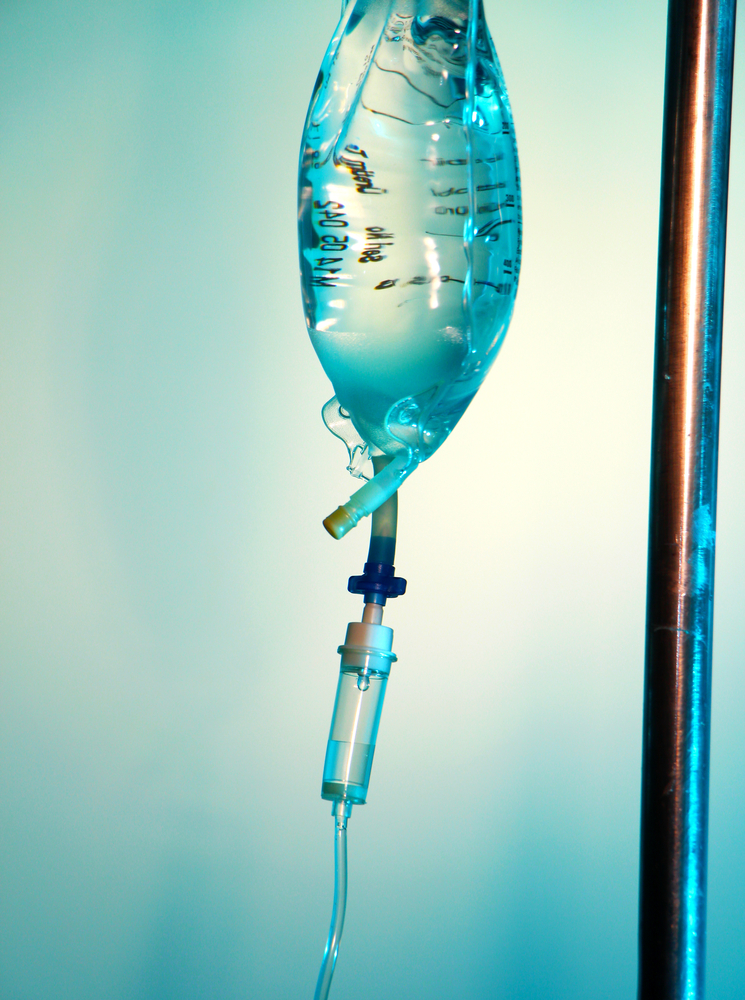
And “ordinary-looking” is doing a lot of work here. Saline is the background actor that quietly holds the whole scene together. It helps hydrate patients. It is used to dilute and deliver medications. It is everywhere in hospitals, outpatient centers, emergency rooms, infusion suites, and cancer care units. When supply gets tight, the problem does not stay in a warehouse spreadsheet. It lands directly in clinical workflow, nursing time, pharmacy operations, and patient care.
The Puerto Rico saline bag shortage became a vivid lesson in how fragile modern healthcare supply chains can be. It also exposed an uncomfortable truth: the U.S. had built heavy dependence on a small number of manufacturers and facilities for low-cost, high-need products. That setup works beautifully right up until a major storm shows up and says, “Nice system you’ve got there.”
Why Puerto Rico mattered so much to the saline bag market
Puerto Rico is not just a scenic dot in the ocean with excellent beaches and a complicated colonial history. It has long been a major hub for pharmaceutical and medical manufacturing. Before Hurricane Maria, the island played an outsized role in producing drugs, devices, and sterile medical products used across the mainland United States. That concentration made business sense for years. It did not make resilience sense when a catastrophic storm smashed power, transport, communications, and everyday operations.
One of the biggest concerns after Maria was the disruption to Baxter facilities in Puerto Rico. Baxter was a crucial supplier of small-volume saline bags for the U.S. market. These are the compact IV bags often used to mix and administer medications such as antibiotics, pain drugs, and other injectable treatments. If you are picturing something small and boring, congratulations, you are picturing something small and absolutely mission-critical.
The shortage did not begin out of nowhere. Saline had already been a tight market before the hurricane because manufacturers were struggling to keep pace with demand. That matters. Maria did not create a perfectly healthy market crisis from scratch. It hit a supply chain that was already running with very little slack. In other words, the healthcare system was already balancing on a narrow ledge, and the hurricane gave it a firm shove.
How Hurricane Maria turned a tight supply into a national problem
When Maria made landfall in Puerto Rico in September 2017, the immediate humanitarian damage was enormous. But even facilities that were not physically destroyed faced a nasty mix of operational headaches: unreliable electricity, fuel shortages for generators, blocked roads, shipping delays, workforce disruptions, and communication problems. Sterile fluid manufacturing is not the kind of business that shrugs and says, “We’ll wing it.” It depends on precision, clean conditions, validated processes, and steady utilities.
That is why the storm’s impact on saline production was so severe. Saline bags are low-cost items, but they are not simple to replace overnight. Hospitals use them constantly, and they cannot be swapped out casually the way you switch from one brand of paper towels to another. A shortage of sterile IV fluids affects medication delivery, hydration protocols, and everything built around those everyday routines.
Once Baxter’s Puerto Rico output was disrupted, hospitals across the United States started feeling the squeeze. This was especially true for small-volume bags, sometimes called minibags, which are frequently used to deliver medications intravenously. The shortage stretched beyond a purchasing inconvenience. It changed what hospitals could order, how much they could keep on hand, and how they prioritized care.
Then came another unwelcome guest: a bad flu season. Demand for IV fluids rose at the same moment supply was under pressure. That is the kind of timing that makes supply-chain managers stare into the middle distance and rethink all their life choices.
Why saline bags matter more than most people realize
Saline solution is often just a bag on a pole in the public imagination, but in practice it functions like plumbing for modern medicine. It is used to hydrate patients who cannot drink enough on their own. It is used as a carrier fluid for many medications. It supports outpatient treatment, emergency care, surgical recovery, and inpatient medicine.
Small-volume saline bags matter because so many drugs are delivered through them. A shortage can force hospitals to rethink how medications are prepared and administered. A single missing bag might seem trivial. Multiply that by hundreds of medications, dozens of wards, and thousands of patients, and suddenly that humble plastic pouch looks less like a commodity and more like a linchpin.
The shortage also highlighted how invisible products become when they are always available. Few people talk about saline when it is flowing normally through the system. But once supply tightens, everyone notices: pharmacists, nurses, oncologists, emergency physicians, supply chain teams, and patients waiting for treatment.
How hospitals adapted when saline bags became scarce
Hospitals did not stop functioning, but they had to get creative fast. Some facilities shifted from small saline bags to larger-volume bags when clinically appropriate. Others used syringes or IV push methods for certain medications. Pharmacists reviewed which drugs truly required a minibag and which could be administered through alternative approaches. Clinicians emphasized oral hydration when it was safe and practical. In other words, the system did what healthcare systems often do in a crunch: it improvised, triaged, and worked a lot harder.
Changes in pharmacy workflow
Pharmacy departments were hit particularly hard. Instead of relying on standard preparation routines, they had to review inventory constantly, manage allocations, revise policies, and educate staff on substitutions. The shortage turned routine dispensing into a puzzle with moving pieces. Products near expiration suddenly mattered more. Alternative container supplies became important. Even empty IV containers drew new attention because hospitals were trying to stretch every option.
Changes in nursing practice
Nurses also absorbed the impact. Different medication delivery methods can require different setup steps, different timing, and additional vigilance. In a staffed-to-the-minute environment, even small process changes add up. A shortage of saline bags therefore became a shortage of convenience, flexibility, and time. And in a hospital, time is never just time. It is labor, attention, and patient contact.
Changes in patient care planning
Most hospitals tried hard to prevent harm, and many succeeded by adapting intelligently. But the shortage still created friction. Some elective procedures were reconsidered. Some therapies required more planning. Some institutions rationed supplies or reserved certain products for the sickest patients. The goal was not panic; it was preservation.
What the FDA and manufacturers did in response
The Food and Drug Administration moved on several fronts. It worked with manufacturers in Puerto Rico, helped address infrastructure obstacles, and coordinated with federal and local agencies on fuel, transport, and facility access. It also allowed temporary importation of certain sterile saline products from Baxter facilities outside the United States and supported additional overseas supply where appropriate.
That import strategy mattered because domestic recovery was not instant. Overseas products could help bridge the gap while Puerto Rico facilities stabilized. The FDA also expedited reviews for additional manufacturers, a crucial step in a market where too few suppliers had too much influence over national availability.
In time, the agency and industry took a broader set of actions: encouraging increased output where possible, extending expiration dating for some products when supported by data, expanding review of new supply sources, and communicating with hospitals about conservation strategies. These were not glamorous solutions. Nobody was throwing a ticker-tape parade for “temporary import flexibility.” But in shortage management, boring competence is exactly what you want.
The bigger lesson: the problem was not just the hurricane
It is tempting to frame the saline bag shortage as a freak event caused by one terrible storm. That story is neat, tidy, and incomplete. Hurricane Maria was the trigger, but the deeper issue was structural fragility. The U.S. healthcare supply chain had become too dependent on limited manufacturing capacity for inexpensive, essential products. Saline is not a flashy blockbuster drug with huge profit margins. It is a basic hospital staple. And low-margin staples often attract too little redundancy.
That creates a dangerous paradox. The cheaper and more routine a product is, the easier it becomes for the market to underinvest in backup capacity. Yet those same products can be vital to daily care. So when disruption hits, hospitals are not scrambling for an exotic niche therapy. They are scrambling for something used all day, every day, by practically everybody.
The Puerto Rico crisis also showed how geographic concentration magnifies risk. When a large share of national output sits in one region, a regional disaster becomes a national healthcare problem. Climate risk, natural disasters, energy reliability, transport access, and workforce continuity all become public health issues, not just operations issues.
What healthcare learned from the saline shortage
The shortage taught several durable lessons. First, transparency matters. Hospitals need better visibility into where critical products are made and how vulnerable those supply lines are. Second, redundancy matters. A system with one main route and a few hopeful backup plans is not resilient; it is optimistic. Third, “commodity” healthcare products deserve strategic attention. Saline bags may be cheap, but the cost of not having them is anything but cheap.
It also reminded clinicians that innovation is not always a robot or an app. Sometimes innovation is a pharmacist redesigning a workflow, a nurse adapting a protocol, or a hospital reviving older medication-administration methods safely and efficiently. Crisis forces creativity, even when nobody asked for the assignment.
Finally, the event made it easier to understand later IV fluid scares. Once one hurricane has already exposed the system’s weak points, every future weather emergency near a major manufacturing hub looks less like a surprise and more like a warning label that nobody should ignore.
What the shortage felt like: experiences behind the headlines
The following experiences are composite, reality-based sketches drawn from the kinds of situations clinicians, hospitals, patients, and supply teams described during the saline shortage.
A hospital pharmacist’s day got longer overnight
Imagine arriving at work and discovering that the product nobody normally talks about is now the product everyone wants to talk about. The pharmacist’s shift starts with inventory checks, but now every unit asks the same question: “How many bags do we have left?” Instead of routine dispensing, the job becomes part logistics, part diplomacy, part emergency planning. A medication that usually travels in a small saline bag may need a different format. Another drug may have to be reserved for the sickest patients. Phone calls multiply. Email alerts pile up. The work is not dramatic in a movie-trailer way, but it is exhausting in a very real one.
Nurses had to adapt without letting patients feel the chaos
For bedside nurses, the shortage was one more invisible problem layered onto already crowded shifts. A medication that used to arrive ready in a standard minibag might now come through a different process. Setups changed. Timing changed. The safest alternative was not always the fastest one. And yet patients still needed calm, confidence, and competent care. That is one of the underrated stories of the shortage: much of the stress was absorbed by staff who kept things moving without turning every room into a seminar on supply-chain fragility.
Patients rarely saw “shortage” on the label, but they felt the slowdown
Most patients did not walk into a clinic and hear, “Sorry, America is having a saline problem today.” What they noticed instead was delay, rescheduling, or a more complicated care process. A family in an infusion center might not understand why a treatment required extra waiting. A patient in the emergency department might not realize that clinicians were actively conserving certain IV supplies. The shortage often lived behind the curtain, but its effects still reached the waiting room.
People in Puerto Rico were dealing with two emergencies at once
On the island, workers and residents were not only facing national supply-chain pressure. They were also living through the immediate aftermath of the storm itself. Roads, fuel, power, communications, and daily life were disrupted. So when the mainland talked about shortages, Puerto Rico was experiencing the disaster at both the human level and the industrial level. That dual reality matters. The crisis was never just about hospital procurement on the mainland. It was also about the people trying to keep essential facilities running while their own communities were struggling to recover.
The shortage changed how people thought about “basic” medicine
Perhaps the most lasting experience was psychological. Many professionals who lived through the episode came away with a new respect for the boring basics. Saline bags stopped being background equipment and became symbols of how interconnected healthcare really is. One storm. One manufacturing bottleneck. One low-margin product. Suddenly the entire system felt more fragile than it had looked the week before. That realization may be the shortage’s most important legacy, because it changed how hospitals, regulators, and supply leaders think about resilience.
Conclusion
The story of the saline bag shortage in the wake of Hurricane Maria is really a story about hidden dependence. Puerto Rico’s manufacturing role mattered enormously, Baxter’s disruption exposed that dependence, and hospitals across the United States were left to adapt in real time. The shortage showed that supply chains for basic medical products can be both highly efficient and dangerously brittle.
In the end, the crisis was not just about a hurricane in Puerto Rico. It was about what happens when modern healthcare treats essential supplies as if they will always be there. Saline bags may be inexpensive, but the system built around them is not. Once the bags ran short, the country got a sharp reminder that resilience is not a luxury feature. In healthcare, it is part of the treatment plan.