Note: This article is written for web publication and focuses on the Six Piece Frying Pan & Saucepot/Saute Set designed by John Pawson, combining product insight, cookware analysis, and practical kitchen experience.
A Cookware Set for People Who Think Their Pan Should Have Manners
The Six Piece Frying Pan & Saucepot/Saute Set – John Pawson is not the kind of cookware that barges into your kitchen wearing neon handles and shouting, “Look at me!” It is the opposite. It is quiet, precise, architectural, and almost suspiciously calm. Designed by British minimalist John Pawson for Demeyere, this stainless steel cookware set feels less like a random collection of pots and more like a disciplined kitchen system with excellent posture.
At first glance, the set looks simple. That is the trick. Great minimalist design often appears effortless because all the arguing, measuring, editing, and engineering happened before the object reached your countertop. Pawson’s cookware follows that philosophy. The silhouettes are clean. The handles are restrained. The finish is polished without being flashy. In other words, these pans do not need rhinestones. They have copper cores.
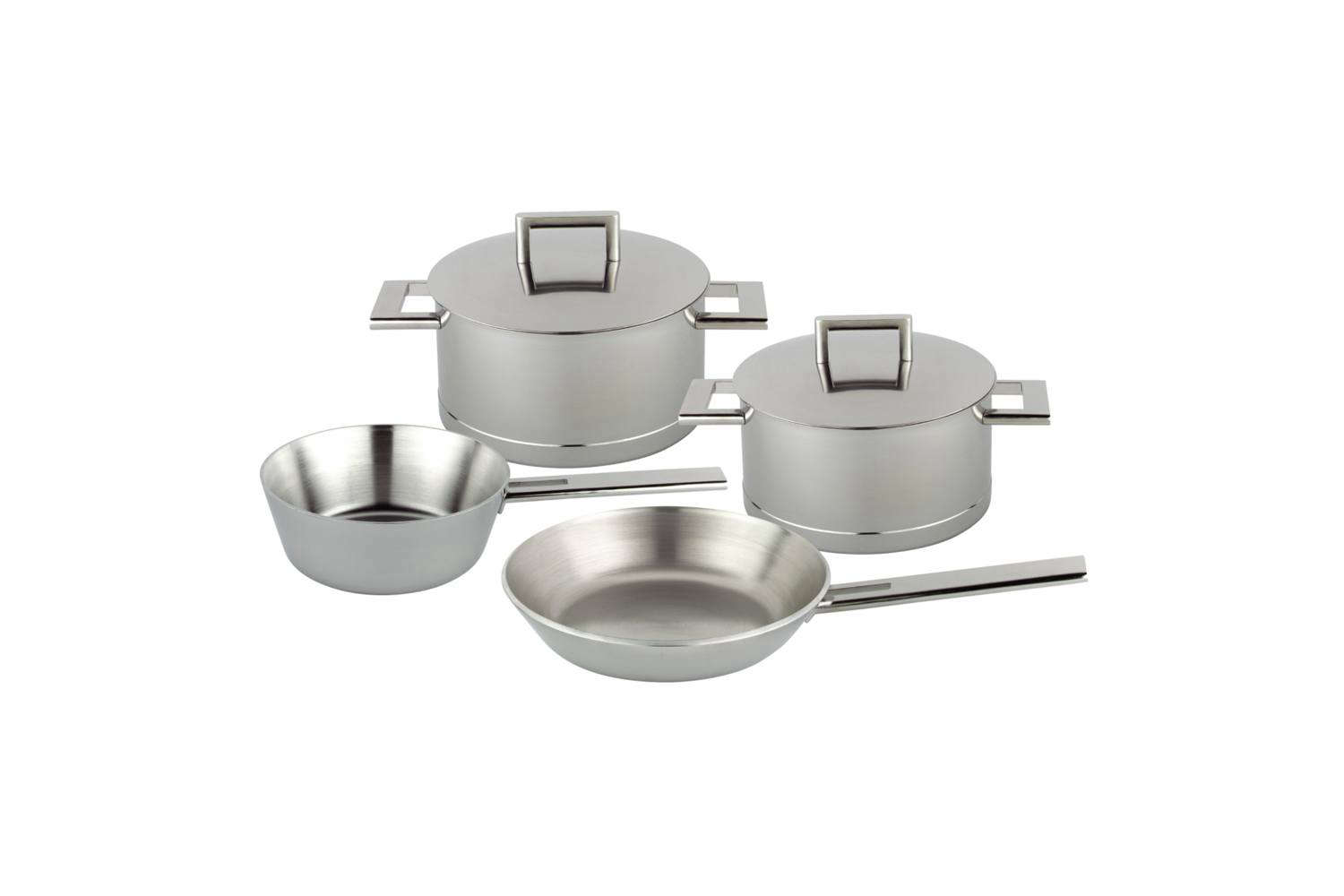
The set originally included an 11-inch frying pan, two saucepots with lids, and a conic saute pan. It was manufactured in Belgium and made with stainless steel and copper, using layered construction designed for even heating and serious performance. It was also oven safe, dishwasher safe, and compatible with all cooking surfaces, including induction. That matters because a beautiful pan that cannot handle real cooking is just a shiny bowl with commitment issues.
Who Is John Pawson, and Why Is He Designing Cookware?
John Pawson is widely associated with minimalism, but his work is not about emptiness for the sake of looking expensive in a magazine spread. His approach focuses on proportion, material, balance, light, and clarity. That mindset translates surprisingly well to cookware. A pan is not just a vessel. It has to sit flat, pour cleanly, feel balanced in the hand, heat evenly, clean easily, and look acceptable when it moves from stove to table.
Pawson’s official description of the cookware project makes one thing clear: designing a pan is not as simple as drawing a circle and attaching a handle. Small objects carry big design problems. The handle has to meet the body elegantly. The pouring lip must work without ruining the form. The pan must feel comfortable over heat and presentable at the table. That is a lot of responsibility for something that may later be asked to rescue a rushed Tuesday pasta sauce.
This is where the John Pawson cookware set becomes interesting. It is not merely “designer cookware” in the decorative sense. It is design as problem-solving. The beauty is tied to use. The clean profile helps the set fit into modern kitchens. The heavy construction helps with cooking consistency. The restrained details reduce visual clutter. If your countertop already has a blender, toaster, coffee machine, air fryer, and one mysterious cable no one can identify, a little visual calm is welcome.
What Comes in the Six Piece Set?
The original six-piece set was described as including:
- 11-inch frying pan for searing, browning, sauteing, and everyday skillet work.
- 5.5-quart saucepot with lid for soups, grains, sauces, vegetables, and smaller batches of stock.
- 8.9-quart saucepot with lid for larger meals, pasta, broth, stews, and batch cooking.
- 2.1-liter conic saute pan for reductions, sauces, vegetables, and controlled cooking.
Although it is called a six-piece set, the count includes lids, which is normal in cookware math. Cookware math is not regular math. It is the same mysterious system that allows a “10-piece set” to include three lids, a steamer insert, and possibly a spoon rest with dreams.
The practical range is excellent. You get a frying pan for direct surface cooking, two saucepots for liquid-based tasks, and a conic saute pan for more delicate control. That combination works for a serious home cook who wants fewer, better tools instead of a cabinet full of cookware that avalanches every time someone reaches for a lid.
The Materials: Stainless Steel, Copper Core, and Layered Construction
The defining feature of the Six Piece Frying Pan & Saucepot/Saute Set – John Pawson is its multi-layer construction. The cookware uses heavy stainless steel around a hermetically sealed copper core. The point of this design is heat control. Stainless steel is durable, nonreactive, and easy to maintain, but by itself it is not the fastest or most even heat conductor. Copper, on the other hand, is a heat-conducting superstar. It responds quickly and distributes heat beautifully, but it needs protection and structure for everyday use.
By combining stainless steel with a copper core, the cookware aims to provide the durability of stainless steel with the responsiveness of copper. This is especially useful for sauces, sauteing, and searing. When heat spreads evenly, you are less likely to get one corner of the pan acting like a volcano while another corner politely remains lukewarm.
For the frying pan, even heating can help create better browning across chicken, fish, mushrooms, and vegetables. For the saucepots, steady heat helps maintain a controlled simmer. For the conic saute pan, responsiveness matters when reducing wine, mounting butter into a sauce, or trying not to turn shallots into tiny black confetti.
Why Stainless Steel Still Matters in a Nonstick World
Nonstick pans have their place. They are useful for eggs, pancakes, and anyone who believes breakfast should not require negotiation with a spatula. But stainless steel cookware remains a favorite among serious cooks because it is durable, versatile, and excellent for browning. It can handle higher heat, metal utensils are less terrifying, and there is no coating that slowly gives up after years of use.
Stainless steel also develops fond, the browned bits that stick to the bottom of the pan after searing meat or vegetables. Fond is not dirt. Fond is flavor with a French accent. Add wine, stock, lemon juice, or even a splash of water, scrape gently, and suddenly you have a pan sauce. This is where stainless steel makes dinner taste like you had a plan all along.
The John Pawson set leans into these strengths. The frying pan is suitable for searing proteins and sauteing vegetables. The saucepots can handle soups, grains, pasta water, and long simmers. The saute pan is useful for sauces, reductions, and dishes where curved sides make whisking or stirring easier. It is cookware for people who want performance, not just convenience.
Induction Compatibility and Modern Kitchen Flexibility
One major advantage of this set is compatibility with all cooking surfaces, including induction. That detail matters more today than it did years ago. Induction cooktops are becoming more common in modern kitchens because they heat efficiently, respond quickly, and keep the cooking surface relatively controlled. But induction requires cookware with magnetic compatibility and a stable base.
The John Pawson cookware set was built to work across gas, electric, ceramic, and induction surfaces. That flexibility is important if you move homes, remodel a kitchen, or finally replace the ancient stove that has one burner setting: “emotional dragon.”
Flat, stable cookware is especially important on induction. Uneven bases can reduce contact and performance. A well-built stainless steel pan with a quality base gives you better control, fewer hot spots, and more predictable cooking. That predictability is the difference between golden onions and onions that taste like regret.
Design Analysis: Minimalism That Earns Its Keep
The visual appeal of the John Pawson frying pan and saucepot set comes from restraint. The pieces have smooth, modern forms and minimal ornamentation. There are no unnecessary grooves, fake heritage flourishes, or handles shaped like medieval door knockers. The cookware looks architectural because it is designed with proportion and clarity in mind.
This matters in open-plan kitchens, where cookware often sits in view. A pot that looks good on the table can move from cooking to serving without visual awkwardness. Pawson’s goal was cookware that felt at home over a flame and on the table. That is a very specific kind of elegance: not showy, not precious, but composed.
Minimalism can sometimes become cold, but this set avoids that by being deeply practical. The shapes are simple because they serve function. The polished stainless steel surface is not just decorative; it supports easy cleaning and a professional appearance. The handles are not oversized because balance matters. The design does not scream luxury. It quietly clears its throat and lets the risotto speak.
Cooking Performance: Where the Set Shines
Searing and Browning
The 11-inch frying pan is the obvious workhorse. Its size gives enough room for chicken thighs, fish fillets, vegetables, or a steak without immediate overcrowding. Overcrowding is the enemy of browning. When too much food goes into a pan, moisture builds up and the food steams instead of sears. That is how mushrooms become sad little sponges.
With stainless steel, the key is preheating. Let the pan warm over medium heat, add oil after the pan is hot, then wait until the oil shimmers before adding food. Once food hits the surface, leave it alone. Stainless steel often releases food naturally after a proper crust forms. If you tug too early, the pan will respond with the culinary equivalent of, “We are not there yet.”
Sauces and Reductions
The conic saute pan is particularly useful for sauces. Its sloped shape makes whisking easier, while the responsive base helps control reductions. A pan like this is ideal for butter sauces, pan sauces, caramelized shallots, small batches of vegetables, or reheating leftovers in a way that makes them feel less like yesterday’s compromise.
Because stainless steel is nonreactive, it can handle acidic ingredients such as tomatoes, wine, vinegar, and citrus. That makes it more versatile than reactive bare metals. You can reduce white wine for beurre blanc, simmer tomato sauce, or finish lemony chicken without worrying about metallic flavors taking over the dish.
Soups, Stocks, and Batch Cooking
The two saucepots add serious utility. The 5.5-quart pot is useful for everyday cooking: soup, beans, rice, sauces, vegetables, and small batches of pasta. The larger 8.9-quart pot is better for family meals, stock, chili, boiling pasta, or cooking ahead for the week. If the frying pan is the charismatic performer, the saucepots are the reliable adults in the room.
Heavy construction helps maintain steady heat during simmering. That is important for soups and stews because a stable simmer extracts flavor without scorching the bottom. A thin pot can create hot spots, especially with thicker sauces or bean dishes. A quality layered pot gives you more forgiveness, which is always nice when dinner and homework and emails all decide to happen at once.
Care and Maintenance: How to Keep It Looking Sharp
Although the set is dishwasher safe, hand washing is often the better habit for premium stainless steel cookware. Dishwashers are convenient, but they can be harsh over time. Warm water, mild dish soap, and a non-scratch sponge are usually enough. For stuck-on food, add water to the pan, bring it to a simmer, and loosen the residue with a wooden spoon or soft spatula.
For discoloration, mineral stains, or rainbow marks, stainless steel cleaner or a paste of baking soda and water can help. Avoid steel wool if you want to preserve the polished look. Also avoid dramatic temperature shocks, such as running cold water into a screaming-hot pan. Even high-quality cookware deserves basic emotional support.
To prevent sticking, remember the stainless steel rhythm: preheat, add fat, add food, wait, then flip. Many sticking problems come from moving food too soon or cooking at the wrong temperature. Medium heat is more powerful than people think, especially with heavy cookware. High heat is not a personality trait. Use it carefully.
Who Should Buy the John Pawson Six Piece Cookware Set?
This set is best for someone who values design and performance equally. It suits home cooks who want long-lasting stainless steel cookware, appreciate minimalist design, and prefer a smaller collection of excellent pieces over a giant bargain set with twenty-seven items and one pan that exists only to hold dust.
It is also a strong match for modern kitchens, induction users, design collectors, and anyone who likes cookware that can move from stove to table gracefully. If you often cook sauces, soups, seared proteins, vegetables, and one-pan meals, the set covers a lot of ground.
However, it is not the best choice for someone who wants ultra-light cookware. Multi-layer stainless steel with copper is substantial. That weight helps performance, but it also means you should expect a solid feel. If you want featherweight pans, this set may feel like it has been doing Pilates.
Is It Worth the Price?
The John Pawson cookware set has historically been positioned as premium cookware, and some listings have described it as discontinued. That makes it part kitchen tool, part design object, and part collectible. The value depends on what you care about.
If you only need a pot to boil pasta twice a month, there are cheaper options. If you want a long-term cookware set with serious materials, induction compatibility, architectural design, and a refined visual presence, the value becomes easier to understand. You are paying for engineering, manufacturing quality, material performance, and John Pawson’s design language.
The best way to judge it is not by counting pieces. Judge it by how often each piece would be used. A frying pan, two saucepots, and a saute pan are core kitchen tools. If they replace several weaker pans and improve daily cooking, the set earns its space.
Practical Cooking Examples
Weeknight Chicken with Pan Sauce
Preheat the frying pan over medium heat, add oil, and sear seasoned chicken cutlets until golden. Remove the chicken, add minced shallot, deglaze with white wine or stock, then finish with lemon and butter. The stainless steel surface helps create fond, and the even heating supports a balanced sauce.
Tomato Soup in the Saucepot
Use the 5.5-quart saucepot for onions, garlic, canned tomatoes, broth, and herbs. Simmer gently, blend, and finish with cream or olive oil. The pot’s stainless steel interior handles acidity well, while the heavy base helps reduce scorching.
Mushrooms in the Saute Pan
Heat the conic saute pan, add oil, then cook mushrooms in batches. Avoid crowding. Let them brown before stirring too much. Finish with garlic, parsley, and a small knob of butter. The result is deeply savory instead of watery, which is exactly what mushrooms deserve after everything they have been through.
Experience Section: Living With a John Pawson-Style Cookware Set
Using cookware like the Six Piece Frying Pan & Saucepot/Saute Set – John Pawson changes the way you behave in the kitchen. That may sound dramatic, but good tools have a way of making you stand a little straighter. The first thing you notice is the weight. These are not flimsy pans that rattle when you set them down. They land on the burner with confidence, like they have read the recipe and already know where this is going.
The frying pan encourages patience. With cheaper pans, many cooks develop nervous habits: poking, shaking, flipping too early, apologizing to the salmon. A heavy stainless steel pan asks you to slow down. Preheat it properly. Add oil at the right moment. Place the food down and leave it alone. The first few times, this feels risky. Then the crust forms, the food releases, and suddenly you understand why stainless steel fans speak in calm voices.
The saucepots are the pieces that quietly become part of daily life. One day they are making pasta. The next day they are simmering lentils, reheating soup, boiling potatoes, or holding chicken stock. The larger pot is especially useful when cooking for a family or preparing meals ahead. It is big enough for serious cooking but refined enough that it does not look like camping equipment wandered indoors.
The conic saute pan may become the sleeper favorite. Its shape is excellent for sauces because a whisk can move easily around the base. It is also useful for small vegetables, quick reductions, and dishes that begin with aromatics and end with someone asking, “Why does it smell so good in here?” That question, by the way, is one of the best kitchen compliments. It ranks just above “Is there more?” and slightly below silence because everyone is eating.
The design also affects the mood of the kitchen. Pawson’s minimalism has a calming quality. When these pans are clean and stacked, they do not create visual noise. They look intentional. In a world where kitchen gadgets multiply like rabbits with USB ports, intentional objects feel refreshing. You may still own a novelty avocado slicer from 2016, but at least your cookware is dignified.
There is also a learning curve. Stainless steel is honest. It tells you when the pan was too cold, when the heat was too high, when you skipped enough oil, or when you tried to flip food before it was ready. At first, that honesty can feel rude. Over time, it becomes useful. The cookware teaches better technique because it rewards proper timing and heat control.
Cleaning is easier when you treat the pans correctly. Deglaze while the pan is warm, soak if needed, and use a gentle cleaner for stains. Do not expect stainless steel to look untouched forever. A working pan develops tiny marks, polish changes, and signs of use. That is not failure. That is biography. A perfect pan that never cooks is just a mirror with a handle.
After living with cookware of this style, the biggest takeaway is simple: fewer, better pieces can make cooking more enjoyable. You do not need a mountain of pans. You need the right pan for the task, a little technique, and the wisdom not to crowd mushrooms. The John Pawson set brings together performance and restraint in a way that feels grown-up but not boring. It is serious cookware, yes, but it still knows how to make a grilled cheese if the evening calls for it.
Conclusion
The Six Piece Frying Pan & Saucepot/Saute Set – John Pawson is a rare blend of minimalist design and professional-grade cookware engineering. It offers the visual calm of architectural restraint and the practical strength of layered stainless steel with a copper core. The set is not for cooks who want disposable convenience or flashy decoration. It is for people who appreciate balance, durability, heat control, and objects that do their job beautifully without yelling about it.
From the 11-inch frying pan to the generous saucepots and versatile conic saute pan, the set covers the core needs of a serious kitchen. It works across cooking surfaces, including induction, and supports techniques such as searing, simmering, sauteing, deglazing, and sauce-making. It also looks good enough to leave out, which is helpful if your cabinets are already hosting a cookware traffic jam.
In the end, John Pawson’s cookware proves that simplicity is not the absence of thought. It is the result of a great deal of thought edited down to what matters. And in the kitchen, what matters is heat, balance, comfort, durability, and the ability to make dinner without arguing with your tools.