Note: This is an original commentary-style article based on publicly reported information about Futurama, its Hulu revival, cast, renewal history, and critical reception. Source links are omitted as requested.
There comes a point in every long-running TV franchise when the question changes. At first, fans ask, “Can they bring it back?” Then, after the miracle happens, they ask, “Is it still good?” Eventually, if the revival keeps reviving like a robot with a suspiciously convenient backup hard drive, the question becomes: “Are we still doing this because there is more story to tell, or are we just doing Futurama to be doing Futurama?”
That is the awkward, funny, slightly existential cloud hovering over Hulu’s Futurama revival. The show has survived cancellations, network moves, direct-to-DVD movies, a Comedy Central comeback, a heartfelt “final” finale, and now the streaming era. Philip J. Fry was frozen for 1,000 years. The series itself has been thawed out so many times that its cryogenic tube probably needs a loyalty card.
And yet, Futurama is not just any revived show. Created by Matt Groening and developed by Groening and David X. Cohen, it has always been one of television’s smartest animated comedies: part workplace sitcom, part science-fiction parody, part emotional gut punch hiding behind a jar full of celebrity heads. At its best, it makes jokes about bureaucracy, love, physics, capitalism, loneliness, and robots who absolutely should not be allowed near alcohol.
So when people say, “Now we’re just doing Futurama to be doing Futurama,” they are not necessarily saying the show is bad. They are asking whether a beloved animated sci-fi comedy can remain special after it becomes content. In the age of streaming, nostalgia is no longer a feeling. It is a business model with a release calendar.
Why This Question Matters in the Hulu Era
Futurama originally premiered on Fox in 1999, sending Fry from New Year’s Eve 1999 to the year 3000 after an accidental cryogenic freeze. The premise was simple enough for anyone to understand in ten seconds, but flexible enough to support decades of absurdity. A pizza delivery guy wakes up in the future, joins Planet Express, falls in love with Leela, befriends Bender, and discovers that humanity has advanced technologically while remaining impressively committed to stupidity.
That setup is evergreen. It lets the writers turn almost any modern anxiety into a future-world gag. Corporate monopolies become MomCorp. Politics becomes Nixon’s head barking from a jar. Dating, war, environmental collapse, religion, labor, media addiction, and artificial intelligence can all be filtered through ray guns, aliens, and Professor Farnsworth’s deeply unsafe inventions.
Hulu’s revival leaned directly into that flexibility. Season 11, which premiered in 2023 after a long hiatus, brought back the original voice cast and teased storylines involving streaming TV, crypto, pandemic culture, cancel culture, and old mysteries from the series’ deep lore. Season 12 continued the trend with episodes touching on NFTs, artificial intelligence, fast fashion, and other extremely “right now” topics. Season 13 arrived in 2025 with another batch of new adventures, and the show has been renewed through more episodes expected to carry it into 2026.
On paper, that sounds like a triumph. A cult favorite that once struggled to stay alive now has a streaming home willing to keep the Planet Express ship fueled. For fans who spent years saying, “Why does television keep canceling one of its cleverest shows?” this is a satisfying reversal. The problem is that abundance changes the flavor of desire. A rare treat feels precious. A subscription-era buffet can feel like something you eat because it is there.
The Comfort of More Futurama
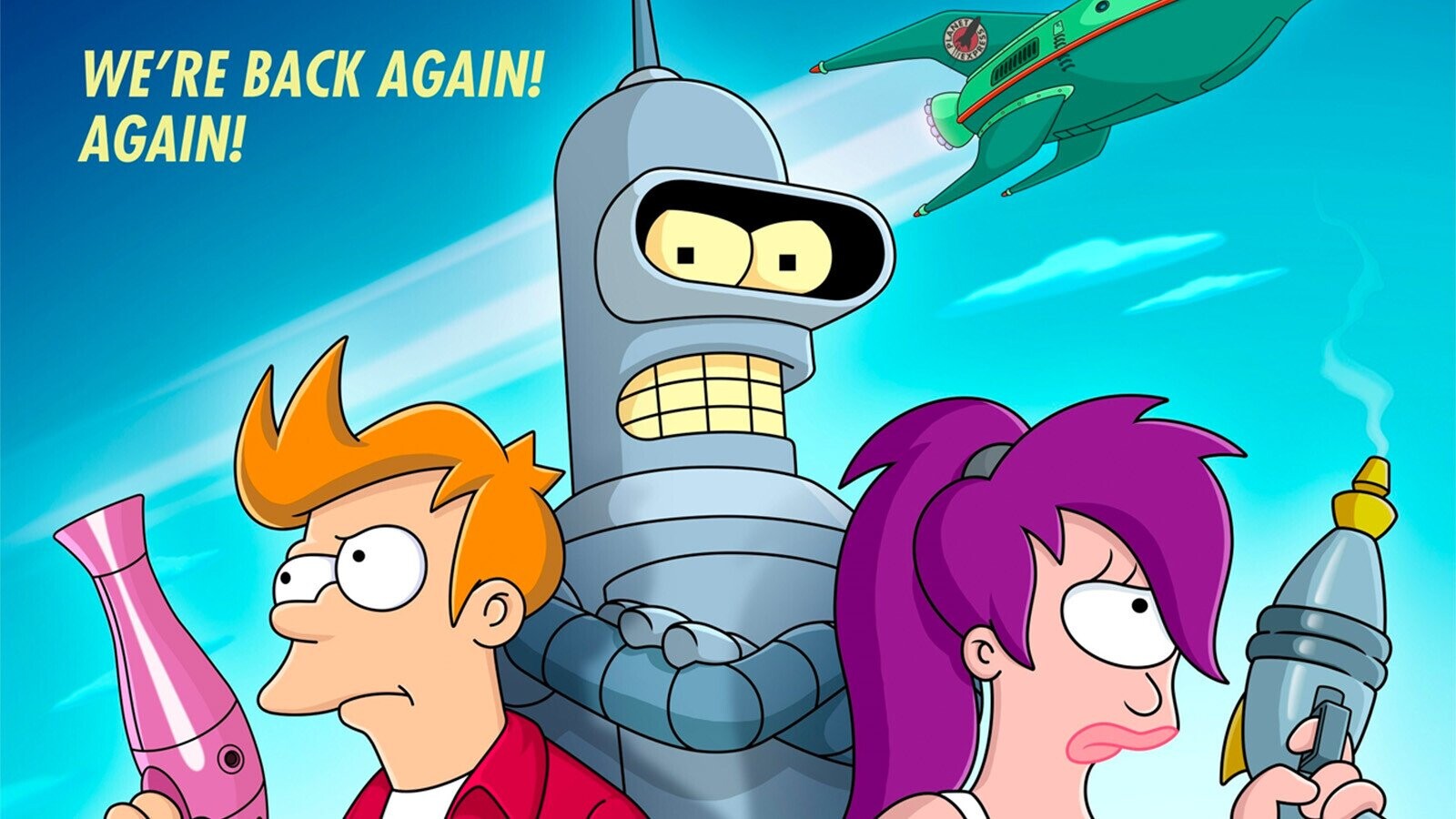
To be fair, there are worse things in life than more Futurama. More bills, more spam calls, more meetings that could have been emailsthose are the true villains. More time with Fry, Leela, Bender, Hermes, Amy, Zoidberg, Scruffy, Nibbler, Kif, Zapp Brannigan, and Professor Farnsworth is, at minimum, pleasant.
The revival often understands that. One of its strongest assets is familiarity. The voices are back. The rhythm is back. The world is back. The Planet Express crew can still stumble into ridiculous cosmic disasters with the confidence of people who have learned nothing from previous cosmic disasters. Bender can still be selfish, loud, shiny, and weirdly lovable. Fry can still be sweetly dumb in a way that occasionally turns profound. Leela can still carry the emotional center of the show while everyone around her behaves like a malfunctioning appliance.
That comfort is not meaningless. Television is not always consumed as homework for cultural advancement. Sometimes viewers want to revisit a universe that feels stable, especially when the real world appears to have been written by a room full of sleep-deprived goblins. A dependable Futurama episode can be like comfort food: familiar, warm, not necessarily revolutionary, but welcome after a long day.
The best revival moments remember that Futurama is not beloved merely because it is clever. It is beloved because its cleverness often sneaks into something sincere. The show can make a joke about time travel and then suddenly punch viewers in the feelings with the emotional force of Seymour waiting outside Panucci’s Pizza. It can make a ridiculous robot opera matter. It can turn Fry and Leela’s relationship into a cosmic love story without losing sight of the fact that Bender is probably stealing something in the background.
When Nostalgia Starts Running on Autopilot
The danger begins when familiarity becomes the whole pitch. If an episode exists mainly to say, “Remember this character? Remember this catchphrase? Remember that thing we did before?” then the show starts to feel less like a living comedy and more like a museum with better one-liners.
This is the central tension behind the phrase “doing Futurama to be doing Futurama.” A revival can honor its past, but it cannot survive on recognition alone. Fans do not just want to identify references. They want the references to become part of a new joke, a new emotional beat, or a new angle on the show’s world.
The Hulu seasons sometimes walk that line gracefully and sometimes trip over it with a bucket on their head. Bringing back long-running mysteries can be fun. Revisiting Fry and Leela’s relationship can be meaningful. Giving the original cast room to settle back into their characters is valuable. But when a scene seems built mostly around the audience saying, “Oh, I know that,” the show risks becoming a franchise checklist.
This is not a problem unique to Futurama. The modern entertainment industry has revived, rebooted, sequelized, prequelized, and legacy-quelized nearly everything that ever made someone buy a lunchbox. Nostalgia is powerful because it feels personal. Studios love it because it lowers risk. Audiences recognize the title, algorithms recognize the audience, and marketing departments can stop sweating for three minutes. Everybody winsuntil the story feels optional.
The Topical Humor Problem
Futurama has always commented on the present through the future. That is one of its best tricks. But the trick works only when the show adds a layer of science-fiction distortion. The future should not simply contain today’s headlines wearing a space helmet. It should mutate them into something stranger, sharper, and more absurd.
That is why some Hulu-era topical jokes have divided viewers. Episodes involving NFTs, crypto, streaming platforms, AI chatbots, and pandemic references can feel funny when they are transformed into a fully Futurama-style invention. But when the show spends too much time explaining the current trend itself, the future starts to feel oddly less futuristic. Nobody wants to travel to the year 3024 just to hear someone explain blockchain at a party. We already suffered enough in this century.
The timing problem is especially brutal for animation. Animated shows take time to write, record, animate, edit, and release. By the time an episode about a hot trend arrives, the internet may have already chewed that trend into paste and moved on to a new panic involving apps, robots, or billionaires launching themselves toward planets that did not ask for this.
Classic Futurama often avoided this trap by building stories around bigger human patterns: greed, loneliness, ambition, obsession, love, bureaucracy, stupidity, and the strange ways people adapt to technology. A joke about delivery work, consumerism, or political vanity can age well because the target does not expire. A joke about a specific tech buzzword has a shorter shelf life. It is the difference between a preserved brain in a jar and an avocado you bought yesterday that is somehow already mush.
Why Fans Keep Coming Back Anyway
Even when the revival feels uneven, fans keep showing up because Futurama built enormous goodwill over its original run and earlier comebacks. This is a show that trained viewers to expect hidden math jokes, background gags, sci-fi references, and emotional surprises. Its audience is unusually loyal because the series rewarded attention without making casual viewing impossible.
There is also something charming about the show’s refusal to stay dead. Many series end once and vanish. Futurama ends, returns, ends again, returns again, jokes about returning, and then returns while joking about the joke. Its own revival history has become part of its identity. The show is practically a zombie, except instead of brains it wants syndication rights and a decent time slot.
The cast is a major reason the revival still works at all. Billy West, Katey Sagal, John DiMaggio, Tress MacNeille, Maurice LaMarche, Lauren Tom, Phil LaMarr, and David Herman helped define the sound of this universe. Without them, Futurama would not simply feel different; it would feel like a replica. John DiMaggio’s return as Bender was especially important because Bender is not merely a character. He is the show’s chaotic id wearing a metal casing and demanding attention.
Streaming has also changed how people relate to long-running animation. Viewers can binge old seasons, jump into new ones, compare eras instantly, and argue online with the urgency of scholars debating sacred texts, except the sacred text is a robot yelling about his shiny metal anatomy. That constant availability makes the revival feel less like a separate chapter and more like another folder in a very strange hard drive.
Is the Revival Necessary?
Here is the uncomfortable truth: no revival is strictly necessary. Futurama already had multiple endings, including “Meanwhile,” a finale so graceful that many fans considered it nearly perfect. Fry and Leela aging together in a frozen universe gave the show an emotional closure that most sitcoms would trade their entire joke budget to achieve.
But “necessary” may be the wrong standard. Comedy does not always need to be necessary. A great joke is not necessary. A weird alien courtroom scene is not necessary. Zoidberg is not necessary, medically or socially, yet the world is better with him scuttling through it.
The better question is whether new Futurama episodes justify themselves creatively. Do they find fresh angles on the characters? Do they use the future to say something funny about the present? Do they remember that absurdity lands harder when there is emotional gravity underneath it? Do they surprise us, even a little?
When the answer is yes, the revival feels worthwhile. When the answer is no, it feels like the show is performing a cover version of itself. Not terrible. Not offensive. Just familiar in a way that can make even fans wonder whether the Planet Express crew is delivering packages or simply delivering brand maintenance.
The Bigger Streaming Lesson
The Futurama revival is a perfect case study in modern streaming culture. Platforms need recognizable titles to keep subscribers engaged. Beloved animated series are especially attractive because they can continue without aging characters on screen, and they appeal to adults who grew up quoting them. That combination makes revival math irresistible.
But art and math are not the same thing. A spreadsheet can say that more Futurama is a good idea. A fan’s heart may agree. The creative challenge is making sure the show has a reason to exist beyond the fact that people recognize the logo.
The irony, of course, is that Futurama is exactly the kind of show that can satirize this situation. It can make fun of content farms, streaming algorithms, corporate nostalgia, and the way entertainment companies reanimate old intellectual property like Professor Farnsworth reanimating something that absolutely should have stayed in a vat. The show knows the joke. The question is whether knowing the joke is enough.
Experiences and Reflections: Watching Futurama Become Its Own Future
Watching the newer Futurama seasons feels a little like visiting an old neighborhood where your favorite diner is still open, but the menu now has QR codes and one suspiciously expensive salad. You are happy it survived. You recognize the booths. The coffee still tastes like it could remove paint. But something about the lighting is different, and you spend half the meal trying to decide whether you have changed, the place has changed, or time itself is just being rude.
That is the strange experience of returning to a show that helped shape your sense of humor. For many viewers, Futurama was not just another cartoon. It was a gateway into smarter comedy: jokes about math, science fiction, bureaucracy, philosophy, and emotional disaster wrapped in the body of a silly animated sitcom. It made being nerdy feel less like a label and more like a language. You could laugh at Bender’s selfishness one minute and then get blindsided by a story about memory, loss, or devotion the next.
So when the show comes back, the reaction is complicated. Part of you wants to cheer. The gang is here. The ship is flying. The theme music still has that ridiculous burst of energy. Fry still looks like a man who has never read instructions in his life. Leela still deserves a vacation and possibly a better HR department. Bender still behaves like a toaster possessed by a casino.
But another part of you watches more carefully. You notice when a topical joke feels too easy. You notice when a plot seems designed around an internet trend rather than a character need. You notice when the show gestures at its old greatness without quite reaching it. That does not make you a hater. It means you remember how high the ceiling once was.
There is also a personal weirdness to seeing a futuristic show age. Futurama once felt like a message from tomorrow. Now some of its older satire feels like a time capsule from yesterday, while its new satire tries to catch up with a present that moves faster than animation production. The series is about the year 3000, but it is also about every era that has produced it: the late-network-TV era, the DVD era, cable revival culture, and now streaming’s endless hunger for familiar worlds.
Still, there is comfort in the mess. Maybe doing Futurama to be doing Futurama is not automatically a creative failure. Maybe it becomes a failure only when the show forgets why people wanted it back in the first place. Fans did not fall in love with Futurama because it could mention current events. They loved it because it turned the present into a bizarre future joke and then, without warning, made that joke feel human.
The best experience of watching the revival is not expecting every episode to be a classic. That way lies madness, disappointment, and probably a Zapp Brannigan monologue. The better approach is to look for sparks: a clever sci-fi twist, a perfectly dumb Bender line, a tender Fry and Leela moment, a background gag that rewards pausing, or a reminder that this universe still has corners worth exploring.
If those sparks keep appearing, then maybe the show deserves its extra lives. If they disappear, then yes, we may simply be watching Futurama continue because continuing is easier than saying goodbye. Either way, the revival has turned the series into the very thing it loves to examine: a funny, flawed machine built by humans, powered by nostalgia, and forever one bad invention away from disaster.
Conclusion: Good News, EveryoneBut Also, Maybe Ask Why
“Now we’re just doing Futurama to be doing Futurama” is a funny complaint because it contains affection. People rarely worry this much about shows they do not care about. The phrase captures the uneasy feeling that a once-rare comeback has become part of the streaming content cycle, where beloved properties are kept alive because recognition is valuable.
But Futurama still has advantages many revivals lack. Its premise remains flexible. Its cast remains iconic. Its world can absorb almost any absurd idea. Its characters still carry emotional history. And its own ridiculous survival story gives it permission to joke about revival culture from the inside.
The challenge is not whether Hulu can keep making Futurama. Clearly, it can. The challenge is whether each new season can find enough wit, weirdness, and heart to feel like more than a familiar title returning to the homepage. The Planet Express ship can keep flying. But if it wants viewers to stay excited, it needs to deliver more than nostalgia in a box.
In other words: keep doing Futurama, sure. Just make sure there is a reason beyond the fact that the cryogenic tube still works.