The future has a branding problem. If you judged tomorrow by today’s headlines alone, you might assume we are all three missed notifications away from living in a sci-fi parking lot filled with anxiety, smoke, and overpriced coffee. And yet, when you step back from the doomscroll and look at the bigger picture, the story becomes more interesting. Messier, yes. Perfect, absolutely not. But possibly better than we think? Surprisingly, yes.
That idea is not about blind optimism or pretending that every hard problem is secretly a motivational poster wearing glasses. It is about noticing something our brains often miss: progress is usually quiet, unglamorous, and incremental, while problems are loud, dramatic, and excellent at going viral. A bridge opening safely does not trend. A bridge closing dramatically with twelve helicopters overhead definitely does. This creates a strange mental illusion where improvement feels rare, even when it is happening in plain sight.
So let’s ask the question seriously: what if the future is better than we think? Not because humans have suddenly become flawless angels with better inbox discipline, but because history shows that people are remarkably good at solving problems, adapting to change, and building tools that make life longer, safer, cleaner, and more connected over time. The future may still be difficult. It may also be more hopeful than our collective group chat suggests.
Why We’re So Good at Imagining Disaster
Humans are not neutral observers. We are wired to notice threats first. That made sense when the biggest daily concern was whether something with teeth was hiding in the tall grass. Today, the tall grass is the internet, and the “something with teeth” is often a headline written to make you gasp before breakfast.
This negativity bias shapes how we think about the future. We remember the layoffs, the wars, the climate disasters, the bad elections, the social media meltdowns, and the AI hot takes that sound like a robot just stole a philosophy degree. We do not remember progress with the same intensity because progress tends to arrive quietly. It shows up as fewer deaths, lower risks, better treatments, cleaner technology, and systems that work just a little better than they did before.
That does not mean fears are fake. Many are rational. It means fear is a terrible statistician. If you only measure the future by its scariest moments, you will miss the deeper trend lines that tell a more balanced story.
The emotional economy of bad news
Bad news spreads fast because it feels urgent. Good news spreads slowly because it feels boring, even when it matters more. “Air got cleaner again” does not have the same cinematic energy as “Everything Is Falling Apart.” But one of those headlines helps explain whether a child grows up breathing healthier air. The other mostly helps explain why your shoulders are suddenly touching your ears.
The Case for a Better Future Is Already Here
If the future is better than we think, the evidence will not appear as one giant miracle. It will appear as a thousand smaller wins across health, technology, safety, energy, and everyday life. And that is exactly what we are seeing.
People are living longer again
One of the clearest signs of social progress is life expectancy. It is not a flashy metric, but it is one of the most honest. When life expectancy rises, it usually means many things are moving in the right direction at once: health care, prevention, public health systems, survival rates, and basic living conditions. That does not mean all communities benefit equally, and it does not erase ongoing problems. But it does suggest that the future is not simply a straight-line march into decline.
Medicine keeps doing things that would have sounded ridiculous 20 years ago
Modern medicine is a great reminder that reality can outdo science fiction, just with more paperwork. Treatments that once seemed impossible are increasingly real. Cancer survival and treatment continue to improve in important areas. Gene therapy has moved from a futuristic concept to actual patient care. Blood tests and earlier detection tools are making it easier to catch disease sooner, when it is often more treatable. Vaccines and targeted therapies are protecting people who would have faced far higher risks in previous decades.
None of this means every disease is solved or every patient gets equal access. That would be nice, and also very unlike reality. But it does mean the arc of medical progress is still bending toward better outcomes. The future is not only about flying cars. Frankly, gene-editing treatments that reduce terrible pain are more useful than a hovering sedan with trust issues.
Some of the most frightening health trends are improving
One of the biggest reasons many people feel pessimistic is that certain crises seemed unstoppable just a few years ago. That impression lingers, even when the data starts improving. Overdose deaths, for example, have shown encouraging declines in recent U.S. figures. That progress is fragile and uneven, but it matters. It suggests that policy, treatment access, prevention, and public awareness can make a real difference. Problems that look permanent often are not.
Progress Doesn’t Usually Feel Like Progress
Here is one of the strangest things about human progress: while it is happening, it often feels like inconvenience. The transition to cleaner energy? Messy. New medical systems? Bureaucratic. Better digital tools? Sometimes annoying before they become useful. Safer cities? Built through long stretches of policy work, data tracking, and community effort that make for terrible movie scenes.
We like breakthrough stories because they are dramatic. But most real improvement looks like infrastructure, regulation, experimentation, maintenance, better design, and millions of people doing competent work without applause. In other words, progress often arrives dressed like a project manager.
Cleaner energy is no longer a side hobby
For years, clean energy was discussed as though it were a nice little side project humans might try after finishing every other problem first. That is no longer the case. Renewable power, battery storage, grid upgrades, and energy innovation are becoming bigger parts of how the economy actually functions. This matters not only for climate goals, but also for jobs, resilience, and long-term affordability.
The future could be better simply because better systems are becoming normal systems. Once a technology becomes boring, affordable, and widely deployed, that is usually a sign it is winning. The future is often built not when something becomes exciting, but when it becomes ordinary.
The air is cleaner than it used to be, even if nobody throws a parade for that
Environmental progress is easy to underrate because many people understandably focus on everything still wrong. But long-run air quality improvements show that policy, science, enforcement, and technology can work. That matters. It means societies are capable of reducing harm at scale. The lesson is bigger than air pollution itself. If one complicated, economy-wide problem can improve over time, other complicated problems can too.
A Better Future Also Depends on How We Measure It
Sometimes we ask the wrong question. We ask whether the future looks calm, simple, and free of conflict. Historically, that is not how progress works. A better future is not a future without friction. It is a future where more people survive hardship, recover faster, access better tools, and get more chances to live decent lives.
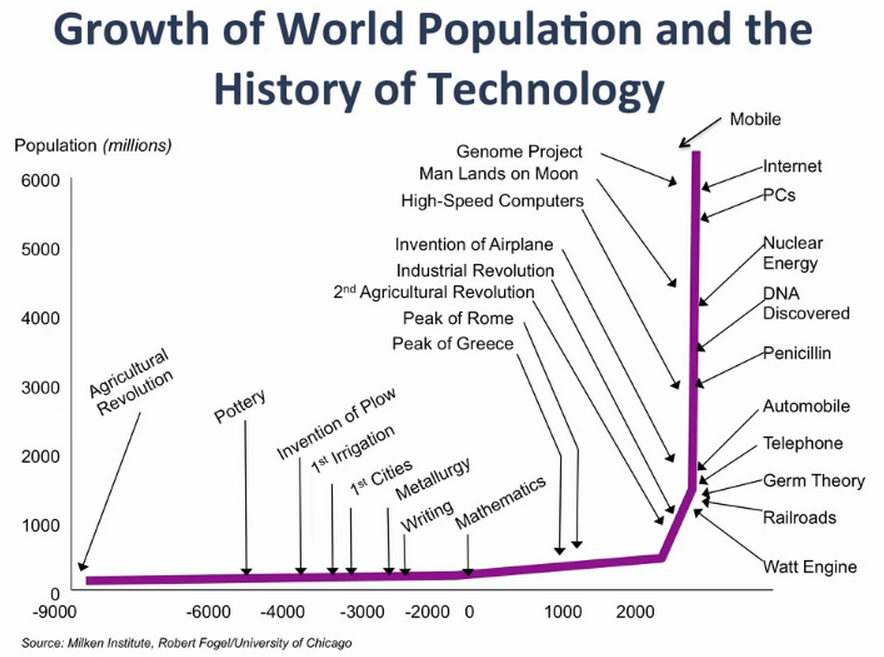
By that standard, there are reasons for hope. Productivity is improving in many areas. New industries are hiring. Innovation is no longer limited to a handful of labs and giant firms; it spreads through universities, startups, hospitals, supply chains, and software tools that help ordinary people work faster and solve practical problems. The question is not whether change feels smooth. The question is whether change expands human capability. In many cases, it does.
Technology is not destiny; it is leverage
People often talk about technology as if it has a personality and is currently in a mood. In reality, technology is leverage. It amplifies human choices. That can be wonderful or terrible depending on what we choose to build, regulate, share, and reward. Artificial intelligence, biotechnology, advanced manufacturing, and clean energy can all increase abundance if guided well. They can also create new risks if handled badly.
That is exactly why pessimism is not enough. Fear can warn us, but it cannot build better systems by itself. A hopeful future requires institutions, rules, and public pressure strong enough to shape innovation toward human benefit. Optimism without responsibility is fluff. Responsibility without optimism becomes paralysis. We need both.
What Usually Makes the Future Better
The future improves when humans do a few stubborn things over and over again.
1. We solve specific problems instead of worshiping giant theories
Civilization often advances through mundane victories: safer roads, better vaccines, cleaner engines, smarter crop science, stronger building codes, earlier screenings, cheaper computing, and more reliable logistics. Grand speeches are optional. Better plumbing, however, remains undefeated.
2. We learn slowly, then all at once
Many breakthroughs appear sudden only after years of invisible preparation. Research builds. Costs fall. Systems improve. Talent spreads. Then one day the public notices and calls it overnight success, which is adorable. The future feels miraculous mainly because most of the work happened before anyone paid attention.
3. We underestimate compounding
Small annual improvements sound unimpressive until they stack. A slightly better treatment. A slightly safer vehicle. A slightly more efficient battery. A slightly better diagnostic test. Multiply that across years and millions of lives, and “slightly better” becomes civilization-level change. Compounding is not sexy, but it is one of history’s great plot twists.
4. Younger generations inherit better tools, not just bigger problems
Every generation receives a mixed bag. Today’s younger people face serious challenges, from housing pressure to climate anxiety to digital overload. But they also inherit astonishing capabilities: instant access to knowledge, expanding medical possibilities, better communication tools, broader participation in education, and technologies that can accelerate discovery. The burden is real. So is the toolkit.
The Honest Version of Hope
Let’s be clear: saying the future may be better than we think is not the same as saying everything will work out automatically. It will not. Better futures are built, not delivered like a package you forgot you ordered. Progress can stall. Good policies can be reversed. Inequality can widen. New tools can be abused. Climate risks are serious. Democratic institutions require maintenance. Human beings remain gloriously capable of making a mess.
But hope becomes more credible, not less, when it is honest. The future can be better precisely because we know where many of the problems are. We are not guessing that disease exists. We are studying it. We are not unaware that energy systems need to change. We are investing in alternatives. We are not shocked that technology can be harmful. We are arguing about guardrails in real time. Awareness is not the enemy of optimism. Awareness is how durable optimism is made.
Why this question matters now
When people stop believing improvement is possible, they also stop investing in it. Cynicism feels sophisticated, but it is often just exhausted surrender wearing a clever jacket. A better future needs imagination. Not fantasy. Imagination. The ability to picture outcomes that do not yet exist, and then work toward them anyway.
That may be the real power of asking whether the future is better than we think. The question itself opens space for action. It makes us look for evidence, not just vibes. It pushes us to notice what is working, where momentum exists, and which systems deserve more support. In that sense, optimism is not a mood. It is a strategic resource.
Experiences That Make This Idea Feel Real
Big trends matter, but most people do not experience “the future” as a chart. They experience it on ordinary Tuesdays. They experience it when a doctor catches something earlier than doctors could have a decade ago. They experience it when a grandparent can talk to family across states without needing a flight, three adapters, and a prayer. They experience it when a neighborhood gets quieter because better technology replaced noisier, dirtier equipment. The future usually arrives through little moments that quietly improve daily life.
Think about a family managing a chronic condition. In the past, keeping up with treatment might have required more in-person visits, more guesswork, and more stress between appointments. Today, many people can message a clinic, check results online, use remote monitoring tools, refill prescriptions through an app, and show up to an appointment already knowing what questions to ask. Is the system perfect? Absolutely not. Ask anyone who has ever argued with insurance while holding a cup of lukewarm coffee. But for many patients, the experience is still more informed, more connected, and more manageable than it once was.
Or consider how people learn. A teenager with curiosity and an internet connection can now access lectures, tutorials, research summaries, coding tools, language apps, and creative software that once required expensive courses or specialized institutions. That does not replace teachers, mentors, or formal education. It expands what is possible. The floor for self-directed learning has dropped dramatically. A motivated person can teach themselves skills that used to sit behind gates, fees, or geography.
There is also the experience of work itself. Plenty of jobs remain stressful, underpaid, or absurd in that uniquely modern way where you attend six meetings to discuss having fewer meetings. Still, technology has removed entire layers of friction from many professions. Repetitive tasks that once ate hours can now take minutes. Small businesses can reach customers more easily. Designers, writers, analysts, teachers, and engineers can test ideas faster and build more with less overhead. Used well, these tools do not just increase output; they give people back time and mental energy.
Then there is the physical world. In some communities, buses are cleaner, appliances are more efficient, streets are safer, and homes are smarter about energy use. These changes rarely get dramatic movie soundtracks, but they shape how life feels. A more efficient home is not only about climate goals. It is about lower bills, better comfort, and fewer little headaches. A cleaner transit system is not just policy; it is the difference between “this city is exhausting” and “this is actually livable.”
Even emotionally, people often encounter a better future in subtle ways. Support communities are easier to find. Mental health conversations are less hidden than they used to be. Diagnoses that once left people isolated now come with forums, specialists, educational resources, and treatment pathways that are easier to navigate. Again, not perfect. But less lonely. And sometimes that is exactly what progress feels like: not a miracle, just fewer dead ends.
That is why the question matters so much on a personal level. “What if the future is better than we think?” is not only a theory about society. It is a way of noticing your own life. It invites you to compare what is possible now with what was possible before. It asks whether things you take for granted would have felt extraordinary to someone living twenty years ago. In many cases, the answer is yes. And that should make us a little more careful before declaring tomorrow doomed.
Conclusion
So, what if the future is better than we think? The strongest answer is this: it probably can be, and in some important ways, it already is. Not because history moves upward automatically, but because people keep building, discovering, repairing, and adapting. Health improves. Tools improve. Systems improve. Not evenly, not fairly enough, and not fast enough for everyone. But improvement is real, and dismissing it does not make us wiser. It just makes us gloomier with Wi-Fi.
The smartest way to face the future is neither panic nor fantasy. It is informed hope. The kind that looks hard problems in the eye and still says, “Yes, but humans have solved hard problems before.” If we can hold on to that mindset, the future may not just be better than we fear. It may be better than we have given ourselves permission to imagine.