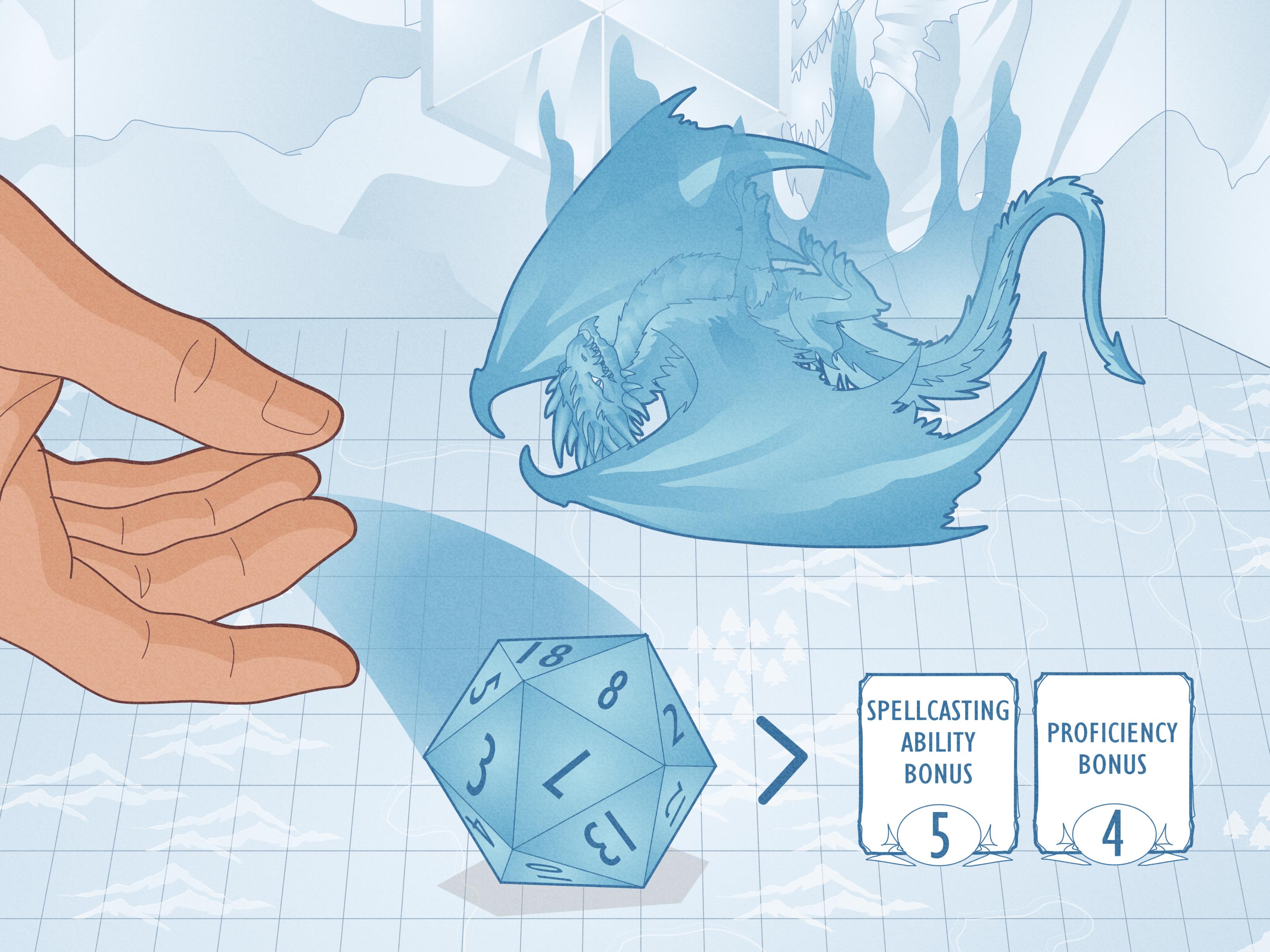
Few phrases in Dungeons & Dragons 5e can make a table cheer, groan, and dramatically stare at the Dungeon Master all at once quite like Legendary Resistance. A wizard spends a high-level spell slot. A monk lands a stunning strike at the perfect moment. The cleric points at the vampire lord and says, “Nope, you are staying right there.” Then the DM smiles the smile of someone who definitely prepared too much lore and says, “It uses Legendary Resistance.”
Is that legal? Yes. Is it annoying? Sometimes. Is it important for keeping major boss fights from ending in round one? Absolutely. Legendary Resistance 5e is one of the game’s simplest monster traits, but it has a huge impact on encounter balance, player strategy, spell selection, and dramatic pacing.
This guide explains what Legendary Resistance is, how it works, when a creature can use it, what it does not do, and how both DMs and players can make it feel exciting instead of like the tabletop equivalent of deleting someone’s homework.
What Is Legendary Resistance in 5e?
Legendary Resistance is a monster trait that lets certain powerful creatures turn a failed saving throw into a success. The standard wording usually looks like this:
Legendary Resistance (3/Day). If the creature fails a saving throw, it can choose to succeed instead.
That one sentence does a lot of work. In plain English, the monster still rolls the saving throw. If it succeeds naturally, nothing special happens. If it fails, the DM can decide to spend one use of Legendary Resistance and treat the failed save as a success.
Most classic boss monsters have three uses per day, though the number can vary depending on the creature, edition update, adventure design, or special lair version. Dragons, liches, vampires, sphinxes, and other major threats often have some version of this trait because they are designed to survive long enough to feel legendary. A lich that gets banished before delivering even one creepy monologue is less “ancient master of death” and more “skeleton with scheduling issues.”
How Legendary Resistance Works Step by Step
The mechanic is short, but the timing matters. Here is the usual flow at the table:
1. A monster is forced to make a saving throw
A saving throw can come from many sources: spells, monster abilities, class features, traps, poisons, environmental hazards, and other effects. For example, a dragon might roll a Dexterity saving throw against disintegrate, a Wisdom saving throw against hold monster, or a Constitution saving throw to maintain concentration.
2. The monster rolls and fails
Legendary Resistance only matters after a failed save. If the creature succeeds, it does not need to spend anything. If it fails, the DM decides whether the failure is serious enough to justify using one of the creature’s limited resistances.
3. The creature chooses to succeed instead
If the DM uses Legendary Resistance, the failure becomes a success. The creature suffers whatever result the original effect assigns to a successful save. Sometimes that means taking half damage. Sometimes it means avoiding a condition entirely. Sometimes it means the party’s perfect control spell fizzles against the boss like a dramatic firework in light rain.
4. One use is spent
If the trait says 3/Day, the creature has three uses for that day. Once they are gone, they are gone. At that point, the monster must live with its saving throw results like everybody else at the table, which is character-building in the most painful sense.
What Legendary Resistance Does Not Do
Legendary Resistance is powerful, but it is not a universal “nope button.” Understanding its limits keeps the rules fair and prevents arguments from turning into a side quest.
It does not work on attack rolls
If the fighter lands a critical hit, Legendary Resistance does not erase it. The trait only applies to saving throws. It does not affect attack rolls, damage rolls, ability checks, or contested checks unless the specific effect calls for a saving throw.
It does not make the creature immune
A monster with Legendary Resistance can still be affected by spells and abilities. The party can force enough saves to drain its uses. Once those uses are gone, the creature is vulnerable to the next failed save like any other monster.
It does not protect allies
Legendary Resistance belongs to the creature that has the trait. A dragon cannot normally spend its Legendary Resistance to save a nearby cultist, pet kobold, or emotionally supportive evil wizard.
It does not usually require an action
Unless a stat block says otherwise, Legendary Resistance is not an action, bonus action, reaction, or legendary action. It is simply a trait that changes the result of a failed saving throw. That means it can happen even when the creature is not taking its turn.
It does not cancel the entire spell for everyone
If a spell affects multiple creatures, Legendary Resistance only changes the result for the legendary creature using it. For example, if a sorcerer casts fireball and the vampire lord uses Legendary Resistance to succeed, the vampire takes the successful-save result, while every other creature resolves its own save normally.
Legendary Resistance vs. Legendary Actions
These two features sound similar, but they are not the same thing. Legendary Actions let a powerful creature act outside its own turn, usually at the end of another creature’s turn. A dragon might make a tail attack, move, or use a special wing attack. Legendary actions help boss monsters keep up with a full party’s action economy.
Legendary Resistance, on the other hand, protects the creature from failed saving throws. It is defensive, limited, and usually saved for effects that could shut down the encounter.
Think of legendary actions as the monster saying, “I am still dangerous between turns.” Think of Legendary Resistance as the monster saying, “Nice spell. Unfortunately, I am the final boss.”
Why Legendary Resistance Exists
D&D 5e has a major design challenge: one big monster fighting four to six player characters is naturally outnumbered. Even if the monster has a huge pool of hit points, the party gets more turns, more spells, more class features, and more chances to land a devastating effect.
Without protection, many boss fights can end abruptly. A failed save against banishment, hold monster, polymorph, stunning strike, or another disabling effect can turn the climactic villain into a decorative initiative marker. Legendary Resistance prevents the most important encounters from collapsing because of one unlucky d20 roll.
That does not mean player abilities are wasted. Every forced use of Legendary Resistance is progress. It is like chipping away at invisible armor. The spell may not land this time, but the party has reduced the boss’s safety net.
Common Examples of Legendary Resistance in Play
Example 1: The wizard casts hold monster
The party faces an ancient dragon. The wizard casts hold monster, forcing a Wisdom saving throw. The dragon fails. If the effect lands, the dragon could become paralyzed, giving attackers a terrifying advantage. The DM spends one use of Legendary Resistance, and the dragon succeeds instead. The wizard’s spell did not paralyze the dragon, but it burned one of the creature’s limited defenses.
Example 2: The monk uses Stunning Strike
A monk hits a lich and spends ki on Stunning Strike. The lich fails its Constitution saving throw. Being stunned would be disastrous: no actions, no reactions, and a pile of incoming attacks. The lich uses Legendary Resistance. The monk may feel robbed, but from a tactical perspective, the monk forced the lich to spend a major resource with a class feature. That is a win, even if it lacks fireworks.
Example 3: The dragon fails a concentration save
If a legendary creature is concentrating on a spell and takes damage, it may need to make a Constitution saving throw to maintain concentration. Since that is a saving throw, Legendary Resistance can apply if the creature fails. A DM might spend a use to keep a crucial spell active, especially if losing concentration would dramatically weaken the boss.
Should the DM Announce Legendary Resistance?
There is no single table style that works for everyone. Some DMs say, “The vampire uses Legendary Resistance.” Others describe it in-world: “Your spell wraps around him like silver chains, but he snarls, and the magic shatters.” Both approaches can work.
Being transparent helps players understand that they made progress. If the DM simply says, “It succeeds,” after a low roll, players may suspect fudging. A clear announcement turns frustration into strategy: the party now knows one resistance is gone.
A good middle-ground approach is to describe the moment dramatically and include the mechanical information. For example: “The dragon fails, but a pulse of ancient magic rolls across its scales. It burns one use of Legendary Resistance and succeeds instead.” That gives players rules clarity and cinematic flavor.
How Players Can Beat Legendary Resistance
Legendary Resistance can feel intimidating, especially for spellcasters who rely on saving throws. The trick is not to avoid save-based effects entirely. The trick is to pressure the monster intelligently.
Force multiple saves
A boss with three Legendary Resistances can handle three failed saves. It cannot handle endless pressure. Spells and features that force repeated saves can wear down the monster’s defenses. Teamwork matters: the cleric, wizard, monk, and druid can coordinate instead of each waiting for the “perfect” moment that never arrives.
Use effects that still matter on a success
Damage spells that deal half damage on a successful save can remain useful. Even if the monster uses Legendary Resistance, it may still take damage if the spell says so. That is less painful than spending a high-level slot on an all-or-nothing effect that produces no result.
Mix attack rolls with saving throws
Legendary Resistance does nothing against weapon attacks, spell attacks, grappling tactics that do not involve saving throws, battlefield positioning, or smart use of terrain. A party that combines direct damage, control, buffs, and movement pressure gives the boss more problems than it can solve.
Bait the resistances
Sometimes a lower-level spell can be dangerous enough to force the monster’s hand. A spell does not need to be ninth level to be worth resisting. If it would restrain, paralyze, banish, incapacitate, or otherwise ruin the monster’s turn, the DM may spend a Legendary Resistance to stop it.
How DMs Can Use Legendary Resistance Fairly
The goal of Legendary Resistance is not to punish players for using cool abilities. It is to make sure the boss survives long enough for the encounter to become memorable. A DM should use it with intention, not as an automatic reflex.
Save it for encounter-changing effects
A legendary monster should usually resist effects that would end the fight, remove it from the battlefield, paralyze it, stun it, dominate it, or destroy its action economy. It usually does not need to spend Legendary Resistance on every small damage spell. Let the players hurt the monster. Bosses are supposed to bleed, crack, smoke, melt, and regret their career choices.
Make each use feel dramatic
Instead of saying “no,” describe the resistance as a visible sacrifice or surge of power. A lich’s gemstone eye might fracture. A dragon’s scales might flare and darken. A vampire’s shadow might tear away like burned silk. These details help players feel that their actions mattered.
Do not overuse it on weak encounters
Not every tough enemy needs Legendary Resistance. Giving it to every mini-boss can make spellcasters feel useless. Reserve it for creatures that truly need to function as major threats: ancient monsters, campaign villains, divine champions, archfiends, and other enemies worthy of the word “legendary.”
Track uses openly or consistently
Some tables enjoy open tracking: “That is resistance two of three.” Others prefer mystery. Either is fine, but consistency matters. If players understand the table’s style, they can plan without feeling tricked.
Is Legendary Resistance Bad Game Design?
Legendary Resistance is controversial because it can feel like it invalidates player choices. A spellcaster prepares a clever spell, spends a limited resource, and watches the boss ignore it. That can sting. Nobody likes seeing their brilliant plan bounce off the villain like a pea thrown at a castle wall.
However, the mechanic solves a real problem. In a game where a single failed saving throw can remove a creature from the fight, solo monsters need protection. Legendary Resistance is simple, fast, and easy to run. It keeps the game moving without requiring a spreadsheet, flowchart, or emergency call to a rules lawyer.
The best version of Legendary Resistance is not invisible denial. It is a visible resource. Players should feel like they are stripping away the boss’s defenses. The first failed save cracks the armor. The second reveals fear. The third makes everyone at the table lean forward because the next spell might finally land.
Homebrew Alternatives to Legendary Resistance
Some DMs adjust Legendary Resistance to make it feel more interactive. Common alternatives include:
Resistance with a cost
The monster succeeds but takes damage, loses hit points, sacrifices a minion, drops a magical shield, or weakens one of its abilities. This makes the player’s effect feel productive even when it does not fully land.
Partial effect instead of full denial
The monster avoids the worst outcome but still suffers a lesser condition. For example, instead of being stunned, it might lose one legendary action. Instead of being banished, it might be briefly staggered or displaced.
Visible resistance tokens
The DM places three tokens on the table. Each use removes one. This is not subtle, but it is satisfying. Players love watching defenses disappear. It turns Legendary Resistance into a mini-objective instead of a mysterious wall.
Homebrew changes should be used carefully. Legendary Resistance exists because boss monsters need durability. If you weaken it too much, your ancient horror may be defeated by round two and remembered forever as “that guy we bullied with one spell.”
Player Experience: Fighting Through Legendary Resistance
From the player side, Legendary Resistance can be emotionally complicated. The first time you see it, it may feel unfair. You finally get your turn. You choose the perfect spell. The boss rolls badly. Victory music begins playing in your soul. Then the DM says the monster chooses to succeed instead, and suddenly your soul is making dial-up internet noises.
The key mindset shift is this: forcing Legendary Resistance is not failure. It is progress. In many boss fights, Legendary Resistance is part of the monster’s effective durability, just like armor class, hit points, damage resistance, and legendary actions. When you burn one use, you have damaged the boss’s defensive structure, even if the hit point total has not changed.
In actual play, the most successful parties treat Legendary Resistance like a shared problem. The monk pressures with Stunning Strike. The cleric uses control magic. The wizard alternates between damage and disabling spells. The fighter and rogue keep the damage steady. Nobody expects one spell to solve everything. Instead, the party creates a sequence: pressure, drain, punish, finish.
One memorable style of play is the “bait and break” approach. The party opens with strong but not irreplaceable effects. The DM must decide whether to spend a resistance now or risk a serious condition. After two uses are gone, the table’s energy changes. Suddenly everyone is counting failed saves like treasure. The next major spell becomes a dramatic gamble, not a routine button press.
Players can also learn to value spells that do something even on a success. A damaging spell that deals half damage, a buff that helps allies, or a battlefield effect that changes movement can still matter. Legendary Resistance is strongest against all-or-nothing effects. It is much less impressive when the party says, “Fine, succeed; you still take damage, and the barbarian is already standing next to you with a very persuasive axe.”
Another useful experience-based lesson is to pay attention to the monster’s priorities. A dragon might ignore a modest damage spell but resist being restrained. A lich may spend a resistance to maintain concentration on a crucial spell. A vampire may panic at radiant effects, sunlight-related dangers, or anything that prevents escape. Good players watch what the DM protects, because that often reveals what the monster fears.
Legendary Resistance also encourages teamwork across character types. Martial characters may not care much about saving throws, but they benefit when spellcasters burn resistances and set up later effects. Spellcasters may feel blocked early, but they benefit from weapon users dealing consistent damage while the magical pressure builds. The mechanic can create a satisfying rhythm when everyone understands the goal.
For DMs, the experience is about trust. If every important enemy constantly ignores player abilities, the table will feel punished. If Legendary Resistance appears only when the story and challenge justify it, players usually accept it. Better yet, they start to enjoy defeating it. The moment when the final resistance is gone can feel like the boss’s shield generator exploding in a fantasy movie. Everyone knows the next failed save could change everything.
The best table experiences happen when Legendary Resistance is treated as drama, not denial. Let the spell shake the villain. Let the monster snarl, stagger, crack, burn, or sacrifice something. Let the players see that they forced a powerful creature to spend part of its legend just to stay standing. That way, even when the boss succeeds, the party feels the ground moving under its feet.
Conclusion
Legendary Resistance 5e is a simple rule with major consequences: when a legendary creature fails a saving throw, it can choose to succeed instead, usually a limited number of times per day. It protects boss monsters from being instantly neutralized by one unlucky roll, helps preserve dramatic encounters, and gives players a tactical resource to drain.
For players, the best response is pressure and teamwork. Force saves, mix tactics, use effects that still matter on a success, and remember that each spent resistance brings the monster closer to true vulnerability. For DMs, the best approach is fairness and flavor. Use Legendary Resistance to protect the drama, not to erase player fun.
When handled well, Legendary Resistance does not have to feel like the DM saying, “No.” It can feel like the villain desperately spending ancient power to survive one more round. And when that final resistance is gone? That is when the table gets quiet, the dice feel heavier, and the next saving throw might become the stuff of campaign legend.