Few sounds in golf are better than a pure iron strike: a sharp click, a thin strip of turf flying forward, and a ball climbing toward the flag as if it finally read the instructions. Unfortunately, many golfers hear that sound about as often as a quiet foursome on a six-hour Saturday round.
Consistent iron play does not require copying a tour professional’s swing. It comes from repeating four practical pieces: your setup, the bottom of your swing arc, your tempo and balance, and the way you practice. Improve those areas and you can reduce fat shots, thin shots, weak fades, surprise hooks, and the mysterious 7-iron that suddenly travels like a nervous pitching wedge.
This guide explains four simple ways to hit irons consistently, along with drills, checkpoints, and real-world lessons you can use at the range or on the course.
1. Build a Repeatable Iron Setup
A repeatable swing is difficult to produce from a different starting position every time. Before rebuilding your takeaway or studying wrist angles in slow motion, make your address position boringly reliable.
Set Athletic Posture and Balance
Stand tall, soften your knees, and bend forward from your hips instead of rounding your upper back. Let your arms hang naturally beneath your shoulders. Feel pressure through the middle of both feetnot parked on your heels and not leaning toward your toes.
This posture gives your arms room to swing and makes it easier to maintain your body angle through impact. PGA and Titleist instruction repeatedly emphasizes setup, balance, aim, and stable posture as foundations for predictable contact.
Use a Consistent Ball Position
For a stock mid-iron, start with the ball slightly forward of center. Short irons can sit closer to center, while long irons may move another ball-width forward. Your ideal position may vary, but it should not wander randomly.
A ball too far back can encourage a steep, low, or pulled shot. A ball too far forward can make it harder to reach the ball before the bottom of the swing, producing thin contact or a heavy strike when you lunge after it.
Aim the Clubface First
Choose a small intermediate target a few feet in front of the ball. Aim the clubface at that spot, then set your feet, hips, and shoulders roughly parallel to the target line. Picture railroad tracks: the clubface looks down one rail while your body stands along the other.
Finish by holding the club securely without squeezing it like the grip owes you money. Excess tension can tighten the arms and rush the transition.
Setup checkpoint: Confirm ball position, clubface aim, posture, and balance before every iron shot.
2. Move the Low Point Forward for Ball-First Contact
The difference between a crisp iron and a heavy one is often the location of the swing’s low point. With an iron played from the ground, the club should contact the ball before reaching the bottom of its arc. The lowest point should occur on the target side of the ball.
This does not mean chopping down or attempting to excavate a new bunker. TrackMan defines attack angle as the clubhead’s upward or downward movement at impact and explains that iron shots from the ground generally need a downward strike with the low point after impact.
Move Pressure Toward the Lead Side
Many fat shots happen because the golfer hangs back and tries to lift the ball. Instead, let pressure move into the lead foot as the downswing begins. Keep your chest and belt buckle moving toward the target through impact.
The iron already has loft. You do not need to scoop the ball into the air. Trying to help it up often moves the bottom of the swing behind the ballthe perfect recipe for turf first and disappointment second.
Use the Towel Drill
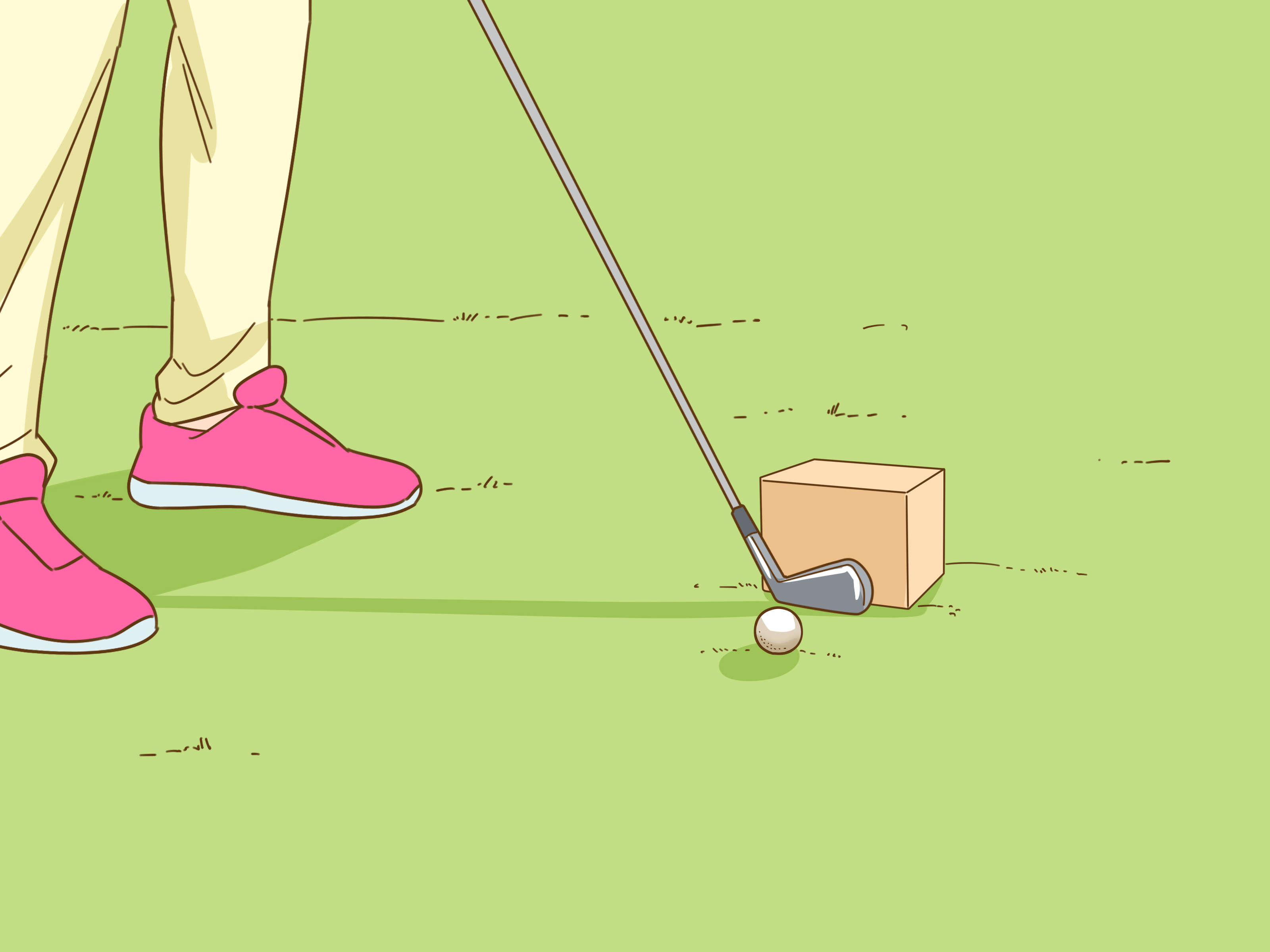
Place a small towel four to six inches behind the ball. Make waist-high swings with a short or mid-iron and strike the ball without touching the towel. If you hit the towel, the club reached the ground too early. Move it farther back while learning, then bring it closer as your control improves.
Golf Digest and Titleist instructors use towel-style drills because they provide immediate feedback while training a forward low point and ball-first contact.
Check Where the Turf Starts
On a grass range, draw a line with spray chalk and place the ball just ahead of it. Your divot should begin at or slightly beyond the ball’s original position. On a mat, place painter’s tape behind the ball and avoid striking it.
Do not judge success by divot size. Some excellent players take shallow divots. The essential sequence is ball first, ground secondnot “ball, ground, and half the county.”
3. Swing at a Balanced, Repeatable Tempo
Many golfers lose consistency because they try to hit an iron harder than the shot requires. The backswing grows, the transition becomes abrupt, and balance disappears. The motion feels powerful, but the clubface arrives with the punctuality of a canceled flight.
Choose an 80-Percent Stock Swing
Use enough club to make a controlled swing. If a 7-iron reaches the target only when you strike it perfectly, choose a 6-iron and remove the need for heroics. An 80-percent swing is not a decelerating swing; it is a complete motion made without strain.
Turn back, change direction without yanking the handle, and continue rotating to the finish. Smooth speed tends to preserve posture, center contact, and face control.
Let Sequence Create Speed
From the top, feel pressure move toward the lead side while the torso and arms follow. Avoid throwing the clubhead at the ball immediately. An early release can add loft, move the low point backward, and produce thin or heavy contact.
A modest amount of forward shaft lean at impact can help deliver predictable dynamic loft. The goal is not to manufacture extreme lag. It is to keep the hands and body moving through the shot rather than stopping so the clubhead flips past them.
Hold a Balanced Finish
Finish with most of your weight on the lead foot, your chest facing the target, and your trail heel raised. Hold that pose until the ball lands. If you cannot maintain it, your swing was probably too fast or poorly sequenced.
Try a three-count rhythm: “one” as the club starts back, “two” at the top, and “three” through impact. The count should feel calm and evenpreferably calmer than the phrase you normally use after a shank.
Tempo checkpoint: Take enough club, swing smoothly, and hold the finish.
4. Practice Contact With Clear Feedback
Hitting a large bucket without a goal can make you tired without making you better. Useful practice tells you where the club hit the ground, where the ball struck the face, whether the shot started on line, and how far it carried.
Track Strike Location
Use foot spray, impact tape, or a dry-erase mark on the ball to reveal contact location. Hit five shots and look for a pattern. A heel, toe, or low-face pattern is useful because it gives you something specific to improve.
Centered contact strongly affects ball speed, launch, curvature, and distance. Practical Golf recommends learning your strike tendency rather than guessing from ball flight, while Titleist’s gate drills combine centered delivery with low-point control.
Practice Through a Gate
Place two tees slightly wider than the clubhead, one near the heel and one near the toe. Put the ball between them and make small swings without touching either tee. Narrow the gate as your skill improves. The drill encourages center-face contact without asking you to supervise every elbow, kneecap, and eyebrow.
Combine Block and Random Practice
Begin with block practice: several shots using the same club and drill. Then switch to random practice by changing club, target, or trajectory after every ball. Block practice helps you learn a movement; random practice teaches you to use it on the course, where you rarely hit seven identical 7-irons in a row.
Use a 20-Ball Session
- Five half-swings: Train centered, ball-first contact.
- Five stock shots: Use one mid-iron and hold every finish.
- Five random shots: Change club or target after each ball.
- Five pressure shots: Complete your full routine and score one point for solid contact and one for starting on line.
Record average carry distance rather than the longest shot you have ever hit. A dependable carry chart improves club selection and reduces the urge to force a marginal club. TrackMan similarly emphasizes average carry as more useful on the course than a personal record.
Quick Fixes for Common Iron Misses
- Fat shots: Shorten the swing, use the towel drill, and finish on the lead side.
- Thin shots: Maintain your hip bend and rehearse brushing the turf after the ball.
- Pulls or hooks: Recheck clubface aim, ball position, grip pressure, and tempo.
- Pushes or fades: Check alignment and strike location, then finish with your chest facing the target.
On the course, use only one setup cue and one motion cue. Choose a conservative target, pick a club that comfortably covers the carry, aim through an intermediate spot, make one rehearsal, and swing to a balanced finish. Aiming at the safe part of the green usually produces better scores than firing at every tucked flag.
Experience Notes: What Changes When Golfers Simplify Their Iron Swing
A common experience among recreational golfers is that the breakthrough does not arrive after discovering a secret move. It arrives when they stop changing three things at once. A player may spend weeks adjusting grip, backswing plane, wrist hinge, hip depth, and follow-through, only to discover that the original problem was a ball position that moved two inches every shot.
The first noticeable improvement often comes from shortening the swing. position that moved two inches every shot.
The first noticeable improvement often comes from shortening the swing. A golfer who normally takes the club beyond parallel may feel as though a three-quarter swing is barely moving. On video, that “short” swing frequently looks complete. More importantly, the shorter motion makes it easier to remain centered, shift pressure forward, and find the middle of the face. The ball may fly the same distance because better contact replaces wasted effort.
Another useful lesson is that turf feedback is more honest than swing feel. A golfer may believe the club is striking down aggressively, yet the divot begins behind the ball. Another may feel as though the swing is sweeping level while the divot consistently starts ahead of the ball. Feel is personal and sometimes hilariously inaccurate. A line on the grass, a towel, or a strip of tape gives an answer that does not care about your autobiography.
Many players also improve when they stop treating every imperfect shot as a disaster. A slightly thin shot that starts on line and reaches the front of the green is a playable miss. The goal is not a highlight-reel strike every time; it is a narrower range of outcomes. Turning a 30-yard dispersion into a 20-yard dispersion can save more strokes than gaining five yards of peak distance.
Club selection becomes part of the experience. Golfers often choose a club based on the best shot they have ever hit rather than their average carry. Then they swing harder because the club is marginal, lose balance, and blame the technique. Taking one more club and making a controlled swing can feel cautious, but the scorecard rarely complains about a ball in the middle of the green.
Practice quality changes as well. Instead of hitting 70 balls quickly, a golfer may hit 25 with clear tasks: towel-drill shots, face-contact checks, stock swings, and random targets. The smaller session can be more productive because every ball has a purpose. The player leaves with a pattern, not just sore hands and an empty bucket.
Confidence eventually grows from evidence rather than positive thinking alone. When you know your setup checkpoint, can control where the club meets the turf, recognize your strike pattern, and trust your average carry, an iron shot becomes less mysterious. You are still playing golf, so strange things will happen. But strange becomes occasional instead of the featured attraction.
Conclusion
To hit irons consistently, focus on four priorities: repeat the same setup, move the low point ahead of the ball, swing with balanced tempo, and practice with clear feedback. Begin with half-swings and a mid-iron. Use a towel or ground line, check strike location, and finish every shot in balance.
Then take one simple cue to the course and choose clubs from realistic carry distances. Better iron play is rarely built by one dramatic discovery. It comes from wonderfully boring repetitionand wonderfully boring golf tends to produce much prettier scorecards.