August 2022 was a classic “good news, bad news, still look up anyway” month for skywatchers. The good news? The Perseid meteor shower returned, Saturn reached opposition, Jupiter became easier to catch in the evening, Mercury made a brief appearance after sunset, and the Summer Triangle practically begged for attention. The bad news? A bright full Sturgeon Moon barged into the middle of meteor season like someone turning on the kitchen lights during a movie night.
Still, August is one of the best months for casual stargazing in the United States. The nights are warm, the Milky Way is high for many observers, and you do not need a mountain observatory or a telescope the size of a water heater to enjoy the show. A lawn chair, a dark sky, a red flashlight, and a little patience can turn an ordinary summer night into a surprisingly dramatic tour of the solar system.
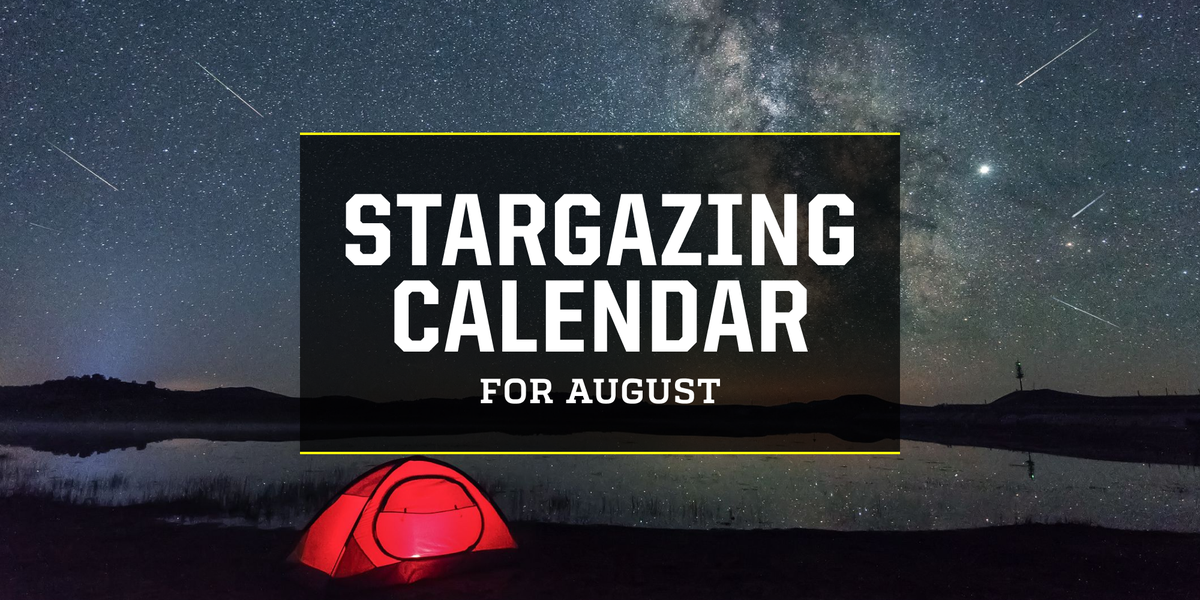
This August 2022 stargazing calendar highlights the month’s most important night-sky events, including the Perseid meteor shower, the full Sturgeon Moon, Saturn at opposition, planet pairings, moon phases, and practical viewing tips. Think of it as your friendly sky planner: part astronomy guide, part excuse to stay outside late, and part reminder that the universe is doing interesting things even when your inbox is not.
August 2022 Stargazing at a Glance
The headline events of August 2022 were easy to remember: meteors, moonlight, and magnificent Saturn. The Perseids were active through much of the month and peaked around August 12–13, but the nearly full Moon reduced visibility for fainter meteors. Saturn reached opposition on August 14, making it one of the best times of the year to observe the ringed planet. Later in the month, darker skies returned around the new Moon on August 27, which was excellent timing for deep-sky observing and astrophotography.
| Date | Sky Event | Best Viewing Tip |
|---|---|---|
| August 1 | Mars and Uranus close in the morning sky | Use binoculars before dawn; Mars helps guide you toward faint Uranus. |
| August 5 | First quarter Moon | Great night for lunar crater viewing along the terminator. |
| August 11 | Full Sturgeon Moon | Watch moonrise for the most dramatic view near the horizon. |
| August 12–13 | Perseid meteor shower peak | Face away from the Moon and watch after midnight. |
| August 14 | Saturn at opposition | Look southeast after dark; a telescope reveals the rings. |
| August 15 | Moon near Jupiter | Binoculars may show Jupiter’s four largest moons. |
| August 19 | Moon near Mars and the Pleiades | Try binoculars for a beautiful early-morning grouping. |
| August 27 | New Moon and Mercury at greatest eastern elongation | Use the dark sky for deep-sky objects; look west shortly after sunset for Mercury. |
Early August: Morning Planets and the Return of Darker Evenings
August 1: Mars Meets Uranus Before Dawn
August began with a subtle but rewarding planet pairing. Mars and Uranus appeared close together in the morning sky on August 1. Mars was the easy one: reddish, brighter, and more cooperative. Uranus, on the other hand, was the shy guest at the party. It required binoculars, a dark sky, and a little patience.
This pairing was useful because Mars acted as a guidepost. Uranus is technically visible to the naked eye under excellent dark-sky conditions, but for most observers, binoculars were the practical choice. The planet appeared as a tiny bluish dot northwest of Mars. No, it did not look like a glorious space-probe photo. Most planets through binoculars are more “small mysterious bead” than “cinematic cosmic wallpaper.” But finding Uranus with your own eyes is still a satisfying achievement.
August 5: First Quarter Moon
The first quarter Moon arrived around August 5, making the early part of the month excellent for lunar observing. A half-lit Moon may not sound as glamorous as a full Moon, but for telescope users it is often better. The best lunar details appear along the terminator, the line between lunar day and night. Shadows there are long, dramatic, and perfect for revealing mountains, craters, ridges, and valleys.
If you were introducing someone to astronomy in August 2022, this was one of the best nights to begin. The Moon is bright enough to find easily, detailed enough to impress beginners, and forgiving enough that even small binoculars can show texture. It is the night sky’s version of a friendly handshake.
August 11: The Full Sturgeon Moon
The full Moon of August 2022 peaked on August 11 at about 9:36 p.m. Eastern time. Traditionally called the Sturgeon Moon, this full Moon gets its name from the large sturgeon fish historically abundant in the Great Lakes and Lake Champlain during late summer. It was also widely described as the final supermoon of 2022, meaning the Moon was near enough to perigee in its orbit to appear slightly larger and brighter than average.
To the casual eye, a supermoon does not suddenly look like a giant silver beach ball rolling over the neighborhood. The difference is subtle. But moonrise is where the magic happens. When the full Moon climbs above trees, buildings, hills, or a distant horizon, it can appear enormous because of the famous Moon illusion. The Moon is not actually swelling with confidence; your brain is just doing what brains doadding drama.
For photographers, the Sturgeon Moon was a beautiful subject. The best approach was to plan a shot with a foreground object, such as a skyline, lighthouse, barn, bridge, or mountain ridge. A full Moon on a blank sky is lovely, but a full Moon rising behind a recognizable landmark gives the image scale and emotional punch.
August 12–13: The Perseid Meteor Shower Peak
The Perseid meteor shower is usually one of the most anticipated annual sky events in the Northern Hemisphere. In a great year, observers under dark skies can see dozens of meteors per hour. The Perseids are produced when Earth passes through debris left by Comet Swift-Tuttle. Those tiny particles enter our atmosphere at high speed and burn up as quick streaks of light. In other words, the universe sprinkles comet crumbs across Earth’s path, and we call it entertainment.
In 2022, however, the Perseids had a lunar problem. The shower peaked on the night of August 12 into the early hours of August 13, almost exactly when the sky was flooded by bright moonlight from the full Sturgeon Moon. That meant many faint meteors were washed out. The brightest Perseids still had a chance to break through, especially after midnight and before dawn, but expectations needed to be realistic.
How to Watch the Perseids in Bright Moonlight
The best strategy in August 2022 was simple: face away from the Moon, find the darkest sky available, and give your eyes at least 20 minutes to adjust. A reclining chair helped, because staring upward for long periods while standing is how necks file complaints. Viewers did not need to look directly at Perseus, the constellation from which the meteors appear to radiate. Meteors can streak across any part of the sky, so a broad, open view was more important than perfect aim.
Even with the Moon interfering, the Perseids were worth checking. Bright fireballs are always possible, and meteor watching has a delightful unpredictability. You can sit for 15 minutes and see nothing, then suddenly watch a glowing streak carve across half the sky like someone signed the darkness with a sparkler.
August 14: Saturn at Opposition
Saturn reached opposition on August 14, 2022. Opposition happens when Earth passes between a planet and the Sun, placing that planet opposite the Sun in our sky. For Saturn, this meant it rose around sunset, remained visible through most of the night, and appeared near its biggest and brightest for the year.
This was arguably the best planetary event of August 2022. Saturn shone as a steady yellowish point low in the eastern to southeastern sky after dark and climbed higher as the night went on. Unlike stars, planets usually do not twinkle as much, so Saturn looked calmer and more solid than surrounding stars. It was the celestial equivalent of someone who knows exactly where they parked.
Can You See Saturn’s Rings?
With the naked eye, Saturn looks like a bright star. With binoculars, it may appear slightly elongated, but the rings are usually difficult to separate clearly. A small telescope changes everything. Even modest magnification can reveal Saturn’s rings, and a medium-sized telescope may show Titan, Saturn’s largest moon. In August 2022, the rings were tilted toward Earth enough to make them a rewarding target.
The nearly full Moon still brightened the sky around opposition, but Saturn was bright enough to remain impressive. For many beginners, Saturn through a telescope is the moment astronomy becomes addictive. Jupiter is bold, the Moon is detailed, but Saturn looks almost unrealas if someone taped a tiny sticker of a planet onto the eyepiece.
Mid-August: Jupiter Joins the Evening Show
August 15: The Moon Near Jupiter
On August 15, the Moon appeared near Jupiter in the pre-dawn sky. Jupiter was becoming more prominent in August, and by the end of the month it was rising around 9 p.m., making it both an evening and morning object. That was excellent news for anyone who prefers not to set a 4:30 a.m. alarm in the name of cosmic ambition.
Jupiter is one of the most rewarding planets for binoculars and small telescopes. Even basic binoculars can sometimes show its four largest moons: Io, Europa, Ganymede, and Callisto. They look like tiny points lined up near the planet. Their positions change from night to night, which makes Jupiter feel alive and dynamic. It is not just a dot; it is a miniature system.
August 19: The Moon Near Mars and the Pleiades
On August 19, the Moon moved near Mars, with the Pleiades star cluster close by. This was one of the prettiest binocular scenes of the month. Mars brought its warm reddish glow, the Moon added brightness, and the Pleiades contributed their delicate cluster of blue-white stars. The Pleiades are sometimes called the Seven Sisters, though most people see fewer than seven stars with the naked eye unless the sky is dark and their eyesight is feeling generous.
This grouping was especially appealing because it worked for both beginners and experienced observers. No advanced equipment was necessary. A simple pair of binoculars could frame the scene beautifully, and the combination of Moon, planet, and star cluster created a natural “tour stop” for anyone learning the sky.
Late August: Dark Skies Return
August 27: New Moon
The new Moon on August 27 brought the darkest skies of the month. This was the best period for deep-sky observing, especially if you could travel away from city lights. Without moonlight, fainter objects such as the Milky Way, star clusters, nebulae, and galaxies became easier to see.
Late August is prime time for the Summer Triangle, formed by the bright stars Vega, Deneb, and Altair. Deneb marks the tail of Cygnus the Swan, a constellation that flies high in the evening sky. Cygnus lies along the Milky Way, making it rich with star fields and deep-sky treasures. Binocular observers could look for star clusters such as M29 and M39, while telescope users could hunt for favorites like the Veil Nebula under dark conditions.
If you wanted one weekend in August 2022 for a serious stargazing trip, the period around the new Moon was the strongest choice. The Perseid peak had already passed, but the darker sky more than made up for it. Sometimes the best stargazing nights are not the ones with the biggest headline. They are the quiet ones when the Moon steps aside and the rest of the universe finally gets a word in.
August 27: Mercury at Greatest Eastern Elongation
Also on August 27, Mercury reached greatest eastern elongation, appearing farthest from the Sun in the evening sky from our point of view. Mercury is notoriously tricky to observe because it stays close to the Sun and never climbs very high above the horizon. The best viewing window was shortly after sunset, low in the western sky.
To find Mercury, you needed a clear western horizon and good timing. Look too early and the sky was too bright. Look too late and Mercury had already dipped too low. The sweet spot was roughly 30 to 60 minutes after sunset. If you spotted a bright, steady point low in the west, congratulations: you had seen the solar system’s speedy little messenger planet. Bragging rights were permitted.
Best Constellations to See in August 2022
Cygnus the Swan
Cygnus was one of the standout constellations of August 2022. It appeared high in the eastern sky after dark and formed a cross-shaped pattern sometimes called the Northern Cross. Its brightest star, Deneb, is part of the Summer Triangle and can be seen even from many light-polluted locations.
Cygnus is a wonderful constellation because it offers something for everyone. Naked-eye observers can trace its elegant shape. Binocular users can sweep through dense Milky Way star fields. Telescope users can look for Albireo, a colorful double star often described as blue and gold. Astrophotographers can spend hours chasing nebulae in the region and still feel like they only opened the first drawer of a very large cosmic cabinet.
The Summer Triangle
The Summer Triangle is not an official constellation, but it is one of the easiest seasonal patterns to recognize. Vega, Deneb, and Altair form a large triangle overhead during summer evenings. Once you learn it, you can use it as a guide to nearby constellations, including Lyra, Cygnus, and Aquila.
For beginners, the Summer Triangle is a perfect starting point. It is bright, obvious, and visible even from many suburban skies. From there, you can hop to the Milky Way, locate Cygnus, and begin exploring with binoculars. It is basically the night sky’s welcome mat.
Practical Stargazing Tips for August 2022
First, check the weather and transparency. A cloudless sky is helpful, but haze, wildfire smoke, humidity, and light pollution can still reduce visibility. Second, give your eyes time to adjust. It takes about 20 minutes for night vision to improve, and one glance at a bright phone screen can undo your progress. Use a red-light mode or red flashlight if possible.
Third, bring comfort. Stargazing is more enjoyable when you are not battling mosquitoes, stiff grass, or a folding chair that seems designed by someone who dislikes spines. A blanket, reclining chair, bug spray, water, and a light jacket can make the difference between a magical night and an early retreat.
Fourth, use binoculars before buying a telescope. Binoculars are affordable, portable, and excellent for the Moon, star clusters, bright comets, planet pairings, and Milky Way scanning. A telescope is wonderful, but binoculars are the friendly gateway instrument. They also do not require a 45-minute emotional negotiation with an instruction manual.
Personal Stargazing Experiences Inspired by August 2022
There is something special about August stargazing that does not fully show up on a calendar. The dates matter, of course. Meteor peaks, moon phases, and planetary oppositions give us targets. But the real experience is often built from smaller details: the smell of warm grass after sunset, the sound of crickets, the soft click of binoculars being adjusted, and the quiet moment when everyone stops talking because something bright just moved across the sky.
One of the best ways to enjoy a month like August 2022 is to treat the sky as a slow event rather than a quick performance. Meteor showers, especially, reward patience. People often step outside, look up for three minutes, see nothing, and declare the entire universe canceled. That is not how meteor watching works. You need time. You need darkness. You need to let your eyes settle and your brain switch from “daily task mode” to “ancient human staring at stars mode.” It is a surprisingly healthy transition.
Watching the Perseids under a bright Moon can feel frustrating at first. You know the meteors are there, but the Moon is washing out the faint ones. Yet that challenge creates its own kind of excitement. Instead of counting dozens of meteors, you wait for the bold onesthe bright streaks strong enough to punch through the moonlight. When one appears, it feels earned. Everyone points in the same direction even though the meteor is already gone. Someone says, “Did you see that?” and someone else says, “Of course,” even if they were looking at their snack at the crucial second.
Saturn offers a completely different kind of experience. Meteor showers are sudden and unpredictable, but Saturn is steady. You find it, center it in the telescope, focus carefully, and then there it is: a planet with rings. The first view can be weirdly emotional. Saturn looks too perfect, too illustrated, too much like a textbook image to be real. But it is real, and it is hanging there in the eyepiece, hundreds of millions of miles away. That moment has converted countless casual observers into lifelong skywatchers.
The full Sturgeon Moon, meanwhile, is best enjoyed with a sense of drama. Moonrise is not just an astronomical event; it is theater. The Moon appears low and huge, tinted orange or gold by Earth’s atmosphere, rising behind trees or buildings as if it has been waiting backstage. Even people who claim they are “not into astronomy” tend to stop and stare. The Moon is democratic that way. It does not require expertise. It simply shows up and looks magnificent.
Late August dark-sky nights provide the opposite pleasure. With the Moon gone, the sky becomes deeper. The Milky Way can emerge from a truly dark location as a pale river overhead. Binoculars reveal star fields that look almost crowded, especially around Cygnus. You realize that “empty space” is not empty at all. It is packed with suns, dust, clusters, glowing gas, and distances so large they make everyday worries feel temporarily smaller.
A good August stargazing session does not need to be perfect. Clouds may wander in. Mosquitoes may treat you as a buffet with opinions. Someone may trip over the cooler. The telescope may fog. The meteor you waited 40 minutes for may appear precisely when you blink. That is part of it. Stargazing is not only about seeing objects; it is about practicing attention. It teaches you to slow down, look carefully, and accept that nature operates on its own schedule.
If August 2022 taught skywatchers anything, it was that a “difficult” sky can still be rewarding. The full Moon interfered with the Perseids, but it gave us a beautiful moonrise. Saturn had to compete with moonlight, but it still shone all night. Mercury was low and elusive, but catchable for those with a clean western horizon. The best nights were not necessarily flawless; they were memorable because people went outside and looked up anyway.
Conclusion: August 2022 Was a Month Worth Looking Up For
Your stargazing calendar for August 2022 had a little bit of everything: a bright supermoon, a moonlit Perseid meteor shower, Saturn at its best, Jupiter rising into evening view, Mars pairing with the Moon and Pleiades, Mercury peeking above the sunset horizon, and Cygnus soaring through the Milky Way. The month reminded us that astronomy is not only about rare eclipses or once-in-a-lifetime comets. Sometimes the best skywatching comes from familiar seasonal rhythms: the Moon waxing and waning, planets drifting into view, and summer constellations returning like old friends.
For beginners, August 2022 was a great lesson in realistic expectations. Not every meteor shower is perfect. Not every planet is high in the sky. Not every night is cloud-free. But the sky almost always offers something. The trick is to know what to look for, when to look, and how to enjoy the experience even when the Moon decides to photobomb the main event.