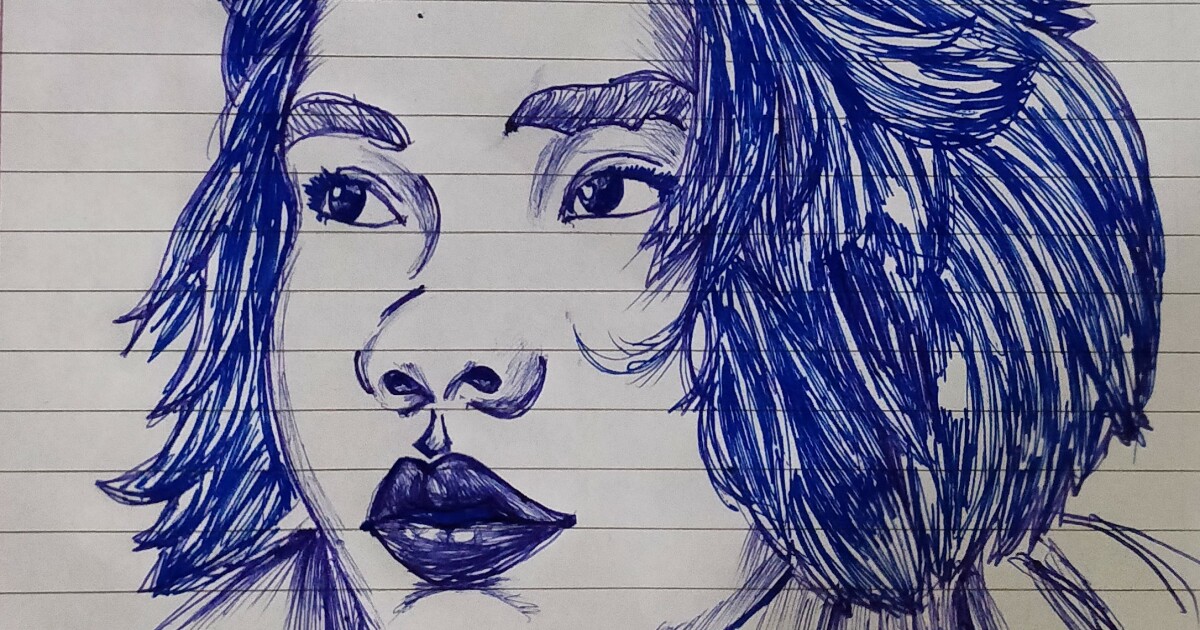
There are internet challenges that ask people to show off perfect vacation photos, impossibly clean desks, or breakfasts arranged like tiny museum exhibits. Then there is the delightfully honest kind: “Hey Pandas, Draw Yourself.” No filters. No dramatic lighting. No pretending your hair always behaves. Just you, a blank page, and the brave decision to turn your face, personality, mood, or inner goblin into art.
At first, drawing yourself sounds simple. You have seen your own face thousands of times, right? You know where your eyes are. You probably know whether your eyebrows look calm, suspicious, or permanently surprised. But the moment a pencil touches paper, your brain may suddenly forget what a nose is. That is part of the fun. A self-portrait is not a passport photo. It is a tiny visual autobiography, a creative experiment, and sometimes a comedy sketch performed by your hand.
The “Hey Pandas, Draw Yourself” idea fits perfectly into the world of online art prompts and community drawing challenges. These challenges are popular because they lower the pressure. You do not need to be a professional illustrator, own a studio, or know how to pronounce “chiaroscuro” without sounding like you are ordering pasta. You only need a willingness to participate, share, laugh, improve, and maybe discover that your cartoon version has much better hair than you do.
What Does “Hey Pandas, Draw Yourself” Mean?
“Hey Pandas” is a familiar community-style prompt format often used to invite people to answer, share, post, draw, or react around a specific theme. In this case, the theme is personal art: draw yourself. The result can be realistic, cartoonish, symbolic, silly, dramatic, abstract, or somewhere between “Renaissance portrait” and “potato with feelings.”
The beauty of the prompt is its flexibility. A person can draw a mirror-based self-portrait with careful shading and facial proportions. Another person can sketch themselves as a sleepy raccoon holding coffee. Someone else may use symbols instead of a face: headphones, paint splashes, favorite books, sneakers, stars, plants, or a tiny storm cloud hovering over a laptop. All of these count because self-portrait art is not only about appearance. It is about identity.
Why Self-Portrait Drawing Is More Than a Cute Internet Challenge
Self-portrait drawing has a long history in art education and museum learning because it asks a powerful question: Who am I? That question can be answered with facial features, but it can also be answered through color, posture, clothing, background, objects, expression, and exaggeration. A self-portrait can show confidence, awkwardness, humor, growth, stress, curiosity, or the exact expression you make when someone says, “Let’s do a group project.”
For beginners, drawing yourself is also a practical exercise. You learn observation, proportion, facial structure, contrast, and composition. You start noticing details you normally ignore: how your eyes sit at different angles, how light hits one cheek more than the other, how your smile changes the shape of your face, or how your hair refuses to be simplified into polite little lines.
For experienced artists, the challenge becomes deeper. How do you express yourself without making a boring copy of a mirror image? How do you communicate mood? What should be left out? What should be exaggerated? Should the portrait look like today’s version of you, childhood you, future you, online you, or the you who opens the fridge three times hoping new snacks have magically appeared?
Self-Portrait Ideas for Every Type of Panda
1. The Honest Mirror Portrait
This is the classic version. Sit in front of a mirror, place your paper nearby, and draw what you see. Start with simple shapes: an oval for the head, lines for the eye level, nose, and mouth, then add features slowly. Do not attack the page like you are trying to solve a crime. Light sketching is your friend.
The honest mirror portrait is great for learning proportions. It teaches you that eyes are usually around the middle of the head, not floating near the forehead like two confused balloons. It also helps you study shadows, highlights, and facial angles in real time.
2. The Cartoon Version of You
If realism feels too serious, go cartoon. Turn your biggest features into a visual joke or signature style. Big glasses? Make them huge. Curly hair? Let it become a friendly cloud. Always tired? Draw yourself as a pajama superhero with a cape made of blankets.
Cartoon self-portraits are popular because they are expressive and forgiving. The goal is not to make every feature accurate. The goal is to capture your vibe. A good cartoon portrait can say, “This is me,” even if the nose is just a dot and the eyebrows are doing most of the emotional labor.
3. The Symbolic Self-Portrait
A symbolic self-portrait uses objects, colors, animals, weather, patterns, and backgrounds to represent your personality. For example, a quiet reader might draw themselves surrounded by floating pages and warm lamplight. A gamer might draw a face made of pixels, controllers, and dramatic victory snacks. A plant lover might turn their hair into vines and leaves.
This style is excellent for people who do not want to focus only on facial accuracy. It also makes the artwork more personal. Instead of asking, “Does this look exactly like me?” you ask, “Does this feel like me?” That is a much better question, and it is less likely to cause an argument with your eraser.
4. The Mood-Based Self-Portrait
Draw yourself as you feel today. Not forever. Not perfectly. Just today. Maybe you are energetic, so your portrait uses sharp lines and bright movement. Maybe you are calm, so the drawing has soft shapes and open space. Maybe your brain feels like 27 browser tabs are open and one of them is playing music. That can become art too.
Mood portraits are great because they remove the pressure to make a “pretty” picture. They turn emotion into design. A messy line can be expressive. A strange color can be meaningful. A half-finished background can say something. Sometimes the most honest self-portrait is not polished; it is alive.
5. The “Me as a Character” Portrait
Imagine yourself as a fantasy hero, detective, astronaut, baker, woodland creature, comic book sidekick, or villain with excellent accessories. This version lets you mix identity with imagination. You can draw yourself as the main character in your own weird little universe.
The “me as a character” approach is especially fun for online communities because it invites personality. People can compare styles, laugh at creative choices, and recognize each other through visual storytelling. Your portrait becomes more than a face. It becomes a tiny biography with better boots.
How to Draw Yourself Without Panicking
Many people avoid self-portrait drawing because they think it requires talent. In reality, it requires patience, observation, and permission to be bad at first. Every artist has made drawings that look like haunted pancakes. The difference is that artists keep going.
Start With Big Shapes
Before drawing eyelashes, freckles, or the heroic curve of your upper lip, block in the large shapes. Draw the head shape, neck, shoulders, hair mass, and basic face guidelines. Big shapes help the portrait stay organized. Details should come later, like dessert after vegetables, except less disappointing.
Use a Reference
A mirror, photo, or quick selfie can help. A mirror gives live observation. A photo freezes the pose. A selfie gives you control over expression and lighting. If you use a photo, choose one with clear light and shadow. Avoid blurry images unless your goal is “mysterious cryptid spotted near art supplies.”
Focus on One Feature at a Time
Do not try to perfect the whole face at once. Work from general to specific. Place the eyes, nose, mouth, ears, and hairline first. Then refine. Look at distances: How far is the nose from the mouth? Where do the eyebrows sit? Does the jawline curve or angle? Observation is the secret sauce.
Do Not Fear Imperfection
A self-portrait does not need to flatter you. It needs to express you. Some of the most interesting portraits in art history are strange, intense, exaggerated, or emotionally raw. A perfect portrait can be impressive, but an honest portrait is often more memorable.
Why Online Drawing Challenges Help People Create More
Online drawing challenges work because they turn a lonely activity into a shared event. Instead of sitting alone wondering what to draw, participants get a prompt and a community. That structure matters. A prompt removes decision fatigue. A community adds motivation. Comments, likes, and friendly responses create momentum.
The best creative communities make room for beginners. They encourage people to post progress, not just masterpieces. This is important because many people stop drawing when they compare their early work to someone else’s polished portfolio. A challenge like “Hey Pandas, Draw Yourself” can remind everyone that art is not only about winning applause. It is about participating.
There is also something wonderfully democratic about a self-drawing prompt. Everyone has a subject. You do not need a model, a fancy setup, or a dramatic mountain view. You are already there. Congratulations, you are both the artist and the unpaid talent.
Creative Examples for “Hey Pandas, Draw Yourself”
Need inspiration? Try drawing yourself in one of these ways:
- Your morning self: messy hair, sleepy eyes, and a coffee cup large enough to require its own ZIP code.
- Your internet self: profile-picture energy, favorite emojis, browser tabs, headphones, and one dramatic notification bubble.
- Your childhood self: old hobbies, favorite toys, school memories, and the haircut everyone agreed not to discuss.
- Your future self: dream job, dream home, dream pet, or dream version of you who finally folds laundry immediately.
- Your animal self: panda, cat, fox, owl, capybara, or any creature that matches your personality.
- Your emotional weather report: sunshine, fog, lightning, rainbow, drizzle, or “partly motivated with a chance of snacks.”
These examples help beginners move beyond “I must draw my face exactly.” A self-portrait can be literal or metaphorical. It can be accurate, funny, symbolic, dreamy, or chaotic. The main requirement is that it tells the viewer something about you.
Common Mistakes Beginners Make When Drawing Themselves
Making the Eyes Too High
Many beginners place the eyes near the top of the head because they forget how much space the forehead and hair occupy. In most front-facing portraits, the eyes sit around the middle of the head. Yes, the middle. Your forehead deserves real estate.
Drawing Features Before Structure
It is tempting to start with the eyes because they are expressive. But if you draw beautiful eyes in the wrong place, your portrait may look like it is quietly judging you from another dimension. Start with structure, then add detail.
Using Only Outlines
Faces are not coloring-book shapes. They are built from light, shadow, planes, and soft transitions. Even simple shading under the nose, chin, hair, and cheekbones can make a portrait feel more alive.
Trying to Look “Cool” Instead of Honest
The funniest and strongest self-portraits often include quirks. Crooked smile? Draw it. Giant hoodie? Include it. Weird concentration face? Absolutely. Your quirks are not mistakes. They are premium features.
How to Share Your Self-Portrait Online
If you are posting your drawing for a community challenge, keep the caption simple and inviting. You can write about your process, your materials, or what the portrait represents. For example: “I drew myself as a tired wizard because finals week has turned my backpack into a cursed object.” That caption gives people a reason to smile and respond.
It is also helpful to mention whether you want feedback. Some artists love critique. Others simply want to share. A kind community respects both. If you comment on someone else’s self-portrait, focus on encouragement. Say what you notice, what made you smile, or what detail feels expressive. Nobody needs a stranger appearing in the comments like an art-school thundercloud.
Why “Draw Yourself” Is Great for Beginners, Teens, Adults, and Secret Doodlers
The prompt works for almost everyone because it can be scaled up or down. A beginner can make a five-minute doodle. A student can create a mixed-media identity project. A professional artist can explore style, symbolism, and emotional storytelling. A shy person can draw themselves as a mushroom wearing glasses and still produce something meaningful.
Drawing yourself also builds visual confidence. You learn that your face does not have to be perfect to be interesting. Your identity does not have to fit one neat category. Your art does not have to look like someone else’s. The more you draw yourself, the more you notice change: your skills improve, your style develops, and your idea of “what counts as art” gets bigger.
Experiences Related to “Hey Pandas, Draw Yourself”
The first experience many people have with a “draw yourself” prompt is panic disguised as laughter. Someone opens a sketchbook, draws one oval, adds two eyes, and immediately thinks, “Why do I look like a confused egg?” That moment is normal. In fact, it is practically a rite of passage. Self-portrait drawing asks us to look carefully at something we assume we already know: ourselves. The surprise is that familiarity does not always equal accuracy. You may know your face emotionally, but drawing it requires a different kind of attention.
One common experience is discovering how personal small details become. A pair of glasses is not just glasses; it may be part of how people recognize you. A hoodie might represent comfort. A messy bun might represent late-night studying, parenting, gaming, creating, or simply losing a long battle with humidity. Even a tiny background object can carry meaning. A plant on the desk, a pet near your feet, a stack of books, a musical instrument, or a half-empty mug can make a drawing feel deeply specific.
Another experience is the unexpected humor. Self-portraits can become funny because we exaggerate what we notice most. Someone may draw their eyebrows as dramatic punctuation marks. Someone else may draw themselves with huge headphones and a tiny social battery icon. Another person may represent themselves as a panda because, frankly, pandas understand the lifestyle: snack, sit, stare, repeat. These funny choices often make the artwork more relatable than a technically perfect portrait.
Sharing the drawing can feel vulnerable, but it can also be freeing. Many people are nervous that others will judge their skill. Yet community art prompts tend to create a softer environment because everyone is responding to the same challenge. The beginner’s sketch, the polished digital painting, the messy notebook doodle, and the symbolic collage all belong in the same conversation. That mix is what makes the prompt enjoyable. It shows progress, personality, and variety instead of one narrow definition of talent.
There is also a reflective side to the experience. Drawing yourself today can capture a version of you that will not exist forever. Your style may change. Your hair may change. Your interests, confidence, worries, and dreams may change. A self-portrait becomes a time capsule. Months later, you can look back and remember not only what you drew, but how you felt while drawing it. Maybe you were nervous. Maybe you were bored. Maybe you were proud because, for once, the nose did not start a rebellion.
The best part of “Hey Pandas, Draw Yourself” is that it does not demand perfection. It invites participation. It says: show us your face, your mood, your imagination, your joke, your symbols, your story. Whether the final result looks realistic, cartoonish, abstract, adorable, chaotic, or accidentally like your cousin, the act of making it matters. You practiced seeing yourself with curiosity instead of criticism. That alone is worth picking up the pencil.
Conclusion: Pick Up the Pencil and Meet Yourself on Paper
“Hey Pandas, Draw Yourself” is more than a playful internet prompt. It is a beginner-friendly art challenge, a self-expression exercise, and a reminder that creativity does not need permission from perfection. You can draw yourself as you are, as you feel, as you imagine yourself, or as the cartoon character your group chat already suspects you might be.
Whether you use pencil, marker, paint, collage, tablet, or the back of an old receipt, the point is to begin. Start with a shape. Add a feature. Add a symbol. Add a joke. Let the drawing become a small conversation between who you are and how you see yourself today. And if the first attempt looks strange, congratulations. You have made art, met humility, and given your future self something hilarious to compare with your next masterpiece.