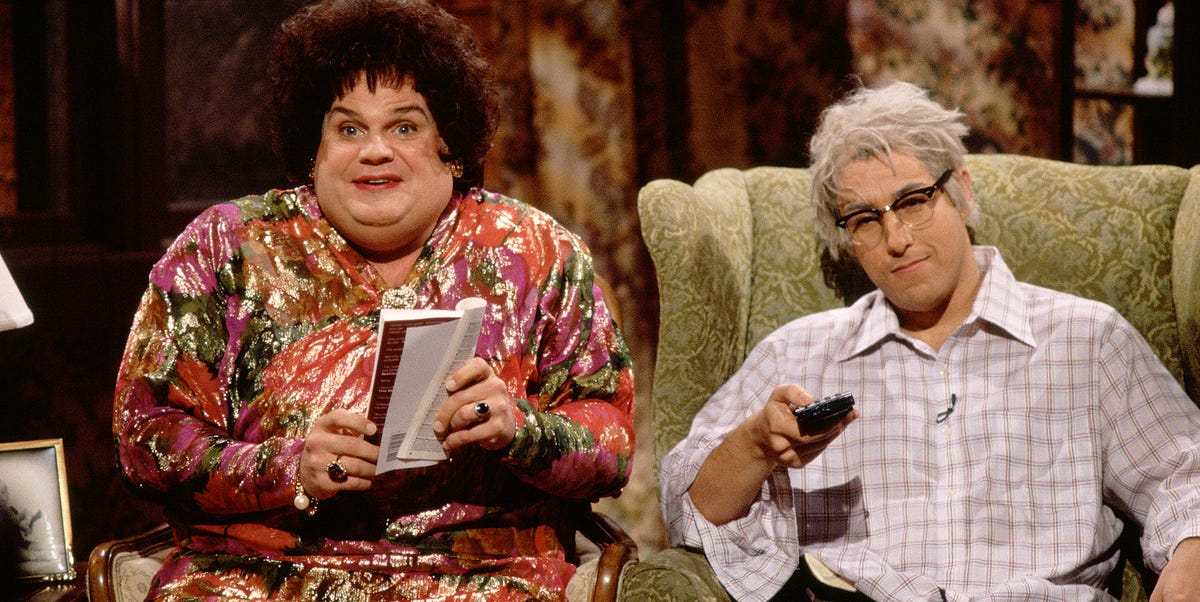
Few stories in comedy history feel as backward as this one: two of the most beloved figures from Saturday Night Live got shown the door at the same time. Chris Farley was a human cannonball in a necktie. Adam Sandler was the weird kid in the back of class who somehow turned nonsense into hit songs and unforgettable characters. Together, they helped define early-1990s SNL. So when fans ask, “Why were Chris Farley and Adam Sandler fired from SNL?” the question usually comes with a second, louder question hiding behind it: How could anyone think that was a good idea?
The short answer is that their exit had less to do with talent and more to do with timing, pressure, and television politics. By the end of the 1994–95 season, Saturday Night Live was getting hammered in the press, ratings had slipped, NBC was unhappy, and the show was ripe for a major overhaul. In that climate, even stars as big as Farley and Sandler were not safe. Sandler later said NBC wanted a fresh start, and that explanation fits the larger picture: the network and the show were trying to reset the board, not calmly evaluate which cast members would one day become comedy royalty.
But that still leaves a lot to unpack. Because if you look back now, it is obvious that Farley and Sandler were not “the problem.” They were the era. Their firing says as much about how SNL works as it does about either man. It also reveals something funny, and slightly absurd, about show business: sometimes the people who look most essential in hindsight are the very ones executives decide to replace in the moment.
The Real Reason Chris Farley and Adam Sandler Left SNL
If you are hoping for a single neat answer, sorry, comedy history rarely files its paperwork that cleanly. Chris Farley and Adam Sandler were let go after the 1994–95 season as part of a broader cast shake-up. The show had taken a beating. Critics were calling it tired, bloated, and past its prime. NBC executives were losing patience. Lorne Michaels himself was under pressure. In other words, this was not a calm “let’s plan for next season” meeting. This was a “somebody fix this before the furniture catches fire” moment.
That context matters. When a long-running show stumbles, television executives often reach for the giant reset button. New cast. New tone. New energy. Different headlines. In that kind of atmosphere, departures are not always surgical. They are symbolic. Letting go of recognizable faces can signal change, even when those faces are the reason many viewers tuned in at all.
Adam Sandler later explained that he did not believe Lorne Michaels personally fired him. According to Sandler, NBC made the move, new leadership wanted to start over, and he had become known as “sophomoric,” which, in Sandler terms, is practically a job description. He also later described the exit in a more philosophical way, saying it felt like he and Farley were both fired and also reaching the end of their run. That combination of hurt feelings and reluctant acceptance probably gets closest to the truth.
So yes, they were fired. But it was not because they suddenly stopped being funny, and it was not because audiences had decided they were washed. It was because SNL was in turbulence, NBC wanted visible change, and Farley and Sandler ended up caught in the middle of a high-profile reset.
Why Chris Farley and Adam Sandler Mattered So Much to Saturday Night Live
Chris Farley was pure physical comedy chaos
Chris Farley did not enter a sketch. He hit it like a runaway shopping cart with excellent comic timing. He had the rare ability to make a room laugh before he even spoke. One second he could play a motivational speaker living in a van down by the river; the next, he could turn nervous silence into comedy gold on The Chris Farley Show. Farley’s genius was not subtle, but it was not simple either. He understood rhythm, escalation, embarrassment, and the power of total commitment. If the sketch asked for 100 percent, Farley showed up with 400 and a neck sweat that deserved its own screen credit.
That is why his best SNL work still lands. He was not just loud. He was precise inside the loudness. The famous Chippendales sketch with Patrick Swayze works because Farley was willing to be both ridiculous and strangely touching at the same time. The Matt Foley character worked because beneath all that glorious yelling was genuine desperation. Farley’s comedy was huge, but it also had a pulse.
Adam Sandler brought a totally different kind of strange
Where Farley was explosive, Adam Sandler was slyly off-center. He brought a comic style that felt intentionally immature, musically inventive, and just odd enough to confuse the wrong people. That last part matters. Sandler’s humor was not built to impress every executive in a blazer. It was built to make the right audience laugh so hard that the people not laughing seemed beside the point.
On SNL, Sandler thrived with characters like Opera Man and with musical pieces that sounded silly on paper but became unforgettable in performance. He had a gift for taking childishness and turning it into comic personality. Not polished personality. Not prestige personality. Personality. That distinction helps explain why he connected so deeply with viewers and why he also divided people inside the building. Some saw brilliance. Others saw a guy doing baby voices with a guitar. History has been extremely rude to the second group.
Why Would SNL Fire Two Breakout Stars?
This is where hindsight makes everybody look a little foolish. Today, Farley and Sandler feel inevitable. Of course they were stars. Of course they helped shape 1990s comedy. Of course their influence outlived the season that got them fired. But television decisions are usually made in the present tense, and the present tense in 1995 was messy.
SNL had become a target. The show was being mocked in the press. Ratings had fallen. The cast had grown large. The tone of the era was increasingly described as uneven and overstuffed. Even when the show still produced standout material, the broader narrative had turned sour. Once that happens, networks stop asking, “Who is talented?” and start asking, “What change can we point to on a memo?”
That helps explain why two major talents could be dismissed at the height of their visibility. Farley and Sandler were not nobodies being quietly trimmed from the roster. They were famous enough that cutting them made noise. And sometimes, in television, noise is exactly the point. A reset has to look like a reset.
There was also the question of taste. Sandler’s style, in particular, appears to have split opinion. Later reporting described factions inside SNL, with some writers and performers fully understanding his off-kilter brilliance and others seeing it as self-indulgent or too juvenile. That kind of divide becomes dangerous when executives are already uneasy. If a performer is universally adored inside a shaky institution, he is harder to cut. If he is loved by some and questioned by others, he becomes easier to label expendable.
Farley’s case was different in style but not in outcome. He was more obviously explosive as a performer, more immediately physical, and harder to misunderstand as a comic force. But he was still part of the same era under judgment. When networks decide to sweep out a room, they do not always separate the priceless furniture from the folding chairs.
Were Chris Farley and Adam Sandler “Fired,” or Is That Too Simple?
In the most literal sense, yes, they were fired. Sandler has said so plainly and more than once. He later turned that fact into one of the great show-business revenge moves: returning to host SNL in 2019 and singing about it in his monologue with the kind of grin only a wildly successful former employee can wear.
At the same time, Sandler has also described the exit as something that felt partly mutual, or at least emotionally inevitable. That is not unusual in SNL history. The show has always had blurry exits. Some cast members leave voluntarily, some are not invited back, some are nudged, and some realize the room is changing before the paperwork catches up. In Farley and Sandler’s case, the departure was painful enough to feel like a firing and broad enough to resemble an era ending.
That distinction matters because it shows why fans still debate the subject. People are not just arguing over an HR label. They are trying to understand whether SNL rejected two stars or simply made the kind of transition long-running institutions always make. The most honest answer is: a little of both, but mostly the first one stings more.
What Happened to Chris Farley and Adam Sandler After SNL?
Adam Sandler turned the setback into a career rocket
If NBC wanted a fresh start, Sandler gave himself one with a flamethrower. After leaving SNL, he quickly became one of the biggest comedy movie stars of his generation. Billy Madison, Happy Gilmore, The Wedding Singer, The Waterboy, and a long list of other hits turned him from dismissed cast member into box-office institution. It is one of the cleanest examples in Hollywood of a supposed setback becoming a branding event.
More importantly, Sandler never really stopped carrying pieces of his SNL self with him. The songs, the oddball voices, the man-child sincerity, the willingness to look dumb in ways that were actually smart: all of that traveled with him. His later dramatic performances proved range, but his comic identity was forged in large part at Saturday Night Live.
Chris Farley remained a giant, even in a shorter career
Farley moved from SNL into movies with the same larger-than-life force he brought to sketch comedy. Tommy Boy became the defining showcase for his screen charisma and his chemistry with David Spade. Black Sheep followed, and Farley’s stardom only seemed to be getting bigger. But unlike Sandler’s long arc, Farley’s story carries real tragedy. He struggled for years with addiction and died in 1997 at just 33.
That loss permanently changes how people look back on his SNL exit. Fans do not see only a fired cast member. They see an irreplaceable performer whose time was already too short. Every great Farley sketch now comes with a little ache attached to the laughter, which is part of why his legacy remains so powerful.
Why This SNL Firing Story Still Matters
The story of Chris Farley and Adam Sandler being fired from SNL still fascinates people because it exposes the gap between industry judgment and cultural memory. In the moment, NBC saw a show in crisis and pushed for change. In retrospect, viewers see two comedy icons who helped make the era memorable in the first place.
It also reminds us that Saturday Night Live is not just a comedy show. It is a pressure cooker, a talent factory, a political target, a media institution, and a workplace where taste is constantly argued over in real time. Great performers do not simply succeed there by being funny. They also have to fit the needs of a network, the instincts of producers, the mood of the writers’ room, and the story the show wants to tell about itself that season.
Farley and Sandler fit some of those demands brilliantly. They failed others, or perhaps more accurately, the institution failed to fully understand what it had. That happens all the time in entertainment. What makes this case special is that the audience kept the receipts. Fans remembered who made them laugh. Decades later, the question is not whether Farley and Sandler mattered to SNL. It is how SNL ever convinced itself it could do without them.
The Fan Experience: What It Felt Like Watching the Farley-Sandler Era End
For a lot of viewers, the end of the Chris Farley and Adam Sandler era on Saturday Night Live did not feel like a strategic reboot. It felt like somebody turned the lights on in the middle of the party and said, “Alright, everybody out.” That is the strange thing about television history: executives see transition; audiences feel loss.
If you watched SNL in the early 1990s, Farley and Sandler did not just appear in sketches. They helped define the mood of the show. Farley brought that full-body, crash-through-the-wall energy that made every scene feel unstable in the best possible way. Sandler brought a flavor of nonsense that was goofy, quotable, and weirdly durable. Together, along with other cast members from that period, they made SNL feel less like a neat comedy machine and more like a rowdy clubhouse where something hilarious could happen at any second.
That is why their departure still has emotional heat. Fans were not merely losing cast members. They were losing a feeling. The Farley-Sandler years had a scruffy confidence to them. The sketches were not always elegant, but they were alive. They could be sloppy, loud, juvenile, and unexpectedly brilliant, often all in the same episode. For viewers who connected with that frequency, the reset that followed could feel colder, more polished, or simply different in a way that did not scratch the same itch.
There is also the hindsight factor, and hindsight is one smug little comedian. Once Sandler became a movie superstar and Farley became an almost mythic comic figure, their firing started to look less like routine TV churn and more like one of the all-time bad calls. Fans love that kind of story because it flips power on its head. The network says, “We are moving on.” History replies, “That is adorable.”
But there is something sad in it too, especially with Farley. Watching old clips now is not just nostalgic; it is emotional. You are seeing joy in real time, but you are also seeing someone whose life would be tragically short. Sandler’s later public tributes to Farley hit so hard because they tap into that shared feeling among fans: the laughter is still there, but so is the sense that we did not get enough of him.
Maybe that is the deeper reason this topic keeps resurfacing. It is not just about why Chris Farley and Adam Sandler were fired from SNL. It is about how audiences form attachments to performers who make a chaotic live show feel personal. It is about how institutions chase reinvention while viewers chase connection. And it is about how comedy, even the loud, silly, falling-through-a-table kind, can lodge itself in memory with surprising force.
In the end, fans experienced their firing as proof of something they would keep relearning: networks make decisions, but audiences decide who lasts. Farley lasted. Sandler lasted. Their SNL run lasted. And the question “Why were they fired?” still gets asked because, all these years later, it still feels a little unbelievable.
Final Take
Chris Farley and Adam Sandler were fired from SNL because the show hit a rough patch, NBC wanted visible change, and the 1995 cast overhaul swept up even some of the era’s brightest talents. It was a business move, a network move, and a cultural reset all at once. But it was not a verdict on their ability. If anything, history has made the opposite case. Farley remains one of the most unforgettable physical comedians the show ever produced. Sandler became one of the biggest comedy stars in America and eventually returned to Saturday Night Live not as an ex-employee begging for closure, but as a beloved legend taking a bow.
That is why this story endures. On paper, Chris Farley and Adam Sandler were fired from SNL. In reality, they outgrew the decision. And in comedy history, that is a pretty decent last laugh.