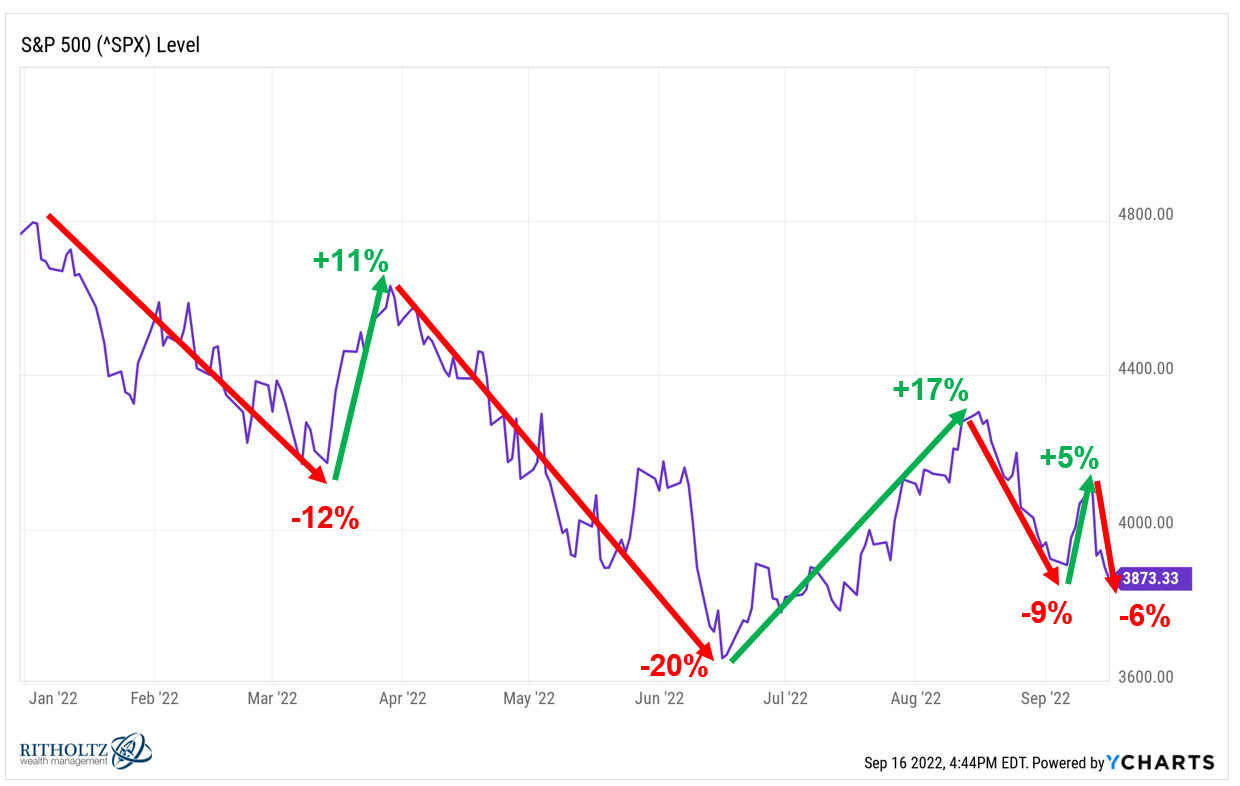
A rising index can make investors feel as if the danger has passed. Yet sharp rallies, narrow leadership, expensive valuations, and shaky confidence can keep parts oen a technical bear market and a market that merely feels bearish can help investors avoid panic, overconfidence, and the classic mistake of buying yesterday’s winners at tomorrow’s prices.
Bear markets have a strange sense of humor. They scare everyone out of stocks, invite them back with a dazzling rally, and then check whether anybody remembered to fasten a seat belt. That is why the phrase “we’re still in a bear market” can remain useful even after the major indexes have bounced. It is not always a literal statement about an index being 20% below its peak. Sometimes it is a warning that the conditions responsible for the declineweak breadth, tight financial conditions, fragile earnings expectations, or excessive valuationshave not completely disappeared.
There is also an important reality check. As of late July 2026, the S&P 500 was not in a textbook bear market. It was positive for the year and far from the conventional 20% decline threshold. The Nasdaq had recently approached correction territory before rebounding, while some headline gains were heavily concentrated in technology stocks. In other words, the broad market was not officially a bear, but the ride still had claws. nts as a Bear Market?
A bear market is commonly defined as a decline of at least 20% from a recent high in a broad market index. A correction usually means a drop of 10% to less than 20%. These labels are convenient, but they are not laws of physics. Nothing magical happens when an index moves from a 19.9% loss to a 20.0% loss. No bell rings. No bear enters the New York Stock Exchange carrying a clipboard. ition also depends on what is being measured. The S&P 500 can remain strong while small-cap stocks, biotechnology shares, regional banks, homebuilders, or speculative technology companies suffer declines of 20%, 30%, or more. An investor holding a concentrated group of damaged stocks may experience a very real bear market even when the evening news says the market closed near a record.
A Bear Market Is a Price Event and a Confidence Event
The percentage decline tells us what prices did. The deeper story is what investors believe. Bear markets often reflect falling confidence in future earnings, economic growth, liquidity, or financial stability. Buyers become less willing to pay generous prices for uncertain profits. Companies with distant cash flows are punished. Weak balance sheets suddenly matter again. Businesses that were described as “visionary” during the boom are asked the rude but reasonable question: “When do you make money?”
That change in expectations can continue long after the first big selloff. A market may recover part of its decline while investors remain skeptical, volatility remains elevated, and leadership stays narrow. This is why a rally does not automatically prove that a durable bull market has begun. Market Rallies Feel So Convincing
Some of the strongest short-term gains occur during ugly markets. Prices become oversold, pessimism becomes crowded, short sellers take profits, and one piece of encouraging news can trigger a rapid rebound. Investors who sold near the low rush back in. Traders who expected another collapse are forced to cover. Suddenly the chart looks glorious, social media rediscovers optimism, and somebody announces that stocks only go up.
Then the market faces the harder test: Can earnings, cash flow, credit conditions, and economic demand support the higher prices? A sustainable recovery usually needs more than a few heroic mega-cap stocks. It needs broader participation, improving fundamentals, and enough liquidity to keep buyers interested after the first burst of relief.
A rally can therefore be genuine without being permanent. Prices may rise 10% or 15% from a low and still remain inside a larger downtrend. This is the classic bull trap: an advance strong enough to make investors abandon caution, but not strong enough to repair the underlying damage.
The Stock Market Is Not One Market
Headline indexes can hide enormous differences beneath the surface. The S&P 500 is weighted by market capitalization, so its largest companies have the greatest influence. If a handful of giant firms rise sharply, the index may look healthy even while most individual stocks decline. An equal-weighted index, which gives each company similar influence, can tell a very different story. ers because market breadththe number of stocks participating in an advancehelps reveal whether strength is widespread or narrow. Broad participation suggests that investors are gaining confidence across industries. Narrow participation suggests that money is crowding into a small group of perceived winners. A market can climb on narrow leadership for a long time, but concentration increases vulnerability when those leaders stumble.
Your Portfolio May Not Resemble the Index
An investor who owns profitable mega-cap companies may see a green account. Another investor who owns small growth stocks, unprofitable software companies, or highly leveraged businesses may still be staring at a miniature financial crime scene. Both investors can describe the market honestly because they own different markets.
This is why comparing a portfolio with the correct benchmark matters. A diversified retirement account should not be judged against the hottest technology stock. A small-cap strategy should not be evaluated only against the S&P 500. The wrong comparison can create unnecessary panic during weakness and reckless confidence during a rally.
Why the Bearish Case Can Survive Higher Prices
Higher prices do not erase risk. In its May 2026 Financial Stability Report, the Federal Reserve said equity valuations remained high relative to history. Elevated valuations do not predict the exact date of a decline, but they can reduce the margin for error. When investors already expect excellent growth, merely good results can disappoint. A company may beat last year’s earnings and still fall because the market had priced in something closer to perfection, plus a marching band. rates also influence what investors are willing to pay. When safer assets offer meaningful yields, stocks must compete harder for capital. Higher borrowing costs can pressure housing, business investment, leveraged companies, and consumers carrying variable-rate debt. The effect is rarely immediate. Monetary policy travels through the economy like a delayed package: everybody knows it is coming, but nobody is sure which afternoon it will land on the porch.
Credit conditions deserve attention too. Stock investors often focus on price charts, but stress may first appear in corporate bond spreads, bank lending standards, refinancing activity, or defaults among weaker borrowers. A heavily indebted company can look fine until it needs new financing. Then the spreadsheet stops being decorative. The Federal Reserve has also noted that high leverage can transmit stress when market participants suddenly lose access to funding. gns the Market Still Has Bearish DNA
1. Weak Market Breadth
If the index rises while most stocks fall, the rally is less healthy than the headline suggests. Watch advance-decline data, equal-weighted indexes, and participation above long-term moving averages.
2. Falling Earnings Estimates
Stock prices ultimately depend on future cash flows. If analysts repeatedly reduce earnings forecasts, rising prices may be driven more by hope or valuation expansion than improving business performance.
3. Expensive Valuations
High price-to-earnings ratios do not cause an immediate crash, but they leave less room for disappointment. Valuation is usually better at shaping long-term expected returns than timing next Tuesday.
4. Tight Credit and Refinancing Pressure
Companies with weak balance sheets struggle when lenders become cautious. Widening credit spreads and rising financing costs can signal that bond investors see risks equity investors are ignoring.
5. Violent, News-Driven Rallies
A market that jumps or drops several percent on each inflation report, central-bank comment, or earnings release may still lack a stable consensus about value.
6. Narrow Leadership
If nearly all gains depend on one sector or a few giant companies, the index becomes more sensitive to disappointments from those leaders.
7. Speculation Returns Before Fundamentals Improve
Meme stocks, extreme leverage, and story-driven assets can rebound quickly. That enthusiasm may signal improving risk appetite, but it can also show that investors have recovered their appetite faster than their judgment.
How to Invest When the Market Feels Bearish
The best response is usually not to predict every turn. It is to build a portfolio that does not require perfect predictions. Investor guidance from the SEC, FINRA, Fidelity, Vanguard, and Charles Schwab consistently emphasizes goals, risk tolerance, diversification, disciplined contributions, and avoiding emotional market timing. That advice sounds less exciting than “buy this secret ticker before breakfast,” which is precisely why it tends to age better. Near-Term Cash Needs
Money needed for rent, tuition, taxes, a home purchase, or retirement spending in the next few years should not depend entirely on a stock-market recovery. A reasonable emergency reserve and a planned source of near-term spending can reduce the chance of selling stocks during a decline.
Review Asset Allocation
A bear market is an expensive way to discover that a supposedly moderate portfolio was actually an aggressive portfolio wearing glasses. Review the mix of stocks, bonds, cash, and other assets. The right allocation should reflect both risk tolerancehow much volatility you can emotionally acceptand risk capacityhow much loss your financial plan can absorb. e Instead of Reacting
Rebalancing means restoring a portfolio to its intended allocation. It can encourage investors to trim assets that have become oversized and add to assets that have become underweighted. This creates a rules-based process when emotions are loud. Taxes and transaction costs still matter, so rebalancing should be thoughtful rather than performed every time the market sneezes.
Use Dollar-Cost Averaging Carefully
Regular investing can reduce the temptation to make one dramatic all-or-nothing decision. When prices fall, the same contribution buys more shares. When prices rise, it buys fewer. Dollar-cost averaging does not guarantee a profit or prevent losses, but it can turn investing into a habit instead of a daily referendum on human civilization. necessary Leverage
Borrowed money magnifies both gains and losses. In a volatile market, leverage can force a sale at the worst possible moment. Long-term investors should be especially cautious with margin, leveraged exchange-traded funds, and options strategies they do not fully understand.
Separate Quality From Popularity
Falling prices do not automatically create bargains. A stock down 70% can fall another 70%. Focus on balance-sheet strength, durable demand, cash generation, competitive advantages, and a valuation that makes sense under realistic assumptions. “It used to trade higher” is not an investment thesis; it is a historical observation.
When the Bearish Thesis Is Wrong
Investors should also define what would invalidate the bearish view. Perhaps earnings estimates stabilize, market breadth improves, inflation cools without a major employment shock, credit spreads remain contained, and more sectors begin reaching new highs. A disciplined thesis needs exit conditions. Otherwise, caution becomes an identity, and the investor spends an entire bull market explaining why the next decline is definitely arriving after lunch.
Bearish analysis is useful when it controls risk. It becomes harmful when it prevents participation in long-term growth. Historically, bull markets have lasted longer than bear markets, and some of the strongest recovery days have occurred close to the worst decline days. Missing those rebounds can significantly reduce long-term returns. Morningstar research has also documented a gap between fund returns and the returns investors actually receive after the timing of purchases and sales is considered. The goal is not permanent optimism. It is durable participation without financial self-destruction. ce From the Trenches: What Bear Markets Teach Investors
The following is a composite experience based on common investor behavior rather than one person’s private financial story.
Imagine an investor named Alex who begins with a sensible plan: diversified funds, regular monthly contributions, and a ten-year horizon. Then a popular growth stock doubles. Alex buys a little. It rises again, and “a little” becomes a major position. Soon the diversified funds look boring, which is an underrated compliment in finance.
When the market turns, Alex initially treats the decline as a sale. That is reasonable. But instead of adding to the diversified portfolio, Alex buys more of the same speculative stock because it is 30% below its high. Then it falls 50%. Alex buys again because the average cost is lower. At 70% down, the position is no longer an investment; it is a family member who has moved into the basement.
A powerful bear market rally arrives. The stock jumps 40% in two weeks, financial television turns cheerful, and Alex feels vindicated. Yet a stock that falls from $100 to $30 and rises 40% is worth only $42. The percentage gain looks heroic, but the account remains deeply damaged. This is one of the first practical lessons of bear markets: losses and gains are mathematically asymmetric. A 50% decline requires a 100% gain to break even.
The second lesson is that liquidity creates patience. Alex has an emergency fund and does not need to sell investments to cover ordinary expenses. That cash reserve earns no applause on social media, but it prevents a temporary market decline from becoming a permanent personal loss. Investors often think cash is merely an asset class. During stress, it is also decision-making oxygen.
The third lesson is that a written process beats a strong opinion. Alex eventually creates simple rules: no single stock may exceed a fixed percentage of the portfolio; speculative positions must remain small; contributions continue automatically; and rebalancing occurs on a schedule or after meaningful allocation changes. These rules do not eliminate losses. They eliminate improvisation while frightened.
The fourth lesson is that headlines describe averages, not personal reality. The S&P 500 may be down 12%, but Alex’s concentrated growth holdings may be down 45%. Later, the index may recover because a few huge companies surge while many smaller stocks remain weak. Alex learns to examine sector exposure, market capitalization, valuation, and business quality instead of assuming the headline index represents every asset.
The final lesson is psychological. Near the bottom, Alex wants certainty before buying. Unfortunately, markets usually provide certainty after prices have already risen. Recovery begins while the news still looks unpleasant. The investor who waits for a perfect all-clear may reenter much higheror remain in cash while explaining that the rally cannot possibly last.
By the next cycle, Alex does not become fearless. Fearless investors frequently become former investors. Instead, Alex becomes prepared: enough cash for near-term needs, a diversified portfolio, modest position sizes, automatic contributions, and a clear definition of acceptable risk. That is the unglamorous advantage bear markets can provide. They reveal which parts of a strategy were built for reality and which parts were built for screenshots.
Conclusion: Respect the Bear Without Becoming One
“We’re still in a bear market, you know” is most useful as a reminder, not a permanent forecast. A technical bear market has a measurable definition, but bearish conditions can linger beneath a rising index. Narrow leadership, expensive valuations, unstable earnings expectations, and tight credit can keep risks elevated even when the headlines turn optimistic.
The sensible response is neither panic nor blind enthusiasm. Keep near-term cash needs protected, diversify, rebalance, invest consistently, limit leverage, and judge businesses by fundamentals rather than previous prices. Markets will always alternate between fear and confidence. Your plan should not need a personality transplant every time they do.
Note: This article is for educational and informational purposes only. It does not provide personalized investment, tax, or legal advice. All investments involve risk, including possible loss of principal.