That awkward little triangle under the stairs has a talent for becoming the Bermuda Triangle of the home. Shoes disappear there. Holiday decorations hibernate there. Random batteries, dog leashes, umbrellas, and one mysterious Allen wrench gather for secret meetings there. But with the right under stairs storage ideas, this overlooked area can become one of the hardest-working spaces in your home.
Whether you live in a compact townhouse, a busy family home, or a charming older house with more character than closet space, under stair storage can help you reclaim square footage without adding a single inch to your floor plan. The trick is to stop treating it like a dark cave and start treating it like a custom storage opportunity.
Below, you’ll find practical, stylish, and realistic ideas for turning the space beneath your staircase into an organized zone that actually works. Some options are budget-friendly weekend upgrades, while others are built-in projects worth planning with a carpenter or contractor. Either way, your stairs are about to earn their keep.
Why under stairs storage is worth the effort
The space under a staircase is often narrow, sloped, and oddly shaped, which is exactly why many homeowners ignore it. But awkward does not mean useless. In fact, that slanted ceiling can be a gift if you match the storage design to the shape of the space.
Under stairs storage works especially well for items that need to be accessible but not necessarily on display. Think coats, shoes, backpacks, cleaning supplies, pantry overflow, pet gear, craft materials, books, seasonal decor, or small appliances. Instead of letting these items migrate across counters, entry benches, and dining chairs, you can give them a dedicated home.
Before choosing a design, measure the full space carefully. Note the height at the tallest point, the depth from front to back, the width, and any obstructions such as outlets, plumbing, HVAC vents, framing, or electrical panels. If you plan to cut into walls, add plumbing, install heavy cabinetry, or alter structural components, bring in a qualified professional. Your stairs are not just decorative; they are doing important stair-like things.
1. Install pull-out drawers for deep, easy-access storage
Pull-out drawers are one of the best under stairs storage ideas because they solve the biggest problem with this area: depth. A standard under-stairs closet often becomes a “front row only” situation. You can reach the first few items, but anything pushed to the back might as well be in another zip code.
Deep pull-out drawers allow the entire storage area to slide toward you. They are excellent for shoes, sports gear, reusable shopping bags, pet supplies, winter accessories, tools, or folded linens. For a clean look, choose drawer fronts that match nearby trim or cabinetry. For a more modern style, go with flat-panel fronts and discreet handles.
Best for:
Busy entryways, narrow hallways, family homes, and anyone tired of crawling into a closet with a flashlight.
Organization tip:
Divide each drawer by category. One drawer for shoes, one for hats and gloves, one for pet items, and one for seasonal overflow. Label the inside edge so the outside stays sleek but the system remains foolproof.
2. Create a hidden mudroom under the stairs
If your staircase is near the front door, side entrance, or garage entry, a hidden mudroom may be the smartest use of the space. Add hooks for coats and bags, a bench for putting on shoes, cubbies for footwear, and baskets for smaller items like scarves, sunglasses, mail, and keys.
A mudroom under the stairs does not need to be large. Even a narrow alcove can work if you use vertical storage. Install double rows of hooks: a higher row for adults and a lower row for kids. Add a boot tray on the floor to catch mud, rainwater, and the occasional leaf that insists on joining the family.
For a more polished look, use beadboard or vertical paneling behind the hooks, then paint the area in a durable semi-gloss finish. It adds charm while standing up to backpacks, raincoats, and real life.
3. Turn the space into a coat closet
A traditional closet is still a winner, especially if your home lacks a proper entry closet. The secret is to avoid leaving it as one empty cavern. Add a short hanging rod where the ceiling height allows, then use shelves, baskets, and wall-mounted organizers in the lower and angled areas.
Sliding or bi-fold doors can help if the hallway is tight. If you prefer a seamless look, choose custom doors that follow the angle of the staircase. For a budget-friendly upgrade, use a curtain on a ceiling-mounted track. It softens the hallway and hides the clutter without requiring major carpentry.
What to store:
Everyday jackets, umbrellas, tote bags, dog leashes, hats, gloves, rain boots, and small travel bags.
What not to store:
A towering pile of “I’ll deal with this later.” That pile has never once improved a home.
4. Add built-in shelves for books and decor
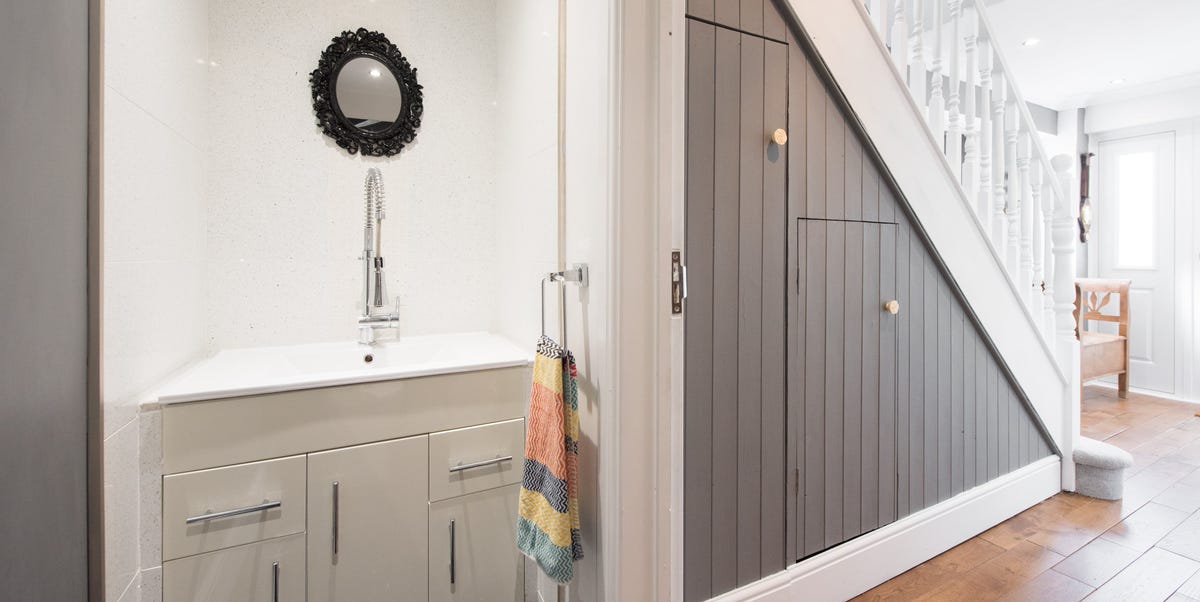
If your under-stairs area opens into a living room, hallway, or reading corner, built-in shelves can turn dead space into a design feature. Shelving that follows the slope of the staircase creates a custom architectural look and gives you room for books, framed photos, baskets, plants, and decorative objects.
Open shelves are ideal when you want the space to feel light and intentional. Closed cabinets on the bottom can hide less attractive items, while open shelves above can display the pretty things. This combination is the storage equivalent of wearing sweatpants with a nice blazer: practical, but still presentable.
For visual balance, vary the shelf contents. Mix vertical books with horizontal stacks, add a few sculptural pieces, and include baskets for small clutter. Leave some breathing room so the shelves do not look like they are gasping for air.
5. Build a compact home office nook
For homes without a spare room, the under-stair area can become a surprisingly useful home office. A slim desk, floating shelves, task lighting, and a comfortable chair can create a compact work zone for paying bills, answering emails, or doing homework.
If space is very tight, install a wall-mounted fold-down desk. When not in use, it can close up and keep the walkway clear. Add a corkboard, magnetic board, or peg rail above the desk to keep notes and supplies organized.
Lighting is essential here. Under-stair spaces are often dim, so add a wall sconce, LED strip, puck lights, or a small desk lamp. A dark nook may feel cozy for five minutes, but after that it becomes a cave with Wi-Fi.
6. Design a pantry for kitchen overflow
If the staircase sits near the kitchen or dining area, consider turning the under-stair space into a pantry. This is especially useful in older homes where the kitchen cabinets seem designed for three plates and a dream.
Install adjustable shelves for dry goods, canned food, baking supplies, extra paper towels, small appliances, and entertaining pieces. Pull-out shelves are helpful because pantry items tend to vanish at the back. Clear bins, lazy Susans, and tiered risers make it easier to see what you have before buying a fifth jar of cinnamon.
Smart pantry zones:
Create sections for breakfast items, baking supplies, snacks, canned goods, beverages, and backstock. Keep heavier items on lower shelves and lighter items higher up.
7. Use the area as a cleaning supply station
The space under the stairs can be perfect for cleaning supplies, especially if you install vertical organizers. Mount a broom holder on the wall, add hooks for dusters and reusable bags, and use caddies for sprays, cloths, and sponges.
Because cleaning products can spill or smell, use wipeable bins and consider ventilation if the closet is fully enclosed. Keep chemicals out of reach of children and pets. If the space is near an outlet, you can also create a charging station for a cordless vacuum.
A cleaning closet works best when everything has a designated spot. Otherwise, the mop and broom will form an awkward stick forest, and nobody wants to hike through that before coffee.
8. Create a pet nook with storage
Pet beds, crates, food bags, leashes, toys, grooming tools, and treats can quickly take over a home. An under-stair pet nook gives your dog or cat a cozy retreat while keeping supplies nearby.
For dogs, add a built-in bed, washable cushion, hooks for leashes, and drawers for toys or grooming tools. For cats, consider shelves, a hidden litter box cabinet with ventilation, or a quiet nap zone. Choose durable materials that are easy to clean, because pets are adorable, but they are not known for respecting upholstery.
If you add doors or a gate, make sure the space remains well ventilated and comfortable. A pet nook should feel like a den, not a tiny royal dungeon.
9. Make a reading nook with hidden storage
A reading nook under the stairs can be both charming and functional. Add a built-in bench, soft cushion, pillows, wall light, and shelves for books. The bench can include lift-up storage or drawers underneath for blankets, board games, or extra toys.
This idea works especially well in homes with children, but adults deserve cozy corners too. Add a small side shelf for a mug, a throw blanket, and warm lighting. Suddenly the under-stair triangle becomes the place everyone wants to sit.
For safety and comfort, avoid overcrowding the nook. Keep the floor clear, choose soft but durable fabrics, and make sure there is enough headroom for the intended user. Toddlers may fit anywhere; adults usually prefer not to fold like lawn chairs.
10. Add a mini bar or coffee station
If your under-stair space is near a dining room or living area, a mini bar or coffee station can feel luxurious without taking up much room. Install cabinets below, floating shelves above, and a small counter for mixing drinks or making coffee.
For a dry bar, include storage for glassware, bottles, cocktail tools, napkins, and serving trays. For a coffee station, add mugs, beans, syrups, filters, and a small trash bin. If plumbing is available and your budget allows, a wet bar can add even more function, but it requires professional planning.
Use lighting to make the area feel intentional. LED strips under shelves or inside cabinets can turn a small corner into a stylish feature.
11. Store seasonal items without chaos
Under stairs storage is ideal for seasonal items because you do not need them every day, but you do need to find them eventually. Use clear, labeled bins for holiday decor, winter gear, summer picnic supplies, gift wrap, and extra blankets.
Stackable bins are useful, but do not stack them so high that retrieving one becomes an upper-body workout. Pull-out platforms, rolling bins, or low shelves can make seasonal storage far easier to access.
Use labels that are specific. “Christmas lights – outdoor” is better than “stuff.” Future you will be grateful, and possibly less cranky.
12. Build a kids’ play space with toy storage
Children love small spaces, which makes the under-stairs area a natural play nook. Add soft flooring, low shelves, bins for toys, a chalkboard wall, and battery-operated lights. This creates a magical little hideaway while keeping toys from spreading across the entire house like confetti.
Design the space so it can evolve. Today it may be a playroom; later it can become a reading nook, homework station, gaming corner, or storage closet. Choose simple built-ins and flexible bins rather than overly themed designs that kids may outgrow quickly.
13. Use freestanding furniture for a renter-friendly solution
Not every under stairs storage idea requires a contractor. If you rent or want a low-commitment option, use freestanding pieces such as a console table, narrow bookcase, rolling cart, dresser, storage bench, or modular cube unit.
Baskets are your best friend here. Use matching bins to create visual order, even if the contents are wildly unglamorous. A row of woven baskets can hide shoes, cords, dog toys, and winter hats while making the space look intentionally styled.
Freestanding furniture also lets you test how you actually use the space before investing in built-ins. Think of it as dating the storage idea before marrying the carpenter.
14. Add lighting so the space works every day
Even the smartest under stair storage will fail if you cannot see inside it. Add lighting early in the planning process. Motion-sensor lights are excellent for closets and drawers because they turn on when you open the door. LED strips can brighten shelves, while puck lights work well in deeper cabinets.
Good lighting makes the space safer, more attractive, and much easier to use. It also helps prevent the classic storage problem: buying duplicates because the original item was hiding in the dark.
15. Plan for safety, ventilation, and building rules
Before enclosing or remodeling space beneath a staircase, think beyond looks. In many areas, enclosed accessible spaces under stairs may need protective materials such as drywall on the enclosed side. Local building codes can vary, especially in multifamily buildings or when the stairs are part of an exit route.
Do not cut structural framing, block vents, cover electrical panels, or store flammable materials near heat sources. If you are adding a bathroom, laundry zone, wet bar, or built-in electrical features, hire licensed professionals. Beautiful storage is wonderful; safe storage is non-negotiable.
How to choose the right under stairs storage idea
The best under stairs storage design depends on your home, lifestyle, budget, and clutter personality. Start by asking one simple question: What problem do I need this space to solve?
If your entryway is chaotic, build a mudroom. If your kitchen is overflowing, create a pantry. If toys are invading every room, make a play nook. If your home lacks a quiet work zone, add a desk. If you simply need hidden storage, choose drawers or cabinets.
Once you know the purpose, the design becomes easier. A space designed for shoes needs durable flooring and ventilation. A reading nook needs lighting and comfort. A pantry needs adjustable shelving. A home office needs outlets, a work surface, and cable management. The goal is not to copy a pretty photo exactly; the goal is to create a space that behaves beautifully in your real life.
Common under stairs storage mistakes to avoid
Ignoring the back of the space
Deep storage without pull-outs often becomes wasted storage. Use drawers, rolling bins, or shelves that allow you to reach everything.
Forgetting about lighting
A dark closet is where organization goes to retire. Add lights before you fill the space.
Using too many tiny containers
Small bins can be helpful, but too many create clutter inside the clutter solution. Use containers that match the size of what you store.
Skipping labels
Labels are not just for perfectionists. They help the whole household return items to the right place.
Choosing style over function
A gorgeous built-in that cannot hold your actual belongings is just expensive wall jewelry. Measure your items before designing around them.
Real-life experience: what actually works under the stairs
After seeing many homes struggle with under-stair clutter, one lesson stands out: the space only stays organized when it has a clear job. The most successful under stairs storage projects are not always the fanciest. They are the ones that match the daily habits of the people who live there.
For example, in a busy family home, a hidden mudroom often works better than elegant display shelving. The family may admire open shelves for about three days, but backpacks, sneakers, lunch bags, and rain jackets will quickly stage a takeover. In that case, hooks, cubbies, and drawers are the heroes. A bench with shoe storage below can make mornings smoother because everyone knows where their things belong. It may not eliminate the phrase “Where are my shoes?” forever, but it can reduce it from a daily announcement to an occasional dramatic performance.
In smaller homes or apartments, flexible storage usually wins. Freestanding cube organizers, labeled baskets, and rolling bins let the space change as your needs change. One season, the area might hold winter coats and boots. A few months later, it might store picnic supplies, sports gear, or extra pantry items. This approach is especially useful for renters or homeowners who are not ready to invest in custom built-ins.
For homeowners planning a renovation, pull-out drawers are often worth the splurge. The reason is simple: accessibility. A deep closet may technically offer storage, but if you need knee pads and a rescue rope to reach the back, you will stop using it properly. Pull-out drawers bring everything forward, which makes the storage practical instead of theoretical.
Lighting is another detail that makes a huge difference. People often organize the closet beautifully on day one, then slowly stop using the system because the space is too dark. A simple motion-sensor light can completely change the experience. When the light comes on automatically, the closet feels usable, not forgotten.
Another practical experience: do not overfill the space. Under stairs storage is tempting because it feels like bonus square footage, but stuffing it to the brim creates a new problem. Leave a little empty space so items can move in and out easily. Storage should breathe. If every shelf is packed tightly, the system will collapse the moment someone buys paper towels in bulk.
Finally, the best under-stair spaces have a reset routine. Once a month, take five minutes to return stray items, remove things that do not belong, and check labels. This small habit keeps the area from sliding back into chaos. Under stairs storage is not magic, although it can feel close when done well. It is simply a smart system in a spot most homes already have.
Conclusion
Under stairs storage is one of the most underrated ways to organize a home. It can become a mudroom, pantry, closet, office nook, pet zone, reading corner, cleaning station, or seasonal storage hub. The best idea is the one that solves a real problem in your household and makes daily life easier.
Start with a purpose, measure carefully, add lighting, choose accessible storage, and do not forget safety. Whether you install custom drawers or simply add baskets and hooks, the space beneath your staircase can become organized, attractive, and surprisingly useful. In other words, your stairs can finally do more than just help people go up and down. Honestly, it is about time they picked up a side hustle.