Groundwater is the quiet roommate of American life. It does not make a dramatic entrance like a hurricane, it does not sparkle like a mountain lake on a tourism brochure, and it definitely does not have a catchy theme song. Yet every day, it helps keep farms producing, homes hydrated, factories running, and communities alive. The problem? We have been treating this hidden resource like an unlimited gift card. Spoiler alert: it is not unlimited.
Across the United States, groundwater is being pumped faster than nature can replace it. Aquifers that took centuries or even thousands of years to fill are being drained in decades. In some regions, wells are going dry. In others, the ground is literally sinking. Roads crack, canals lose capacity, rural families pay to drill deeper, and farmers face the terrifying math of growing food with less water. This is not a distant environmental concern reserved for policy conferences and people who own too many reusable water bottles. It is a survival issue.
The disappearance of U.S. groundwater affects drinking water, food prices, public health, local economies, infrastructure, and climate resilience. If surface water is the money in our checking account, groundwater is the emergency savings account under the national mattress. And right now, America is making withdrawals like the ATM forgot how to say “insufficient funds.”
What Is Groundwater, and Why Should We Care?
Groundwater is water stored beneath the Earth’s surface in spaces between soil, sand, gravel, and rock. These underground storage zones are called aquifers. Some aquifers refill relatively quickly when rain and snowmelt seep into the ground. Others refill so slowly that the water being pumped today may have entered the ground before the invention of pizza delivery, air conditioning, or even modern agriculture.
For millions of Americans, groundwater is not an abstract science term. It is the water coming from the kitchen faucet. Many public water systems rely on groundwater, and more than 43 million people in the United States depend on private wells for drinking water. These private wells are often outside the federal protections that regulate public drinking water systems, which means homeowners are responsible for testing, maintenance, and sometimes very expensive surprises.
Groundwater also supports rivers, wetlands, and ecosystems. When aquifers are healthy, they slowly feed streams during dry periods. When they decline, streams can shrink, wetlands can dry out, and wildlife habitat can disappear. In other words, groundwater is not just “water underground.” It is part of the entire water cycle, quietly doing essential work while getting almost no applause.
Why U.S. Groundwater Is Disappearing
The main reason is simple: we are pumping too much. The complicated part is why we are pumping so much and why stopping is difficult.
1. Agriculture Is Thirsty
Irrigation is one of the biggest drivers of groundwater use in the United States. In dry regions, groundwater allows farmers to grow crops where rainfall alone would not be enough. That has helped make the United States an agricultural powerhouse. It has also created a dangerous dependency.
In parts of the High Plains, Central Valley, Southwest, and other agricultural regions, groundwater has become the backup plan, the main plan, and sometimes the only plan. During droughts, when rivers and reservoirs decline, pumping often increases. That keeps crops alive in the short term but pushes aquifers closer to long-term trouble.
2. Drought and Climate Change Are Tightening the Squeeze
Climate change does not create every groundwater problem, but it makes many of them worse. Hotter temperatures increase evaporation and crop water demand. Snowpack melts earlier. Droughts become more intense in many regions. When surface water becomes unreliable, cities and farms often turn to groundwater.
This is where the cycle gets ugly. Less rain and snow mean less natural recharge. More heat means more demand. More demand means more pumping. More pumping means lower water tables. Lower water tables mean deeper wells, higher energy costs, and greater inequality between those who can afford adaptation and those who cannot.
3. Weak or Uneven Groundwater Rules
Unlike rivers, which often cross state lines and attract legal attention, groundwater has historically been managed locally, inconsistently, or sometimes barely at all. Some states have strong groundwater rules. Others have gaps large enough to drive a drilling rig through.
California passed the Sustainable Groundwater Management Act in 2014 to bring overdrafted basins toward sustainability, but implementation takes time. Arizona has strict rules in certain Active Management Areas but far looser rules in many rural areas. In parts of the country, groundwater law still resembles a potluck dinner: everyone brings their own approach, and nobody is completely sure who is in charge of the casserole.
The High Plains Aquifer: America’s Underground Warning Sign
The High Plains Aquifer, often associated with the Ogallala Aquifer, stretches beneath parts of eight states, including Texas, Kansas, Nebraska, Oklahoma, Colorado, New Mexico, South Dakota, and Wyoming. It helped transform the Great Plains into one of the most productive farming regions in the world.
But the same aquifer that helped feed the nation is now one of the clearest examples of groundwater depletion. In some areas, water levels have declined by more than 100 feet since large-scale pumping began. In other places, the saturated thickness of the aquifer has been reduced dramatically. Once that water is gone, many parts of the aquifer will not refill on a human timeline.
This matters far beyond the farm gate. The High Plains region produces major shares of U.S. corn, wheat, cattle feed, and other agricultural products. When groundwater declines, farmers may shift crops, reduce yields, abandon irrigation, or leave land fallow. Consumers may see higher food prices. Rural economies may shrink. Small towns built around irrigation-based agriculture may face an uncertain future.
California’s Central Valley: When the Ground Sinks
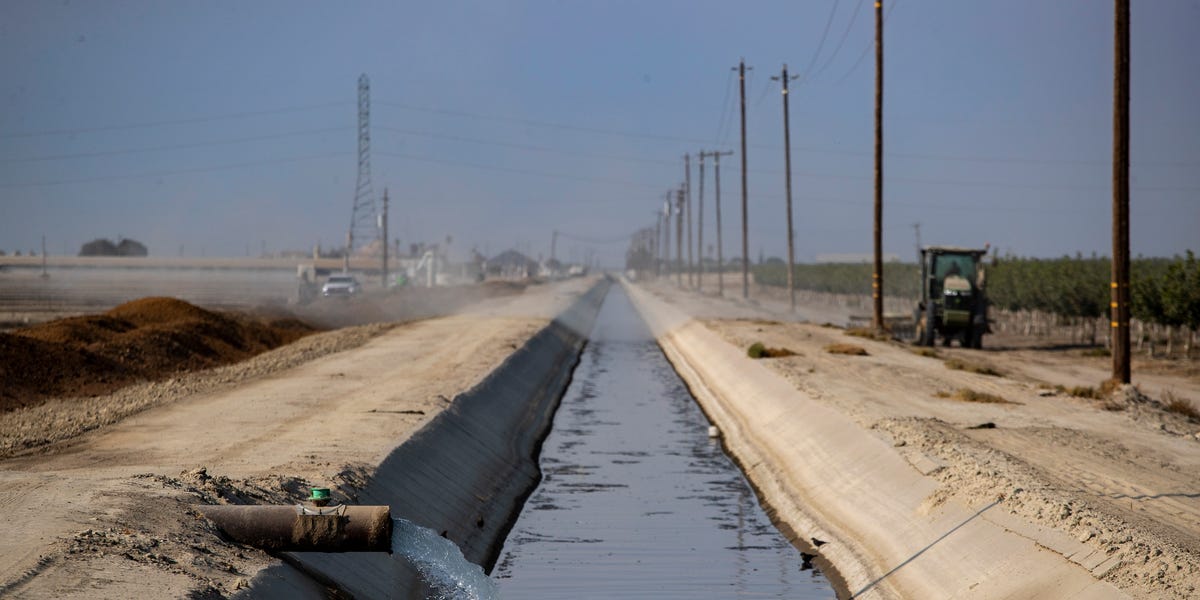
California’s Central Valley is another groundwater stress hotspot. This region grows a huge portion of America’s fruits, nuts, and vegetables. Almonds, tomatoes, grapes, lettuce, pistachios, dairy feed crops, and many other products rely heavily on water. During drought years, when surface water deliveries are reduced, groundwater pumping often rises.
The result is not just falling water levels. In parts of the San Joaquin Valley, excessive groundwater pumping has caused land subsidence, meaning the ground compresses and sinks. This is not a quirky geological magic trick. It damages canals, roads, bridges, and pipelines. It can permanently reduce the storage capacity of aquifers because compacted underground layers may never fully expand again.
Imagine squeezing a sponge so hard that it never springs back. That is essentially what can happen underground. Once aquifer materials compact, the system may lose part of its ability to store water in the future. That is the kind of mistake that sends a bill to your grandchildren.
The Colorado River Basin and the Groundwater Safety Net
The Colorado River Basin supplies water to tens of millions of people and supports major agricultural regions across the Southwest. Much public attention focuses on Lake Mead and Lake Powell, and for good reason. Reservoir levels are easy to photograph, measure, and panic about on the evening news.
Groundwater loss is harder to see, but satellite observations and scientific studies show that underground water storage in the basin has also been declining. When surface water supplies shrink, more users turn to groundwater. That hidden pumping can delay visible crisis while making the long-term problem worse.
This is one of the cruel tricks of groundwater depletion: it can make communities feel safe for a while. Wells keep running. Crops keep growing. Subdivisions keep expanding. Then one day, the well fails, the pumping costs jump, the water quality declines, or the ground starts cracking. Groundwater crisis often arrives wearing the costume of normal life.
What Happens When Groundwater Runs Low?
Wells Go Dry
When groundwater levels drop, shallow wells are often the first to fail. Families may need to deepen existing wells or drill new ones, which can cost thousands or even tens of thousands of dollars. For low-income households, that expense can be devastating. In rural communities, a dry well is not an inconvenience. It can mean no water to drink, cook, bathe, or flush a toilet.
Water Quality Gets Worse
As wells are drilled deeper or aquifers are depleted, water quality may change. Higher concentrations of salts, arsenic, uranium, nitrates, pesticides, or industrial contaminants can become a greater concern in some areas. Private well owners face particular risks because their water is not routinely monitored under the same federal rules that apply to public water systems.
Land Subsidence Damages Infrastructure
When groundwater is removed from certain aquifer systems, underground sediments compact. The surface sinks. This can crack roads, buckle canals, damage building foundations, and alter flood risks. In places such as California’s San Joaquin Valley and parts of Arizona and Texas, subsidence is already a costly warning.
Food Systems Become More Fragile
Groundwater depletion threatens irrigated agriculture, especially in dry regions. Farmers may have to switch to less water-intensive crops, invest in expensive irrigation technology, reduce acreage, or stop farming some land entirely. These shifts can affect food supply, food prices, farm jobs, and rural tax bases.
Ecosystems Lose Their Lifeline
Many streams, springs, and wetlands depend on groundwater. When aquifers decline, these ecosystems can weaken or disappear. Fish, birds, plants, and other wildlife lose habitat. Outdoor recreation and cultural landscapes also suffer. Nature may be resilient, but it is not a magician with a secret emergency aquifer hidden backstage.
Groundwater and Environmental Justice
Groundwater depletion does not affect everyone equally. Wealthier farms, corporations, and municipalities may have the money to drill deeper wells, buy water rights, install advanced treatment systems, or lobby for favorable rules. Smaller farms, rural households, Tribal communities, and low-income neighborhoods often have fewer options.
In some places, domestic wells go dry near large agricultural operations with deeper, more powerful wells. In others, communities already dealing with nitrate contamination, PFAS concerns, arsenic, or aging infrastructure must also face declining water levels. The crisis is not only about hydrology. It is about power, money, planning, and fairness.
When a family’s well fails while nearby fields keep being irrigated, the question is not simply “How much water is left?” The question becomes “Who gets to use it, who pays when it disappears, and who gets protected first?”
Can Groundwater Be Saved?
Yes, but not with wishful thinking, ceremonial rain dances, or another inspirational poster in a government conference room. Groundwater recovery requires measurement, management, investment, and political courage.
Measure What We Pump
You cannot manage what you do not measure. Many regions still lack complete, real-time information on groundwater withdrawals, water levels, recharge rates, and well conditions. Better monitoring helps communities understand whether they are living on renewable water income or spending ancient underground savings.
Recharge Aquifers During Wet Years
Managed aquifer recharge can help store water underground when supplies are available. This may involve spreading floodwater over suitable fields, restoring floodplains, using recharge basins, or directing treated stormwater into aquifers. Underground storage has major advantages: it avoids some evaporation losses, reduces flood risk, and can help rebuild depleted reserves.
Use Water More Efficiently
Drip irrigation, soil moisture sensors, crop switching, canal lining, leak repair, wastewater reuse, and smarter landscaping can all reduce pressure on groundwater. Efficiency is not a silver bullet, because saved water can sometimes be used to expand production instead of reducing total demand. Still, when paired with pumping limits, efficiency becomes a powerful tool.
Align Crops With Water Reality
Some places are growing very thirsty crops in very dry regions. That does not mean farmers are villains. Farmers respond to markets, policies, equipment investments, water rights, and consumer demand. But long-term survival requires matching land use with water availability. In some basins, that may mean fewer irrigated acres, more drought-tolerant crops, or compensation programs for land retirement.
Protect Private Well Users
Private well owners need better support for testing, treatment, emergency water supplies, and well replacement. States and counties can help by mapping vulnerable wells, requiring transparency about large pumping projects, and making sure domestic water needs are not sacrificed to short-term economic pressure.
What Individuals Can Do Without Becoming Full-Time Water Detectives
Most people cannot personally reform national groundwater policy between breakfast and lunch. But individuals still matter. Homeowners with private wells can test their water regularly. Residents can support local water planning, vote in water district elections, replace thirsty lawns with regionally appropriate landscapes, fix leaks, and ask where their food and water come from.
Consumers can also understand that cheap food sometimes hides expensive water consequences. This does not mean everyone must become a spreadsheet-powered grocery philosopher. It does mean we should stop pretending water has no cost just because the receipt does not show it.
Experiences From America’s Groundwater Front Lines
Spend time in groundwater-stressed regions and the issue stops feeling theoretical. In rural California, residents have described the strange helplessness of turning on a tap and hearing air instead of water. A dry faucet changes the rhythm of a household immediately. Laundry waits. Dishes stack up. Bottled water becomes a daily expense instead of an emergency backup. Children learn that brushing their teeth now depends on plastic jugs lined against the wall.
For farmers, the experience is different but just as tense. A grower in the High Plains may watch a center-pivot irrigation system sweep across a field and know that every circle of green is drawing from a shrinking underground account. The machinery hums, the crop grows, and the future quietly narrows. Many farmers are not careless. They are practical people trapped between debt, markets, weather, and water law. A farmer may want to conserve, but still need to pay for seed, equipment, land, labor, and loans. Groundwater depletion is not a simple morality play. It is a system problem with human faces.
In Arizona, some communities have seen rapid development and large-scale farming collide with limited groundwater oversight. Residents may notice wells deepening, land cracking, or dust rising from fields that depend on pumped water. The experience can feel unfair: one household tries to conserve every gallon while a large operation nearby uses water at a scale no family could imagine. That gap creates frustration, suspicion, and political conflict.
In California’s Central Valley, subsidence makes the invisible visible. The ground sinks, canals lose capacity, and infrastructure built for one elevation must function at another. It is one thing to say an aquifer is declining. It is another to see roads warped, bridges stressed, or irrigation systems altered because the land itself has dropped. The message from the ground is not subtle. It is basically shouting, “Please stop squeezing me.”
Even urban residents are connected to this story, whether they realize it or not. A person in Chicago, Atlanta, New York, or Seattle may feel far removed from aquifer depletion in Kansas or California. But that person buys bread, beef, tomatoes, almonds, lettuce, dairy products, and countless other foods shaped by irrigation decisions. Groundwater depletion travels through the grocery store. It shows up in prices, availability, farm consolidation, and rural economic stress.
The most important experience is perhaps the emotional one: the slow realization that water security is not guaranteed. Americans are used to turning a handle and expecting civilization to pour out. Groundwater depletion challenges that assumption. It asks whether we can plan beyond election cycles, profit cycles, and drought cycles. It asks whether we can respect a resource we rarely see. And it asks whether survival is worth changing habits before crisis makes the decision for us.
Conclusion: The Underground Clock Is Ticking
U.S. groundwater is disappearing because we have confused abundance with permanence. Aquifers made modern agriculture, suburban growth, and rural independence possible across vast regions of the country. But the same hidden reserves that helped America thrive are now being depleted faster than they can recover.
The solution is not panic. Panic is rarely useful unless you are being chased by a goose, and even then it is only moderately effective. The solution is disciplined action: better data, fairer rules, smarter farming, managed recharge, private-well protection, pollution control, and honest public conversation about limits.
Groundwater is not just a resource beneath our feet. It is a test of whether America can protect something essential before it becomes scarce enough to fight over. Our survival is at stake not because the last drop will vanish tomorrow, but because every year of delay makes the future more expensive, unequal, and fragile. The water below us has been patient. We should not mistake that patience for permission.