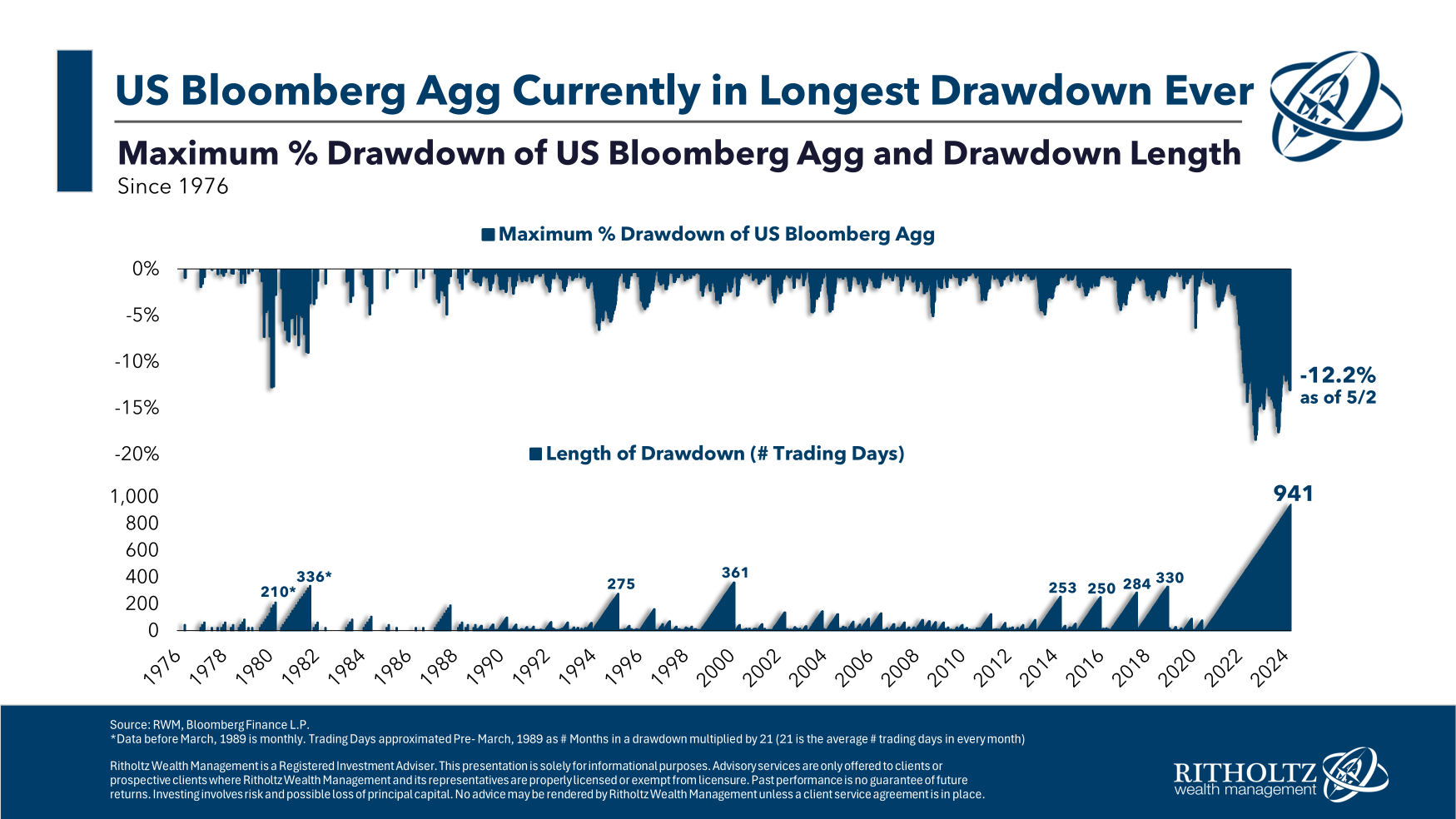
Bonds were supposed to be the cardigan of investing: dependable, a little boring, and unlikely to cause a dramatic scene at the family dinner table. Then the post-pandemic rate shock arrived, inflation refused to behave, and the supposedly polite corner of the market started flipping chairs. By several historical yardsticks, the damage done to long-term bonds since the ultra-low-yield era has been extraordinary. Even now, with the panic phase behind us, the bond bear market still feels like it is marching on because the scars remain, long-term yields are still elevated, and investors keep learning the same painful lesson: a bond is not the same thing as a guaranteed gain.
That distinction matters. A bond held to maturity can still return principal, assuming no default. A bond fund or a long-duration Treasury ETF, meanwhile, lives in the real world of daily prices, interest-rate swings, and investor mood swings. And in that real world, the old idea that bonds always cushion portfolios has been tested harder than a cheap umbrella in a hurricane.
Why this bear market earned its ugly reputation
The phrase worst bond bear market ever sounds dramatic, but it is not just financial clickbait wearing a necktie. The bond selloff that began after the low-rate era collided with inflation and aggressive Federal Reserve tightening has been historically severe. The reason is simple enough to explain at a backyard barbecue, although it may ruin the mood near the grill: when interest rates rise, existing bond prices fall.
That inverse relationship is the core mechanic behind this mess. Investors who bought bonds when yields were tiny locked themselves into very low coupons. When newer bonds started offering much higher yields, the older bonds suddenly looked about as appealing as a flip phone at a software convention. Prices had to adjust downward to make the math work.
And not all bonds were equally vulnerable. Duration, one of the most important concepts in fixed-income investing, measures how sensitive a bond is to changes in rates. The higher the duration, the harder the price typically gets hit. In practical terms, if a bond has a duration of 10, a one-percentage-point jump in rates can translate into roughly a 10% drop in price. That is why long-term Treasuries and zero-coupon bonds took the worst of the beating. They were basically rate sensitivity wearing a nametag.
The market backdrop in 2026: the fire is smaller, but it is still warm
The bond market is no longer in the pure shock stage of 2022, yet the healing process is incomplete. In mid-April 2026, the effective federal funds rate sat around 3.64%, while Treasury yields remained notably higher on the long end of the curve. The 2-year Treasury yield was around 3.76%, the 10-year hovered near 4.26%, and the 30-year was still close to 4.87%. That is a steep enough setup to remind investors that the Fed controls the short end, but the market still writes its own screenplay for longer maturities.
Inflation is a big reason why. March 2026 CPI data showed headline inflation running at 3.3% year over year, with core CPI at 2.6%. Energy was the troublemaker again, posting a 12.5% annual increase, while headline CPI rose 0.9% in a single month. The Fed’s preferred inflation gauge was somewhat cooler, but still not exactly on a beach vacation: the February 2026 PCE price index was up 2.8% year over year, and core PCE ran at 3.0%.
That mix creates an awkward bond-market mood. Inflation is not fully out of control, but it is sticky enough to keep investors wary. BlackRock recently argued that inflation remains too high to get back to the Fed’s 2% target anytime soon. That helps explain why hopes for aggressive rate cuts have faded and why long-term yields keep acting like they drank three espressos.
Higher rates, stubborn term premiums, and bigger borrowing needs
Another reason the bond bear market still feels alive is supply. The U.S. Treasury continues to borrow heavily, and large borrowing needs can pressure yields higher when investors demand more compensation to absorb the flood of issuance. In February 2026, the Treasury said it expected to borrow $109 billion in privately held net marketable debt during the April-to-June quarter. That is not the only borrowing figure that matters, but it reinforces the larger point: supply is not exactly disappearing into the mist.
When supply stays heavy and inflation worries linger, long-term investors often demand a higher term premium. That premium is basically the market saying, “Sure, I will lend money for 10 or 30 years, but I would like to be paid for the privilege of taking all that uncertainty.” Translation: if the future looks messy, the yield curve can steepen even if the Fed is no longer hiking.
That is why the bond market has confused so many people in the past year and a half. The Fed cut from peak levels, but long-term yields did not obediently collapse. Fidelity has highlighted exactly this point: short-term policy rates can move down while intermediate and longer-term yields remain elevated because those rates are driven by broader market forces, not just the Fed’s latest move.
Why long bonds got clobbered harder than short bonds
If the bond market were a horror movie, long-duration bonds would be the character who wanders into the basement carrying a flashlight and bad judgment. They are far more sensitive to changes in rates, inflation expectations, and term premium. A 30-year Treasury can look wonderful when yields fall. It can also look like a dare when yields rise.
That has been the defining experience of this cycle. Short-term bonds offered investors more protection because they matured sooner and could be rolled into higher-yielding securities relatively quickly. Long-term bonds, by contrast, locked investors into lower coupons for much longer and saw bigger mark-to-market losses. The closer long-bond yields have crept toward 5%, the more this distinction has mattered.
That divide also explains why many strategists in 2026 prefer the front end or the intermediate part of the curve. J.P. Morgan has pointed to greater opportunities in the front end of government bonds, while Schwab has argued that bond returns this year may come more from coupon income than from dramatic price appreciation. In other words, investors may still get paid, but they may need to stop expecting every bond rally to show up riding a white horse.
The 60/40 portfolio learned a painful lesson
One of the most important side stories in this bond bear market has been what happened to the classic 60/40 portfolio. For decades, the logic was straightforward: stocks delivered growth, bonds delivered ballast. When stocks fell, bonds were supposed to steady the ship. Then 2022 arrived and basically kicked a hole in the boat.
Morningstar’s long-run work on the 60/40 portfolio has underlined just how unusual this episode was. It took a historically awful bond market to make balanced portfolios suffer in a way that felt almost traitorous to investors who thought diversification would save the day automatically. The problem was not that diversification stopped working forever. The problem was that both major engines of the portfolio got hit at the same time by the same broad force: rapidly higher rates.
That matters in 2026 because the emotional damage lingers even when headline numbers improve. Plenty of investors still look at bond funds the way someone looks at a toaster after it once launched a bagel like a missile. The memory sticks.
So is the bear market really still “marching on”?
Yes, but with a very important footnote. If you define a bond bear market only as a nonstop calendar-year decline in every corner of fixed income, the answer gets messy. Some bond sectors have had recoveries. Coupon income is much more attractive than it was in the zero-rate era. And starting yields today give investors a bigger cushion than they had before the selloff.
But if you define the bear market more broadly as the continuing aftermath of the historic bond repricing that began when yields were absurdly low and then snapped sharply higher, the answer is still yes. The march continues in three ways.
First, the price damage in long-duration bonds has not been fully repaired. Second, long-term yields remain elevated enough to keep pressure on bond prices and borrowing costs. Third, the market still has not settled the core debate over inflation, deficits, supply, and long-run real rates. That is not a calm ending. That is an argument still happening in the driveway.
What investors should actually learn from this
Lesson 1: Bonds are safer than stocks in many ways, but not magically safe
Credit risk, interest-rate risk, inflation risk, and reinvestment risk all matter. A Treasury bond can be free of default risk and still lose a lot of market value if you need to sell before maturity.
Lesson 2: Starting yield matters more than many investors realized
Today’s higher yields are not just a headline; they are a shock absorber. When you start from 4% to 5% yields instead of 1% to 2%, coupon income can offset more volatility over time. That does not eliminate risk, but it does improve the math.
Lesson 3: Duration is not trivia
If you own long-term bonds, you are making a bigger interest-rate bet than you may realize. Investors who want fixed income without all the drama may be better served by short-to-intermediate maturities, ladders, or a mix that includes Treasury Inflation-Protected Securities.
Lesson 4: The yield curve tells a story, but not always the one investors expect
Many people assume lower Fed rates automatically mean lower mortgage rates and happy bond funds. Not necessarily. Long-term yields respond to inflation expectations, fiscal policy, supply, growth, and investor confidence. Sometimes the market nods politely at the Fed and then does whatever it wanted to do anyway.
Where the opportunities are hiding now
Ironically, the worst bond bear market in modern memory may have made bonds more attractive going forward. Higher yields mean better income. Positive real yields mean investors are no longer forced to accept microscopic compensation for taking duration risk. And for patient buyers who match maturities to real-life cash needs, today’s market offers something the zero-rate era did not: actual choice.
That does not mean investors should cannonball into the longest bond fund they can find while yelling “mean reversion.” It means selectivity matters. Short and intermediate Treasuries, high-quality corporates, municipals for taxable investors in the right bracket, and ladders built around known spending needs all deserve a close look. The smarter play may be less about heroically calling the bottom in long bonds and more about collecting solid income while keeping risk at a level that lets you sleep without conducting midnight TED Talks to the ceiling fan.
Experiences from the bond bear market: what it has actually felt like for investors
One of the strangest parts of this cycle is how personal it has felt. Stock bear markets are loud. Everyone sees the headlines, the flashing red tickers, the dramatic TV panels. Bond bear markets are quieter, which somehow makes them even weirder. Investors log in expecting the “safe” side of the portfolio to look calm and instead find numbers that resemble a minor home-repair estimate.
For retirees and near-retirees, the experience has often been deeply frustrating. Many shifted toward bonds precisely because they wanted stability and income. Instead, they watched fund balances shrink at the same time living costs rose. It felt like doing the responsible thing and still getting handed detention. The shock was not just financial; it was psychological. When the conservative plan stops behaving conservatively, confidence takes a hit.
Financial advisors have lived through their own version of the saga. In countless client conversations, they had to explain that no, a bond fund is not broken, and yes, this is how pricing works when rates rise fast from very low levels. Those conversations were not always fun. Telling a client that their “safe” allocation is down because yields are up is a little like telling someone their umbrella is excellent at being wet. Technically true, emotionally unhelpful.
Younger investors had a different experience. Some saw the selloff as a first real lesson in how fixed income actually works. For years, bonds were described in almost cartoonishly simple terms: less risky than stocks, income-producing, defensive. This cycle introduced the missing chapters. Bonds can be volatile. Long duration can punish complacency. And the difference between an individual bond held to maturity and a bond fund held in a brokerage account is not a detail; it is the plot.
Homebuyers felt the bond bear market too, even if they never bought a Treasury fund in their lives. Elevated long-term yields helped keep mortgage rates stubbornly high. So while many people heard about policy easing and assumed financing costs would soon get friendlier, the bond market had other ideas. That disconnect created confusion and plenty of grumbling around kitchen tables, loan offices, and group texts full of people saying some variation of, “Wait, I thought rates were coming down.”
Then there were the patient investors who quietly adapted. They shortened duration. They built ladders. They stopped chasing every forecast about the 10-year yield and focused on cash flow instead. Their experience has been less cinematic but arguably more useful. The big lesson of this era is not that bonds are broken. It is that investors need to respect the plumbing. Once they do, bonds can still play an important role. They just no longer get to wear an “always harmless” sticker.
Conclusion
The worst bond bear market ever marches on not because every bond is still in free fall, but because the forces that created the disaster have not fully vanished. Inflation is cooler than its peak, but not comfortably tamed. Treasury supply remains significant. Long-term yields are still high enough to keep pressure on prices and the broader economy. And investors are still recalibrating after learning that fixed income can be volatile when starting yields are too low and policy shifts too fast.
The encouraging part is that this painful adjustment has also reset the market. Bonds now offer real income again. Portfolio construction can be more rational. Investors do not have to pretend 1% yields were a gift from the heavens. They can finally get paid to be patient. After years of bond-market chaos, that may be the closest thing to good news wearing a suit.
Note: This article is based on real market information current through April 2026 and is for informational purposes only, not personalized investment advice.