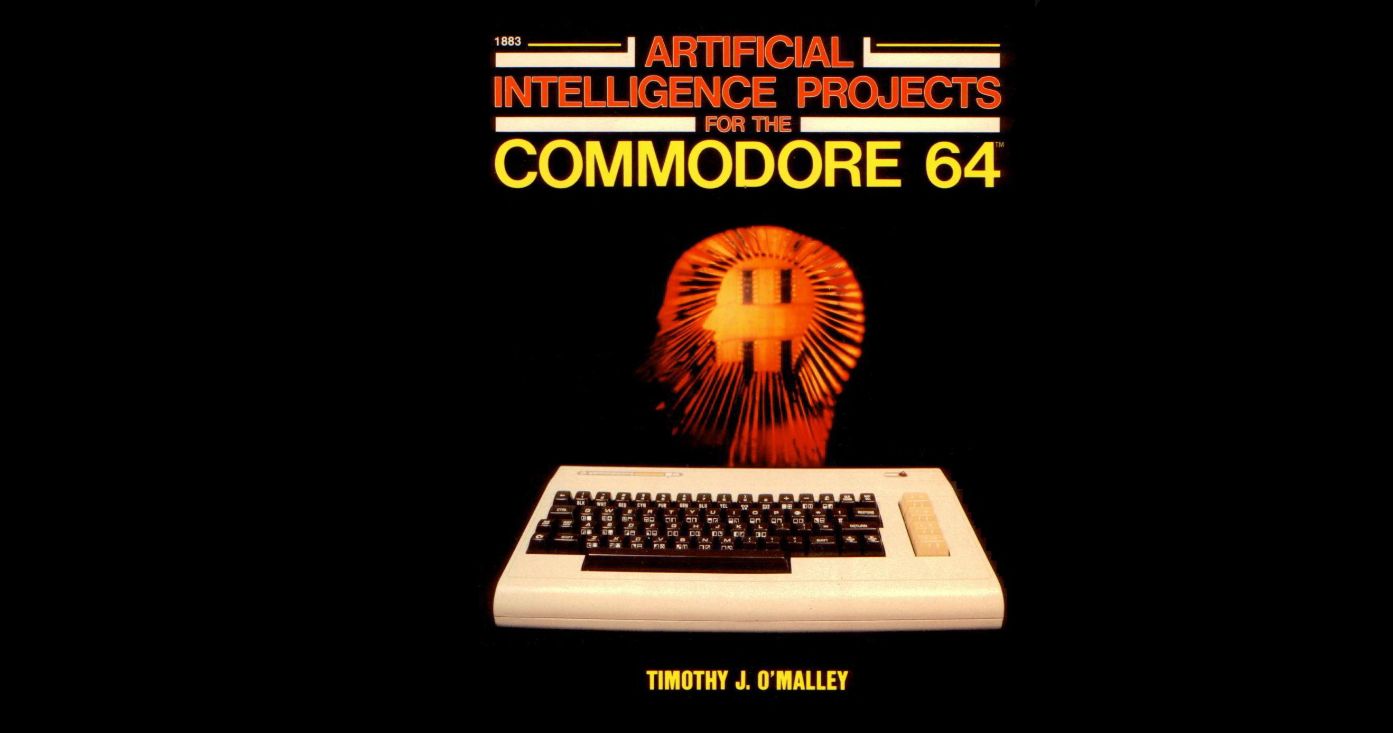
Artificial intelligence, we are told, requires oceans of data, warehouses full of GPUs, cooling systems that sound like jet engines, and a budget that makes the finance department quietly close its laptop. But then along comes a beige keyboard from 1982, wearing the color palette of a toasted marshmallow, and whispers: “Actually, I can do a little AI too.”
That is the delightful lesson behind the idea that all you need for artificial intelligence is a Commodore 64. No, the famous 8-bit home computer is not going to run a modern large language model, generate photorealistic dragons, or summarize your unread emails while pretending not to judge you. But the Commodore 64 can teach the essential ideas behind AI: rules, memory, pattern recognition, decision-making, natural language tricks, game strategy, and the surprisingly old dream of making machines appear intelligent.
The point is not that a Commodore 64 can replace today’s AI infrastructure. The point is better: artificial intelligence is not magic. Strip away the buzzwords, the data centers, and the corporate slide decks, and AI becomes a set of techniques for helping a machine make useful choices. In that sense, the Commodore 64 is not a joke. It is a tiny, charming classroom with a blinking cursor.
Why the Commodore 64 Still Belongs in the AI Conversation
The Commodore 64, often called the C64, was introduced in 1982 and became one of the most beloved home computers ever made. It had 64 kilobytes of RAM, a MOS 6510 processor running at about 1 MHz, colorful graphics through the VIC-II chip, and memorable sound from the SID chip. By modern standards, that is less computing power than a smart toothbrush with career ambitions. By early 1980s standards, it was a small miracle that could sit on a kitchen table and connect to a television.
Its popularity mattered. The C64 brought programming into ordinary homes. Kids, hobbyists, students, parents, and weekend experimenters learned that a computer was not just a sealed appliance. It was a machine you could talk to in BASIC. Type a line, press RETURN, and something happened. Sometimes that something was a game. Sometimes it was a syntax error. Either way, the computer answered back.
That interactive relationship made the C64 a natural platform for early artificial intelligence experiments. During the 1980s, books such as Artificial Intelligence Projects for the Commodore 64 by Timothy J. O’Malley and Artificial Intelligence on the Commodore 64: Make Your Micro Think introduced readers to AI concepts through programs they could type, modify, break, fix, and brag about. These were not glossy apps downloaded from a store. They were lessons in how intelligence could be simulated using rules, data, memory, and clever programming.
Artificial Intelligence Before the Hype Machine Got a Megaphone
Modern AI is often associated with machine learning, neural networks, generative AI, and huge models trained on enormous datasets. But AI as a field is much older. Long before chatbots could write wedding speeches or image generators could turn a dachshund into a Renaissance duke, researchers were building systems that reasoned through rules, searched game trees, recognized patterns, and responded to human language using scripted logic.
That older style of AI is sometimes called symbolic AI or rule-based AI. Instead of learning from millions of examples, a symbolic program follows human-written rules. If this condition is true, do that. If the player moves here, block there. If the user types a sentence containing “mother,” respond like a suspiciously patient therapist. It sounds simple, but simple does not mean useless. Many expert systems, games, diagnostic tools, and decision-support programs were built from rules.
This is where the Commodore 64 shines. With limited memory and processing power, it forces AI back to basics. You cannot hide sloppy thinking behind a billion parameters. You have to ask: What does the program know? How does it decide? What pattern is it looking for? What should it do when the answer is uncertain? The C64 makes those questions visible.
What “AI on a Commodore 64” Actually Means
When people hear “AI on a Commodore 64,” they may imagine a tiny version of ChatGPT squeezed into a cassette tape. That is not realistic. A C64 does not have the memory, speed, or storage for modern deep learning models. But artificial intelligence is broader than today’s headline technologies.
On a Commodore 64, AI can mean a game opponent that chooses moves intelligently. It can mean a simple expert system that recommends an action based on user input. It can mean a chatbot inspired by ELIZA, the famous 1960s natural language program that created the illusion of conversation through pattern matching. It can mean a pattern-recognition demo that learns to identify small character shapes. It can even mean a primitive neural-network-style program with a handful of artificial neurons and carefully constrained inputs.
In other words, the C64 can host the ingredients of AI, even if it cannot host the buffet. It can reason through rules. It can search possible moves. It can store facts. It can match patterns. It can update a score. It can appear to “learn” within a narrow domain. That is enough to make the machine feel clever, especially when the person using it understands just how tiny the hardware really is.
Games Were the Original AI Playground
For many home computer users, the first encounter with artificial intelligence was not in a lab. It was in a game. A chess program that refused to lose politely. A maze enemy that seemed to know where you were going. A strategy game opponent that made a move just annoying enough to feel personal. On the Commodore 64, game AI was everywhere, even when nobody called it AI with a straight face.
Game AI is often about creating the appearance of intelligence. A computer opponent does not need consciousness. It needs behavior that feels responsive, challenging, and believable. In a board game such as Nim or chess, the machine can examine possible moves and select the one that leads to a better outcome. In an arcade game, enemies can follow patterns, react to player position, or choose from a small set of behaviors. In a simulation, characters can follow schedules, respond to events, and maintain internal priorities.
The limitation is part of the charm. A C64 game could not afford endless calculations. Developers had to cheat elegantly. They used heuristics, shortcuts, lookup tables, probability, and weighted decisions. The result was not human-level intelligence, but it did not need to be. It only needed to make the player lean forward and say, “Wait, how did it know?”
Expert Systems: The Spreadsheet’s Nerdy Cousin With Opinions
One of the most practical forms of early AI was the expert system. An expert system tries to capture specialist knowledge as rules. For example: if a device will not power on and the fuse is blown, check the power supply. If a plant has yellow leaves and soggy soil, reduce watering. If your printer makes a grinding noise, first offer it emotional support, then check the paper tray.
On a Commodore 64, an expert system might ask the user a series of questions, store the answers, and make a recommendation. The logic could be written in BASIC using IF-THEN statements, arrays, and branching routines. This approach is not glamorous, but it is understandable. You can inspect the rules. You can change them. You can see exactly why the program reached its conclusion.
That transparency is still relevant today. Modern AI systems can be powerful but difficult to explain. A small rule-based AI on a C64 is the opposite. It may be limited, but it is honest about its machinery. It is like watching a magician perform with glass sleeves.
Natural Language on 64 Kilobytes: Tiny Chatbots With Big Confidence
Natural language processing sounds modern, but the dream of chatting with machines is old. ELIZA, created in the 1960s, showed that a program could create a surprisingly convincing conversation by matching keywords and transforming user statements into questions. It did not understand the way humans understand. It reflected language back in a clever pattern.
A Commodore 64 could run ELIZA-like programs because the underlying trick was lightweight. The program looked for words, selected response templates, and rearranged phrases. If the user typed, “I feel worried,” the program might respond, “Why do you feel worried?” If the user typed something outside the script, the program could produce a generic prompt such as, “Please tell me more.” Congratulations: the world’s smallest therapist is now accepting appointments, payment in floppy disks only.
This kind of chatbot reveals an important truth about AI: people are very willing to assign intelligence to systems that respond in familiar ways. A program does not always need deep understanding to feel interactive. That does not make it truly intelligent, but it does make it useful for studying how humans interpret machine behavior.
Pattern Recognition: The Little Neural Network That Tried
The Commodore 64 also has a place in the story of early neural-network experimentation. Simple pattern-recognition programs could use small grids of characters or pixels as input, compare them with stored examples, and identify the closest match. Some hobbyist projects explored associative memory, where the computer tried to recognize a learned pattern even when the input was incomplete or noisy.
Compared with modern neural networks, these programs were microscopic. They could handle only tiny problems. They could fail quickly if asked to remember too much. But that is exactly why they are educational. A small neural-style program shows the concept without burying it under layers of abstraction. Inputs become numbers. Connections are weighted. Similar patterns produce similar responses. The machine does not “see” in the human sense, but it can compare structures and make a best guess.
That is the seed of a much larger idea. Today’s neural networks may contain millions, billions, or even trillions of parameters, but the basic ambition remains recognizable: learn useful patterns from data and apply them to new inputs. The C64 version is a paper airplane. Modern AI is a cargo jet. Both still teach something about lift.
The C64 as an Antidote to AI Confusion
One reason the Commodore 64 is valuable in the AI conversation is that it removes the fog. Modern AI can feel overwhelming because so much happens at enormous scale. Training runs across specialized chips. Models are optimized, quantized, aligned, benchmarked, deployed, monitored, and wrapped in interfaces so smooth that the complexity disappears.
On the C64, nothing disappears. Memory is scarce. Speed is limited. Storage is slow. Every decision costs something. If a program searches too many possibilities, the user waits. If a knowledge base grows too large, the machine runs out of room. If a response system has too few templates, the chatbot sounds like a fortune cookie trapped in a filing cabinet.
Those constraints are not merely technical obstacles. They are teachers. They force programmers to define the problem clearly. What is the smallest version of intelligence that would still be useful? What information does the machine need? Can a clever rule replace brute force? Can a small model produce a good-enough result?
From Commodore 64 AI to TinyML and Edge AI
The modern world has rediscovered the value of small AI. TinyML and edge AI focus on running machine learning models directly on limited devices such as microcontrollers, sensors, appliances, wearables, and industrial equipment. Instead of sending every signal to the cloud, a device can process information locally. It can detect a wake word, classify a vibration pattern, recognize a simple gesture, or notice that a motor sounds wrong before it fails.
Of course, today’s microcontrollers are far more capable than a Commodore 64 in many ways. They may run at much higher clock speeds, include specialized instructions, and support optimized inference frameworks. But philosophically, the challenge is familiar: make intelligence fit inside tight limits. Use less memory. Use less power. Reduce latency. Make the model small enough to be practical.
The C64 is not a modern TinyML board, but it is a spiritual ancestor of the same discipline. It reminds us that AI does not always need to be gigantic. Sometimes intelligence is more impressive when it is compact, local, understandable, and efficient.
What a Commodore 64 Can Teach Modern AI Builders
1. Constraints Create Better Questions
When hardware is limited, vague ambition gets punished. You cannot simply say, “Let’s make it smart.” You must define smart. Does smart mean winning a game? Recognizing a pattern? Giving a recommendation? Asking a useful follow-up question? The C64 turns AI from a buzzword into a design problem.
2. Transparency Matters
A BASIC program full of rules may not be sophisticated, but it is readable. That readability helps users trust, debug, and improve the system. Modern AI still struggles with explainability. The C64 reminds us that understanding how a decision is made can be as important as the decision itself.
3. Intelligence Is Often Domain-Specific
A small C64 program might be excellent at one narrow task and useless at everything else. That is not a failure. Much of practical AI works the same way. A model that detects machine faults does not need to write poetry. A game opponent does not need to diagnose orchids. Narrow competence is still competence.
4. The User Experience Is Part of the Intelligence
A clever program feels smarter when it responds quickly, asks clear questions, and gives useful feedback. The Commodore 64’s simple interface made every interaction visible. Today, AI products still depend on the same truth: intelligence is not just the algorithm. It is also how the system communicates.
So, Can You Really Build AI on a Commodore 64?
Yes, if you define AI honestly. You can build rule-based systems, game-playing programs, ELIZA-style chatbots, simple pattern recognizers, and tiny learning demonstrations. You can explore decision trees, search algorithms, heuristics, and symbolic reasoning. You can make a machine behave in ways that appear intelligent within a narrow, controlled environment.
No, if you mean modern generative AI at internet scale. A Commodore 64 cannot train a large model, run a mainstream LLM, or process massive datasets. Asking it to do so would be like asking a bicycle to tow an aircraft carrier. Admirable spirit, terrible physics.
But the C64 does something perhaps more useful for learners: it makes AI approachable. It gives beginners a way to see intelligence as a collection of mechanisms rather than a mysterious cloud service. It shows that the core ideas are not locked behind corporate labs. They can fit, in simplified form, inside a machine with 64 kilobytes of RAM and a keyboard that looks ready to survive a minor earthquake.
Experience Section: What Working With Commodore 64 AI Feels Like
Working with artificial intelligence ideas on a Commodore 64 feels less like commanding a supercomputer and more like training a very clever hamster with a notebook. You quickly learn humility. The machine is not going to indulge your vague plans. If your program is inefficient, the C64 lets you know by slowing down, freezing, or politely detonating your enthusiasm with a syntax error.
The first experience is usually wonder. You type a few lines of BASIC, create a simple decision tree, and suddenly the computer seems to be asking questions with purpose. Maybe it is diagnosing a pretend problem. Maybe it is choosing a move in a game. Maybe it is responding to typed sentences with suspiciously therapist-like calm. The effect is small, but it is real enough to make you smile.
The second experience is frustration. Memory becomes a wall. You want more rules, more vocabulary, more patterns, more examples. The machine wants you to calm down and count bytes. This is where the learning happens. You start trimming unnecessary text. You store data more efficiently. You replace long logic with compact routines. You discover that constraints are not just limitations; they are design editors with no patience for fluff.
The third experience is respect. A Commodore 64 does not waste anything. Every variable, every loop, every character in a response table has a job. When a small AI program works, it feels earned. A simple Nim opponent that blocks your winning move can feel more magical than a modern app because you can understand how little the machine had to work with.
The fourth experience is perspective. After building or studying AI on a C64, modern artificial intelligence feels less alien. Large models are still complex, but the basic questions become familiar. What is the input? What is stored? What is being compared? What rule, weight, or probability shapes the output? What happens when the system is wrong? The C64 gives you a mental toolkit for asking better questions about bigger systems.
The fifth experience is joy. Retro computing has texture. The keyboard clacks. The screen glows. Loading from disk or tape feels like waiting for a tiny robot to finish making tea. There is no invisible cloud doing the work behind the curtain. The machine is right there, trying its best. When it recognizes a pattern or chooses a decent move, the achievement feels personal.
That feeling matters. AI is often discussed as if it belongs only to giant companies, advanced researchers, and server farms. The Commodore 64 pushes back. It says that intelligence, at least in its simplest programmable forms, can be explored by anyone curious enough to experiment. You do not need a data center to understand the foundations. You need a problem, a few rules, some memory, and the willingness to make mistakes in public while a blinking cursor silently judges you.
In the end, the best experience related to “All You Need For Artificial Intelligence Is A Commodore 64” is not nostalgia. It is clarity. The C64 strips AI down to its bones. It shows that artificial intelligence is not one thing, but many techniques arranged around a goal: making machines act usefully in situations that normally require human judgment. Sometimes that takes a supercomputer. Sometimes it takes a humble 8-bit machine, a BASIC listing, and a person who refuses to believe that 64 kilobytes is too small for big ideas.
Conclusion: The Beige Box Still Has Something to Say
The Commodore 64 will not overthrow modern AI. It will not replace cloud models, GPU clusters, or advanced neural networks. But it remains a brilliant way to understand what artificial intelligence really is. Through games, expert systems, chatbots, search routines, and pattern-recognition experiments, the C64 proves that AI is not only about scale. It is also about structure, logic, behavior, and creative problem-solving.
That is why the title “All You Need For Artificial Intelligence Is A Commodore 64” works so well. It is funny because it sounds absurd. It is meaningful because it is partly true. If your goal is to build the biggest AI system on Earth, you need much more than a Commodore 64. If your goal is to understand the roots of AI, the design tradeoffs, and the joy of making a machine appear to think, the old breadbox is more than enough.
Artificial intelligence may now live in data centers, smartphones, cars, cameras, and tiny embedded devices. But one of its most charming classrooms still has 64 KB of RAM, a 1 MHz processor, and the confidence of a machine that once taught millions of people to type 10 PRINT “HELLO” and feel like the future had arrived.