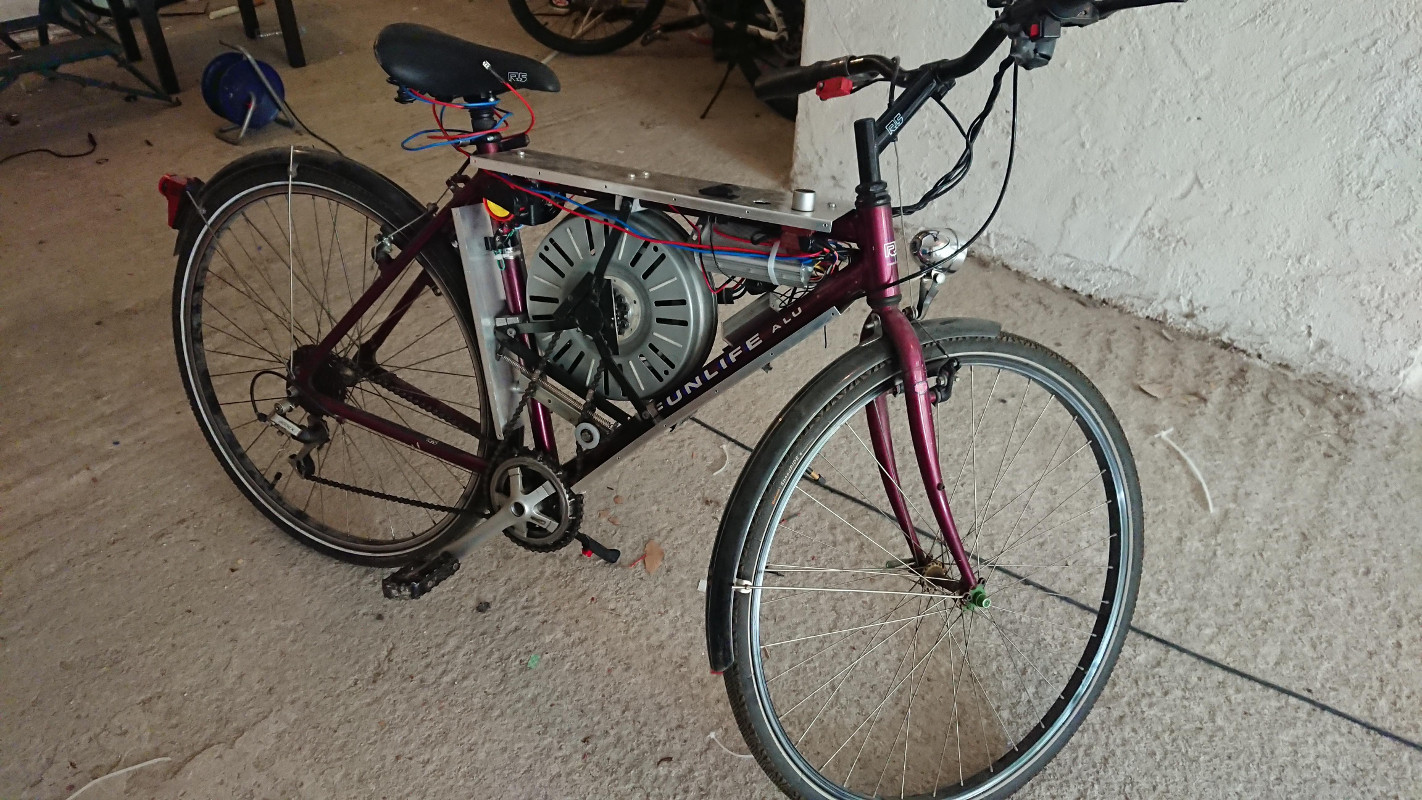
Every so often, the internet produces a DIY machine so gloriously weird that it makes both engineers and normal people stop scrolling at the same time. This is one of those machines. A builder took an old 10-speed bicycle, raided a washing machine for its motor, and created an electric bike that looked equal parts clever prototype, garage science project, and “please do not show this to my insurance company.”
And yet, beneath the delightful absurdity, there is real engineering here. The appeal of this build is not just that it is funny to imagine your laundry room secretly holding performance parts. It is that the project demonstrates how e-bike design works at a deeper level: motors like to spin, bikes already have gearing, and an inventive person can connect those facts in a surprisingly elegant way. The result is a machine that feels less like a novelty and more like a rebellious master class in repurposing technology.
In an era when e-bike conversions have become easier, cleaner, and far more commercial, this homemade “Spin Cycle” stands out because it goes in the opposite direction. Instead of ordering a neat little kit and pretending you invented torque, it leans into salvage, improvisation, and mechanical nerve. It also raises some big questions about safety, legality, and whether your trusty old 10-speed really wanted this kind of career change.
The DIY Build That Made the Internet Double-Take
The basic concept is catnip for makers: take a salvaged washing machine motor, mount it inside a bicycle frame, and use it to help drive the bike through the existing drivetrain. That sounds like a fever dream cooked up by someone staring too long at a spin cycle, but it is exactly why the project caught attention. It did not simply bolt a motor to a wheel and call it innovation. It used the bike’s original chain and gears as part of the powertrain, which is much smarter than it first appears.
That detail matters. Many DIY e-bike conversions use hub motors because they are easy to install. Drop one into a wheel, add a controller and battery, and you are in business. This build went a different route by driving the crank and keeping the original gearing in play. In plain English, the bike still got to be a bike, instead of turning into a scooter wearing bicycle clothing as a disguise.
The project’s charm comes from that tension between roughness and intelligence. Visually, it has the cobbled-together energy of a machine built by someone who owns both a soldering iron and a dangerous amount of confidence. Mechanically, though, it shows a real understanding of how power, gearing, and weight placement affect ride quality.
Why a Washing Machine Motor Is Not as Ridiculous as It Sounds
At first glance, “washing machine motor e-bike” sounds like the kind of phrase that should trigger a concerned phone call from an electrician. But the idea is not nonsense. A washing machine motor already performs a demanding job: it rotates a heavy drum, handles changing loads, and operates across different cycle behaviors. In other words, it is not a toy motor from a novelty fan. It is a serious piece of hardware designed to move mass over and over again.
That is especially true of direct-drive washer systems. Modern direct-drive motors are valued because they use fewer moving parts and are built for quieter, more durable operation. Brushless permanent-magnet motor designs also offer advantages in variable load and speed situations, with less brush wear and less of the racket associated with older brushed motors. So while repurposing one for a bicycle is unusual, the underlying logic is sound: if a motor can keep a washing machine drum behaving itself, it may have enough muscle to help move a rider down the road.
Of course, “can move a bicycle” and “should be used to move a bicycle” are cousins, not twins. A washer motor was not designed around bike geometry, rider input, potholes, or the deeply human habit of wanting more speed the moment something works. That is why the Spin Cycle build is interesting. It lives in the space between legitimate engineering and glorious mechanical mischief.
The Genius Move: Letting the Bike Keep Its Gears
The smartest idea in this conversion is the same one that makes many premium mid-drive e-bikes feel so good on the road: the motor works with the bike’s gears instead of ignoring them. That changes everything.
Better use of the drivetrain
When a motor feeds power through the crank and chain, the rider can shift gears to keep the motor operating in a more favorable range. That matters on hills, during starts, and whenever speed changes quickly. Mid-drive systems are prized for exactly this reason. They can climb more efficiently because they take advantage of the bike’s existing gearing rather than trying to brute-force every situation from the wheel. A build like Spin Cycle taps into that same idea, just with much more garage energy and much less product packaging.
More centered weight, less weird handling
Mounting a motor near the middle of the frame also helps with balance. Centralized weight tends to make a bike feel more stable and natural than hanging a big chunk of power in one wheel. Riders often prefer that more centered feeling because it keeps steering and tracking from getting too strange. Put simply, if you are going to give a bicycle an electrical identity crisis, at least keep the weight where the bike can handle it.
The freewheel fix is a small miracle
One especially clever touch in builds like this is making sure the motor can run without forcing the pedals to spin like a kitchen appliance on espresso. That is where a freewheel becomes crucial. Without it, motor power can back-drive the crank and turn pedaling into a slapstick routine. With it, the system behaves more like a proper e-bike drive, separating motor assistance from rider cadence in a way that protects both comfort and dignity.
Where the Cleverness Ends and the Problems Begin
For all its ingenuity, a homebrew conversion like this comes with real engineering headaches. That is not a knock on the builder. It is simply the truth of combining salvaged parts, electrical systems, and a bicycle frame that was never expecting this level of drama.
The controller and battery are half the story
People tend to obsess over the motor because the motor is the celebrity. But in an e-bike, the controller, battery, charger, and electrical integration are just as important. The controller determines how power is delivered. The battery determines range, weight, cost, and a fair amount of risk. The charger and wiring determine whether the whole system behaves like a useful machine or a very expensive lesson. Safety testing organizations now treat e-bike systems holistically for a reason: batteries, motors, controllers, brakes, and the rest of the system need to work together, not merely occupy the same zip code.
Your old 10-speed was not drafted into this willingly
Another issue is mechanical stress. The romantic version of DIY says an old bike gets a glorious second life. The less romantic version says extra motor torque can chew through drivetrain parts, wear chains and cassettes faster, strain bearings, and expose braking limitations in a hurry. A traditional bike frame can survive conversion, but it is not automatically optimized for motorized use. When people imagine e-bike upgrades, they picture speed. They rarely picture brake fade, accelerated chain wear, and the awkward realization that the donor bike now has stronger opinions about maintenance.
Battery safety is not optional
This is the part where the article puts down the wink and gets serious. DIY electric builds are only fun while they remain non-flammable. Consumer safety guidance around micromobility products is increasingly clear: use compatible charging systems, follow charging instructions, and never charge unattended while you are asleep or away. That advice might sound boring compared with “behold my laundry-powered speed machine,” but boring is underrated when lithium-ion batteries are involved.
The Legal Catch: Cool Build, Complicated Classification
The Spin Cycle story also lands right in the middle of a legal question that many homebrew builders prefer not to think about until a police officer, park ranger, or deeply unimpressed city ordinance does it for them. Under U.S. consumer-product law, a low-speed electric bicycle must have fully operable pedals, a motor under 750 watts, and a motor-only top speed under 20 mph on paved level ground. On top of that, most states now work within a three-class framework that separates pedal-assist and throttle-based bikes into categories with different access rules.
That matters because the very thing that makes this build exciting also makes it slippery from a compliance standpoint. A one-off conversion built around a salvaged washer motor is not rolling off a certified factory line with tidy labels and predictable specs. Even if the bike has pedals, a custom build can drift out of standard e-bike territory if power, speed, or electrical integration exceed the norms. Once that happens, you may no longer be dealing with a simple bicycle under the law. You may be flirting with moped, motor-driven cycle, or “nice try, but no” territory depending on where you ride.
So yes, the Spin Cycle is a brilliant conversation piece. It is also a reminder that the difference between a legal e-bike and a headache with handlebars can be surprisingly small.
Why This Build Still Fascinates People
Part of the appeal is thrift. Taking a discarded appliance and giving it a second life as transportation scratches a deep cultural itch. It feels resourceful, rebellious, and a little poetic. In a world where consumer tech is often sealed, disposable, and warranty-protected like a royal infant, a machine like this says the opposite: parts can be opened, reimagined, and made weirdly useful again.
Another part is that it reveals something honest about modern e-bikes. Strip away the slick marketing photos and many e-bikes are still a simple idea: battery, controller, motor, drivetrain, rider. The Spin Cycle makes that plain by using unconventional parts in an exposed, almost theatrical way. It is the backstage version of electrified cycling, all cables and problem-solving and “let’s see if this works.”
And then there is the fun factor. Let us not underestimate the power of a machine that sounds like a joke and works anyway. “I turned my old bicycle into an e-bike with a washing machine motor” is an unbeatable sentence. It has plot, character development, and a mild scent of burnt insulation.
What Builders Can Actually Learn From It
First, the build proves that drivetrain architecture matters more than gadget hype. Getting power into the right part of the bike can matter as much as the motor’s raw output. A modestly powerful system that uses gearing intelligently can feel better and climb better than a brute-force setup that ignores mechanical efficiency.
Second, repurposed hardware can be brilliant, but integration is everything. Salvaging a motor is the easy part compared with making the whole system safe, predictable, and durable. Battery choice, controller tuning, mounting rigidity, torque management, and braking upgrades are what separate a clever machine from a rolling apology.
Third, old bikes have limits. A vintage 10-speed may be light, charming, and perfect for coffee-shop admiration, but once electric assistance enters the chat, every weak point gets louder. Sometimes the smartest upgrade is not more power. It is better brakes, stronger wheels, fresh drivetrain parts, and a sober look at whether the donor bike is truly up for the job.
Grease, Guesswork, and Grins: The Experience Around a Build Like This
What makes a project like the Spin Cycle memorable is not only the finished machine, but the experience orbiting it. Builds like this tend to produce a very specific kind of joy: the joy of making something that really should not work as well as it does. There is the first moment the wheel spins under electric power and the builder realizes this is no longer a pile of promising nonsense. There is the second moment, usually five minutes later, when another issue appears and reminds everyone that homemade vehicles are humble pie on two wheels.
The riding experience is often a mix of surprise and negotiation. A centrally mounted motor can make the bike feel more balanced than outsiders expect, and when the gearing is used well, the assist can feel surprisingly natural. Instead of the abrupt shove associated with some crude conversions, a drivetrain-fed system can build speed in a way that feels more like the bike suddenly found ambition. Hills become easier, starts feel punchier, and the old 10-speed takes on an almost comedic new swagger. It is still a bicycle, but now it acts like it drank cold brew and started a side hustle.
Then there is the soundscape. Factory e-bikes are refined. A machine like this usually is not. You notice chain noise, controller behavior, gear engagement, and every vibration that the builder swore was “probably fine.” That does not necessarily ruin the experience. In a strange way, it deepens it. Riding a homemade e-bike can feel more intimate because you are aware of the system as a system. You are not just operating a product. You are negotiating with a contraption that you or someone like you brought into existence with parts, patience, and selective optimism.
There is also the social experience, which should not be overlooked. Homebuilt electric bikes are conversation magnets. Park it outside a café and somebody will ask what kind of motor it uses. Tell them it came from a washing machine and you immediately become the main character in their afternoon. That storytelling value is part of the appeal. A commercial e-bike may be smoother, safer, and easier to maintain, but it rarely comes with the same folklore. Nobody leans over a mass-produced commuter and says, “Wait, this used to wash towels?”
For builders, the emotional rhythm is equally familiar: excitement, problem-solving, tiny victories, fresh setbacks, then another tiny victory. One day the throttle response is perfect. The next day a mount shifts, a chainline looks suspicious, or a wire decides it no longer believes in cooperation. That cycle can be frustrating, but it is also why these builds create loyalty. People do not just ride them. They develop relationships with them. They learn their quirks, carry tools, listen for changes in sound, and become half rider, half caretaker.
That may be the most honest thing about the whole topic. A salvaged-motor e-bike is rarely only about transportation. It is about curiosity, self-reliance, and the thrill of turning castoff hardware into motion. Even when a project like this is not the most practical route to daily commuting, it delivers a kind of ownership that store-bought convenience cannot quite match. You do not merely charge it and go. You understand why it moves, where it complains, and what it took to get there. In a world full of sealed devices, that experience feels refreshingly mechanical, slightly chaotic, and deeply human.
Conclusion
The Spin Cycle is memorable because it sits at the perfect intersection of creativity and cautionary tale. It is a witty, mechanically savvy example of DIY e-bike thinking, and it makes a strong case for the hidden potential inside everyday machines. At the same time, it exposes the hard truths of homemade electrification: safe systems are more than motors, legal e-bikes have clear limits, and old bicycles do not magically become purpose-built platforms just because someone had a great idea in the garage.
Still, that is exactly why the build resonates. It reminds us that innovation does not always arrive in polished packaging. Sometimes it shows up wearing chain grease, borrowed hardware, and the expression of a person who looked at a broken washer and thought, “You know what this needs? Handlebars.”