A Seder plate is expected to carry parsley, bitter herbs, charoset, an egg, and several thousand years of memory. That is already a demanding job for one piece of tableware. The Seder Plate from MARCH, however, added another assignment: look striking enough to stop design lovers in their tracks without turning a sacred ritual into a tabletop fashion show.
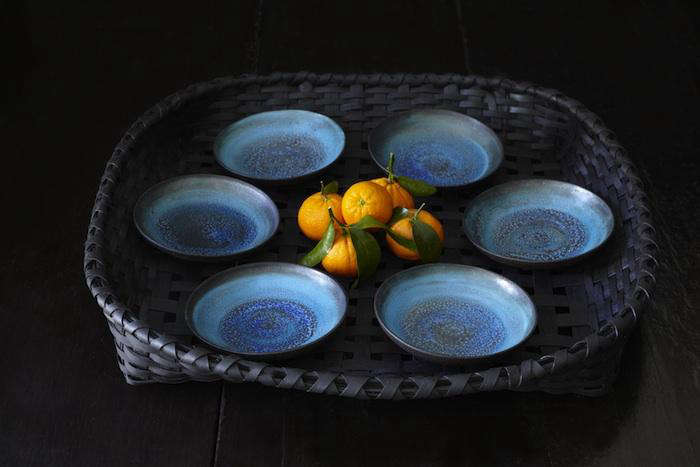
Introduced in 2012 by MARCH, the influential San Francisco kitchen and home shop, this limited-edition Passover piece combined six handmade turquoise ceramic dishes with a woven black-ash basket. Potter Victoria Morris created the ceramic vessels, while basketmaker Jonathan Kline produced the natural outer structure. The result was part ritual object, part functional sculpture, and part family heirloom waiting for a family. At its original price of $1,100, it was certainly not an impulse purchase made while grabbing extra matzah at the grocery store.
This distinctive design offers a useful way to explore what makes a meaningful Passover Seder plate. Its story connects Jewish tradition, American craft, food, material culture, and the deeply personal experience of setting a holiday table.
What Was the Seder Plate from MARCH?
The Seder Plate from MARCH was created as a collaboration between three creative worlds. MARCH founder Sam Hamilton supplied the curatorial vision. Victoria Morris contributed organic ceramic forms. Jonathan Kline supplied the handwoven basket that held the six individual dishes together.
Instead of producing one flat plate with labeled depressions, the collaborators treated the Seder plate as a collection of separate vessels. Six small turquoise bowls nested inside a dark basket made from black-ash splints. Each bowl could contain one of the symbolic foods traditionally placed at the center of the Passover table.
The arrangement was visually simple, but it was not simplistic. The slight irregularities of the handmade ceramics created warmth and movement. The woven basket gave the composition structure while emphasizing the tactile character of natural material. Nothing looked stamped out by a machine having a particularly uninspired Tuesday.
The limited-edition plate also reflected MARCH’s broader approach to home goods. The store became known for combining culinary usefulness with sculptural craftsmanship, presenting household objects as things that could be touched, used, repaired, remembered, and eventually passed down. The Seder plate fit naturally into that philosophy because Passover objects often gather meaning through repeated family use.
Why the Seder Plate Matters
The Passover Seder is not simply a holiday dinner accompanied by unusually detailed instructions. The word seder means “order,” referring to the structured sequence of blessings, questions, storytelling, symbolic foods, songs, and rituals followed during the evening. The Haggadah guides participants through that sequence as they retell the Exodus from Egypt.
The Seder plate, known in Hebrew as a k’arah or ke’arah, acts as the table’s symbolic center. Depending on community and family custom, it may hold five or six ritual items. These foods are not passive decorations. Participants point to them, explain them, taste several of them, and use them to transform an ancient narrative into a physical experience. The Seder asks people to encounter liberation through flavor, texture, aroma, conversation, and memorynot through a lecture delivered while everyone quietly checks the time.
The Six Foods on a Traditional Seder Plate
Zeroa: The Roasted Shank Bone
The zeroa traditionally consists of a roasted shank bone or another roasted bone. It recalls the Passover sacrifice offered in the ancient Temple in Jerusalem. Unlike several other items, it is generally displayed rather than eaten during the Seder.
Vegetarian and vegan households may substitute a roasted beet. Its deep red color provides a visual connection to the traditional symbolism while allowing the household to maintain its dietary commitments. This substitution also shows an important feature of Jewish ritual life: continuity does not always require identical materials in every home.
Beitzah: The Egg
The beitzah is a roasted or hard-boiled egg. It is commonly associated with the festival offering once brought to the Temple. Its round form has also inspired interpretations involving life, mourning, renewal, and the continuing cycle of the Jewish calendar.
At many tables, additional eggs are served with salt water at the beginning of the meal. This creates one of Passover’s most recognizable flavor combinations: simple, salty, comforting, and remarkably effective at making everyone wonder when the soup is coming.
Maror: The Bitter Herb
Maror represents the bitterness of enslavement. Horseradish is common in many Ashkenazi households, although romaine lettuce and other qualifying bitter greens may also be used.
Its sharp flavor prevents the story of oppression from becoming abstract. A spoonful of strong horseradish can clear the sinuses, focus the mind, and briefly eliminate all unrelated thoughts. That sensory intensity is precisely the point: the Seder uses taste to make memory immediate.
Hazeret: The Second Bitter Herb
Hazeret is a second portion or variety of bitter herb, often romaine lettuce. It may be used in the korech, commonly called the Hillel sandwich, which combines matzah, bitter herbs, and, in many traditions, charoset.
Not every Seder plate includes a separate hazeret compartment. Some communities use five primary foods, while others display two portions of bitter herbs because maror appears at more than one stage of the ritual. This difference explains why historical and contemporary Seder plates may contain either five or six designated spaces.
Karpas: The Spring Vegetable
Karpas is usually parsley, celery, onion, potato, or another vegetable. It is dipped in salt water or, in some traditions, vinegar. The green vegetable can represent spring, growth, hope, and the early flourishing of the Israelites in Egypt. The salty liquid evokes tears and suffering.
The combination is one of the Seder’s most compact lessons. Fresh growth and sorrow occupy the same bite. Hope does not erase pain, and pain does not permanently cancel hope.
Charoset: The Sweet Mixture
Charoset is a mixture of fruit, nuts, spices, and often wine. Its texture and brown color recall the mortar associated with Israelite forced labor. Yet charoset is sweet, producing a deliberate contrast between the memory of slavery and the possibility of freedom.
Recipes vary widely. Ashkenazi versions frequently include apples, walnuts, cinnamon, and wine. Sephardi and Mizrahi preparations may use dates, figs, raisins, apricots, chestnuts, citrus, or regional spices. These variations turn charoset into an edible map of Jewish migration and family history.
How MARCH Reimagined the Traditional Seder Plate
Separate Bowls Made the Symbols Feel Individual
Many Seder plates present the symbolic foods in shallow compartments on a single ceramic, metal, or glass surface. The MARCH design separated the foods into six individual bowls. This gave every item its own physical presence.
That choice was practical as well as beautiful. Charoset could be spooned into a deeper vessel without wandering into the parsley’s neighborhood. Horseradish remained contained. The egg could be lifted out easily. The modular arrangement also allowed the host to reposition or replace bowls when necessary.
More importantly, separate vessels encouraged participants to notice each symbol. Instead of scanning one decorative plate, guests could observe six distinct forms gathered into a unified wholean appropriate visual metaphor for a communal ritual built from many voices and customs.
Turquoise Added Life Without Overloading the Table
The turquoise glaze gave the plate a fresh, luminous character. Blue and green tones naturally suggested water, sky, vegetation, and spring. Against parsley, dark charoset, white egg, and reddish horseradish, the glaze would have created vivid but balanced contrasts.
The color also kept the piece contemporary. It avoided the heavy ornamentation associated with some ceremonial silver while remaining special enough for a holiday table. It did not whisper, “I came free with a set of six cereal bowls,” but it also did not require its own spotlight operator.
The Basket Connected Ritual With Handcraft
Jonathan Kline’s woven black-ash basket supplied a dark, textural frame for the ceramic bowls. The basket was more than packaging. Its structure completed the plate and physically gathered the individual components.
Basketry also introduced associations with labor, patience, and natural materials. Splints must be prepared, shaped, and woven through repeated hand movements. The resulting pattern reveals the making process rather than concealing it.
That quality is especially appropriate for Passover, a festival concerned with labor, dignity, memory, and freedom. A handmade ritual object can quietly remind participants that meaningful things often emerge from time, skill, and human effort.
Imperfection Became Part of the Beauty
Victoria Morris’s pottery is associated with organic forms and subtle irregularity. In the MARCH Seder plate, slight differences among the bowls would have made the composition feel alive. Handmade ceramics rarely behave like identical soldiers standing for inspection, and that is part of their appeal.
Passover itself depends on repeated structure without demanding emotional sameness. The order of the Seder remains recognizable, but every year brings different guests, questions, losses, jokes, recipes, and concerns. The irregular bowls visually echoed that relationship between continuity and change.
The Special MARCH Charoset Connection
The original presentation of the Seder plate included a charoset recipe developed by chef Brian Espinoza, a friend of Sam Hamilton who had attended Passover dinners with her. His preparation was described as a nod to Sephardic charoset.
Instead of relying primarily on chopped raw apples, the recipe used ingredients including Asian pears, golden raisins, apricots, dried sour cherries, dates, walnuts, sweet red wine, cinnamon, and pink peppercorns. The pears were sautéed and lightly caramelized, the dried fruit was warmed, and the mixture was thickened with mashed dates. Toasted walnuts added texture.
This culinary element helped prevent the plate from becoming an object admired only from a respectful distance. It was created to hold actual food, including sticky charoset with an enthusiastic relationship to spoons, napkins, and nearby tablecloths.
The recipe also reinforced the idea that ritual foods can preserve tradition while welcoming creativity. A family does not need to abandon its inherited recipe, but it can explore how different Jewish communities use regional fruit, nuts, wine, spices, and preparation methods to express the same central symbolism.
Is the MARCH Seder Plate Still Available?
The original collaboration was presented as a limited edition rather than a permanent mass-produced collection. Its reported retail price in 2012 was $1,100. MARCH itself later ended its San Francisco retail operation after more than two decades, making the plate best understood today as a historical design object rather than a current standard product listing.
Collectors may occasionally encounter related work by the individual artisans, but buyers should verify provenance carefully. A group of turquoise bowls inside a basket is not automatically the documented MARCH collaboration, just as putting six cupcakes on a platter does not automatically make them ceremonial Judaica.
Lessons for Choosing a Seder Plate Today
The MARCH plate offers inspiration even for households that have no plans to spend four figures on holiday tableware.
Prioritize Meaning Over Price
A valid and memorable Seder plate can be made from fine silver, studio pottery, thrift-store saucers, children’s painted dishes, or a practical serving tray. Jewish tradition does not require luxury. Chabad’s overview of the Seder plate notes that it may be an ornate object or something as humble as a simple covering that holds the ceremonial foods.
Make Every Symbol Easy to Identify
Guests, especially children and first-time attendees, should be able to see the foods clearly. Labels can help, but the leader should still explain each item. A beautiful plate cannot conduct the Seder by itself, no matter how confidently it sits in the center of the table.
Respect Different Family Customs
Ask which foods and arrangements your household follows. Some use five ritual items; others use six. Some place matzah beneath the plate, while others keep it nearby in a covered stack. Salt water usually sits in a separate bowl. Vegetarian substitutions and contemporary additions may also appear.
Choose Materials That Can Survive Dinner
A ceremonial object should be usable. Consider whether the dishes are food-safe, washable, stable, and large enough for the foods. Charoset can stain porous surfaces, horseradish has strong opinions, and parsley has an astonishing ability to migrate across a table.
Leave Room for New Layers of Meaning
Some contemporary families add an orange, olive, tomato, pinecone, or other object connected to inclusion, peace, labor rights, refugees, or environmental concerns. These additions do not replace the traditional foods. Instead, they create a bridge between the Exodus story and present-day questions about freedom and responsibility.
Experiencing the Seder Plate from MARCH at a Real Table
Imagine preparing a Seder table around the MARCH plate. The basket is placed in the center before the guests arrive. From a distance, it looks almost like a low sculptural arrangement. Up close, the woven black ash reveals its texture, and the turquoise bowls catch the evening light. The object feels special, but not fragile in the emotional sense. It looks ready to work.
The host begins filling the bowls. Parsley goes into one, its green leaves standing sharply against the blue glaze. A roasted egg settles into another. The charoset requires a larger spoon because the mixture contains sticky dates, pieces of pear, dried fruit, and walnuts. A little lands on the rim. This is the moment when a museum-minded owner might gasp, but a sensible host remembers that the bowl was created for charoset, not for a lifetime of spotless unemployment.
When the guests sit down, the plate immediately generates questions. Someone asks why the foods are in separate dishes. A child wants to know whether the basket is part of the ritual. Another guest recognizes the pottery as handmade and notices that the bowls are not perfectly identical.
These observations create an opening. The leader can explain that the Seder itself gathers different symbols, generations, interpretations, and family customs into one ordered experience. The bowls are individual, yet the basket keeps them together. The design lesson is not difficult to find, and fortunately nobody needs to deliver it with a pointer and presentation slides.
As the Seder progresses, the plate changes. Parsley is removed for dipping. Maror is measured and eaten. Charoset is spooned onto matzah. The arrangement becomes less pristine and more meaningful. Empty spaces appear. Crumbs collect near the basket. A drop of wine lands where it was not invited.
This gradual transformation is one of the most satisfying parts of using a handmade ceremonial object. At the start of the evening, it is a composed design. By the middle, it has become evidence of participation. The table no longer resembles a photograph prepared for a design magazine. It resembles a family telling a story together.
The plate may also trigger memories from previous Seders. An older guest might remember a grandmother’s silver plate with Hebrew labels. Someone else may recall using unmatched saucers in a first apartment. A younger person may describe a school project made from paper plates and paint. The expensive artisan object does not erase those humbler memories. Ideally, it invites them into the conversation.
There may be practical surprises too. Separate bowls are easier to pass, but enthusiastic guests may forget which one belongs where. The basket’s texture may collect crumbs. A generous helping of charoset may prove that six small bowls have finite ambitions. These minor complications keep the object grounded in domestic life.
After dinner, the dishes are washed carefully and returned to the basket. The host may notice a slight glaze variation that had gone unseen before, or a faint change in the basket where it was handled repeatedly. Such signs do not necessarily diminish the piece. They record use.
Over several years, the plate could become associated with particular voices and moments: the year a child asked all Four Questions without assistance, the year a new family member joined the table, the year the charoset was accidentally spicy, or the year the gathering took place in a cramped apartment with folding chairs borrowed from three neighbors.
That is how a luxury design object becomes a family object. Price may begin its story, but repetition gives it emotional value. The most successful Seder plate is not the one that receives the most compliments before dinner. It is the one that helps people ask questions, taste the symbols, tell the Exodus story, and return the following year with more memories than they had before.
Conclusion: Craft in the Service of Memory
The Seder Plate from MARCH demonstrated how contemporary design could approach religious tradition with seriousness, creativity, and restraint. Its six turquoise ceramic bowls honored the individuality of the ritual foods. Its woven black-ash basket gathered those pieces into a coherent whole. Its companion charoset recipe connected visual craft with flavor and family hospitality.
The plate was undeniably exclusive, but its broader lesson is widely accessible. A meaningful Passover table does not depend on owning a rare collectible. It depends on using objects thoughtfully. Whether a household chooses handmade pottery, inherited silver, everyday bowls, or a plate decorated by children, the goal remains the same: make the story visible, make participation possible, and give memory a place to sit.
Beautiful design can enrich ritual, but it should never compete with it. At its best, the Seder plate quietly supports the questions, symbols, tastes, and conversations that surround it. Then, after the last song and the final search for escaped matzah crumbs, it returns to the cupboard carrying another year of family history.
Note: The original MARCH collaboration was a limited-edition artisan product from 2012. Availability, ownership history, and resale claims should be independently verified before purchasing a piece presented as authentic.