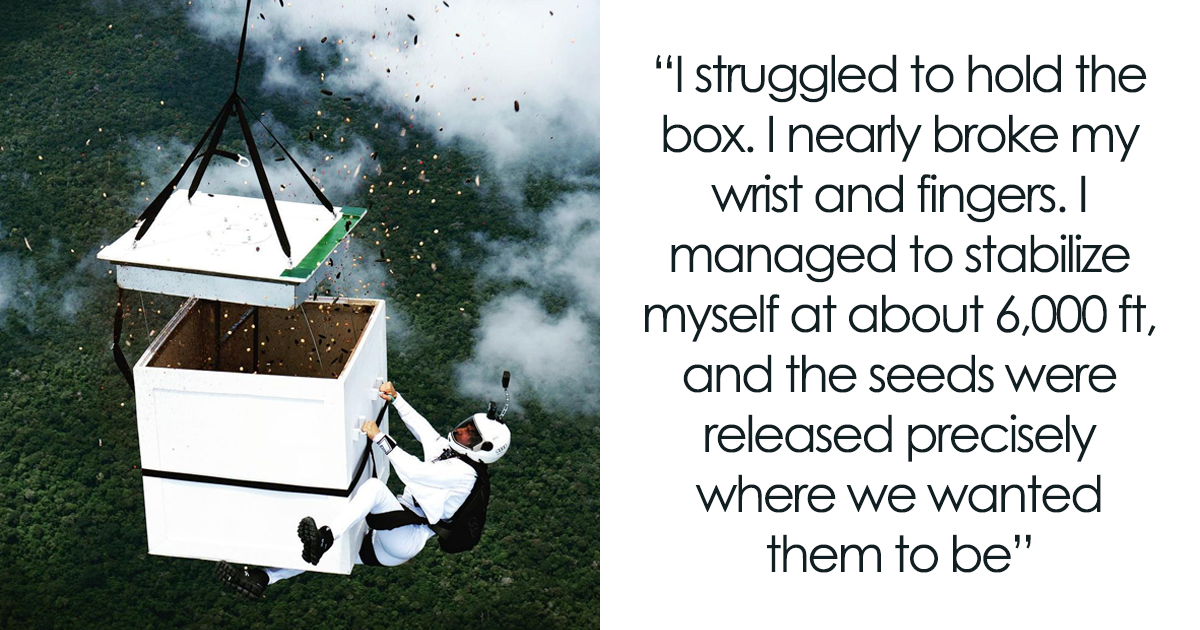
Imagine jumping out of a plane over the Amazon rainforest with a mission that sounds like part action movie, part science project, and part Mother Nature apology letter. That is the story behind Brazilian skydiver Luigi Cani, who reportedly released 100 million native seeds over a deforested area of the Amazon from about 6,500 feet in the air. It was not just a stunt for applause, though applause definitely arrived. It was a bold attempt to turn extreme sports into ecological restorationbecause apparently planting a backyard tomato garden was not dramatic enough.
The project captured global attention because it combined three things people rarely see in the same sentence: skydiving, reforestation, and 100 million seeds. But behind the viral headline is a deeper story about the Amazon’s fragility, the promise and limits of aerial seeding, and the serious work required to help damaged landscapes recover. Dropping seeds from the sky may look simple in a video clip, but successful forest restoration is not confetti with leaves. It requires planning, native species, permits, timing, monitoring, local knowledge, and a long view measured in yearsnot likes, shares, or dramatic background music.
What Happened Over the Amazon?
In 2022, Luigi Cani, a Brazilian skydiving legend known for world-record jumps, carried out one of the most unusual environmental actions of his career. Reports say he released around 100 million seeds from 27 native Amazonian plant species over a remote deforested area in Brazil. The operation took years of preparation and involved logistical hurdles that would make an average weekend project run screaming into the garage.
The mission reportedly targeted a roughly 100-square-kilometer area located about 130 kilometers from Novo Aripuanã, a municipality in Brazil’s Amazon region. Before Cani could leap into the air and scatter the future forest, the team had to obtain legal approvals, prepare seeds, and design a biodegradable seedbox capable of releasing them at the right moment. That last part matters. At high speed, high altitude, and high stakes, “oops” is not a great environmental strategy.
According to accounts of the project, the seeds were selected from native plants adapted to the local biome. That detail is crucial. Reforestation is not simply about putting “green stuff” back on land. A healthy Amazon forest is a living network of trees, vines, fungi, animals, water, soil, and Indigenous and local knowledge. The wrong species in the wrong place can fail to growor worse, disrupt the recovery process. Native seeds give the land a better chance to rebuild a forest that belongs there.
Why the Amazon Forest Matters So Much
The Amazon is often called the world’s largest tropical rainforest, and for good reason. It spans nine countries, with the largest portion in Brazil. It stores vast amounts of carbon, influences rainfall patterns, supports extraordinary biodiversity, and sustains millions of people. If forests had résumés, the Amazon’s would need a second page and probably a very impressed hiring manager.
But the Amazon is under pressure from deforestation, degradation, illegal mining, fires, roads, cattle ranching, and agricultural expansion. Satellite monitoring has shown how forests have been cleared over decades, often to make room for pasture and crops. Even when forest loss slows, degradation can continue quietly. A degraded forest may still look green from far away, but it can be drier, less biodiverse, more vulnerable to fire, and weaker as a carbon sink.
This is why a story about 100 million seeds falling from the sky resonates. It feels hopeful. It offers a dramatic image of repair at a time when many environmental headlines sound like nature is sending increasingly angry emails. Yet hope works best when it is paired with realism. Aerial seeding can help, but it is not a magic wand with propellers.
Aerial Seeding: Brilliant Idea or Green Hype?
Aerial seeding is the practice of distributing seeds from the air using planes, helicopters, drones, or other aerial systems. It has been used in different forms for agriculture, post-fire stabilization, erosion control, and ecological restoration. Its main advantage is speed. In remote or difficult terrain, aerial methods can reach places where crews on foot would take weeks or months to cover.
For a deforested Amazon site, that advantage is obvious. The rainforest is vast, roads are limited, and some damaged areas are difficult to access. Dropping seeds from above can reduce labor needs and spread plant material across a large area quickly. In theory, it gives restoration teams a way to scale up action when time is not exactly lounging in a hammock.
However, the challenge is that seeds are picky little passengers. They need the right landing spot, the right season, the right soil moisture, protection from predators, enough light, and freedom from aggressive grasses or weeds. A seed that lands on compacted, sun-baked soil may not germinate. A seed that germinates during the wrong weather window may die before roots establish. A seedling that survives its first weeks may still be outcompeted by invasive grasses or lost to drought, fire, or grazing.
Why Native Species Make or Break Restoration
Using native species is one of the smartest parts of any serious reforestation effort. Native plants are adapted to local rainfall patterns, soils, wildlife interactions, and ecological relationships. In the Amazon, those relationships are staggeringly complex. Some trees depend on animals to disperse seeds. Some plants support specific insects. Some species help shade the soil, while others prepare the way for slower-growing forest giants.
That is why the reported use of 27 native species matters. Diversity improves the odds that at least some species will thrive under site conditions. It also helps avoid the trap of creating a tree plantation instead of a forest. A plantation may store carbon and provide wood, but it is not the same as a biodiverse rainforest. A real forest is messy, layered, noisy, and alive. In other words, it is less like a green carpet and more like a city where everyone speaks bird, root, fungus, and rain.
The Hidden Work Behind a Viral Seed Drop
The most shareable part of the story is the jump. The most important part may be everything that happened before and after it. Restoration specialists emphasize that seeding success depends on site evaluation, seed quality, seedbed preparation, delivery methods, and monitoring. That means a good aerial seeding project begins long before the aircraft takes off.
Teams need to ask practical questions. What caused the forest loss? Is the soil compacted? Are invasive grasses present? Is there nearby natural forest that can support regeneration? Are fires likely? Are local communities involved? Are there land rights conflicts? Is the project designed for long-term stewardship or just a dramatic one-day spectacle?
Those questions may not fit neatly into a 20-second social media clip, but they decide whether the project becomes a forest or a footnote. Restoration is not only about seed delivery. It is about removing barriers that prevent recovery. Sometimes the best strategy is assisted natural regeneration, which protects young trees already trying to return. In other cases, direct seeding, nursery planting, agroforestry, or a combination of methods may be needed.
What Could 100 Million Seeds Actually Achieve?
The number 100 million sounds enormous because it is enormous. But in ecological restoration, seed count does not equal tree count. Many seeds never germinate. Some are eaten. Some land in unsuitable places. Some sprout and die. This is normal in nature. Forests produce huge numbers of seeds because survival is a numbers game, and nature has never been shy about overpacking.
Still, large-scale seeding can be valuable when used wisely. If even a fraction of the seeds establish and grow, the project can help jump-start vegetation cover, reduce erosion, improve soil conditions, and create habitat. Early-growing species can shade the ground, cool the surface, and make the site more welcoming for later forest species. Birds, bats, and other animals may eventually help carry in more seeds, turning a human-started process into a natural recovery cycle.
The best-case scenario is not that every seed becomes a towering tree. The best-case scenario is that enough seeds establish to restart ecological momentum. Once that momentum begins, the forest can help do what forests do best: rebuild relationships, store carbon, cycle water, shelter wildlife, and turn sunlight into life with quiet, leafy confidence.
Why the Amazon Needs Both Big Ideas and Local Stewardship
Luigi Cani’s seed-drop mission is powerful because it makes restoration visible. People understand the image instantly: a man jumps from the sky and releases seeds over damaged land. It is cinematic, hopeful, and easy to remember. But the Amazon does not survive on symbolism alone. It needs enforcement against illegal deforestation, support for Indigenous land rights, sustainable livelihoods, fire prevention, scientific monitoring, and restoration projects that stay funded after the cameras leave.
Indigenous peoples and local communities are central to this future. Across the Amazon, territories managed by Indigenous communities often show stronger forest protection outcomes than surrounding areas. That is not a coincidence. People who live with the forest, depend on it, and inherit knowledge across generations are often among its most effective guardians. Any restoration plan that ignores them is like trying to repair a watch with oven mitts: technically ambitious, practically doomed.
Large organizations have also launched major restoration efforts in the Brazilian Amazon, including projects focused on restoring tens of millions of trees across degraded land. These programs often combine direct planting, seed networks, natural regeneration, community participation, and monitoring. The lesson is clear: restoration works best as an ecosystem of actions, not a single heroic gesture.
The Bigger Picture: Progress and Warnings
Recent reports show that Brazil has made progress in reducing Amazon deforestation, with official data in 2025 indicating an 11-year low in the annual deforestation rate. Global forest monitoring also points to meaningful reductions in non-fire primary forest loss in Brazil. That is encouraging, because policy, enforcement, and public pressure can make a measurable difference.
At the same time, the Amazon remains vulnerable. Fires, drought, illegal logging, mining, and degradation can damage forests even when clear-cutting declines. A forest does not need to disappear completely to lose ecological strength. Repeated drought and fire can weaken trees, reduce biodiversity, and make future fires more likely. This is the kind of slow-motion damage that does not always trend online but can reshape a biome.
That is why restoration stories should be celebrated carefully. The seed drop is inspiring, but it should not make anyone think the Amazon can be fixed by one jump, one celebrity athlete, one aircraft, or one clever seedbox. The real message is not “problem solved.” The real message is “look what imagination can startand now look how much work remains.”
Lessons From the Man Who Sprinkled 100 Million Seeds Above the Amazon
1. Creativity Can Make Conservation Impossible to Ignore
Environmental work often struggles for attention because it is complex, technical, and slow. A skydiver releasing seeds from 6,500 feet cuts through the noise. It gives people an unforgettable image that can lead them toward deeper questions about deforestation, restoration, and climate action.
2. Scale Matters, But Survival Matters More
One hundred million seeds is a stunning number, but restoration success depends on how many seedlings survive and how the ecosystem develops over time. Monitoring is essential. Without follow-up, nobody knows whether the project produced a young forest, a patchy recovery, or a very ambitious snack delivery service for birds and insects.
3. Native Biodiversity Beats One-Size-Fits-All Planting
The Amazon is not a blank canvas. It is a living system with local species, local people, local soils, and local climate patterns. Restoration must respect that complexity. The goal is not merely to make land green again, but to help it become ecologically functional.
4. Viral Hope Should Lead to Practical Support
Stories like this can inspire donations, policy support, volunteer interest, and public education. But inspiration should move toward grounded action: protecting intact forests, supporting Indigenous-led conservation, reducing demand linked to deforestation, funding restoration science, and choosing products with more transparent supply chains.
Experiences Related to the Topic: What This Story Teaches Anyone Who Has Tried to Grow Something
Anyone who has ever planted a seedeven in a coffee mug on a windowsillcan understand the emotional pull of this story. Seeds are tiny acts of trust. You place something small into soil and behave as if the future has RSVP’d yes. Sometimes it works beautifully. Sometimes nothing happens, and you stare at the dirt like it personally betrayed you. That small experience offers a surprisingly useful window into the Amazon seed-drop story.
Gardening teaches humility. You can buy good seeds, choose a sunny spot, water carefully, and still lose plants to heat, pests, poor soil, or mysterious plant drama. Now multiply that challenge by a rainforest landscape. In a deforested Amazon area, seeds may face compacted earth, invasive grasses, drought stress, fire risk, and the absence of the shade and moisture that forest seedlings often need. The romance of throwing seeds into the wind quickly meets the reality of ecology.
At the same time, planting teaches patience. A seed does not become a tree because we are excited. It germinates when conditions allow. It grows slowly, builds roots first, and survives day by day. That is one of the most meaningful lessons from Cani’s mission. The jump was fast; the forest, if it returns, will be slow. The dramatic moment lasted minutes. The restoration test lasts years.
There is also a community lesson here. Many people who start gardens eventually learn from neighbors, farmers, local growers, or elders who know what works in that specific place. They learn when rains arrive, which plants attract pollinators, which soil needs compost, and which shortcuts are not worth taking. Amazon restoration requires that same respect for local expertise, only at a much larger scale. Scientists, Indigenous communities, seed collectors, pilots, land managers, and restoration crews all hold pieces of the puzzle.
For people far from the Amazon, the story can still change behavior. It can encourage support for organizations that protect forests, curiosity about where beef, soy, timber, or gold comes from, and a deeper appreciation for native plants at home. Someone in Ohio, Texas, California, or New York may not be dropping seeds from an aircraft, but they can plant native species in a yard, support habitat corridors, reduce waste, vote for responsible environmental policy, and talk about conservation without sounding like a walking instruction manual.
The most relatable part of the story is not the altitude. Most of us will not leap from 6,500 feet with a seedbox, and frankly, many of us get nervous on a step ladder. The relatable part is the decision to do something useful with the tools available. Cani had skydiving skills, visibility, and courage. Restoration scientists have research. Indigenous communities have ancestral knowledge and lived stewardship. Ordinary people have choices, voices, and the ability to support better systems.
In that sense, the 100 million seeds are also a metaphor. Not every effort grows. Not every action succeeds. But enough well-placed efforts, supported by care and persistence, can change a landscape. The Amazon does not need empty optimism. It needs durable hopethe kind that gets permits, chooses native species, monitors seedlings, protects land rights, prevents fires, and keeps working after the applause fades.
Conclusion
The story of the man who sprinkled 100 million seeds above the Amazon forest from 6,500 feet is more than a viral environmental headline. It is a reminder that restoration can be imaginative, daring, and deeply serious at the same time. Luigi Cani’s reported mission turned a skydiving jump into a symbol of repair, but the deeper lesson is that forests are rebuilt through patience, science, community, and long-term protection.
Aerial seeding may help restore hard-to-reach land, especially when native species, good timing, and follow-up management are part of the plan. But the Amazon’s future depends on much more than seed drops. It depends on stopping deforestation, reducing degradation, preventing fires, respecting Indigenous leadership, and supporting restoration that is measured not by views, but by living roots.
The Amazon has spent millions of years becoming one of Earth’s greatest life-support systems. Helping it heal will not be easy. Still, stories like this matter because they prove that people can look at a damaged landscape and choose action instead of despair. Sometimes that action begins with a seed. Sometimes, apparently, it begins with 100 million of them falling from the sky.