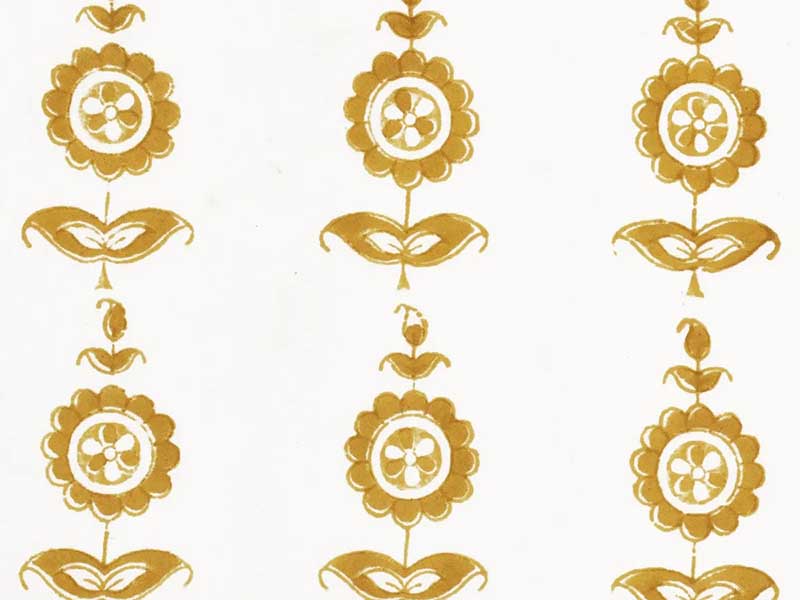
Some fabrics walk into a room and immediately demand a brass band, three chandeliers, and their own Instagram account. Les Indiennes #006 Daisy takes the opposite approach. This hand-block-printed floral is quiet, airy, and remarkably easy to live with. Its small botanical motif gives a room personality without making the sofa look as though it has joined a traveling circus.
Created by Les Indiennes, a textile company known for naturally dyed cotton fabrics produced in India, Daisy combines an old textile tradition with a surprisingly modern sense of restraint. The pattern is small enough for layering, distinctive enough to recognize from across a room, and available in a palette that ranges from classic Indigo to earthy Olive and Chocolate.
For anyone interested in hand-block-printed fabric, traditional Indian textiles, cottage-style interiors, organic cotton décor, or simply a floral pattern that does not scream “floral pattern,” #006 Daisy deserves a closer look.
What Is Les Indiennes #006 Daisy?
Les Indiennes classifies #006 Daisy as a botanical, floral, small-scale print. According to the company’s specifications, the individual pattern measures approximately 3.5 by 1.75 inches, with a 3.75-inch vertical repeat and a 3-inch horizontal repeat. The fabric is approximately 60 inches wide.
The available colorways include:
- Indigo
- French Gray
- Madder Red
- Gold
- Olive
- Chocolate
Those names tell you quite a bit about the Les Indiennes aesthetic. This is not neon-daisy territory. The palette is muted, natural-looking, and intended to age gracefully alongside wood, linen, antiques, painted furniture, stone, and other materials that tend to improve rather than panic when they acquire a little patina.
A Small Print With an Important Advantage
The relatively compact repeat is one of Daisy’s strongest characteristics. Large-scale florals can be spectacular, but they need room to perform. Small-scale patterns are generally easier to use across pillows, drapes, bed skirts, lampshades, upholstered chairs, table coverings, and smaller rooms.
A little print also behaves almost like texture when viewed from farther away. Up close, you notice the daisy-inspired botanical shapes. Step backward and the repeated motif becomes a softer field of color and movement. That dual personality makes small prints extremely useful when building layered interiors.
The Story Behind Les Indiennes Fabrics
Les Indiennes was launched by Mary Mulcahy in 2002 after she was unable to find the naturally dyed cotton fabric she imagined: light backgrounds, uncomplicated motifs, and a handcrafted appearance rather than the mechanical perfection of mass printing.
The company eventually developed its textiles with artisans in southern India using traditional techniques associated with kalamkari. Les Indiennes describes a labor-intensive process involving the preparation of cotton, printing with hand-carved blocks, natural dyes, drying, steaming, washing, and further finishing.
This process helps explain why a Les Indiennes fabric should not look exactly like a digitally printed bolt produced by industrial equipment. Minor irregularities are part of the object. A faint smudge, a slight shift in a motif, or subtle variations in color can reveal the human process behind the material.
Why Block Printing Matters
Indian block-printed cotton has an extraordinary history. Museum collections across the United States contain surviving Indian textiles dating back centuries, including examples from Gujarat and the Coromandel Coast. Indian makers became famous internationally for sophisticated resist-dyeing, mordant-dyeing, painted decoration, and block printing on cotton.
These fabrics traveled extensively through trade networks connecting India with Egypt, Southeast Asia, Europe, and eventually the Americas. European consumers became particularly enthusiastic about colorful Indian cottons during the 17th and 18th centuries. Their popularity eventually influenced European textile manufacturing and the development of printed fabrics such as French indiennes and toile.
So while Daisy is a contemporary decorative fabric, the idea behind it belongs to a much longer story. Repeating botanical forms on cotton are not merely a current cottagecore mood board; they are part of a textile tradition that has traveled around the world for generations.
Organic Cotton and Natural Dyes
Les Indiennes states that its textiles are printed on organic cotton with natural dyes. The company’s fabric range includes multiple cotton weights, from lighter bedding fabric to regular fabric, upholstery weight, and heavier canvas.
That distinction matters when choosing #006 Daisy for a project. A print may look perfect on a laptop screen, but the intended use should determine the fabric weight. Flowing curtains need a different hand than a hardworking dining chair that regularly encounters jeans, children, pets, and the occasional glass of red wine with poor spatial awareness.
Organic terminology also deserves a little precision. In the United States, USDA guidance distinguishes between organic fiber claims and certification of a finished textile product. In other words, “organic cotton” describes an important material attribute, but shoppers should still pay attention to the exact certification and product wording when comparing textiles.
The Beauty of Variation
One unusual feature of naturally dyed, handmade fabric is that consistency is not the entire point.
Les Indiennes specifically warns that dye lots can vary and that exact pattern alignment cannot always be guaranteed. Natural dyes may also fade or bleed under some circumstances. If you grew up believing the highest compliment for a textile was “every inch looks identical,” handcrafted fabric requires a small philosophical adjustment.
Think of it more like handmade pottery. Two bowls can clearly belong to the same set without looking like identical clones. Those differences give the material character.
How Les Indiennes Daisy Looks in an Interior
Daisy sits comfortably between minimalist and traditional decorating. It has enough history for an antique-filled house but enough simplicity for a cleaner contemporary room.
1. Curtains and Roman Shades
Window treatments are an obvious application because a small repeating motif can cover a large area without becoming visually exhausting. In Indigo or French Gray, Daisy can introduce pattern while preserving a cool, restrained palette.
Against white or cream walls, the effect can be especially crisp. Pair the fabric with natural wood, aged brass, woven shades, or painted trim and the room immediately feels more collected.
2. Bedrooms and Bedding
Small botanical prints work particularly well in bedrooms because they create movement without becoming overly energetic. Daisy could be used for pillow shams, a bed skirt, a lightweight coverlet, curtains, or an upholstered headboard.
For a layered bedroom, combine Daisy with a larger floral, a simple stripe, and a few plain textiles. Varying the scale keeps the combination intentional. Three tiny florals competing for attention can resemble a wallpaper convention trapped inside one bedroom.
3. Accent Chairs
In an upholstery-appropriate weight, Daisy can turn an ordinary chair into something far more interesting. Its small repeat is especially useful on furniture with multiple seams or curves because the pattern does not require a gigantic uninterrupted surface to make sense.
An old wooden armchair upholstered in Madder Red Daisy could provide warmth in a neutral living room, while French Gray would suit a quieter Scandinavian, farmhouse, or coastal scheme.
4. Pillows and Lampshades
If committing several yards of fabric feels ambitious, start small. A pillow or lampshade provides enough surface area to appreciate the hand printing while keeping the investment and visual impact manageable.
This is also one of the easiest ways to introduce block-print fabric into a modern room. One patterned lampshade beside a simple linen sofa can provide exactly the slightly imperfect, handcrafted detail that prevents an otherwise polished space from feeling like a furniture showroom.
Understanding the Daisy Colorways
Indigo
Indigo is perhaps the easiest introduction to the collection. Blue-and-cream textiles have centuries of decorative precedent and work beautifully with brown wood, white paint, brass, denim blue, ticking stripes, and natural fibers.
French Gray
French Gray is quieter and particularly useful when you want pattern without a dramatic color statement. Consider it for serene bedrooms, curtains, or rooms already containing several stronger materials.
Madder Red
Madder Red connects naturally with the long history of plant-derived reds used in Indian textiles. In decorating terms, it provides warmth without necessarily feeling bright or primary. It pairs especially well with antique woods, cream, tobacco brown, muted green, and traditional rugs.
Gold
Gold can warm a pale room and works comfortably with beige, ochre, walnut, olive, and warm white. It is an attractive choice for homes aiming for an aged, sun-softened atmosphere rather than high contrast.
Olive
Olive makes the botanical character of Daisy feel particularly natural. It can sit comfortably beside terracotta, brown leather, unlacquered brass, jute, and warm neutral walls.
Chocolate
Chocolate gives the delicate motif a grounded, earthy personality. Brown has become increasingly important in contemporary interiors because it creates softness and depth without the visual sharpness of black.
Daisy vs. Daisy Large
Les Indiennes also produces #006L Daisy Large, a considerably enlarged interpretation of the motif. The large version has a pattern dimension of roughly 10 by 5 inches and a much larger repeat.
The choice is less about which design is “better” and more about scale.
Standard #006 Daisy is ideal when you want the print to function almost as a texture. Daisy Large becomes more of a statement. The larger design can shine on expansive curtains, walls, a generous headboard, or furniture where there is enough uninterrupted surface to appreciate the motif.
For pattern mixing, the two scales could even inspire an interesting strategy: use a generous botanical somewhere prominent and reserve smaller repeating patterns for secondary surfaces.
How to Mix #006 Daisy With Other Patterns
One reason heritage-inspired interiors feel rich rather than chaotic is controlled contrast. Instead of choosing several patterns of approximately the same scale, combine distinctly different ones.
A practical formula might look like this:
- Small pattern: Les Indiennes #006 Daisy
- Medium structure: ticking stripe or gingham
- Large statement: oversized floral, paisley, or scenic textile
- Quiet zone: solid linen, cotton, wool, or velvet
Color repetition ties the mix together. If Daisy is Indigo, repeat similar blue tones elsewhere in the room rather than introducing six unrelated colors and hoping they eventually become friends.
Important Practical Considerations Before Ordering
Handmade fabric rewards a slightly different buying strategy from industrial yard goods.
Because Les Indiennes notes that natural dye lots may vary, purchasing enough fabric for an entire project at once is sensible. Ordering additional yardage months later may result in noticeable color variation.
Pattern repeat also matters when estimating fabric. Draperies, pairs of chairs, cushions, or other pieces that require motif alignment can consume additional material. A professional upholsterer or workroom can calculate allowances before cutting.
Finally, expect the cream-colored ground and natural dyes to develop differently from aggressively colorfast synthetic textiles. Handmade fabric should be selected with its evolving character in mind.
Why Daisy Feels Relevant Right Now
Contemporary interiors have been moving toward craftsmanship, traditional motifs, botanical patterns, heritage fabrics, and visible evidence of the maker. American decorating publications have increasingly highlighted block prints and small florals as ways to soften modern rooms and add personality.
Daisy fits that movement almost suspiciously well, except it did not need to chase the trend. Les Indiennes has been working with this visual language for decades.
The appeal is easy to understand. After years of perfectly smooth surfaces and machine-made sameness, a slight irregularity can feel luxurious. Handmade no longer has to mean rustic. It can mean deliberate.
Practical Experience: What It Is Like to Design a Room Around #006 Daisy
The easiest way to understand a small print such as Les Indiennes #006 Daisy is to imagine working with it through an actual decorating project rather than judging a tiny swatch in isolation.
Suppose you are refreshing a guest bedroom with warm white walls, an old walnut dresser, a simple upholstered bed, and hardwood floors. The room is pleasant but slightly anonymous. Nothing is technically wrong. Unfortunately, “nothing is technically wrong” is also how people describe office waiting rooms.
Introduce Daisy first through curtains. From close range, the botanical motif adds handmade detail. From the doorway, however, the small repeat visually blends into a softer patterned field. That means the curtains can cover a substantial area without taking over the room.
The next surprise is how easily other materials begin to make sense around the fabric. A striped pillow suddenly seems appropriate. So does an antique wooden stool. A woven basket no longer looks randomly placed because the natural texture relates to the handcrafted character of the textile.
At this stage, restraint becomes important. Loving Daisy does not mean the room needs Daisy curtains, Daisy bedding, Daisy upholstery, Daisy lampshades, and perhaps a Daisy outfit for the dog. Repetition is effective until it becomes evidence for a small botanical conspiracy.
Instead, echo the fabric once or twice. A matching lumbar pillow on the bed might be enough. Alternatively, use a different Les Indiennes-style botanical with a larger scale so the room feels layered rather than matched.
Handling hand-block-printed fabric also changes expectations. Tiny registration shifts or color variations can initially catch the eye if you are accustomed to digitally printed textiles. After living with the material, those differences tend to become part of its appeal. The surface has movement. It does not feel frozen.
Natural dye colors also behave differently from aggressively saturated synthetic prints. Indigo, Madder Red, Gold, Olive, and Chocolate feel especially convincing beside imperfect natural materials: washed linen, aged wood, stone, wicker, old brass, and handmade ceramics.
A practical lesson is to order sufficient yardage before beginning a larger project. When multiple curtain panels or matching upholstered pieces are required, working from one dye lot helps maintain continuity. Pattern-repeat calculations should also be done before anyone confidently attacks expensive fabric with scissors.
Another useful experience is viewing a sample under different lighting. French Gray in bright daylight may feel light and airy, while evening lamps can emphasize warmer undertones. Chocolate becomes richer in lower light. Indigo can range from crisp and graphic to quietly traditional depending on surrounding colors.
Most importantly, Daisy demonstrates why small-scale block prints are so versatile. They can make a modern room feel less sterile, a traditional room feel less formal, and a cottage-style room feel authentic without becoming theatrical.
The successful result is not a room that announces, “Behold my expensive fabric.” It is a room that feels comfortable, layered, and as though its contents were gathered gradually. That may be #006 Daisy’s best trick: despite the historical technique and recognizable design language behind it, the pattern rarely looks like it is trying too hard.
Conclusion
Les Indiennes #006 Daisy is a deceptively simple textile. Its small floral motif makes it adaptable, while hand block printing, organic cotton, natural dyes, and deliberate irregularities give it depth that machine-perfect reproductions often struggle to achieve.
The pattern works particularly well for curtains, bedding, pillows, lampshades, and appropriately weighted upholstery. Its six earthy color options allow it to move between traditional, cottage, farmhouse, coastal, eclectic, and contemporary rooms without losing its identity.
More importantly, Daisy represents something larger than another pretty floral. It connects contemporary interior design with centuries of Indian cotton printing and dyeing knowledge. The pattern may be small, but its design family has traveled quite a distance.
Note: Specifications, materials, production characteristics, historical context, and decorating guidance in this article were synthesized from official manufacturer information and established U.S. museum, government, textile, and interior-design resources. Handmade textiles can vary between dye lots and individual pieces, so current samples and manufacturer guidance should be checked before a major project.