Shopping for a game player sounds easy until you realize there are at least six species of them. There is the person who treats chess like a religion. The console loyalist who can identify a controller by touch alone. The family-game-night hero who somehow owns three versions of Uno and still wants another. The retro romantic who would absolutely display an arcade cabinet in the living room if society would stop being so judgmental. And then there is the modern gaming omnivore, who bounces from handheld to couch co-op to mobile play with the confidence of someone who has long ago accepted that sleep is optional.
That is why the best gift guide for the game player is not really about “gamer stuff.” It is about how people like to play, where they like to play, and what makes the experience feel richer, smoother, prettier, and more social. A great gift can be a sleek controller, yes, but it can also be a handsome chess set, a smarter lamp for a desk setup, a storage solution that keeps chaos from swallowing the coffee table, or a party game that turns a quiet Friday into a minor legend.
In true Remodelista spirit, the sweet spot is where function meets delight. Think fewer novelty disasters, more objects that earn their place in the room. The ideal gift should feel useful, a little indulgent, and just design-savvy enough that it does not scream, “I was panic-bought at 11:48 p.m.”
What the Best Gifts for Game Players Get Right
They match the player, not the stereotype
The biggest shopping mistake is assuming every game player wants the same thing. Some want immersion. Some want portability. Some want style. Some want a reason to invite six people over and aggressively explain the rules to a card game in under four minutes. A good gift begins with the recipient’s habits. Do they play solo, socially, online, around a table, or sprawled across a sofa with snacks that absolutely should not be near electronics?
They improve the ritual of play
Good gifts are not always headline items. Sometimes the real winner is what makes the whole ritual better: better sound, better seating, better lighting, better organization, better storage, better mobility. In other words, less friction and more fun. The game player who already owns the console may still be thrilled by the thing that makes the console easier to enjoy.
They look good in real life
Not every home needs to resemble a neon spaceship. More people now want their game spaces to feel integrated into daily life, which means gifts that blend into a living room, den, bedroom, or office are especially smart. Wood finishes, compact silhouettes, attractive textiles, and clean lines all matter more than they used to. The age of “hide it in the basement” is over. The game room has entered its design era.
1. For the Tabletop Purist
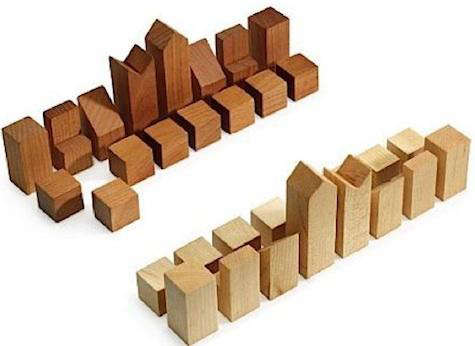
If your recipient loves games with pieces, cards, boards, tiles, and just enough strategy to make everyone suspicious of one another, lean into tactile pleasure. This is the crowd that appreciates objects with weight, texture, and ceremony. An elevated chess set, a refined Mahjong set, a beautiful deck of cards, or a well-made backgammon board all make sense here.
The appeal is not only the game itself. It is the setup. Opening the box. Laying everything out. Hearing that satisfying click of pieces landing where they belong. Tabletop players tend to love gifts that feel like heirlooms, or at least like future heirlooms if nobody spills ranch dressing on them first.
To make the gift more thoughtful, pair the game with one environmental upgrade: a felt-lined tray for loose pieces, a soft throw for marathon sessions, or a low, warm lamp that turns a dining table into a game-night destination. A classic game can become a whole experience with just one well-chosen companion piece.
2. For the Handheld Nomad
Some people do not play in one place. They play on the couch, in bed, in airports, in cars, at a friend’s house, and occasionally while pretending to watch television with the family. For them, portability is everything. A gift that supports handheld or mobile gaming is almost always a win.
This can mean a mobile controller that turns a phone into a more satisfying gaming setup, a compact case, a charging accessory, a sturdy stand, or a handheld-friendly storage solution. If your budget is bigger, a premium handheld device becomes the kind of gift that gets remembered for years. If your budget is smaller, the right accessory can still feel luxurious because it solves an everyday annoyance.
The key is convenience. Handheld players do not want friction. They want to grab, go, and start playing without digging through cables like archaeologists of bad planning. Gifts that keep devices protected, powered, and ready are never boring when they are genuinely useful.
3. For the Comfort-First Marathoner
Then there is the player who does not merely “play a little.” This person settles in. They commit. They sit down for one quick session and emerge three hours later blinking at daylight like they have been away at sea. For them, comfort is not a luxury. It is infrastructure.
A great headset, an ergonomic chair, a compact mechanical keyboard, a precise mouse, a desk light, or quality speakers all fall into this category. These are gifts that improve long sessions without feeling flashy for the sake of it. They also age well. Unlike novelty items, comfort gear gets used over and over, which is the holy grail of gift giving.
This is also where design matters more than people admit. The best desk accessories are the ones that disappear into the room while quietly doing excellent work. Clean lines. Thoughtful materials. No need for a product to glow in seventeen colors unless the recipient actively enjoys that level of drama. And some do. Bless them.
4. For the Host Who Turns Game Night Into an Event
Every friend group has one. The person who texts, “Come by around seven,” and by 7:15 there are snacks in bowls, candles lit, playlists on, and some wildly specific game already waiting on the table. Shop for this person and you are really shopping for atmosphere.
The smartest gifts here are not limited to the games themselves. Think serving pieces for snack duty, a cozy lamp, storage baskets, a pretty tray for cards and dice, a foldable side table, or a compact speaker. You can also choose a party game with a low barrier to entry so people spend less time reading instructions and more time accusing each other of sabotage.
If you want to go full overachiever, create a game-night bundle: one fast-paced party game, one strategic tabletop game, one snack bowl set, and one candle or lamp. Suddenly you are not giving a thing. You are giving Friday night.
5. For the Retro Romantic
Retro gifts work because they hit two sweet spots at once: nostalgia and display value. The game player who grew up with cartridge systems, arcade cabinets, or iconic characters usually loves a gift that nods to gaming history without feeling childish.
This category includes mini arcade machines, home arcade cabinets, coffee-table books about classic games, collectible art books, Lego-style retro builds, vintage-inspired controllers, and clever decor with a wink rather than a scream. The beauty of these gifts is that they often function as decor even when they are not in active use.
A retro gift is especially good for the person who says they “don’t need anything.” What they often mean is that they already bought the practical stuff. What they have not bought is the charming, display-worthy object that makes them grin every time they walk by it.
6. For the Family Diplomat
Not every game player is chasing frame rates or collecting hardware. Some are simply trying to get everyone in one room, off their phones, and laughing over something that does not require a password. These people deserve gifts too, and frankly they may be the real heroes.
Classic family board games, quick card games, cooperative games, and easy-to-learn party picks all belong here. A family-friendly gift succeeds when it invites people in rather than intimidating them. It should be playable in real life, not just theoretically enjoyable after a 22-minute rules tutorial.
This is the category where age range matters most. For younger families, simple pace and repetition work beautifully. For mixed-age households, go with games that reward teamwork, quick reactions, or humor. For older kids and adults, slightly more strategic choices can keep everybody engaged without turning the dining table into a hostage negotiation.
7. For the Person Who Already Has Everything
When the recipient is hard to shop for, do not compete with their main setup. Support it. Accessories are often the smarter play. Think cable management that actually looks elegant, a charging dock that reduces visual clutter, an attractive headphone stand, a compact storage pouch, a premium microfiber cloth kit for screens, or a small shelf that organizes controllers and handheld gear.
You can also go personal. A custom-designed controller, monogrammed card case, framed print inspired by a favorite game, or niche art book feels considered in a way that generic electronics rarely do. Personalization works because it tells the recipient you paid attention. Which, in gift giving, is basically the whole sport.
How to Choose Without Buying Nonsense
Start with platform
Before buying anything technical, know whether they primarily play on console, PC, handheld, mobile, or tabletop. Accessories are often platform-specific, and few things are sadder than a beautifully wrapped gift that requires an adapter, an apology, and a return label.
Think about space
A tiny apartment and a large rec room call for very different gifts. A giant arcade cabinet is fabulous if the recipient has a bonus room. It is less fabulous if it ends up looming over a studio apartment like an electronic wardrobe. Compact, foldable, and dual-purpose gifts are especially strong for urban homes and shared spaces.
Choose longevity over hype
Trend-driven items can be fun, but the best gifts have staying power. Look for quality materials, broad compatibility, or timeless appeal. A good headset, an elegant chess board, a durable controller, or a classic party game will outlast the gift that gets one amused laugh and then quietly migrates to a drawer of regret.
The Real Remodelista Rule: Buy the Gift That Improves the Room
The loveliest thing about shopping for the game player right now is that play no longer has to be visually separate from home life. Games can live in the living room. The controller can sit on a shelf and still look intentional. The chess set can double as sculpture. The side table can hide cards and chargers. The rec room can be stylish, multifunctional, and welcoming instead of dimly lit and vaguely sticky.
That shift opens up better gift choices. You are no longer choosing between “fun” and “beautiful.” You can choose both. The best modern gift for the game player is one that says, “I know what you love, and I know how you live.” That is a much more elegant message than “I saw this online and panicked.”
Experience: Why the Best Gift for a Game Player Is Rarely the Loudest One
There is a funny moment that happens when someone opens the right gift for a game-loving person. It is not always explosive. Sometimes there is no shouting, no dramatic gasp, no movie-style leap across the room. Sometimes the reaction is quieter and much better. They pick it up immediately. They turn it over in their hands. They look at you with that very specific expression that means, “Oh. You actually got me.”
That is because games are personal in a way people often underestimate. They are not just products. They are rituals. A person may use a handheld device to decompress after work, invite friends over for board games because it is their favorite way to socialize, or keep a chess board on the table because it makes the house feel alive. A gift related to gaming can touch routine, memory, comfort, friendship, and even identity all at once. No pressure, right?
I think the best gifts in this category work because they understand that playing is not childish. It is human. Adults who love games are often not chasing noise or novelty. They are chasing focus, fun, challenge, and connection. They want a reason to gather around a table. They want a better seat for a long session. They want a controller that feels better in the hand. They want their hobby to fit more gracefully into their home and their day.
That is why the seemingly small gifts often land hardest. A warm desk light can make late-night play feel calmer and easier on the eyes. A well-designed storage case can mean the handheld actually leaves the house instead of staying forgotten in a drawer. A handsome card set can transform an ordinary visit into a tradition. A classic party game can rescue a holiday gathering from awkward small talk and the annual debate over who forgot the ice.
There is also something lovely about gifts that make other people part of the experience. Family games, cooperative games, host-friendly setups, and cozy room upgrades all say the same thing in different ways: I want your fun to be shared. That is a generous instinct. It turns a gift into permission to slow down, invite people over, and make memories that are a little sillier and warmer than whatever else would have happened that night.
And yes, sometimes the best gift is gloriously impractical. A retro arcade machine? Ridiculous, wonderful, unforgettable. A chocolate chess set? Barely sensible, extremely charming. A custom controller in a color combination nobody needs but one person deeply loves? Perfect. The right gift does not always have to be rational. It just has to feel specific.
In the end, shopping for the game player is not about buying the most expensive object with the most buttons. It is about paying attention to how they enjoy themselves. Do they love hosting? Traveling? Collecting? Competing? Relaxing? Laughing with family? Building a room around play? Answer that honestly, and the gift gets easier. Better yet, it gets more meaningful.
And that, really, is the whole point. The right gift tells people they are seen. It says you noticed the way they light up when the board comes out, when the console boots, when the cards are shuffled, when the room fills with friendly trash talk and snack crumbs and the kind of laughter that makes everyone stay later than planned. Buy for that feeling, and you will not go far wrong.
Conclusion
The best gifts for the game player are thoughtful, useful, and just a little bit delightful. They can be tactile or digital, social or solitary, nostalgic or cutting-edge. But the strongest ones all do the same thing: they make play easier to enjoy and nicer to live with. Whether you choose an elegant tabletop classic, a comfort upgrade for marathon sessions, a mobile accessory for gaming on the go, or a stylish touch for a room built around fun, the smartest gift is the one that fits the person instead of the stereotype.