If putting in eye drops makes you feel like you are trying to land a helicopter on a postage stamp, you are not alone. A surprisingly large number of people miss their eye, blink at exactly the wrong moment, or end up with most of the medicine rolling dramatically down their cheek like a tiny medical tear. The good news is that using eye drops correctly is a learnable skill, and once you get the method down, it becomes much easier.
Whether you use prescription eye drops for glaucoma, allergy drops during pollen season, antibiotic drops for an infection, or lubricating drops for dry eye, technique matters. Using eye drops the right way helps the medicine stay where it belongs, lowers the risk of contamination, and gives your eyes the best chance to benefit from the treatment. In other words, this is one of those small daily habits that can make a big difference.
This guide walks you through exactly how to use eye drops step by step, plus what to avoid, how to handle multiple medications, what to do with contact lenses, and how to make the whole process less frustrating for adults, older adults, and kids.
Why Proper Eye Drop Technique Matters
Eye drops may look simple, but they are not just fancy eye water. Many are medications designed to treat dry eye, allergies, infection, inflammation, or elevated pressure inside the eye. If the drops do not make it into the lower eyelid pocket or drain out too quickly, you may not get the full benefit.
There is also a safety issue. Eye drop products need to stay sterile. Touching the bottle tip to your eye, lashes, fingers, sink, counter, or “just for one second” bathroom shelf can contaminate the bottle. That raises the risk of irritation or infection, which is definitely not the upgrade anyone is looking for.
Proper technique also matters when you use more than one eye medication. If you stack drops too quickly, the second one may wash out the first. That wastes medicine and can make treatment less effective.
Before You Start: A Quick Eye Drop Prep List
1. Wash your hands
Use soap and water, then dry your hands with a clean towel. This is the non-negotiable first step. Your eyes are sensitive, and this simple habit helps reduce the risk of contamination.
2. Read the label
Double-check that you have the correct bottle, the correct eye, and the correct time of day. If the label says to shake the bottle before use, do that. If it gives instructions about contact lenses, storage, or timing between medicines, follow them.
3. Inspect the bottle
Make sure the safety seal was intact when you first opened it. Do not use the drops if the bottle is damaged, the solution looks cloudy when it should not, has particles floating in it, or is past the expiration date. If an over-the-counter product has been recalled, stop using it and replace it.
4. Remove contact lenses if needed
Many medicated eye drops should not be used while contacts are in your eyes. In many cases, you will need to remove the lenses first and wait before putting them back in. Check the label, ask your pharmacist, or follow your eye doctor’s instructions. If your eye is irritated or infected, do not put your contacts back in unless your clinician says it is okay.
5. Get comfortable
Stand in front of a mirror, sit in a chair, or lie down if that feels easier. Have a clean tissue nearby for extra liquid. A calm, steady setup is much better than trying to do this while sprinting out the door with one shoe on.
How to Use Eye Drops: Step-by-Step Instructions
Step 1: Tilt your head back and look up
Lift your chin slightly and look toward the ceiling. You do not need a dramatic movie-star head toss. A gentle tilt is enough.
Step 2: Pull down the lower eyelid
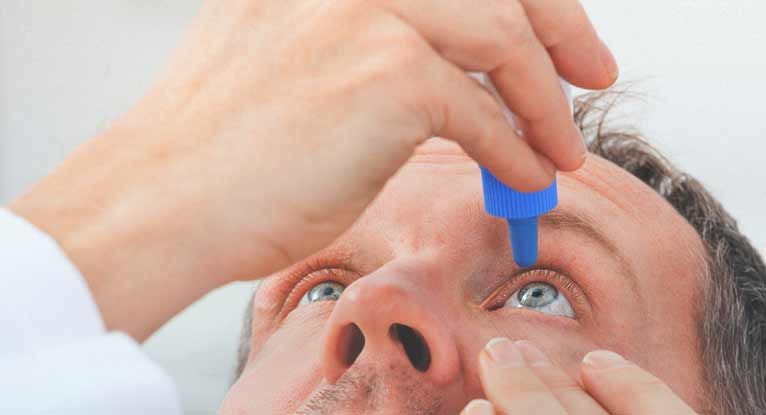
Use one hand to gently pull the lower eyelid down and away from the eye. This creates a small pocket. That pocket is your target. You are not trying to drop medicine directly onto the center of your eyeball.
Step 3: Hold the bottle above the pocket
With your other hand, hold the bottle upside down above the pocket. Keep the tip close, but do not let it touch your eye, eyelid, eyelashes, or skin. Resting your hand lightly against your forehead can help steady it.
Step 4: Squeeze in the prescribed number of drops
Gently squeeze the bottle and let the drop fall into the lower eyelid pocket. Use only the number of drops your doctor or the label recommends. More is not automatically better. In fact, too much often just means more medication running down your face and less staying in your eye.
Step 5: Close your eye gently
After the drop lands, close your eye softly. Do not squeeze your eyelids shut like you are bracing for a splash in the face. Also try not to blink repeatedly. A gentle close helps the medication stay in place longer.
Step 6: Press the inner corner of the eye
Place a finger lightly at the inner corner of the closed eye, near the nose, and press gently for about 1 to 2 minutes. This is sometimes called punctal occlusion. It helps keep the medicine in the eye instead of letting it drain quickly into the tear duct.
Step 7: Blot away any extra liquid
If excess medicine or tears spill onto your skin, blot them gently with a clean tissue. No rubbing. Your eye is not a kitchen counter and does not need aggressive scrubbing.
Step 8: Replace the cap right away
Put the cap back on without touching the tip. Store the bottle as directed. Some drops stay at room temperature, while others may need refrigeration before opening or after opening.
Step 9: Wash your hands again if needed
If any medication got onto your fingers, wash your hands. This is especially helpful with medicated drops so you do not accidentally transfer residue to your other eye, your contact lenses, or your skin.
What If You Miss the Eye?
It happens. A lot. If the drop lands on your cheek, eyelashes, or eyebrow, simply try again. Do not panic, do not guess, and do not count a drop that never actually made it into the eye. If you are not sure whether the drop went in, it is reasonable to retry once.
If missing the eye happens often, try these adjustments:
- Lie down instead of standing.
- Use a mirror for aiming.
- Rest your bottle hand on your forehead for stability.
- Ask your eye doctor or pharmacist about a drop-assist device.
How Long Should You Wait Between Different Eye Drops?
If you use more than one type of eye drop in the same eye, wait at least 5 minutes between them unless your doctor tells you otherwise. This gives the first medication time to settle instead of getting washed out by the second.
If you use both drops and ointment, the usual rule is to use the drops first and the ointment last. Ointment is thicker and can blur vision temporarily, so it makes more sense as the final step. Many people prefer ointment at bedtime for that reason.
If you use contact lenses, do not assume they can go back in immediately. Some products require waiting at least 15 minutes. Others should not be used with contacts at all. Follow the specific instructions for your medication.
Common Eye Drop Mistakes to Avoid
- Touching the bottle tip to the eye: This can contaminate the bottle.
- Blinking hard right after the drop: This pushes medicine out faster.
- Using drops too close together: The second drop may wash away the first.
- Using someone else’s eye drops: Bad idea. Different products treat different conditions and sharing can spread germs.
- Self-treating serious eye disease with random over-the-counter drops: Conditions like glaucoma, cataracts, or retinal disease need professional care.
- Using old or recalled drops: Eye products must be sterile, and contaminated products can be dangerous.
- Putting the drop on the cornea instead of the lower lid pocket: It is more uncomfortable and often less effective.
When to Stop Using Eye Drops and Call a Doctor
Get medical advice promptly if you develop severe pain, new discharge, swelling, worsening redness, light sensitivity, or changes in vision while using eye drops. Those symptoms can signal a problem that needs attention.
Seek urgent care right away if:
- You have a chemical splash in the eye.
- You have sudden vision loss or major blurry vision.
- You have an eye injury.
- Your eye pain is severe.
- You think the product may be contaminated or recalled and you are having symptoms.
If a chemical gets in the eye, flushing with clean water or saline is the priority. That is not the time to experiment with mystery drops from your bathroom cabinet.
Special Tips for Kids, Older Adults, and Nervous Adults Who Instantly Blink
For kids
Children often do better lying down. Support the head gently and keep the process calm and quick. If a child will not open the eye, some clinicians teach parents to place the drop at the inner corner of the closed eye so it flows in when the child opens or blinks. Always follow your pediatrician’s instructions.
For older adults
Arthritis, tremor, weak grip strength, poor vision, or limited neck movement can make eye drops harder to use. Sitting down, using a mirror, stabilizing the hand against the forehead, or using an assist device can make a huge difference. If needed, ask a family member, caregiver, pharmacist, or eye clinic to demonstrate the technique again.
For anyone who hates eye drops
You are in extremely crowded company. Try taking a slow breath before each drop. Keep the bottle visible at first, then look upward so it feels less threatening. Many people improve dramatically once they stop aiming for the eyeball and start aiming for the lower eyelid pocket instead.
Frequently Asked Questions About Using Eye Drops
Should I blink after eye drops?
A gentle blink is fine, but avoid repeated blinking or squeezing your eyes shut. Closing the eye softly is better.
Can I use eye drops with contact lenses in?
Sometimes, but not always. Rewetting drops may be designed for contacts, while many medicated drops are not. Check the label and follow your doctor’s guidance.
Why do the drops run down my face?
Usually because the eye was blinking, the head position was awkward, or too much liquid was used too quickly. One careful drop into the lower lid pocket usually works better than a heroic flood.
Can I use more drops to make them work faster?
No. Use the prescribed amount only. Extra drops generally do not improve results and can increase waste or side effects.
Do eye drops sting?
Some do. Mild temporary stinging can happen with certain medications or lubricants, but strong pain, worsening redness, or vision changes should be checked by a healthcare professional.
Can I share my eye drops with someone else?
No. Prescription drops should only be used by the person they were prescribed for, and sharing any eye product can spread germs.
Real-Life Experiences With Eye Drops: What People Commonly Notice
One of the most common experiences people report when they first start using eye drops is surprise at how awkward it feels. On paper, the instructions sound easy: tilt, pull, drop, close. In real life, many people discover that the moment the bottle hovers over the eye, their blink reflex stages a rebellion. The hand gets shaky, the drop misses, and suddenly the whole process feels much more dramatic than it deserves. That is normal.
Another common experience is thinking the drop did not go in because you did not “feel” much. Then, five seconds later, you taste the medicine in the back of your throat or feel liquid rolling down your cheek and realize part of it definitely traveled somewhere. This is one reason the gentle pressure at the inner corner of the eye matters. It helps the medication stay put instead of heading off on a little road trip through the tear duct.
People with dry eye often describe a trial-and-error phase. One brand may feel soothing, another may sting, and a third may seem to disappear instantly. It is also common for preservative-free artificial tears to feel more comfortable when drops are needed often throughout the day. Many people eventually settle into a routine, keeping a bottle in a work bag, on a nightstand, or beside the coffee maker like it is part of the household cast.
For people using prescription drops long term, especially for glaucoma, the biggest challenge is often consistency rather than technique alone. Missing a dose does not always cause immediate symptoms, which can trick people into thinking the medication is optional. But eye conditions do not always send dramatic reminders. Many people say the turning point comes when they connect the drops with preserving vision, not just completing a chore.
Parents giving eye drops to children often describe the process as somewhere between a medical task and a wrestling match. Kids may clamp their eyes shut, twist away, or become suspicious the second they hear the bottle cap click open. Families who succeed usually develop a ritual: a favorite blanket, a calm explanation, a quick reward, and the same method each time. Predictability helps.
Older adults may notice that eye drops become harder to manage because of arthritis, tremor, or trouble seeing the bottle tip clearly. Many say the experience improves a lot once they stop trying to do it standing at the bathroom sink and switch to sitting in a chair with a mirror and better lighting. Small changes can turn an aggravating process into a manageable one.
And then there is the emotional side. People often feel oddly frustrated by eye drops because the task looks so simple. If you struggle with them, that does not mean you are doing something wrong forever. It usually means you need a better setup, a better angle, or a little practice. Once the routine clicks, eye drops go from “Why is this impossible?” to “Okay, that took ten seconds.” That is a pretty satisfying upgrade for such a tiny bottle.
Conclusion
Learning how to use eye drops correctly is one of those small health skills that pays off every single day. The basics are simple: wash your hands, create a lower eyelid pocket, keep the bottle tip clean, place the drop carefully, close the eye gently, and wait between medications when needed. That method helps more medicine stay in the eye and lowers the chance of contamination or wasted doses.
If eye drops still feel difficult after a few tries, do not just struggle in silence with your bathroom mirror as your only witness. Ask your eye doctor, pharmacist, or pediatrician to demonstrate the technique. A quick adjustment can make the process safer, easier, and much more effective.