Note: Nobody literally makes every layup forevernot even the pros, and certainly not the guy at the park yelling “I’m like Kyrie!” before hitting the bottom of the backboard. This guide uses the phrase “always make your layups” the way coaches mean it: build repeatable mechanics, confident footwork, soft touch, and smart finishing habits so your layup percentage becomes something your team can trust.
The layup is basketball’s most basic shot, but basic does not mean easy. A good layup asks your body to do several things at once: dribble under control, gather the ball, take the correct steps, jump off the right foot, protect the ball, aim softly, and finish while moving. Add a defender, a little contact, or tired legs in the fourth quarter, and suddenly that “easy two points” feels like solving a math problem while being chased by a refrigerator.
The good news is that layups are highly trainable. Coaches at every level teach the same core ideas: control your approach, master footwork, use the backboard, keep your eyes on the target, finish with both hands, and practice under game-like pressure. The 11 steps below will help beginners, school players, pickup hoopers, and developing athletes turn missed layups into automatic finishes.
Why Layups Matter More Than Fancy Moves
Before we get into the steps, let’s be honest: three-pointers get the applause, dunks get the social media clips, and layups get ignored like the vegetables on a dinner plate. But layups win games. They are close-range, high-percentage shots, and they punish defenses when you cut, drive, run the fast break, or grab an offensive rebound.
A player who consistently finishes layups becomes dangerous without needing a complicated bag of tricks. You can score in transition, attack closeouts, finish through contact, and force defenders to help. Once defenders worry about your drive, your passing and shooting opportunities open up too. In other words, a reliable layup is not just a shotit is a key that unlocks the rest of your offense.
How to Always Make Your Layups in Basketball: 11 Steps
1. Start With the Correct Mindset: Smooth Beats Rushed
The first step to making more layups is understanding that speed is not the goal. Control is. Many missed layups happen because players sprint into the paint, panic, and throw the ball at the rim like it owes them money. A great layup looks quick, but it is built on rhythm.
Think “controlled attack.” You want to move fast enough to beat the defender but calm enough to make a clean finish. As you approach the basket, keep your head up, see the rim, and know where your steps will land. A rushed layup often becomes a wild shot. A controlled layup becomes a repeatable finish.
2. Learn the Right-Hand Layup Footwork
For a traditional right-handed layup, the common footwork rhythm is right foot, then left foot, then jump. Your final jump is usually off your left foot while your right knee rises toward the basket. This opposite-arm, opposite-leg motion helps your body lift naturally and keeps your finish balanced.
Here is a simple way to feel it: stand a few feet from the right side of the rim. Step with your right foot, step with your left foot, jump off the left foot, and raise the ball in your right hand. Do this slowly without a ball first. Yes, you may feel silly. That is fine. Every good player has done awkward footwork reps somewhere when nobody was watchingor at least when they hoped nobody was watching.
3. Learn the Left-Hand Layup Footwork
For a left-handed layup, reverse the pattern: left foot, then right foot, then jump. You usually jump off your right foot and lift your left knee as your left hand finishes the shot. The key is symmetry. If your right-hand layup feels natural but your left-hand layup feels like your body is buffering on slow Wi-Fi, that simply means your weak side needs more repetition.
Practicing both sides matters because defenders will quickly notice if you only finish with one hand. If you drive from the left side and bring the ball back to your right hand, you expose it to shot blockers. A player who can finish with either hand is harder to guard and much more useful in real games.
4. Use the Backboard Like a Best Friend
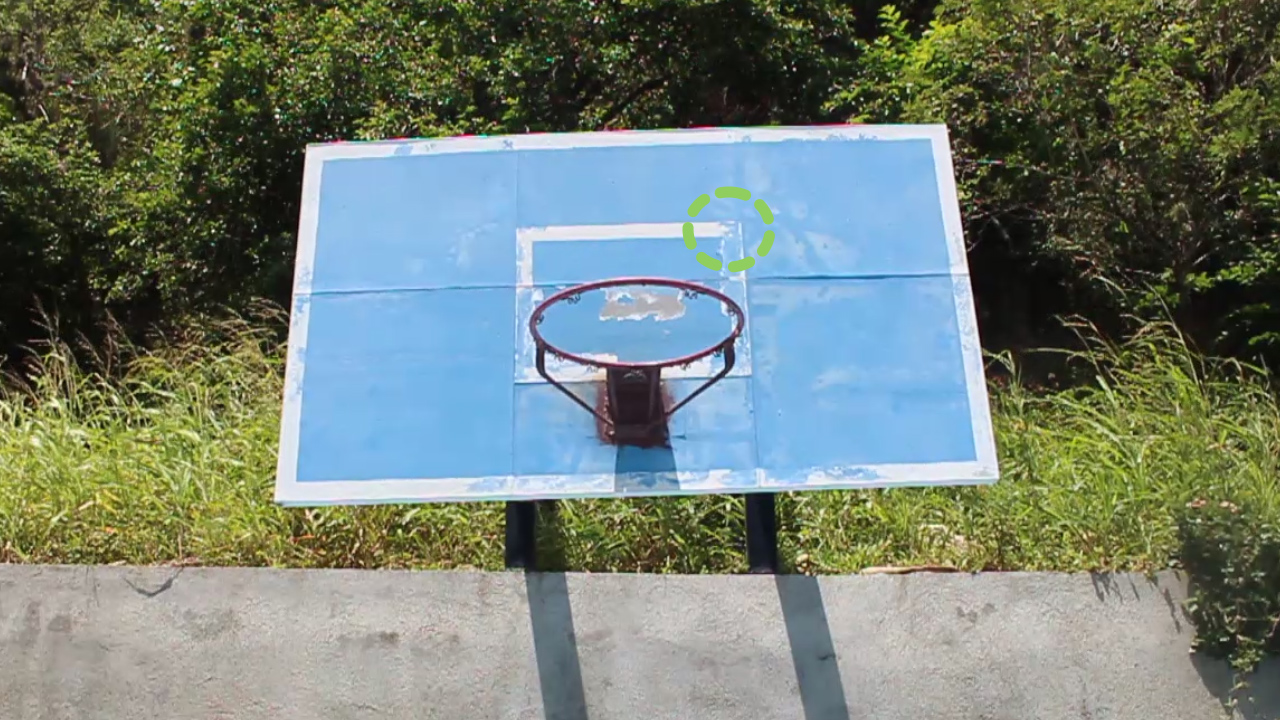
The backboard is not decoration. It is your helper. For many basic layups, especially from the side of the basket, aim for the upper corner of the square on the backboard. A soft touch off the glass gives the ball a better angle to drop through the rim.
Do not aim at the rim with a flat, hard release unless the angle calls for it. When players miss layups long, short, or off the side, the problem is often poor target selection. Pick a small spot on the glass before you release. “Aim small, miss small” is a useful idea here. If you just aim at “somewhere near the hoop,” the ball may decide to go sightseeing.
5. Keep the Ball High and Protected
Once you gather the ball, keep it secure. Young players often bring the ball low near their waist before going up, which gives defenders a free chance to poke it away. A better habit is to gather strong, keep the ball near your outside hip or chest depending on the angle, and then lift it smoothly toward the basket.
Protection also comes from your body. On a right-side layup, your body can shield the ball from a defender in the middle. On a left-side layup, your body can do the same when you finish with your left hand. Do not swing your elbows or play recklessly; simply use your shoulder, body angle, and outside hand to keep the ball away from trouble.
6. Jump Up, Not Just Forward
A common layup mistake is jumping too far forward instead of upward. When you launch toward the baseline or drift under the hoop, your angle gets worse and the finish becomes harder. Your second step should help you rise. Think of jumping tall, not falling sideways.
Good layup footwork often uses a long first step to cover ground and a powerful second step to lift. That second step is where balance matters. Bend your knees, stay under control, and explode upward. The higher and more balanced you are, the softer your release can be.
7. Finish With a Soft Hand
A layup is not a fastball. You do not need to launch the ball through the backboard into the next zip code. Great finishers have soft touch. Their fingers guide the ball, their wrist relaxes, and the ball comes off the hand gently.
One helpful cue is to imagine placing the ball on a shelf. Another is to finish with your fingers pointing toward the target. Whether you use an overhand layup or an underhand finger-roll style finish, the release should feel controlled. If the ball is bouncing off the glass too hard, slow down your hand and focus on touch.
8. Keep Your Eyes on the Target
Your eyes are part of your shooting mechanics. If you look down at your feet, glance at the defender, or stare at the ball during your release, your accuracy drops. As soon as you begin your gather, find your target. On a glass layup, that target is usually a spot on the backboard. On a direct layup, it may be the front or center of the rim.
This sounds simple, but it is powerful. Many players miss because their eyes get noisy. They see the defender’s arm, hear footsteps, feel pressure, and forget the target. Train yourself to lock in visually. The basket is the destination; everything else is traffic.
9. Practice Without the Ball First
If your layup footwork is messy, remove the ball. This is one of the smartest training progressions for beginners. Without the ball, you can focus completely on your steps, jump, knee lift, and hand motion. Walk through the pattern slowly, then jog it, then add speed.
Try this drill: start near the right block. Step right, step left, jump, and touch the backboard with your right hand. Then switch sides: step left, step right, jump, and touch with your left hand. After several clean reps, add the ball. This builds coordination before pressure enters the picture.
10. Build a Simple Layup Practice Progression
Do not jump straight into full-speed layups if your form is inconsistent. Use a progression. Start with close-range form layups. Then take one-step layups. Next, add the two-step rhythm. After that, add one dribble. Finally, start from farther out and attack at game speed.
A smart progression might look like this:
- 10 right-hand form layups from close range
- 10 left-hand form layups from close range
- 10 one-step layups on each side
- 10 one-dribble layups on each side
- 10 full-speed layups from the wing on each side
This kind of structure helps you avoid practicing mistakes. Remember, practice does not automatically make perfect. Practice makes permanent. If you repeat bad footwork 200 times, congratulationsyou have built a very reliable bad habit.
11. Add Pressure, Contact, and Game Angles
Once your basic layup becomes consistent, make practice more realistic. Games are rarely polite. Defenders chase you. Bodies bump you. Angles change. You may need to finish from the wing, middle, baseline, or after a cut. That means your training should include pressure.
Practice layups with a defender trailing you. Add a pad bump from a coach or teammate. Start from different spots on the court. Work on reverse layups, power layups, inside-hand finishes, and high finishes off the glass. You do not need to become a circus act, but you should learn enough variations to score when the basic layup is taken away.
Common Layup Mistakes and How to Fix Them
Mistake 1: Taking Off Too Close to the Basket
If you jump from directly under the rim, your angle disappears. You may end up shooting from behind the backboard or flipping the ball awkwardly. Fix this by learning your takeoff spot. For many players, the second step happens near the block or slightly outside it, depending on speed and body size.
Mistake 2: Using the Wrong Hand
Finishing on the left side with your right hand is not always wrong, but beginners should first master outside-hand finishes. Right side, right hand. Left side, left hand. This keeps the ball farther from defenders and teaches balanced development.
Mistake 3: Going Too Fast Before You Have Control
Speed exposes weak mechanics. If you miss layups at full speed, slow down and rebuild. Start close, get the footwork right, and increase speed gradually. The goal is not to look fast in practice; the goal is to make the shot in games.
Mistake 4: Shooting Flat
A flat layup often hits the front rim or smacks the backboard too hard. Add arc by lifting through your legs and finishing with a soft wrist. Think up first, forward second.
Best Layup Drills for Better Finishing
The Mikan Drill
The Mikan Drill is a classic for a reason. Stand under the basket and alternate right-hand and left-hand layups, rebounding the ball after each make or miss. This drill builds touch, rhythm, coordination, and weak-hand confidence. Start slowly. Make clean reps. Then increase speed while keeping control.
One-Dribble Wing Layups
Start on the right wing with the ball. Take one strong dribble, gather, step right-left, and finish with your right hand. Then move to the left wing and go left-right with your left hand. This drill connects your dribble to your gather, which is where many players lose rhythm.
Partner Chase Layups
Have a teammate start slightly behind you. You attack the basket while they chase without fouling. This adds realistic pressure and teaches you to finish without panicking. Keep your line to the rim, protect the ball, and use the glass.
Contact Pad Layups
If you have a coach, teammate, or safe training pad, practice light contact as you take off. The goal is not to create a wrestling match. The goal is to stay balanced, absorb contact, and finish softly. This drill is especially useful for players who make layups when alone but miss when touched.
How to Make Layups in Real Games
Game layups require reading the floor. If the defender is behind you, extend and finish quickly. If the shot blocker is waiting, use your body, a higher release, or a reverse angle. If help defense steps up early, a jump stop or pass may be better than forcing a wild shot.
The best finishers are not just athletic; they are calm decision-makers. They know when to use the glass, when to finish directly, when to slow down, and when to pass. Making layups is partly mechanics and partly judgment. That is why practice should include both repetition and live situations.
Experience Section: Real Lessons From Learning to Finish Layups
One of the funniest things about learning layups is that most players think they only need more confidence. Confidence helps, but confidence without footwork is just optimism wearing basketball shoes. In real practice, the biggest improvements usually come from boring details: the right steps, the right angle, the right hand, and the right speed.
A common experience for developing players is missing wide-open layups during fast breaks. This feels embarrassing because everyone in the gym sees it. The bench reacts. Your teammate who made the perfect pass looks personally betrayed. The rim suddenly feels tiny. But the mistake often happens before the shot. The player catches the ball, takes one extra dribble, gets too close to the basket, jumps forward instead of up, and releases the ball while drifting. By the time the ball leaves the hand, the miss has already been created.
The fix is to practice fast-break layups in layers. First, run at half speed and focus on where you gather. Then increase to three-quarter speed. Finally, sprint while keeping the same footwork. This teaches your body that speed should not destroy rhythm. When you can sprint and still take clean steps, layups become much easier.
Another real lesson is that the weak hand matters more than players want to admit. Many right-handed players avoid left-hand layups because they feel awkward. At first, the ball may roll off the fingers strangely, hit the side of the backboard, or miss everything in a way that makes you check whether your hand still belongs to you. That is normal. The weak hand improves through patient reps. Start close. Use the backboard. Keep your eyes on the target. Do not judge the first few sessions too harshly.
Players also learn quickly that contact changes everything. A layup with no defender is peaceful. A layup with a defender bumping your shoulder is a different conversation. This is where balance and core strength show up. You do not need to be the strongest player on the court, but you do need to keep your line, stay low on the gather, and finish through your legs instead of throwing the ball with only your arm.
One helpful habit is ending every workout with pressure layups while tired. Fatigue reveals truth. If you can make five right-hand layups and five left-hand layups after running, your mechanics are becoming reliable. If everything falls apart, that is not failure; it is useful information. It shows what needs more work.
The most important experience is this: layups become “automatic” only after they become simple. Do not chase fancy finishes too early. Master the regular layup. Master both hands. Master the glass. Master the gather. Once those are stable, reverse layups, float finishes, inside-hand finishes, and creative moves become easier. Build the house before decorating the roof.
Conclusion
Learning how to always make your layups in basketball is really about building habits that survive pressure. You need clean footwork, a controlled approach, soft touch, smart use of the backboard, strong ball protection, and practice from both sides. Start slow, master the form, then add speed, defenders, contact, and game-like angles.
The layup may not be the flashiest shot in basketball, but it is one of the most valuable. Make it dependable, and you become a better scorer, a better teammate, and a bigger problem for every defense you face. Plus, you will finally stop hearing that painful sentence from your coach: “We have to make the easy ones.” Nobody misses that sentence. Nobody.