Note: This article is written as original, publish-ready body HTML in standard American English. It contains no source URLs, no autogenerated citation placeholders, and no unnecessary publishing artifacts.
Somewhere between the flat-packed wardrobes, maze-like showrooms, Swedish meatballs, and lamps with names that sound like cheerful forest goblins, IKEA accidentally created one of the internet’s most beloved aquatic celebrities: the BLÅHAJ shark plush. Technically, it is a soft toy. Spiritually, it is a squishy roommate, emotional support fish, accidental model, professional napper, and, judging by customer photos, a creature with a much busier social calendar than most humans.
The viral idea behind “22 Times IKEA Customers Spotted Shark Plushies Doing Human Things At Their Stores” is simple: shoppers noticed IKEA shark plushies posed around stores as if they were ordinary people. A shark might be lounging in bed like it just hit snooze for the fifth time. Another might be “working out,” “doing laundry,” “cooking,” “reading,” or dramatically collapsing after a long day of being adorable. The result is part retail display, part internet treasure hunt, and part comedy sketch starring a stuffed shark with embroidered eyes and zero fear of public embarrassment.
What makes these photos so funny is not just the shark. It is the contrast. IKEA stores are built to show everyday life: bedrooms, kitchens, laundry areas, playrooms, tiny apartments, and organized storage solutions that make shoppers briefly believe they too can become people who label pantry jars. Then BLÅHAJ slides into those scenes like a blue-gray sitcom character. Suddenly the model home feels alive, and the shark becomes the tired parent, the weekend chef, the college student, the laundry inspector, or the person who definitely said they were “just browsing” and left with a cart full of candles.
Why the IKEA Shark Plush Became an Internet Favorite
BLÅHAJ, pronounced roughly like “blo-hai,” means “blue shark” in Swedish. IKEA’s plush shark has existed in its familiar blue form since the 2010s, and it became especially popular online through photos that placed it in funny, human-like situations. That is the heart of the meme: take one soft shark, give it a tiny slice of ordinary life, and let the internet do what it does bestturn wholesome absurdity into a shared language.
The plush itself helps. It is long, soft, huggable, visually simple, and expressive despite having a fixed face. Its wide mouth, small eyes, and pillow-like body make it easy to project emotions onto it. Is the shark proud? Sleepy? Hungover? Philosophical? Waiting for its turn in the bathroom? Yes. All of the above. BLÅHAJ is basically a blank canvas with fins.
IKEA’s showroom format also gives the meme perfect staging. Unlike a typical toy aisle, where plush animals sit in bins, IKEA places products inside miniature versions of real rooms. A bed display has pillows, blankets, lamps, side tables, and mood lighting. A kitchen setup includes utensils, dishes, storage, and counters. A laundry area has baskets and machines. That means a customer can find a shark plush already surrounded by props, making the photo feel like a tiny scene from a very strange documentary: Sharks of Suburbia.
22 Human Things IKEA Shark Plushies Have Been Spotted Doing
The best BLÅHAJ sightings work because they treat the shark as if it belongs there. Nobody needs to explain why a shark is in a showroom bed wearing the emotional energy of a Monday morning. We simply understand. Here are 22 kinds of “human things” shoppers have spotted or recreated with IKEA shark plushies in stores.
1. Testing Beds Like a Professional Nap Critic
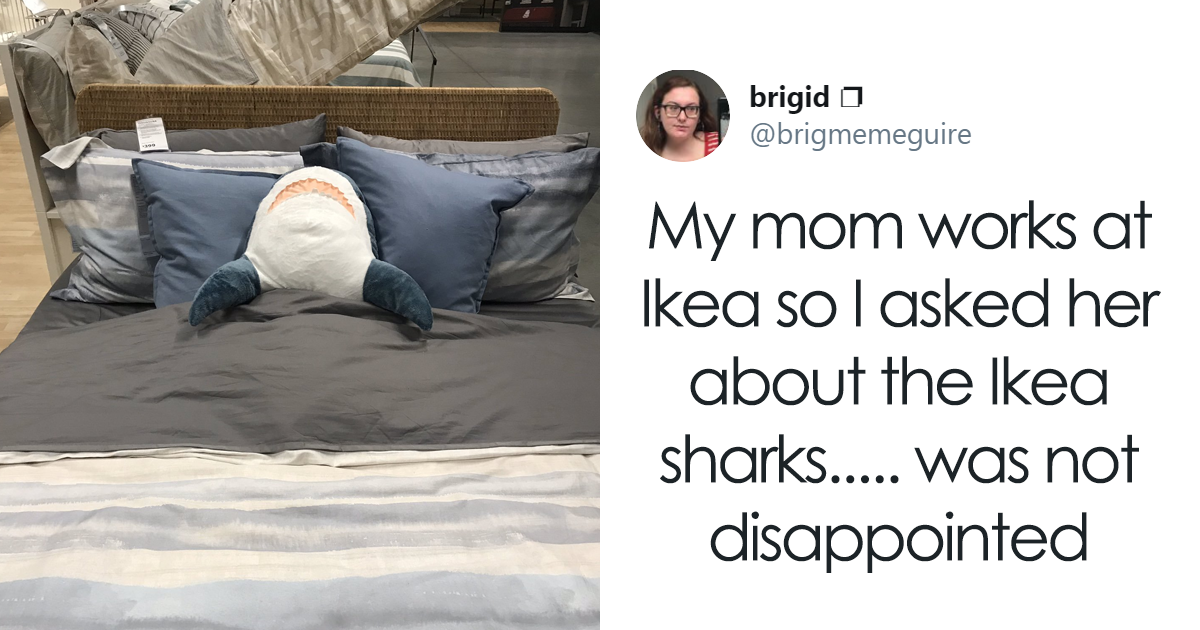
One of the most common shark sightings is the bed test. A BLÅHAJ stretched across a pillow looks less like a product display and more like a hotel reviewer with very high standards. The comedy comes from how naturally the shark fits into the scene. It has no legs, no pajamas, and no alarm clock, yet somehow it appears to be saying, “This mattress has acceptable emotional support.”
2. Hanging Out in Wardrobes
Sharks in closets should be alarming. In IKEA, they are simply fashionable. Customers have spotted plush sharks tucked into wardrobe displays, hanging near clothes, or lounging among shelves like they are choosing an outfit for a dinner party. The idea of a shark needing eveningwear is ridiculous, which is exactly why it works.
3. Recovering From a Rough Night
Some displays make BLÅHAJ look like it had a little too much fun in the cafeteria. A shark slumped over furniture, lying sideways, or staring blankly near a cup can instantly become a tiny drama about poor life choices. The plush has mastered the universal expression of “I regret ordering the second plate of meatballs.”
4. Fishing for Humans
One especially funny style of scene flips the classic shark story. Instead of humans fearing sharks, BLÅHAJ appears to be fishing for people or investigating human-shaped toys. It is harmless, silly, and just dark enough to make shoppers laugh without turning the store into a horror movie.
5. Having a Group Hangout
Multiple BLÅHAJ plushies placed together can look like a dorm room, a frat party, a family meeting, or an emergency shark council. One shark is funny. Five sharks arranged with chaotic confidence become a social event. Are they planning dinner? Discussing shelving units? Starting a podcast? We may never know.
6. Enjoying a Drink
A shark near a cup or bottle instantly becomes relatable. The tiny black eyes suddenly say, “I have had a long shift.” It is a perfect example of anthropomorphism, the human habit of assigning feelings and intentions to nonhuman things. BLÅHAJ does not need facial expressions; the props do the acting.
7. Supervising Laundry
A BLÅHAJ in a laundry display feels like a friendly employee who has just checked your towels and decided everything is fine. IKEA’s laundry setups already look organized and practical. Add a shark, and the scene becomes a domestic sitcom: Shark Laundry Services, open weekends, payment accepted in snacks.
8. Playing Peekaboo
Sharks hiding behind furniture, peeking from bins, or sticking their noses out of cabinets are comedy gold. The plush has the perfect shape for surprise appearances. You can see just enough shark to recognize it, and the shopper gets the small joy of discovering a secret joke in the middle of a retail maze.
9. Cooking in the Kitchen
BLÅHAJ in a kitchen display can look like a chef, a sous-chef, or a suspicious diner waiting for seafood. A shark near pots and pans immediately raises questions. Is it making soup? Is it concerned about the menu? Is it emotionally prepared to chop onions? The more ordinary the kitchen setup, the funnier the shark becomes.
10. Reading Like a Bookworm
A shark posed with books is one of the gentlest versions of the meme. BLÅHAJ suddenly becomes thoughtful, studious, and perhaps a little dramatic. It might be reading marine biology, Swedish furniture assembly instructions, or a self-help book titled How to Stop Being Typecast as a Predator.
11. Weightlifting
A plush shark near gym-like props or arranged as if exercising delivers instant visual comedy. The soft, floppy body makes the idea of serious weight training absurd. Still, BLÅHAJ looks determined. Maybe it is training for Shark Week. Maybe it is trying to carry one more flat-pack box to the car.
12. Sunbathing
Some sightings make the shark look like it is stretched out for a beach day. The joke lands because BLÅHAJ is technically ocean-themed, but the store setting is very much not the ocean. A shark sunbathing under retail lighting has the energy of someone making the best of a vacation booked through a questionable website.
13. Wearing a Hat
Put a hat on almost anything and it becomes a character. Put a hat on BLÅHAJ and it becomes a fashion influencer. Shoppers love these tiny styling moments because they turn the plush into a personality. A shark in a hat is not just a toy; it is someone with errands, opinions, and probably a tote bag.
14. Acting Like a Store Greeter
When BLÅHAJ is placed near an entrance, display sign, or product area, it can look like it is welcoming customers. The shark’s face is permanently friendly enough to pull this off. It does not say “beware.” It says, “Hej, please enjoy the showroom and try not to buy twelve throw pillows.”
15. Staging a Family Moment
With the arrival of smaller baby shark versions in some markets, BLÅHAJ scenes can become oddly wholesome. A large shark beside smaller sharks looks like a parent managing a family outing. Of course, because it is IKEA, that family outing probably involves arguing about drawer organizers.
16. Hiding in Storage Bins
IKEA is famous for storage solutions, and BLÅHAJ makes them funnier by refusing to be stored properly. A shark sticking out of a basket looks like a roommate who agreed to help clean but became part of the mess. It is cute, chaotic, and extremely on brand for anyone who has ever reorganized a closet and made it worse first.
17. Taking Over the Kids’ Room
In children’s room displays, BLÅHAJ makes perfect sense. IKEA designs soft toys for comfort, play, and imagination, so a shark surrounded by toys, tents, books, and tiny furniture feels right at home. The surprise is not that the shark is there; it is that it seems to be in charge.
18. Becoming a Tiny Roommate
IKEA showrooms are built around the idea of better everyday living in small spaces. BLÅHAJ turns that design idea into a character study. A shark in a compact bedroom or apartment setup looks like it pays rent, complains about cabinet space, and has strong feelings about lighting.
19. Inspecting Furniture
Sometimes the plush appears to be testing chairs, tables, or shelves like a very serious quality inspector. The joke is especially good because IKEA furniture is already associated with practical problem-solving. BLÅHAJ adds a layer of imaginary professionalism: “This chair supports naps. Approved.”
20. Creating a Treasure Hunt
IKEA has used playful store experiences to encourage visitors to look for soft toys around the showroom. That turns shopping into a game. Instead of simply walking through departments, customers begin scanning displays for hidden sharks. It is retail hide-and-seek, except the prize is joy and maybe a new laundry basket.
21. Photobombing Everyday Life
The best shark sightings often feel accidental. A BLÅHAJ half-visible in the background of a room display can steal attention from everything else. The sofa may be lovely, the lamp may be elegant, and the storage unit may be life-changing, but the shark peeking from the corner wins the room.
22. Looking Weirdly Like Us
The funniest thing about BLÅHAJ doing human things is that the shark often looks familiar. Tired in bed? Same. Lost in a store? Same. Pretending to understand kitchen organization? Same. The plush becomes a mirror for ordinary human behavior, only softer, bluer, and less likely to have unread emails.
Why These Shark Plushie Moments Work So Well
The IKEA shark plush meme succeeds because it combines three powerful ingredients: cuteness, context, and participation. Cuteness makes the shark immediately approachable. Context gives every scene a story. Participation invites shoppers to join in, take photos, rearrange a harmless display, and share the result with friends.
It also fits the modern internet perfectly. People love low-stakes humor that feels communal. A BLÅHAJ photo does not require deep lore, a complicated punchline, or a 12-part video essay. You see a shark tucked into a bed, and you get it. The image is funny in one second, wholesome in two, and shareable in three.
There is also a branding lesson here. IKEA did not need to turn BLÅHAJ into a loud mascot with a catchphrase. The store environment did much of the work. The showrooms already tell stories about daily life. Customers simply added the shark as the main character. That kind of user-generated humor is hard to manufacture because it works best when it feels discovered, not forced.
The Bigger Meaning Behind BLÅHAJ’s Popularity
Although the shark plush is funny, its popularity also shows how people form emotional connections with objects. A soft toy can become a comfort item, a meme, a symbol of belonging, or a small reminder that life does not always need to be so serious. For many fans, BLÅHAJ is not just a product. It is a character they can project kindness, silliness, and comfort onto.
The shark has also become meaningful in online communities, including LGBTQ+ and transgender spaces, where fans have embraced it as a soft, friendly symbol. Part of that connection comes from the plush’s blue, pink, and white colors, which many people associate with the transgender pride flag. But its broader appeal goes beyond any single community. BLÅHAJ is popular because it is gentle, funny, and emotionally flexible. It can be a joke one minute and a comfort object the next.
That flexibility is why the “doing human things” photos continue to resonate. They let a plush toy participate in the everyday routines that shape real life: sleeping, cleaning, cooking, reading, exercising, shopping, hiding, relaxing, and recovering from the chaos of existence. In other words, BLÅHAJ became internet-famous by being deeply unserious in a way that feels oddly sincere.
Extra Experience Section: What It Feels Like to Spot IKEA Shark Plushies Doing Human Things
Finding a BLÅHAJ posed in an IKEA store feels different from seeing a normal display. A normal display says, “Here is a bed.” A shark display says, “Here is a bed, and apparently a marine creature has claimed it after a difficult week.” That tiny twist changes the mood of the shopping trip. You are no longer just comparing duvet covers; you are participating in a quiet scavenger hunt for comedy.
The experience usually starts with a double take. You walk past a showroom, your brain registers something blue and fin-shaped, and suddenly you stop. There it is: a shark tucked under a blanket, wedged into a chair, resting in a laundry basket, or staring bravely from a kitchen counter. For one second, the practical adult part of your brain says, “That is a product placement.” The happier part says, “No, that shark has a mortgage.”
That is the magic. IKEA stores can be overwhelming. They are bright, huge, full of arrows, and designed so that a quick trip for napkins somehow becomes a two-hour expedition through civilization’s entire relationship with shelving. A funny shark sighting breaks the spell. It gives shoppers a moment of play in a place mostly dedicated to decision-making. Should you buy the white cabinet or the oak-effect cabinet? Should your home office have a pegboard? Does anyone truly need this many storage boxes? Then BLÅHAJ appears, lying dramatically on a bed, and the answer to every question becomes, “Maybe, but first I need a photo.”
For families, these shark moments can turn shopping into a game. Kids may start looking ahead into each room, hoping to spot the next plush hiding place. Adults may pretend they are above it, then quietly point out the shark in the wardrobe. Couples may invent dialogue for it. Friends may compete to find the funniest scene. Even solo shoppers can enjoy the tiny companionship of a plush shark living its best showroom life.
There is also something charming about the fact that the joke belongs to everyone. Store staff may arrange displays. Customers may notice them. Other shoppers may add a small twist. Online audiences may turn the photos into memes. No single person owns the humor. It travels because it is easy to understand and easy to continue. You do not need special editing skills or a big production budget. You need a plush shark, a room display, and the courage to imagine that a stuffed animal has errands.
The best experiences are the ones that feel accidental. Maybe a shark is half-hidden behind pillows, as if avoiding responsibilities. Maybe it is sitting near cookware, looking like it just discovered dinner requires effort. Maybe it is lying in a child’s tent, living the camping dream without mosquitoes. These scenes work because they are ordinary. The shark is funny precisely because it is doing the same small things humans do every day.
In the end, spotting IKEA shark plushies doing human things is a reminder that shopping can still contain surprise. A store display does not have to be only functional. It can be playful. A plush toy does not have to be only merchandise. It can become a tiny character. And a shark does not have to be scary. Sometimes it just wants a nap, a snack, a good book, and perhaps a stylish hat.
Conclusion
The phenomenon of IKEA customers spotting shark plushies “doing human things” is more than a cute internet gallery. It is a perfect example of how humor, design, and everyday imagination can turn an ordinary store visit into a memorable experience. BLÅHAJ works because it is simple, expressive, and endlessly adaptable. Place it in a bed, kitchen, laundry room, wardrobe, or toy corner, and it instantly becomes the star of a miniature human drama.
For IKEA, the shark plush shows the power of playful retail. For shoppers, it offers a small reward for paying attention. For the internet, it provides exactly what the internet always needs: a soft blue shark acting like it has plans after work. Whether BLÅHAJ is reading, cooking, lifting weights, hiding in storage, or recovering from a suspiciously intense night out, one thing is clear: this plush shark understands the human condition surprisingly well for someone with fins.