A folding table is the furniture equivalent of a dependable friend with a pickup truck: not always glamorous, but absolutely heroic when life gets crowded. One minute it is hiding behind a door, under a bed, or in the garage beside the holiday decorations. The next minute, it is hosting Thanksgiving side dishes, a craft project, a laptop, a lemonade stand, a yard sale, or a birthday cake that absolutely should not be trusted on a wobbly stool.
But not all folding tables deserve the same applause. Some are handsome enough to live in a dining room, tough enough for repeated events, and stable enough to survive a board-game night with competitive relatives. Others are budget-friendly utility tables that do the job, fold away, and ask for nothing except maybe a quick wipe-down after the nacho incident.
That is where the “high/low” approach becomes useful. Instead of asking, “What is the best folding table?” the smarter question is, “Which folding table is worth spending more on, and where can I save?” This guide breaks down the premium and affordable ends of the folding table world so you can choose one that fits your space, your budget, and your personal tolerance for tables that wobble when someone reaches for guacamole.
What Does “High/Low” Mean for a Folding Table?
In home design, “high/low” usually means mixing splurge-worthy pieces with budget-friendly finds. Applied to folding tables, it means comparing higher-end optionscommercial-grade banquet tables, wood drop-leaf tables, design-forward folding dining tables, or heavy-duty outdoor modelswith lower-cost plastic, resin, card, camping, or utility tables.
The high option is not always better for every home. A commercial folding table may be strong and long-lasting, but it can also be heavy, bulky, and overqualified for occasional cookie decorating. A low-cost table may be perfect for apartments, dorm rooms, patios, kids’ activities, or once-a-year hosting. The trick is matching the table to the job instead of buying the most expensive one and hoping it magically improves your storage situation.
The High: When a Premium Folding Table Is Worth It
1. You Use It Often
If your folding table comes out every week for family dinners, remote work, craft nights, school projects, church events, club meetings, pop-up sales, or backyard hosting, spending more usually makes sense. Frequent use exposes the weak points: flimsy hinges, flexing tabletops, unstable legs, scratched surfaces, and locks that feel like they were designed during a lunch break.
Premium folding tables often include stronger frames, better leg-locking mechanisms, thicker tabletops, and finishes that handle repeated cleaning. Commercial-grade models commonly use high-density polyethylene tops and powder-coated steel frames, a combination valued because it balances durability, water resistance, and relatively easy maintenance.
2. Stability Matters More Than Price
A folding table can be inexpensive, lightweight, and compactbut if it shakes every time someone writes on it, it will slowly transform into a household enemy. For dining, sewing, laptop work, puzzles, board games, food prep, or display setups, stability is not a luxury. It is the difference between “functional furniture” and “why is my coffee traveling?”
Higher-end models tend to have wider leg stances, reinforced supports, locking braces, non-marring foot caps, and stronger hinges. These details are easy to overlook in product photos but very noticeable when real life arrives with elbows, serving dishes, toddlers, and one cousin who leans on everything.
3. You Want It to Look Like Furniture
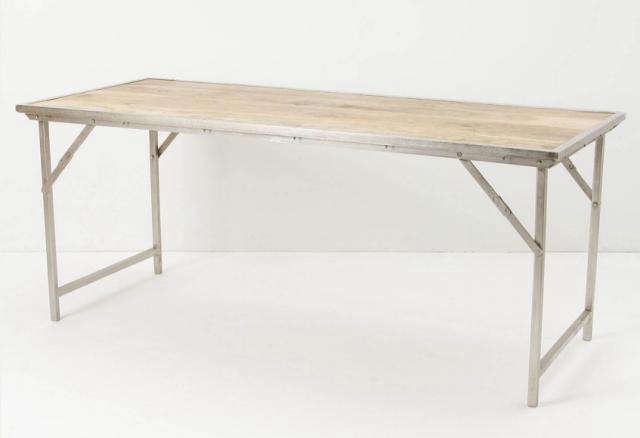
Some folding tables are unapologetically utilitarian. They say, “I am here for the buffet line.” Others are designed to blend into a home. Wood folding card tables, wall-mounted drop-leaf tables, narrow foldable dining tables, and compact bistro-style tables can feel intentional rather than temporary.
If your folding table will stay visible most of the time, design matters. A solid wood or wood-look tabletop, clean metal legs, a slim profile, or a warm finish can make the difference between “smart small-space solution” and “conference room accidentally moved into the kitchen.”
4. Outdoor Durability Is Required
For patios, balconies, camping, tailgating, and backyard parties, materials matter. Resin, HDPE, aluminum, powder-coated steel, eucalyptus, and other weather-aware materials are common choices for folding tables intended to handle outdoor use. Budget tables can work outside too, but they may not resist sun, rain, scratches, or repeated transport as well as sturdier models.
A premium outdoor folding table should be easy to clean, resistant to moisture, and solid enough that a mild breeze does not turn it into a very unpopular kite. If you host outdoors often, pay attention to the frame finish, feet, tabletop thickness, and whether the table is truly designed for indoor/outdoor use.
The Low: When a Budget Folding Table Is the Smart Buy
1. You Only Need It Occasionally
If the table appears twice a year for holiday meals and then returns to storage like a seasonal appliance, a lower-cost option may be perfect. Many affordable resin or plastic folding tables are lightweight, easy to clean, and available in practical sizes such as 4-foot, 6-foot, and 8-foot rectangles.
A budget folding table is especially useful when function matters more than finish. Think garage sales, kids’ crafts, gift wrapping, temporary laundry folding, party drinks, extra dessert space, or the classic “we invited four more people than our dining table can handle” situation.
2. Portability Is the Priority
Sometimes the best folding table is simply the one you can carry without questioning your life choices. Fold-in-half utility tables with handles are popular because they fit in car trunks, closets, sheds, and small storage rooms. Lightweight camping tables are even easier to move and may include roll-up tops, carrying bags, or adjustable legs.
Budget-friendly portable tables are great for picnics, school events, vendor booths, beach days, tailgates, and apartment living. Just remember: lighter often means less stable. If the table will hold heavy equipment, large serving trays, or expensive electronics, do not choose based on weight alone.
3. You Need Multiple Tables
Buying one folding table is a small decision. Buying six is a spreadsheet. For classrooms, workshops, community rooms, yard sales, parties, or small business events, affordability matters. In these cases, a practical budget table may outperform a stylish premium table simply because you can buy enough of them.
Look for stackability, nesting storage, uniform dimensions, easy-clean surfaces, and frames that can survive repeated setup. A low price is helpful, but the cheapest table is not a bargain if the legs bend after three uses.
Popular Folding Table Types and Where They Shine
Rectangular Folding Tables
Rectangular folding tables are the workhorses. A 4-foot table is compact enough for small apartments, kids’ activities, and side stations. A 6-foot table is the classic all-purpose choice for dining, buffets, office work, and parties. An 8-foot table offers maximum surface area for large gatherings, vendor displays, and banquet-style seating.
For most homes, a 6-foot fold-in-half resin table is the “safe bet.” It stores reasonably well, seats several people in a pinch, and can double as a buffet, desk, craft table, or emergency puzzle headquarters.
Round Folding Tables
Round folding tables feel more social because everyone faces inward. They are great for card games, casual dining, group discussions, and events where conversation matters. The downside is storage: round tables can be bulkier, and larger models may be awkward to move through narrow hallways.
Square Card Tables
A square folding card table is compact, affordable, and easy to store. It works well for games, puzzles, kids’ snacks, small craft projects, and extra seating for two to four people. It is not the table you choose for a giant buffet, unless your buffet is one bowl of chips and optimism.
Drop-Leaf and Wall-Mounted Folding Tables
Drop-leaf and wall-mounted folding tables are ideal for small spaces. They can turn a blank wall into a breakfast nook, homework station, craft area, or compact desk. When folded down, they save floor space and keep a room flexible. These tables are especially useful in apartments, studios, laundry rooms, kitchens, and multipurpose rooms.
Camping and Outdoor Folding Tables
Camping tables focus on portability, fast setup, and weather-friendly materials. Some are low and compact for holding drinks near camp chairs. Others are taller and stronger for food prep, cooking gear, or group meals. Adjustable-height models are particularly useful because they can shift from low lounge mode to higher prep-table mode.
Materials: What to Choose and What to Avoid
Plastic, Resin, and HDPE
Plastic, resin, and HDPE tabletops are common because they are relatively lightweight, wipeable, and suitable for many indoor/outdoor tasks. They are excellent for families, events, patios, and utility use. The tradeoff is appearance: even a good resin table still looks casual unless covered with a tablecloth or styled carefully.
Wood and Wood-Look Tops
Wood folding tables feel warmer and more decorative. They are a strong choice for dining rooms, card rooms, home offices, and visible spaces. However, wood may require more care, can be heavier, and may not love moisture unless properly finished.
Laminate and Particleboard
Laminate-top folding tables can offer a smoother, more furniture-like surface and a range of finishes. Particleboard versions are often affordable and suitable for lighter use, while plywood-core models are typically stronger and better for heavy-duty applications. For schools, offices, and meeting spaces, laminate can look more polished than basic white plastic.
Metal Frames
Steel frames add strength, while aluminum frames reduce weight. Powder-coated finishes help resist rust and wear. For outdoor use, check whether the frame is specifically described as weather-resistant, not just “metal,” because plain metal plus rain can become a science experiment.
High vs. Low: How to Decide in Five Minutes
Choose a higher-end folding table if you will use it frequently, leave it visible, put heavy items on it, host often, need outdoor durability, or care about a polished look. Choose a lower-cost folding table if you need occasional extra surface area, easy storage, light weight, basic utility, or multiple tables for events.
For most households, the best strategy is one dependable mid-range rectangular table plus one smaller specialty table. For example, a 6-foot resin fold-in-half table can handle parties, while a wall-mounted drop-leaf table can support daily small-space living. That combination covers more real-life scenarios than buying one fancy table and expecting it to be everywhere at once.
Styling a Folding Table So It Does Not Look Like a Folding Table
The easiest upgrade is a tablecloth that fits properly. For dining, choose a fabric that drapes enough to hide the folding legs. For casual outdoor use, a wipeable vinyl or coated cotton cover is practical. For work, add a desk mat, tray, lamp, and small storage bin. Suddenly the table looks intentional instead of borrowed from the church basement.
Chairs matter too. A folding table paired with attractive dining chairs, stools, or benches can look surprisingly stylish. Add a centerpiece, runner, woven placemats, or a plant, and the whole setup becomes less “temporary emergency furniture” and more “flexible hosting genius.”
Common Folding Table Mistakes
Buying Too Big
An 8-foot table sounds useful until you try to store it in a small apartment or carry it alone. Measure your storage space, doorway width, car trunk, and setup area before buying.
Ignoring Weight
A heavy table may be more stable, but it is not helpful if you dread moving it. Check the product weight, especially if one person will handle setup.
Forgetting Leg Room
Some folding mechanisms interfere with chairs or knees. If the table will be used for dining or work, look closely at the leg design and support bars.
Assuming “Outdoor” Means Indestructible
Outdoor-friendly does not mean you should leave every folding table in rain, sun, and snow forever. Store it properly when not in use to extend its life.
Real-Life Experience: What Living With Folding Tables Teaches You
After using folding tables in real homes, parties, small apartments, outdoor spaces, and last-minute “where do we put all this food?” situations, one truth becomes obvious: the best folding table is not the prettiest one in the product photo. It is the one that fits smoothly into your routines. A table that is too heavy stays in storage. A table that is too small becomes frustrating. A table that wobbles becomes famous in the family for all the wrong reasons.
For everyday experience, the 6-foot rectangular folding table wins because it is boring in the most useful way. It can become a buffet during holidays, a wrapping station in December, a homework zone during the school year, a laundry-folding surface on Sunday, and a garage-sale display when you finally admit you own too many mugs. It is rarely glamorous, but it is almost always helpful.
The small folding card table has a different personality. It is the table you grab when you need “just a little more space.” It works for puzzles, board games, snacks, kids’ crafts, and laptop use. It is not ideal for heavy-duty work, but it is wonderfully low-commitment. It can slide into a closet, live behind a sofa, or disappear under a bed. In a small home, that kind of disappearing act feels like magic.
Outdoor folding tables teach another lesson: flat ground is a luxury. On patios, lawns, campsites, and driveways, stability becomes more important than style. Adjustable legs can be a lifesaver, especially for camping or uneven surfaces. A table that looks plain but keeps your drinks upright deserves respect. A beautiful table that turns every plate into a downhill skiing event does not.
There is also a hosting lesson. Folding tables are excellent social problem-solvers. They remove the pressure of having a perfect formal dining setup. You can create a kids’ table, dessert station, drink bar, craft zone, or overflow dining area in minutes. Add a clean cover, decent lighting, and a few intentional details, and guests will see hospitalitynot the fact that your “banquet hall” was stored next to the vacuum cleaner an hour ago.
For work-from-home use, folding tables can be surprisingly effective as temporary desks, but comfort matters. The height should match your chair, the surface should not bounce while typing, and the table should be deep enough for a laptop, notebook, and coffee. A narrow table may save space, but if your elbows are hanging off the edge like they are waiting for rescue, it is not the right desk.
The biggest experience-based tip is to practice setting up and folding the table before the event. This sounds silly until you are wrestling with a stubborn leg lock while guests arrive and someone asks where the serving spoons are. A good folding table should open and close smoothly, lock securely, and not require a secret handshake. If setup feels annoying on day one, it will not become charming by day ten.
Finally, storage determines long-term happiness. Before buying, decide where the table will live. Behind a door? In a closet? Under a bed? In the garage? On wall hooks? The most useful folding table is one you can access easily. If retrieving it requires moving three boxes, a bicycle, and a suspiciously dusty holiday wreath, you will stop using it. Convenience is part of quality.
Conclusion: The Best Folding Table Is the One That Earns Its Storage Space
A folding table should make life easier, not become another awkward object you have to manage. The high-end choice is worth it when you need durability, stability, frequent use, outdoor performance, or a look that feels closer to real furniture. The low-cost choice is smart when you need occasional seating, lightweight portability, or quick extra surface area without a major investment.
For most people, a practical mid-range folding table offers the best balance. Look for a sturdy frame, easy-clean surface, secure locking legs, manageable weight, and dimensions that match both your room and storage space. Whether it becomes a holiday buffet, a craft station, a camping companion, or the world’s most temporary home office, a good folding table proves that flexible furniture can be humble, hardworking, and surprisingly lovable.
Note: This article was created for web publishing and is based on synthesized, real-world information about folding table materials, sizes, features, and use cases from reputable U.S.-focused home, retail, manufacturer, and product-review references.