Note: This article is written for editorial publication and synthesizes real-world relationship, pet-care, sleep, allergy, and animal-behavior guidance without inserting source links.
There are cat people, and then there are people who appear to have signed a lifelong emotional contract with a whiskered roommate who pays no rent, ignores everyone’s boundaries, and still somehow wins every argument. That is the awkward heart of this story: a woman feels pushed aside because her boyfriend repeatedly chooses his cat over her, even during moments when most couples would prefer not to have an audience with a tail.
The situation sounds funny at first. A man loves his cat. The cat is his best friend. The woman wants to feel like his romantic partner, not like a guest star in a one-cat drama. But the deeper issue is not really about whether cats are lovable. Of course they are. The internet did not build itself on tax forms and broccoli recipes. It was built on cats knocking cups off tables with the confidence of tiny landlords.
The real issue is about priorities, boundaries, emotional availability, and what happens when a pet becomes the third presence in a relationship. Loving a pet is healthy. Ignoring your partner’s discomfort is not. Canceling plans for a sick animal can be responsible. Interrupting intimacy to pet the cat may be, depending on the couple, a romantic record scratch loud enough to wake the neighbors.
Why This Story Hits a Nerve
Pet ownership in the United States has become deeply emotional. Many people consider pets family members, not accessories. A cat is not “just a cat” to a devoted owner. It may be a source of comfort, stability, routine, companionship, and emotional support. For someone who lives alone, has gone through grief, or has built years of daily life around an animal, a pet can feel like a constant in a world that changes too quickly.
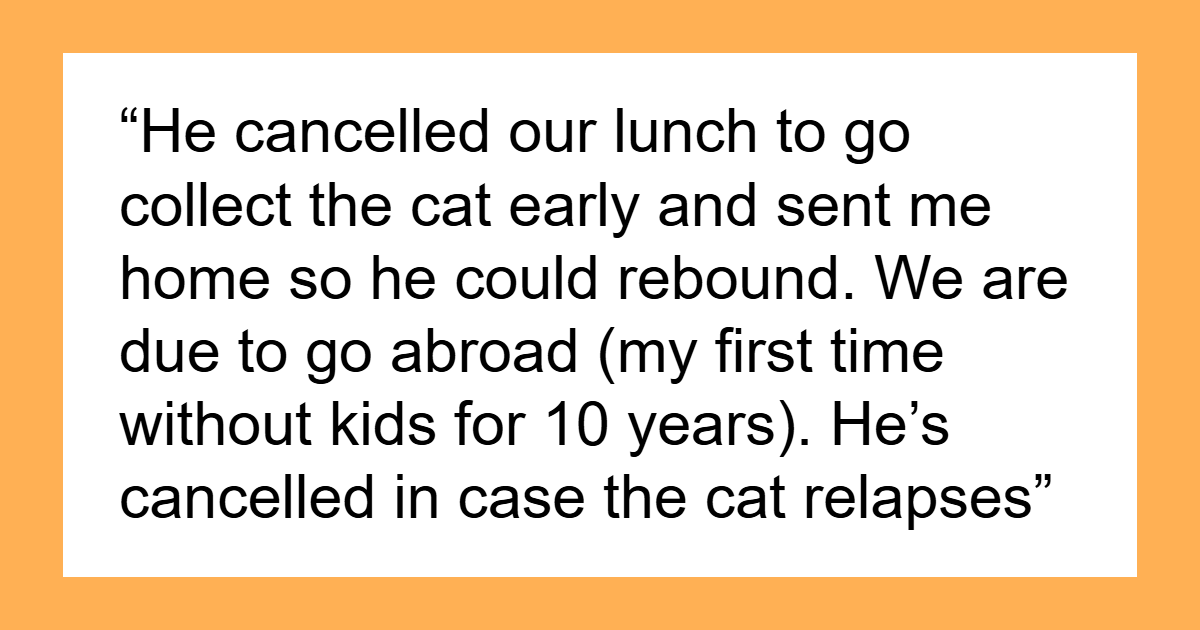
That is why many readers can understand the boyfriend canceling a date to pick up a sick cat from the vet. Responsible pet owners do not treat health scares like minor calendar conflicts. If an animal is unwell, the owner may feel anxious, protective, and unwilling to leave the pet alone. In that context, choosing the cat is not automatically a red flag. It may simply be care.
But relationships are not built only on emergencies. They are built on patterns. If one partner regularly feels second place to a pet, the issue becomes less about a single canceled date and more about emotional hierarchy. Is the partner being respected? Are plans negotiated fairly? Is the pet’s welfare being used as a reason to avoid closeness, travel, conflict, or commitment?
Choosing the Cat During a Health Issue Is Understandable
Let’s be fair to the cat dad. If his cat had recently been ill, his anxiety may have been real. Cats can hide pain and illness well, and many pet owners become extra cautious after a vet visit. A person who has nursed a pet through sickness may not relax easily, even when the situation is no longer life-threatening. Every sneeze becomes a crisis. Every missed meal becomes a veterinary mystery. Every slow blink becomes “Is she saying goodbye or judging the couch?”
In that sense, canceling one date or postponing a plan may be reasonable. A caring partner might not love it, but they can understand it. Compassion for animals is usually an attractive quality. A man who takes responsibility for a dependent creature often shows patience, loyalty, and tenderness. Those traits can translate beautifully into romantic life.
The problem begins when care becomes rigid and one-sided. If every plan is fragile because the cat might need something, the human partner may start to feel emotionally homeless in the relationship. No one wants to compete with a pet, especially when the pet has claws, seniority, and the ability to stare from doorways like a disappointed Victorian ghost.
The Intimate-Time Problem Is a Different Conversation
The most uncomfortable part of the story is not that the cat exists in the home. Many couples with pets know the reality: animals wander in at the worst possible time. Dogs bark. Cats jump on beds. A pet may sit nearby with the expression of a tiny accountant auditing your life choices. These interruptions can be awkward, but they are common.
What made this situation feel creepy to the woman was that her boyfriend reportedly stopped during an intimate moment to stroke the cat. That is where many people would draw a firm line. Physical intimacy depends on mutual attention, safety, privacy, and emotional presence. When one partner suddenly shifts focus to a pet, the other may feel exposed, rejected, embarrassed, or simply turned off.
For some couples, a pet walking through the room is no big deal. For others, the bedroom door closes. The important point is consent and comfort. If one partner says, “I do not want the cat in the room during intimate moments,” that request deserves to be taken seriously. It is not anti-cat. It is pro-boundary.
Why Pet Boundaries Matter in Romantic Relationships
Healthy boundaries do not mean pushing a beloved pet out of someone’s life. They mean creating agreements that allow both partners to feel respected. A boundary might sound like: “I understand your cat is important to you, but I need private time when we are being intimate.” Another might be: “If the cat is sick, let’s talk honestly about whether plans need to change instead of canceling at the last minute.”
Boundaries are especially important when one partner had the pet before the relationship began. The owner may see the animal as part of the household structure. The newer partner may feel like they are entering a world with rules they did not help create. That can work, but only if the couple talks about expectations instead of silently collecting resentment like cat hair on black pants.
Common pet-related boundaries include where the animal sleeps, whether it is allowed on the bed, how vet emergencies are handled, how travel is planned, how expenses are managed, and whether pets are present during romantic or private time. These details may sound small until they are not. Relationships often struggle not because of one dramatic betrayal, but because of repeated moments where one person feels dismissed.
Is He Too Attached to His Cat?
Attachment to a pet is not automatically unhealthy. Many people form strong bonds with cats because cats provide routine, comfort, and affection without the complexity of human conflict. A cat does not ask, “Where is this relationship going?” A cat asks, “Why is my bowl 40 percent visible at the bottom?” In stressful lives, that simplicity can feel safe.
However, a pet bond can become complicated if the owner uses the animal as a shield from intimacy. If every difficult conversation ends with “My cat comes first,” the partner may hear, “Your feelings do not matter.” If the cat is repeatedly placed between the couple during emotionally vulnerable moments, it may prevent the relationship from deepening.
The question is not whether he loves the cat too much. Love is not a pie chart where affection for a pet automatically steals slices from a partner. The better question is whether he has enough emotional flexibility to love both. A mature partner can adore a cat and still close the bedroom door. He can worry about a pet and still communicate respectfully. He can say, “My cat matters,” without implying, “You do not.”
Why the Girlfriend Feels Creeped Out
The girlfriend’s reaction makes sense because intimate moments require a sense of being chosen. When a partner interrupts that moment to focus on a pet, it can feel like emotional whiplash. One second she is sharing closeness with him; the next, the cat has become the main character.
Feeling creeped out does not necessarily mean she dislikes animals. It means her private boundary was crossed. Many people are comfortable cuddling a pet on the couch, sharing photos, buying toys, paying vet bills, and even referring to the animal as a fur baby. That does not mean they want the pet involved in every room, every plan, and every moment of adult intimacy.
Her discomfort also may come from feeling unheard. She reportedly confronted him more than once, and he brushed it off. That response is often more damaging than the original behavior. A partner does not need to instantly agree with every concern, but they should care that something bothers the person they love. Dismissal turns a solvable boundary issue into a relationship problem.
What He May Be Missing
From his perspective, stroking the cat may have felt harmless. He may see the cat as family and assume the girlfriend should accept that without question. He may believe that anyone who loves him must love the cat’s constant presence too. That is a common mistake among devoted pet owners.
But accepting a pet and accepting no boundaries around a pet are two different things. A partner can respect the cat, feed the cat, buy the cat a ridiculous birthday toy, and still say, “I need private couple time.” Love does not require pretending everything is fine while feeling deeply uncomfortable.
He also may be underestimating how attraction works. Romantic connection is not just physical. It depends on attention. If a partner feels deprioritized, attraction can shrink. It is hard to feel desired when a cat gets more immediate responsiveness than you do. The issue is not jealousy of the cat; it is the desire to feel emotionally significant.
How Couples Can Handle a Pet Priority Conflict
1. Separate Emergencies From Patterns
A sick cat is an emergency or at least a valid concern. A cat interrupting every plan is a pattern. Couples should identify which is which. If the pet truly needs care, compassion is appropriate. If the pet is used as the default reason the couple cannot move forward, that deserves a serious conversation.
2. Create Clear Bedroom Rules
This is the simplest fix. If one partner is uncomfortable with pets in the room during intimacy, close the door. Give the cat a cozy bed, food puzzle, or safe space elsewhere. The cat may complain dramatically, because cats are basically opera singers in fur coats, but a closed door is not cruelty.
3. Plan Pet Care Before Travel
If travel is a recurring conflict, the owner should arrange a trusted sitter, vet boarding, or check-in routine ahead of time. If the cat has medical needs, discuss them early. Last-minute cancellations create resentment, especially when the other partner has rearranged work, family, childcare, or money.
4. Use “I” Statements Instead of Accusations
“You care more about your cat than me” may be emotionally honest, but it can sound like an attack. A calmer version is: “I feel unimportant when our plans are canceled without discussion, and I feel uncomfortable when the cat is present during intimate moments.” That makes the problem specific and easier to solve.
5. Watch the Response
The most important sign is not whether he agrees immediately. It is whether he listens. A loving partner may say, “I did not realize it felt that way. Let’s figure it out.” A dismissive partner may say, “This is how it is, and nothing comes between me and my cat.” The second response tells her a lot about the future.
When the Cat Is Not Really the Problem
Sometimes the pet becomes the symbol of a bigger incompatibility. The girlfriend may want a partner who prioritizes shared travel, privacy, and couple rituals. The boyfriend may want a partner who fully accepts that his cat is central to his life. Neither desire is automatically wrong. But they may not fit together.
Compatibility is not about finding someone with no quirks. Everyone has quirks. Some people sleep with six pillows. Some label leftovers like museum artifacts. Some talk to their cats in a voice that could damage a serious courtroom career. The question is whether the quirks leave enough room for mutual respect.
If she feels repeatedly sidelined and he refuses to adjust, the relationship may become a long audition for a role she does not want: second-in-command to a feline queen. If he feels judged for loving his cat, he may become defensive and resentful. Both people need honesty before the conflict turns into contempt.
What a Healthy Compromise Could Look Like
A reasonable compromise would not require him to love his cat less. It would require him to structure that love in a way that respects the relationship. For example, he could keep the cat out of the room during intimate time, check on the cat before and after dates, arrange reliable care before trips, and communicate early if a medical issue changes plans.
She, in turn, could recognize that a sick pet is not a casual inconvenience. If the cat is genuinely unwell, flexibility and compassion matter. She can also avoid framing the issue as a competition. The goal is not “me or the cat.” The goal is “how do we make space for the cat without shrinking the relationship?”
That shift matters. The best couples do not demand that their partner abandon what they love. They ask to be included, considered, and protected from avoidable discomfort. In this case, a closed door, a clear plan, and a little emotional maturity could solve more than half the drama.
Specific Examples of Reasonable vs. Unreasonable Behavior
Reasonable: He cancels dinner because the cat has just returned from the vet and needs monitoring. He explains clearly, apologizes, and reschedules.
Unreasonable: He cancels every meaningful plan because the cat might possibly be sad, bored, mildly annoyed, or spiritually opposed to luggage.
Reasonable: The cat sleeps on the bed when both partners are comfortable with it.
Unreasonable: He insists the cat must stay on the bed during private romantic moments even after his partner says it makes her uncomfortable.
Reasonable: He says, “My cat is a major part of my life, and I need a partner who understands that.”
Unreasonable: He says, “Nothing comes before my cat,” and uses that sentence to end every discussion about the girlfriend’s needs.
These distinctions matter because they prevent the conversation from turning into “cat lovers versus everyone else.” The real divide is not between pet people and non-pet people. It is between flexible care and rigid prioritization.
Should She Stay or Leave?
She does not need to leave because he loves his cat. She may need to reconsider the relationship if he cannot respect her boundaries. A partner’s love for an animal can be beautiful. But beauty fades fast when it becomes an excuse for dismissiveness.
If he can listen, compromise, and create private couple space, the relationship may recover. If he mocks her discomfort or treats every request as a threat to the cat, she has valuable information. Dating is partly about discovering whether two lives can fit together. Sometimes the answer is yes, with adjustments. Sometimes the answer is no, with a polite goodbye and maybe a lint roller.
Experience Section: What This Kind of Situation Teaches About Love, Pets, and Boundaries
People who have dated devoted pet owners often describe a similar learning curve. At first, the pet is charming. The cat curls up nearby, blinks slowly, and looks like a tiny loaf of judgment. The partner talks about the cat’s routines, favorite snacks, medical history, and deeply held opinions about cardboard boxes. It can be sweet. It can also be overwhelming if the pet’s needs seem to control every shared decision.
One common experience is the “invisible competition” feeling. The human partner may know logically that a cat and a romantic partner are not the same category. Still, feelings are not spreadsheets. If date nights, vacations, sleep, and intimacy are constantly shaped around the animal, the partner can begin to feel like an optional add-on. That feeling becomes stronger when concerns are laughed off or minimized.
Another familiar experience is discovering that pet boundaries reveal communication styles. A couple may start by arguing about whether the cat should be in the bedroom, but soon the real issue becomes clear: Can they discuss discomfort without defensiveness? Can they make practical agreements? Can one person say, “This matters to me,” and the other respond with care instead of sarcasm?
Many couples successfully navigate this. They create routines. The cat gets playtime before bed. The bedroom door closes during private time. Travel plans include a trusted sitter, written instructions, emergency vet numbers, and check-ins that do not consume the entire vacation. The pet remains loved, and the relationship gets breathing room. Nobody has to be the villain. Not even the cat, although the cat may disagree loudly from the hallway.
The experience also teaches that people attach to animals for meaningful reasons. A pet may have been there through divorce, loneliness, illness, grief, or years of single life. Asking someone to suddenly deprioritize that bond can feel cruel. But asking a romantic partner to accept unlimited pet involvement can also be unfair. Compassion must travel in both directions.
For the person feeling pushed aside, the best lesson is to name the need clearly. Instead of saying, “Your cat is weird,” say, “I need private time without the cat in the room.” Instead of saying, “You always choose the cat,” say, “When plans change, I need us to discuss it together and reschedule in a way that respects my time.” Clear requests reveal whether the problem is confusion or unwillingness.
For the pet owner, the lesson is equally important: loving an animal does not excuse neglecting a partner’s emotional comfort. A cat can be family, but a romantic relationship needs its own protected space. When someone invites a partner into their life, they are not replacing the pet. They are expanding the circle. Expansion requires adjustment.
In the end, this story is memorable because it is funny on the surface and serious underneath. A man petting his cat during intimacy sounds like a bizarre sitcom scene. But the emotional question is universal: Do I feel chosen? Do my boundaries matter? Can we build a life where love for a pet and love for a partner do not compete? If the answer is yes, the couple has a chance. If the answer is no, the cat may keep the man, and the woman may keep her peace.
Conclusion
The story of a guy always choosing his cat over his partner is not simply about jealousy, pets, or one awkward intimate moment. It is about whether love can make room for more than one attachment. A devoted cat owner can be caring, loyal, and emotionally deep. But a healthy romantic relationship also requires privacy, communication, and mutual respect.
The girlfriend is not wrong for feeling uncomfortable. The boyfriend is not wrong for loving his cat. The conflict lives in the gap between devotion and boundaries. If he can close the door, plan responsibly, and listen to her concerns, this could become a funny story they survive together. If he cannot, then the cat is not the only one sending a message.