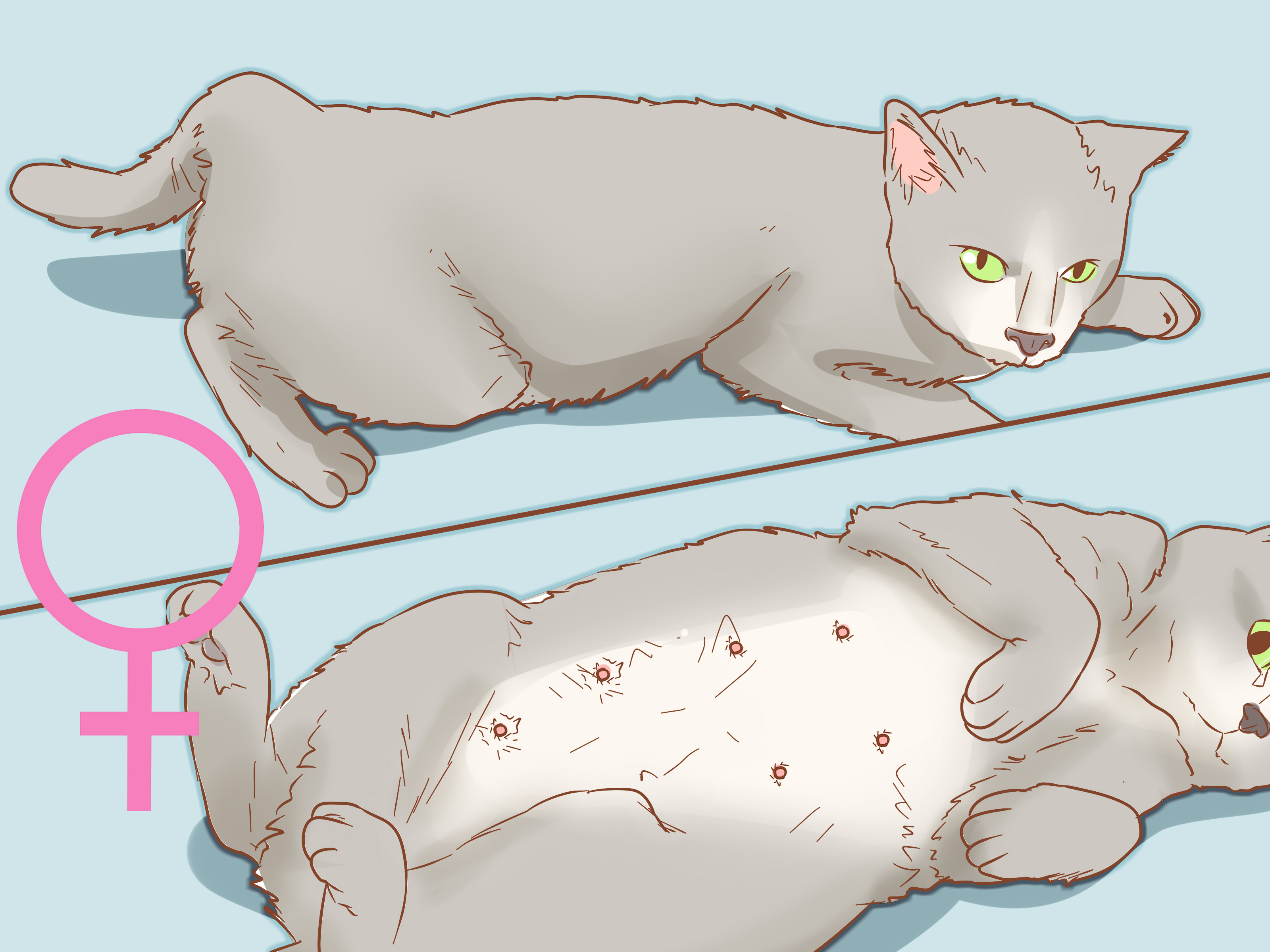
Trying to determine the sex of a cat can feel surprisingly dramatic for something that involves lifting a tail for three seconds. One minute you are confidently naming your new kitten “Sir Whiskers,” and the next minute your veterinarian politely explains that Sir Whiskers may need a princess crown. It happens. Cats are tiny, fluffy, wiggly, and extremely talented at hiding the exact information you are looking for.
The good news is that learning how to determine the sex of a cat is not mysterious once you know what to check. The most reliable method is not personality, size, sass level, or whether your kitten looks like it owns a leather jacket. It is the appearance and spacing of the openings under the tail. In plain English: you look at the anus, then look at the genital opening below it, and compare the shape and distance.
This guide explains the process in seven simple steps, with extra tips for kittens, adult cats, rescued cats, and neutered males. You will also learn which clues are helpful, which ones are unreliable, and when it is smarter to let a veterinarian make the call. Your cat may not appreciate the inspection, but with gentle handling and a calm approach, the whole thing can be over before your feline has time to file a complaint with management.
Why Knowing a Cat’s Sex Matters
Knowing whether a cat is male or female is useful for more than choosing a name. It helps you plan veterinary care, schedule spay or neuter surgery, understand reproductive risks, prevent surprise litters, and recognize certain health concerns. Male cats, especially intact males, can be more prone to urine spraying, roaming, and territorial behavior. Female cats can go into heat and become pregnant earlier than many new owners expect.
For shelters, rescues, foster homes, and anyone caring for a litter, accurate sex identification is also practical. It helps separate kittens before sexual maturity, label medical records correctly, and avoid awkward adoption paperwork that says “female” until the kitten grows testicles and ruins the plot twist.
How to Determine the Sex of a Cat: 7 Steps
Step 1: Choose the Right Time
Timing matters. A relaxed cat is much easier to examine than a cat who has transformed into a furry helicopter. Pick a calm moment, such as after a meal, after playtime, or when your cat is sleepy and comfortable. Avoid checking immediately after a stressful event, during a loud household moment, or when the cat is hiding.
For very young kittens, be extra careful. Newborns should not be handled excessively, especially if the mother cat is nervous. If the kitten is with its mother, keep the inspection short, warm, and gentle. If the mother seems upset, stop and try again later. A healthy relationship with the queen is more important than solving the “boy or girl?” mystery five minutes faster.
Step 2: Handle the Cat Gently and Safely
Place the cat on your lap, on a towel, or on a stable surface. Speak softly. Pet the cat along the back and base of the tail. Many cats naturally lift their tails when scratched gently near the tail base, which makes the process easier and less awkward for everyone involved.
Never pull the tail sharply. Never squeeze the abdomen. Never force the cat to stay in position if it is frightened. If your cat struggles, wrap the body loosely in a towel while leaving the rear visible, or ask another calm person to help. For a nervous cat, a veterinarian or experienced shelter worker can often identify the sex quickly without turning the moment into a wrestling documentary.
Step 3: Lift the Tail and Locate the Two Openings
Once the tail is lifted, look directly under the tail. The first opening, closest to the tail, is the anus. Below the anus is the genital opening. This second opening is what helps you determine whether the cat is male or female.
Do not expect to see an obvious penis on a male kitten. In young kittens, the penis is usually not visible. Do not assume a kitten is female just because you cannot see testicles. Tiny kittens are experts at making their anatomy look like an unsolved riddle.
Your goal is to notice two things: the distance between the anus and genital opening, and the shape of the genital opening. Those two clues are far more reliable than guessing based on size, attitude, or whether the kitten knocked over your coffee with bold masculine energy.
Step 4: Look for the Female Pattern
A female cat usually has the anus and vulva close together. The genital opening often looks like a vertical slit, teardrop, or small line. Many people compare the female pattern to an upside-down exclamation point.
In kittens, the two openings may be very close, almost touching. The area between them is usually shorter and less spacious than in males. If you are looking at a litter, comparison helps. Put two kittens side by side briefly, look at the spacing, and you may notice that one has a much shorter gap while another has a longer one.
In adult female cats, the same basic pattern remains. The vulva sits close below the anus, and there is no scrotal sac between the openings. However, fur can make things harder to see, especially in long-haired cats. If your cat is a fluffy cloud with opinions, gently part the fur rather than poking around blindly.
Step 5: Look for the Male Pattern
A male cat usually has a larger distance between the anus and the genital opening. The genital opening tends to look rounder, more like a dot. In many male cats, the overall pattern looks like a colon, with two separated circular points.
In intact adult males, the testicles are often visible between the anus and penis opening. They may appear as two small oval shapes or a soft scrotal sac. In kittens, testicles may be tiny, not descended clearly, or hidden by fur. In neutered males, the testicles have been removed, so the scrotal area may be flat or subtle. That is why spacing and shape are still important.
If you see a larger gap between the anus and the genital opening, and the lower opening is round rather than slit-like, you are probably looking at a male cat. Congratulations: you have successfully completed a very strange but useful inspection.
Step 6: Use Coat Color as a Clue, Not a Final Answer
Coat color can provide hints, but it should not be your main method. Calico and tortoiseshell cats are almost always female because the orange-and-black color pattern is linked to genes carried on the X chromosome. Since female cats typically have two X chromosomes, they are much more likely to show both orange and black coloring.
Male calico or tortoiseshell cats can exist, but they are rare and often have unusual chromosome patterns. So, if you have a calico kitten, female is a strong guess, but not a legal contract signed by the universe.
Orange cats are more often male, but plenty of orange females exist. A ginger tabby named “Frank” may be female, and a delicate calico named “Muffin” may still need a vet confirmation if anything looks unusual. Color is helpful when combined with anatomy, but anatomy wins the argument.
Step 7: Confirm With a Veterinarian When Unsure
If you are uncertain, ask your veterinarian. This is especially important with very young kittens, long-haired cats, neutered males, cats with swelling or injuries, or cats whose anatomy does not look typical. Some cats may have developmental differences that make sex identification difficult without a professional exam.
A veterinarian can also check whether the cat is already spayed or neutered, estimate age, discuss vaccines, and help plan future care. If your cat is a rescue or stray, a vet visit is strongly recommended even if you feel confident about the sex. Fleas, worms, upper respiratory infections, and reproductive status can all affect next steps.
Male vs. Female Cat: Quick Comparison
| Feature | Female Cat | Male Cat |
|---|---|---|
| Distance between anus and genital opening | Shorter; openings are close together | Longer; more space between openings |
| Shape of genital opening | Vertical slit or teardrop | Round dot or small circle |
| Common visual comparison | Upside-down exclamation point | Colon |
| Testicles | Absent | May be visible in intact males; subtle or absent-looking after neuter |
| Coat color clues | Calico and tortoiseshell are usually female | Orange cats are more often male, but not always |
Common Mistakes When Sexing a Cat
Mistake 1: Looking for an Obvious Penis
Many new owners expect male kittens to look like tiny adult males. They usually do not. The penis is often hidden, and the testicles may not be obvious. Focus on spacing and shape instead.
Mistake 2: Trusting Personality
Male cats are not always more affectionate, and female cats are not always more independent. Cat personality is shaped by genetics, socialization, environment, age, health, and individual temperament. In other words, your cat is not spicy because she is female; she may simply be spicy because she is a cat.
Mistake 3: Relying Only on Size
Adult males are often larger than females, but size varies widely by breed, nutrition, and age. A large female Maine Coon mix can easily outweigh a small male domestic shorthair. Size is a clue, not a conclusion.
Mistake 4: Confusing a Neutered Male for a Female
After neutering, a male cat may not have visible testicles. This can make him look female at first glance. The greater spacing between the anus and genital opening usually remains the better clue.
How Young Is Too Young to Tell a Kitten’s Sex?
Experienced rescuers and veterinarians can often identify kitten sex early, but for beginners, it gets easier as kittens grow. In the first days of life, everything is tiny and delicate. By a few weeks old, the differences become easier to see. Around six to eight weeks, many owners can identify sex more confidently, especially when comparing littermates.
Still, accuracy depends on lighting, handling, fur length, kitten size, and experience. If the kitten is very young and you are not sure, write down your best guess and confirm later. There is no shame in changing “Oliver” to “Olivia.” Cats do not read birth certificates.
Why Early Sex Identification Helps Prevent Surprise Litters
Cats can reach sexual maturity earlier than many people realize. Female kittens may become capable of pregnancy at a young age, and intact males can become interested in mating as they mature. If you have male and female kittens together, identifying their sex early helps you plan separation and surgery before nature starts making decisions on your behalf.
Spaying and neutering also offer health and behavior benefits. Spaying prevents pregnancy and eliminates the risk of uterine infection. Neutering prevents testicular cancer and can reduce urine spraying, roaming, and fighting. The best timing depends on the cat’s health, weight, age, and your veterinarian’s recommendation.
Extra Experience Tips: What Real Cat Owners Learn the Hard Way
After helping with kittens, rescues, and newly adopted cats, many people learn that sexing a cat is less about having magical knowledge and more about having patience, good lighting, and the humility to say, “I am only 80 percent sure.” The first practical tip is to compare kittens whenever possible. One kitten alone may look confusing, but two or three littermates can make the difference obvious. The male usually has more space between the openings, while the female’s openings sit closer together. Comparison turns a guessing game into a visual pattern.
Another useful experience is to take a quick photo if the cat is calm and safe. Do not use flash directly in a kitten’s face, and do not stress the cat for the sake of a picture. But a clear photo from behind can help you look again without repeatedly handling the kitten. It can also be shown to a veterinarian or experienced foster coordinator. Many foster families use photos because kittens wiggle like popcorn kernels in a hot pan.
Lighting matters more than people expect. A dim room makes every kitten look like a mystery. Natural daylight or a bright lamp can help you see whether the genital opening is round or slit-like. Long-haired kittens may need the fur gently parted. Never trim fur around the area unless a veterinarian or groomer recommends it; tiny skin folds are easy to nick, and nobody wants a grooming accident in the middle of a basic identification task.
It is also smart to check more than once. A very young kitten may be difficult to identify on Monday and obvious by the following week. If you are fostering, label your notes with “suspected male” or “suspected female” until confirmed. This prevents confusion later, especially in a litter of five nearly identical tabbies who all look like they were manufactured by the same tiny stripe factory.
Owners of adult rescued cats often learn another lesson: do not assume a cat’s sex based on the name given by a previous person. Stray cats, barn cats, and community cats are frequently misidentified. A cat named “Mama” may turn out to be a neutered male who simply has nurturing energy. A cat named “Tom” may be female. Names are charming; anatomy is evidence.
Behavior can also trick people. Intact males may spray urine, roam, and act territorial, but females can spray too, especially under stress. Female cats in heat may vocalize loudly, roll, raise their hindquarters, and seem extra affectionate. However, medical problems and stress can create similar behavior changes. If your cat is suddenly crying, straining in the litter box, hiding, or acting uncomfortable, treat it as a health issue rather than a sex-identification clue.
The biggest experience-based recommendation is simple: be gentle and be willing to ask for help. You do not need to become a feline anatomy professor overnight. If the cat is relaxed, look briefly and compare shape and distance. If the cat is scared, stop. If you are unsure, ask a veterinarian. Your cat will forgive a short inspection much faster than a long, clumsy one. Possibly after snacks. Definitely after snacks.
Conclusion
Learning how to determine the sex of a cat comes down to a few reliable clues. Gently lift the tail, find the anus, look at the genital opening below it, and compare the distance and shape. Female cats usually have a short gap and a vertical slit. Male cats usually have a wider gap and a rounder opening. Coat color can help, especially with calico and tortoiseshell cats, but it should never replace a careful look at anatomy.
If your cat is very young, fluffy, nervous, neutered, or simply confusing, ask your veterinarian to confirm. A quick professional check can save you from naming surprises, medical record mistakes, and unexpected litters. The process may feel awkward the first time, but with patience and gentle handling, you can identify most cats accurately and keep your feline friend comfortable at the same time.