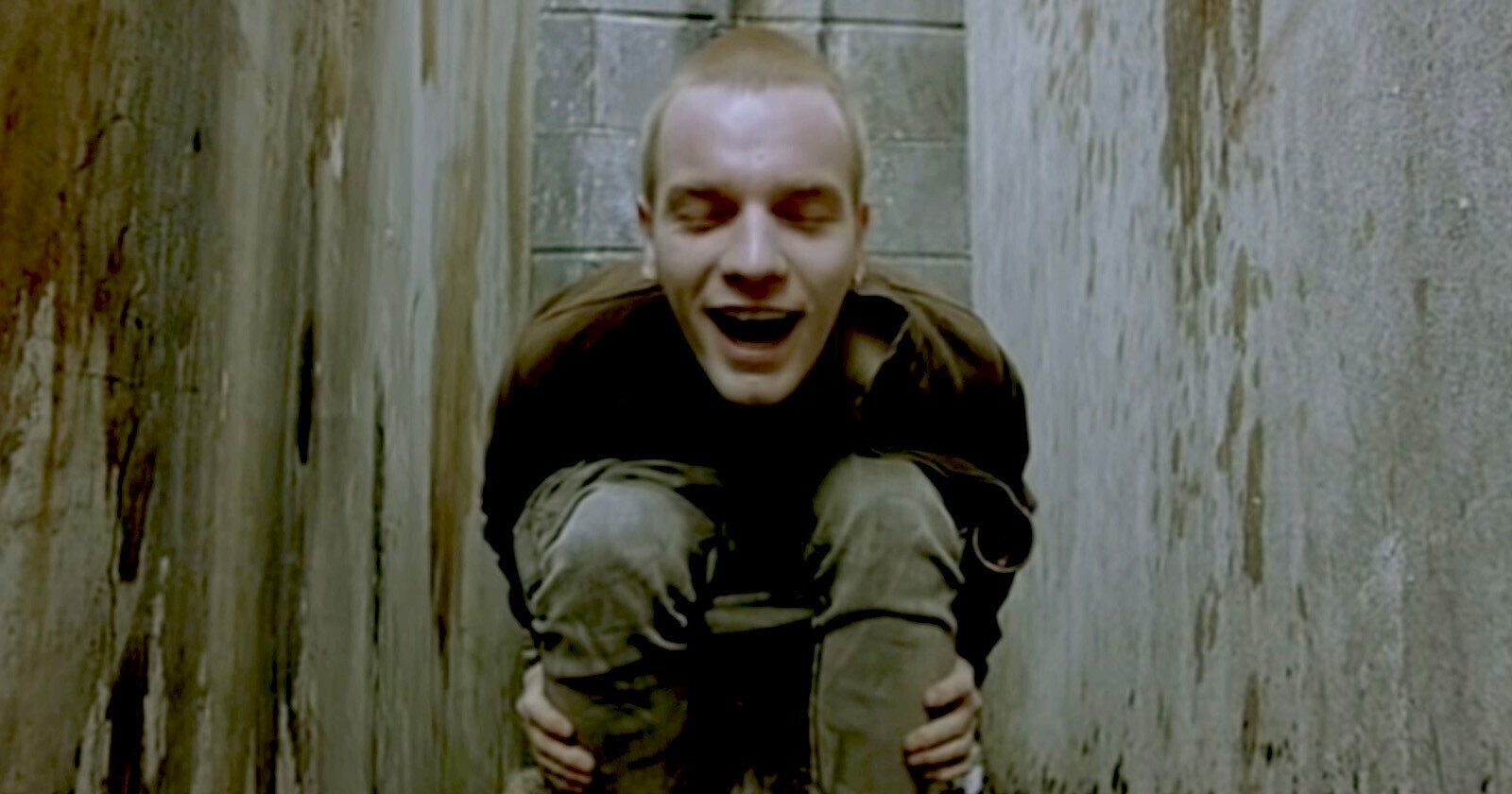
Some parents show their children baby photos. Some cue up home videos of first steps, awkward school plays, or the family dog committing a minor household crime. Ewan McGregor, being Ewan McGregor, apparently had a slightly different entry in the family archive: the infamous toilet scene from Trainspotting.
Yes, that toilet scene. The “Worst Toilet in Scotland” scene. The one in which McGregor’s Mark Renton, desperate to retrieve lost opium suppositories, dives headfirst into a public restroom nightmare before the movie suddenly transforms filth into surreal, underwater beauty. It is disgusting, funny, weirdly poetic, and somehow one of the most memorable movie scenes of the 1990s.
During a conversation at the Karlovy Vary Film Festival, McGregor revealed that while he was not present when his daughter Clara first watched Trainspotting, he had previously shown his kids the bathroom sequence “just for a laugh.” It is the kind of celebrity-parent anecdote that sounds almost unbelievable until you remember the source: a charming Scottish actor whose career has included heroin-addicted antiheroes, Jedi robes, singing bohemians, motorcycle adventures, and enough dry humor to power a small Edinburgh pub.
Why This Ewan McGregor Story Went Viral Again
The reason the story caught fire is simple: it blends two things audiences lovemovie nostalgia and parent-child awkwardness. McGregor did not frame the moment as a grand lesson in cinema history. He described it as a funny, strange perk of being a father who can say, in effect, “Would you like to see Dad disappear into a toilet on camera?”
That is not exactly standard family viewing. Trainspotting is a raw, R-rated black comedy about addiction, poverty, friendship, despair, and escape. Yet the toilet scene has lived far beyond the film’s original 1996 release because it compresses the movie’s entire personality into a few unforgettable minutes. It is gross, energetic, surreal, dangerous, and strangely beautiful. It makes viewers laugh and gag at the same time, which is not easy unless you are Danny Boyle or a toddler with spaghetti.
The Scene: Disgusting on Screen, Surprisingly Sweet Behind the Scenes
In the movie, Mark Renton is trying to get clean from heroin. He takes opium suppositories to manage withdrawal, only for his body to betray him at the worst possible moment. He rushes into a grotesque public toilet, loses the suppositories, and then plunges into the filth to recover them. The scene then flips into fantasy: Renton swims through a calm blue underwater space, as if the world’s worst bathroom has opened a secret portal to a dream.
Here is the deliciously disgusting twist: according to Danny Boyle, the set was not nearly as horrifying as it looked. The muck was reportedly made from different kinds of chocolate, and the bathroom itself was carefully controlled and clean. So while audiences saw sewage, McGregor was dealing with movie magic, clever production design, and a smell closer to a candy shop than a health-code emergency.
That contrast is part of why the scene works so well. Boyle takes an image of total degradation and turns it into visual poetry. Renton literally sinks into the worst place imaginable and emerges inside a strange, graceful fantasy. The moment is ridiculous, but it also tells us something serious: addiction can trap people in humiliating, desperate situations, while the mind keeps chasing escape, relief, and oblivion.
Why ‘Trainspotting’ Still Matters Nearly Three Decades Later
Released in 1996 and adapted from Irvine Welsh’s novel, Trainspotting became one of the defining British films of the decade. Directed by Danny Boyle and written for the screen by John Hodge, it starred Ewan McGregor as Mark Renton alongside Ewen Bremner, Jonny Lee Miller, Robert Carlyle, Kevin McKidd, and Kelly Macdonald.
The film was never just “the drug movie with the toilet.” It was a blast of visual style, music, youth culture, anger, comedy, and moral discomfort. Its famous “Choose life” opening speech became a generational slogan, partly because it sounded like both a rebellion and a dare. The movie did not politely ask viewers to understand its characters. It grabbed them by the collar, sprinted down the street, and threw them into Renton’s head.
That intensity helped turn McGregor into an international star. Before Trainspotting, he had already worked with Boyle on Shallow Grave. After Trainspotting, his career widened dramatically, eventually taking him from indie cinema to Moulin Rouge!, Star Wars, Big Fish, Fargo, Halston, and back to Obi-Wan Kenobi. But Renton remains one of his signature roles because it captured him at a moment of electric, youthful fearlessness.
A Father, a Famous Scene, and a Very Weird Family Memory
What makes McGregor’s anecdote so funny is not only that he showed his kids a shocking scene. It is that the scene is part of his own professional history. For most families, embarrassing dad moments include bad dancing, questionable grill techniques, or wearing socks with sandals. For McGregor’s children, one awkward dad artifact happens to be a globally famous sequence in which their father goes headfirst into cinematic sewage.
There is also something endearing about the casualness of his comment. McGregor was not presenting himself as the keeper of a sacred artistic flame. He was being playful. The humor comes from the absurd gap between what the film means to cinema fans and what it can mean inside a family: “Here is one of the most discussed scenes of my career, and also, yes, your dad looks completely ridiculous.”
Why the Toilet Scene Became Pop-Culture Immortal
The Trainspotting toilet scene has lasted because it is more than shock value. Many movies have gross-out moments. Few turn a disgusting gag into a cinematic thesis statement. The scene tells viewers that this movie will not soften the ugliness of addiction, but it will also not present that ugliness in flat, gray realism. Boyle’s camera moves with speed and imagination. The editing is sharp. The fantasy image is unexpectedly beautiful. The result is a sequence that feels like a dare: laugh, recoil, think, repeat.
It also captures the dark comedy that runs through the film. Trainspotting is not funny because addiction is funny. It is funny because human beings often use humor when life becomes unbearable. The characters joke, lie, brag, panic, and perform because comedy is one of their survival tools. The toilet scene is extreme, but it belongs to that emotional logic. It is humiliation staged as slapstick, desperation staged as fantasy, and bodily horror staged with the rhythm of a punchline.
How Ewan McGregor’s Humor Fits His Public Image
McGregor has long had a reputation for warmth and openness in interviews. He often speaks about career milestones without the heavy self-mythologizing that can make celebrity stories feel polished to death. This toilet-scene anecdote fits that style. It is self-deprecating without being fake. He understands the absurdity of the situation and leans into it.
That is why the story works so well for entertainment readers. It gives fans a glimpse of McGregor not as a distant movie star, but as a dad with a bizarrely famous clip available for family comedy. It is also a reminder that actors live with their work differently than audiences do. A fan may see the scene as a landmark of 1990s cinema. McGregor can see it as a day on set, a technical challenge, a career-making moment, and something funny enough to show the kids.
From ‘Trainspotting’ to Family Collaboration
The story also surfaced around a period when McGregor was discussing work with his daughter Clara McGregor. The two appeared together in You Sing Loud, I Sing Louder, a father-daughter drama that added another layer to the public conversation about family, art, and shared experience. That context makes the Trainspotting anecdote feel even more human.
There is a long distance between showing your child a wild scene from your younger acting days and standing opposite that child as a fellow performer. In one case, the family is laughing at the strange evidence of Dad’s career. In the other, father and daughter are building a new creative memory together. McGregor has described acting with Clara as natural and meaningful, and that sense of family intimacy gives the toilet-scene story a softer edge.
The Serious Side Behind the Laugh
Of course, Trainspotting itself is not light entertainment. It deals with addiction, withdrawal, death, betrayal, and the social damage surrounding heroin use. The film has always walked a tightrope between style and suffering. Some viewers have argued that its energy risks glamorizing the lifestyle it depicts. Others see its humor and visual flair as the very reason it communicates so powerfully: it shows why destructive choices can feel thrilling before showing the consequences.
The toilet scene sits exactly on that tightrope. It is undeniably funny in its exaggeration. It is also horrifying in what it represents. Renton is reduced to a level of desperation that would be tragic if Boyle staged it quietly. Instead, he stages it loudly, absurdly, and beautifully, forcing viewers to experience disgust and wonder at the same time.
Why Audiences Still Click on Stories Like This
Entertainment news thrives on moments that make famous people feel oddly relatable. McGregor showing his children a notorious movie scene is not relatable in the literal sensemost parents do not have a cult-classic toilet dive in their filmography. But the emotional structure is familiar. Parents love embarrassing their kids. Kids love discovering that their parents had entire lives before they were born. Families often turn old photos, old stories, and old mistakes into comedy.
McGregor’s version is simply more cinematic. Instead of an old prom picture, there is Mark Renton in the worst restroom ever built by a production designer. Instead of a bad haircut, there is one of the most famous gross-out sequences in modern film. Same family energy, bigger screen.
Experience Section: Watching the Scene Today Feels Different
Rewatching the Trainspotting toilet scene today is a strange experience, especially if you first encountered it years ago. The first reaction is still physical. Your face tightens. Your stomach sends a formal complaint. Your brain asks why cinema had to go this far before breakfast. But once that first wave passes, the craft becomes impossible to ignore.
The scene works because it understands timing. Renton’s panic builds quickly, but the movie does not rush the payoff. It lets the audience sit in discomfort just long enough for the absurdity to bloom. Then, when he dives into the toilet, the film breaks reality completely. What should be the lowest point becomes a dreamy underwater escape. It is grotesque, but it is also elegant. That is the trick: Boyle makes the audience laugh at the image and then admire the filmmaking before they can fully forgive themselves for laughing.
For parents, the anecdote adds another layer. Imagine showing a child a scene from your younger life that is both professionally important and personally ridiculous. The child is not thinking about camera movement, British cinema, or 1990s cultural impact. The child is thinking, “That is my dad, and he is going into a toilet.” No film-school lecture can compete with that. It is pure family comedy.
The story also says something about how art changes inside a household. Publicly, Trainspotting is a classic. Privately, it becomes part of a family’s shared joke. A famous scene loses none of its importance, but it gains a new use. It becomes a way to laugh, tease, and connect. That is one of the odd gifts of movies: they belong to millions of viewers, but they also belong differently to the people who made them.
There is a useful lesson here for anyone who loves film. Iconic scenes do not survive because they are tasteful. They survive because they are specific, brave, and impossible to confuse with anything else. The toilet scene is not polite. It is not pretty in the usual sense. But it is unforgettable. It takes a moment of degradation and turns it into a visual metaphor for escape. That is why people still talk about it, why journalists still ask McGregor about it, and why his children probably had one of the strangest “look what Dad did at work” moments imaginable.
In a world where celebrity stories can feel over-managed, this one has a refreshing messiness. It is funny, awkward, affectionate, and deeply tied to a real piece of film history. Ewan McGregor did not just show his kids a random gross scene. He showed them a scene that helped define his career, helped define a decade of cinema, and proved that sometimes the most unforgettable art begins in the least glamorous place possible.
Conclusion
Ewan McGregor’s admission that he used to show his kids the Trainspotting toilet scene “for a laugh” is more than a quirky celebrity quote. It is a perfect collision of family humor, cult cinema, and the strange afterlife of iconic movie moments. The scene remains shocking because it is designed to be shocking, but it remains beloved because it is also inventive, funny, and oddly beautiful.
For McGregor, the sequence is part of his acting legacy. For film fans, it is a landmark of 1990s cinema. For his children, it may simply be the day Dad proved that his job was much weirder than everyone else’s. And honestly, that might be the most charming interpretation of all.