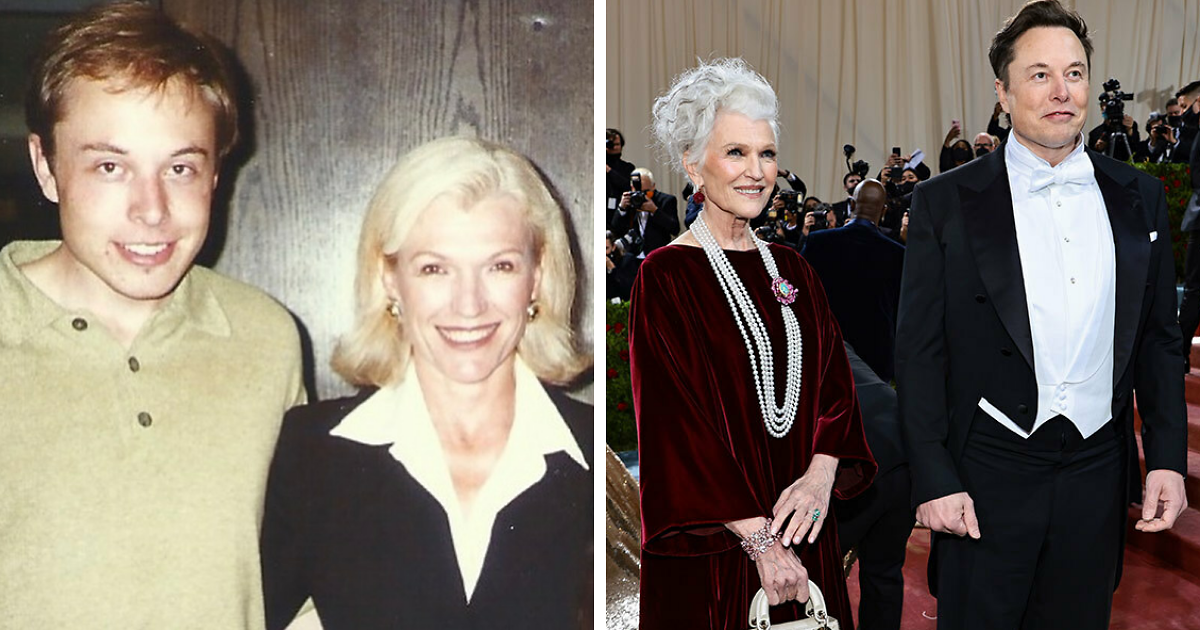
Note: This article is a journalistic synthesis based on publicly reported information from U.S. and international media coverage, official records, and social media reporting. It presents “racist comment” and similar language as criticism made by online users and commentators, not as a court finding.
Introduction: When a Family Defense Turned Into a PR Fireball
Defending your child is one of the oldest parental instincts in the book. A toddler knocks over a vase? “He is exploring physics.” A teenager dents the car? “She is learning responsibility.” A billionaire son gets criticized by a New York Times reporter? Well, in Maye Musk’s case, the defense apparently came with a social media post that many critics said took a very strange and racially charged detour.
The controversy began when Maye Musk, mother of Elon Musk, posted on X while criticizing what she described as an upcoming “hit piece” about her son by New York Times technology reporter Ryan Mac. Instead of focusing only on the article, the reporting, or the substance of Mac’s previous coverage, Maye pointed to Mac’s Vietnamese American background. That detail immediately became the center of the backlash because, as many people asked, what did a reporter’s ethnicity have to do with whether his work was fair, accurate, or newsworthy?
The internet, being the internet, did not respond with a calm committee meeting and herbal tea. Critics called the comment racist, unnecessary, and deeply inappropriate. Some went further, connecting the remark to broader criticism of Elon Musk, X, Tesla, and the Musk family’s public posture toward race, media, and accountability.
The headline-grabbing phrase “Just as awful as her rotten son” came from online backlash, not from a formal investigation. But the anger behind it reveals something bigger than a single deleted post: public figures no longer get to toss identity into an argument and expect everyone to politely pretend they did not hear the record scratch.
What Did Maye Musk Say?
According to multiple reports, Maye Musk’s now-deleted post was aimed at Ryan Mac, a technology journalist at The New York Times and co-author of Character Limit: How Elon Musk Destroyed Twitter, a book about Elon Musk’s takeover of Twitter, now known as X.
In the post, Maye reportedly claimed she had heard that Mac was preparing an “Elon hit piece” for The New York Times. Then came the phrase that sparked the backlash: she described Mac as an “American Vietnamese reporter” and said her book was a bestseller in Vietnam, suggesting Vietnamese readers would not believe the article if it were “hateful” or “dishonest.”
That framing landed badly. Very badly. Like “dropping your phone into soup during a Zoom call” badly.
The core problem, critics argued, was not simply that Maye mentioned Vietnam. It was that she appeared to connect Mac’s ethnic heritage to his credibility as a reporter. In professional journalism, a story should be judged by evidence, sourcing, fairness, and accuracy. Bringing up a journalist’s ancestry in an argument about their reporting can look like an attempt to otherize them or imply that their background somehow explains their work.
Why Critics Called the Comment Racist
Public criticism focused on one basic question: why was Ryan Mac’s Vietnamese American heritage relevant?
When a public figure criticizes a journalist, there are normal lanes available. They can challenge facts. They can dispute framing. They can point to previous reporting they consider unfair. They can ask for corrections. They can even complain loudly, preferably after counting to ten and drinking water.
But critics said Maye Musk drove straight past those lanes and parked in the “ethnicity is somehow part of the argument” zone. That is why many social media users described the post as racist or racially insensitive. NBC News reporter Tyler Kingkade was among those who publicly objected, noting that Mac was born and raised in California and that calling out a reporter’s ethnic heritage was inappropriate.
Ryan Mac himself responded with humor, reportedly updating or referencing “American Vietnamese” in his online presence. His response turned the awkwardness back on the original comment, a classic internet judo move: let the weird remark embarrass itself.
Who Is Ryan Mac?
Ryan Mac is not some random keyboard goblin who wandered into Elon Musk discourse because the Wi-Fi was strong. He is an experienced technology reporter who has covered Silicon Valley, wealth, power, Facebook, Twitter, and Elon Musk for years.
Mac previously worked at Forbes and BuzzFeed News before joining The New York Times. He has been associated with major investigative reporting and is co-author, with Kate Conger, of Character Limit: How Elon Musk Destroyed Twitter. The book explores Musk’s $44 billion acquisition of Twitter and the chaos, layoffs, management changes, and political consequences that followed.
That context matters. Mac’s coverage of Musk has not been casual celebrity gossip. It has been part of a larger accountability beat examining one of the most powerful technology figures in the world. When a reporter regularly covers a billionaire who owns a major communications platform, manufactures electric vehicles, launches rockets, and influences politics, scrutiny is not a hobby. It is journalism doing its job.
Why the Backlash Spread So Fast
The Maye Musk controversy spread quickly for three reasons: the Musk name, the racial angle, and the platform where it happened.
1. The Musk Family Is Already a Lightning Rod
Elon Musk is not merely a CEO. He is a global spectacle with a stock ticker, a rocket company, a social network, a fan base, and a parade of controversies following behind him like ducks in sunglasses. Anything involving his family immediately attracts attention because the public already sees the Musks as part business dynasty, part reality show, part internet weather event.
2. Race and Media Credibility Are Sensitive Topics
Calling attention to a journalist’s ethnic background while attacking their reporting hits a nerve because minority journalists have long faced assumptions that their identity makes them biased, foreign, or less objective. Critics saw Maye’s post as falling into that familiar pattern, even if she may have intended it differently.
3. X Is Built for Combustion
The post happened on X, the platform formerly known as Twitter, where nuance often enters the building wearing a helmet and still leaves with bruises. Screenshots move fast, deleted posts rarely stay deleted, and public figures quickly learn that “I removed it” is not the same thing as “nobody saw it.”
Maye Musk’s Follow-Up Did Not Quiet the Critics
After the backlash, Maye Musk reportedly defended her broader point by accusing The New York Times of lying about Elon Musk for years. She also suggested that Ryan Mac was being paid well, which critics interpreted as doubling down rather than clarifying.
That response did not solve the problem because it did not directly address the key concern: why mention Mac’s heritage at all?
In a crisis, public figures usually have three options. They can apologize, explain, or pour gasoline onto the barbecue and act surprised when the patio disappears. Critics felt Maye chose something closer to option three. Instead of separating her criticism of The New York Times from her comment about Mac’s identity, she kept the dispute focused on media hostility toward her son.
How Elon Musk’s Own Controversies Shaped the Reaction
The backlash against Maye Musk did not happen in a vacuum. Elon Musk has faced repeated criticism over his own social media behavior, his leadership of X, and broader claims involving racism and hate speech connected to companies he controls.
After Musk bought Twitter in 2022 and renamed it X, researchers, advocacy groups, journalists, advertisers, and users raised concerns about hate speech, content moderation, and extremist content on the platform. A 2025 peer-reviewed study in PLOS One found that English-language hate speech on X rose after Musk’s acquisition and remained elevated through part of his tenure as CEO. The study also noted that researchers could not prove every change was caused directly by Musk’s policies, but the findings added weight to public concerns about the platform’s direction.
In another high-profile controversy, Musk faced backlash in 2023 after endorsing an antisemitic post on X as “the actual truth.” Major advertisers paused spending, and Musk later apologized for the post while also lashing out at advertisers during a public interview. For critics, Maye Musk’s comment about Ryan Mac fit into a wider pattern of racial, ethnic, and identity-related disputes surrounding the Musk public universe.
Tesla’s Racial Harassment Lawsuits Add More Context
Tesla, another major Musk-led company, has also faced serious allegations related to racial discrimination and harassment. The U.S. Equal Employment Opportunity Commission sued Tesla in 2023, alleging that Black employees at the company’s Fremont, California facilities endured racial harassment and retaliation. Separately, Reuters reported that thousands of Black workers were permitted to proceed as a class in a race-bias case involving alleged slurs, racist graffiti, and nooses at the Fremont plant.
These cases do not mean Elon Musk personally made Maye Musk’s comment, nor do they prove anything about her intent. But they do explain why critics were primed to react strongly. When a family already sits at the center of public debates about race, speech, labor conditions, and platform moderation, even one sentence can land like a cymbal crash in a library.
Was the Comment Racist or Just Clumsy?
This is where careful language matters. Critics called Maye Musk’s comment racist. Some described it as racially insensitive. Others saw it as a clumsy attempt to connect her popularity in Vietnam with skepticism toward Mac’s reporting.
Intent and impact are not always the same thing. A person may intend to make one point and still cause harm by dragging identity into a place where it does not belong. That is why the “I did not mean it that way” defense often fails online. People judge not only what you meant, but what your words reasonably suggested.
In this case, the problem was the implication. If Mac’s reporting was allegedly unfair, critics asked, why not address his reporting? Why bring up Vietnam? Why describe his heritage with the word “sadly”? Why suggest readers in Vietnam would reject his work because of that background? Those questions made the post difficult to defend as merely awkward phrasing.
The Bigger Lesson: Identity Is Not a Rebuttal
The Maye Musk backlash offers a simple media-literacy lesson: a person’s ethnicity is not a counterargument.
If a journalist writes something inaccurate, show the mistake. If a publication behaves unfairly, show the pattern. If a story lacks context, provide context. But pointing at a reporter’s heritage does not fact-check a sentence, correct a timeline, or disprove a source. It just changes the subject in a way that can feel personal and prejudiced.
This matters beyond celebrities and billionaires. In workplaces, schools, politics, and online debates, identity often gets used as a shortcut. Someone’s race, religion, nationality, gender, or accent becomes a lazy substitute for engaging with what they actually said or did. It is intellectually flimsy and socially corrosive. Also, it is not even a good debate tactic. It is the rhetorical equivalent of bringing a banana to a chess match.
Why Public Figures Need Better Social Media Discipline
Public figures often forget that social media is not a private kitchen table. It is a glass house with microphones, screenshots, and millions of people ready to quote-post before the coffee cools.
Maye Musk is not only Elon Musk’s mother. She is a model, author, public personality, and brand in her own right. Her words carry weight because she has an audience, media visibility, and a direct connection to one of the world’s most powerful tech figures. That makes precision more important, not less.
Parents can defend their children. Public figures can criticize journalists. Readers can question media coverage. None of that requires singling out someone’s ethnic heritage. The moment identity becomes the argument, the original point gets buried under the very backlash the speaker created.
Public Reaction: Outrage, Mockery, and the Musk Effect
The public response included anger, jokes, and personal attacks on the Musk family. Some users said Maye’s comment showed that the “apple didn’t fall far from the tree.” Others used harsher language, including the viral “just as awful as her rotten son” line.
That kind of criticism shows how quickly online discourse escalates. A valid objection to a racially charged remark can quickly turn into a pile-on. The internet rarely stops at “this comment was inappropriate.” It tends to sprint toward “let’s psychoanalyze the entire family tree by lunch.”
Still, the intensity of the backlash reflects a real frustration. Many people are tired of powerful figures treating criticism as persecution, journalists as enemies, and identity as a convenient weapon. The Maye Musk incident became a small but vivid example of that larger cultural fight.
Experience-Based Reflection: What This Controversy Teaches About Online Defensiveness
There is a familiar pattern in online scandals like this one. Someone powerful or close to power feels attacked. They respond emotionally. Instead of addressing the substance, they reach for a personal detail about the critic. The internet notices. The original complaint disappears. The new story becomes the bad response.
Anyone who has managed a brand page, moderated a community, worked in journalism, or simply survived a family group chat knows this pattern well. The first rule of public communication is not “always win.” It is “do not make the problem bigger while trying to win.” Maye Musk’s post is a textbook example of how a defensive message can become the headline.
In real life, this lesson applies everywhere. Imagine an employee criticizes a company policy, and the boss responds by mentioning the employee’s nationality. Imagine a student challenges a grade, and the teacher brings up the student’s family background. Imagine a customer leaves a review, and the business owner replies by pointing to the customer’s ethnicity. In every case, people would reasonably ask: why is that relevant?
That is the heart of the Musk controversy. The mention of Ryan Mac’s Vietnamese American heritage did not clarify Maye Musk’s objection. It muddied it. It shifted attention away from whether The New York Times was fair to Elon Musk and toward whether Maye had used race as a way to undermine a journalist.
For writers, marketers, executives, creators, and anyone with a public account, the experience-based takeaway is simple: criticize behavior, not identity. Challenge evidence, not ancestry. Question a claim, not a person’s ethnic background. If your sentence would sound bad when read aloud in a workplace discrimination seminar, maybe do not post it to millions of people.
The second lesson is that deletion is not a magic eraser. Screenshots are the internet’s fossils. Once a post becomes controversial, deleting it may stop further direct engagement, but it often confirms that something went wrong. The better move is usually a clear explanation or apology, especially when the issue involves race.
The third lesson is about humility. Public criticism feels uncomfortable. For famous families, it probably feels endless. But the more power someone has, the more careful they must be when punching back. A billionaire’s family member criticizing a reporter is not the same as a private person complaining about a bad review. The power imbalance changes how the message is received.
Finally, this story shows that modern audiences are increasingly alert to coded language and irrelevant identity references. People may disagree about politics, Elon Musk, The New York Times, or X. But many agree on one basic standard: a journalist’s race or heritage should not be treated as evidence against their reporting.
Conclusion: A Deleted Post With a Long Shelf Life
The controversy over Maye Musk’s comment is more than another celebrity-family social media flare-up. It is a reminder that public speech has consequences, especially when it touches race, journalism, and power. Critics did not object simply because Maye Musk defended Elon Musk. They objected because her defense singled out Ryan Mac’s Vietnamese American heritage in a way many found irrelevant and racially loaded.
The episode also shows why the Musk family remains such a magnetic force in online debate. Elon Musk’s businesses, politics, platform ownership, and personal posting style already attract constant scrutiny. When his mother enters the conversation with a racially charged remark, the reaction is not isolated. It connects to years of arguments about media accountability, hate speech, workplace discrimination claims, and the responsibilities of the ultra-powerful.
Whether one views Maye Musk’s post as racist, careless, defensive, or all three, the lesson is hard to miss: identity is not a rebuttal, and public figures should know better than to make it one.