Note: This article is an original, publication-ready synthesis based on publicly available information about Ashhar Farhan, VU2ESE, HF Signals, BITX, uBITX, sBitx, zBitx, and the broader amateur radio homebrew community.
Every once in a while, the electronics world gets a reminder that innovation does not always arrive wearing a shiny corporate badge, surrounded by fog machines, subscription plans, and a keynote presenter saying “revolutionary” every 14 seconds. Sometimes, it arrives from a radio amateur with a notebook full of circuits, a practical sense of what builders actually need, and the kind of stubborn curiosity that makes solder smoke look like incense.
That is why the phrase “Ashhar Farhan’s done it again” has a special ring in the amateur radio community. Ashhar Farhan, known on the air as VU2ESE, has built a reputation for creating approachable, affordable, open-source radio designs that invite people to learn by doing. His work around the BITX transceiver, uBITX, sBitx, and newer HF Signals radios has helped turn the intimidating world of high-frequency communication into something a curious builder can actually touch, modify, and understand.
In a hobby where some equipment costs more than a used motorcycle and comes with menus deeper than a tax form, Farhan’s designs feel refreshingly human. They say: “Here is a circuit. Here is why it works. Now go build, improve, break, fix, and learn.” That is not just radio design. That is engineering with the front door wide open.
Who Is Ashhar Farhan?
Ashhar Farhan is an Indian radio amateur, experimenter, designer, and open-source hardware advocate whose call sign is VU2ESE. He is best known for designing the BITX family of amateur radio transceivers, especially the BITX20, BITX40, and uBITX. These radios became popular because they offered something rare: real HF radio performance at a price and complexity level that hobbyists could approach without needing a commercial lab, a heroic bank account, or a personal friendship with a retired RF wizard.
Farhan’s public writing and projects show a consistent philosophy. Radio electronics should not be locked away inside sealed boxes. Builders should be able to examine the circuit, understand the signal path, make modifications, and share improvements. That attitude has made his projects especially attractive to homebrew radio builders, QRP operators, field-radio fans, electronics students, and anyone who has ever looked at a schematic and thought, “I have no idea what this does, but I badly want to find out.”
Why the BITX Idea Caught Fire
The original BITX concept was powerful because it was practical. It was designed as a simple single-sideband transceiver that could be built with commonly available parts. The design was not about making a luxury radio. It was about making radio building possible.
That matters because amateur radio is not only about talking across continents. It is also about understanding how signals are created, filtered, amplified, mixed, tuned, and sent into the air. A commercial black-box transceiver may perform beautifully, but it often hides the magic. BITX did the opposite. It put the magic on the table, screws loose and all.
The design became a kind of learning platform. Builders could assemble it, modify it, troubleshoot it, and discuss improvements with other operators online. It was affordable enough to encourage experimentation. If something went wrong, the emotional damage was lower than with a premium rig that costs roughly the same as a family vacation.
From BITX to uBITX: The Little Radio That Made Big Noise
The uBITX, or Micro BITX, took Farhan’s approach to another level. It was a general coverage HF SSB and CW transceiver designed for multiple amateur bands. Instead of being limited to a single band, it opened up a wider world of operating possibilities while keeping the project within reach for builders.
One of the clever pieces of the uBITX ecosystem is the Raduino, a control board built around familiar, hobbyist-friendly technology. By using digital frequency generation and microcontroller control, the uBITX reduced the complexity traditionally associated with multiband transceivers. In plain English: it helped builders get a lot of radio without needing to construct a spaceship cockpit.
What Made uBITX Special?
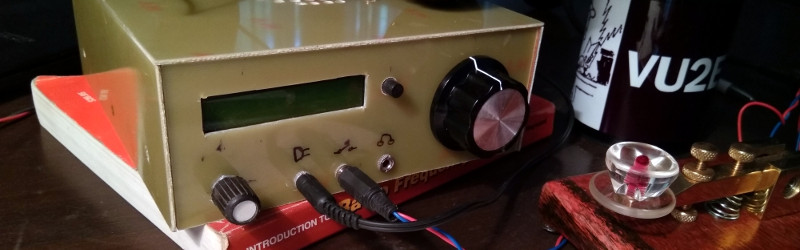
The uBITX combined several attractive features: SSB and CW operation, HF coverage, a compact form factor, open-source software, and a highly modifiable design. It was not marketed as a polished appliance for people who never want to remove a screw. It was closer to a living project.
That openness created a lively builder culture. People designed enclosures, wrote firmware improvements, added automatic gain control, modified displays, improved audio, changed controls, and documented their experiments. In other words, the radio did what great hobbyist tools do: it became a conversation.
And yes, like many ambitious hardware projects, it had quirks. Some users reported issues, some revisions needed improvement, and some builders discovered that “open source” can also mean “open season for troubleshooting.” But that is part of the charm. A uBITX is not just a radio you own. It is a radio you negotiate with, learn from, and occasionally stare at like it owes you an apology.
HF Signals and the Mission Behind the Hardware
Farhan founded HF Signals to make amateur radio building more accessible. The company’s mission centers on encouraging people around the world to become more active in amateur radio, analog electronics, and self-learning. That last phrase is important. Self-learning is the fuel that keeps the homebrew radio community alive.
HF Signals products are not merely gadgets. They are educational platforms. The company’s radios and kits have traditionally emphasized documentation, open-source availability, repairability, and modification. This approach fits perfectly with the amateur radio spirit: experiment first, polish later, and never underestimate the educational value of a mistake that makes a tiny puff of smoke.
sBitx: When the Classic Homebrew Spirit Met SDR
After BITX and uBITX, Farhan moved further into software-defined radio territory with the sBitx. The sBitx represents an interesting evolution: it blends the hands-on, hackable philosophy of homebrew radio with the flexibility of SDR technology.
Software-defined radio can sound intimidating, but the basic idea is simple. Instead of making every radio function happen through fixed analog hardware, SDR moves many functions into software. That can make a radio more flexible, more updateable, and more capable of supporting modern digital modes.
The sBitx embraces that flexibility while still remaining a builder-friendly platform. It supports popular digital modes, integrates computing power, and keeps the door open for hacking and scripting. In many ways, it is a bridge between two worlds: the classic bench-radio world of filters, mixers, and oscillators, and the modern world of code, displays, networking, and digital communication.
zBitx and the Continuing Push Toward Portable SDR
The zBitx continues the pattern: smaller, smarter, and still designed with the builder in mind. It pushes the idea of a compact QRP all-mode radio that can travel easily, operate from portable power, and support modes such as SSB, CW, FT8, and more without turning your field station into a cable salad.
For portable operators, that is a big deal. Field radio is about compromise. You want capability, but you also want to avoid carrying a backpack that feels like it contains a microwave oven and a car battery. Radios like the zBitx appeal to operators who want lightweight gear that still feels serious enough to chase contacts from parks, summits, campsites, and the occasional folding table that wobbles like it has strong opinions.
Why Farhan’s Work Matters to Amateur Radio
The importance of Ashhar Farhan’s work is not only technical. It is cultural. His projects have helped lower barriers to entry for people who want to understand radio, not just use it. That distinction matters.
Modern electronics can be discouragingly opaque. Devices are smaller, more integrated, and harder to repair. For beginners, that can make learning feel like trying to read a book through a keyhole. Farhan’s designs push back against that trend. They expose the circuit. They invite modification. They make the builder part of the process.
He Made Radio Feel Buildable Again
For many people, amateur radio begins with operating. You buy a radio, connect an antenna, and get on the air. That is wonderful. But building your own radio creates a different kind of connection. When a signal comes through something you assembled or modified, the experience is oddly personal. It is not just “I heard Japan.” It is “I heard Japan through a chain of decisions, solder joints, filters, and questionable bench lighting.”
Farhan’s radios brought that feeling within reach for thousands of builders. They gave people the confidence to open a box, follow a diagram, ask for help, and eventually say the magic words: “I changed something, and it still works.”
The Open-Source Advantage
Open-source hardware and software are central to the BITX story. When schematics, source code, and documentation are available, users can learn from the design instead of merely consuming the product. That is powerful for education, repair, and community development.
Open-source projects also evolve in public. Builders find issues. Other builders fix them. Someone writes better firmware. Someone else designs a cleaner case. Another operator adds a feature nobody knew they needed until it appeared. The project becomes more than the work of one designer. It becomes a shared workshop.
Of course, open source does not magically remove all problems. Documentation can lag. Revisions can confuse people. User expectations can vary wildly. One person wants a laboratory-grade transceiver. Another wants a weekend learning project. A third person wants both, plus Bluetooth, a touchscreen, and a cup holder. But the open model gives the community tools to adapt.
Community: The Secret Component in Every BITX Radio
If you study the BITX ecosystem, one thing becomes obvious: the community is part of the design. Forums, groups, blogs, videos, and personal build logs have helped these radios thrive. Builders share fixes, photos, firmware, enclosures, calibration tips, and the occasional confession that they soldered something backward and would prefer not to discuss it over dinner.
This kind of community support is especially valuable for beginners. Instead of being alone with a silent receiver and a growing sense of dread, a builder can search for similar problems, ask questions, and learn from people who have already made the same mistake. In electronics, shared mistakes are practically a public service.
The Design Philosophy: Simple, Affordable, Hackable
Farhan’s work is often praised because it balances three goals that are difficult to combine: simplicity, affordability, and real usefulness. A radio can be simple but too limited. It can be powerful but too expensive. It can be cheap but frustratingly fragile. The best BITX-family designs aim for the sweet spot where the radio is capable enough to be exciting and understandable enough to be educational.
Simple Does Not Mean Shallow
One of the misunderstandings about simple designs is that they are somehow less serious. In reality, simplicity can be harder to achieve than complexity. Anyone can add more parts. The real art is knowing which parts are essential, which compromises are acceptable, and which features help the builder instead of burying them in confusion.
That is where Farhan’s designs stand out. They are not perfect. They are not trying to be. They are designed to be understood, built, modified, and improved. That makes them unusually valuable in a hobby where learning is supposed to be the point.
Specific Examples of Farhan’s Impact
One example is the popularity of the uBITX among QRP and portable operators. The radio gave builders a low-cost entry into multiband HF operation while leaving room for experimentation. Many owners used it as a first serious HF project, a portable rig, or a platform for firmware and hardware modifications.
Another example is the sBitx, which shows how the same educational philosophy can move into SDR. By integrating computing, digital modes, and software flexibility, the sBitx appeals to operators who want both radio fundamentals and modern operating tools.
A third example is the LARCSet and other analog projects connected to the BITX tradition. These designs remind builders that analog radio is not obsolete. It is still one of the best ways to understand what is happening between an antenna and a speaker.
Challenges and Criticism: The Honest Part
No serious article about these radios should pretend everything is flawless. Some BITX and uBITX users have reported hardware issues, documentation gaps, inconsistent experiences, or the need for modifications to get the performance they wanted. That is real, and it matters.
But it also depends on expectations. A builder-friendly, open-source radio is not the same thing as a sealed commercial transceiver from a major manufacturer. It may require patience, curiosity, and the willingness to learn. For some users, that is a downside. For others, that is the entire dessert cart.
The honest takeaway is this: Farhan’s projects are best understood as learning-rich radios. They are capable, creative, and often surprisingly affordable, but they reward users who enjoy experimentation. If your idea of a perfect radio is one you never open, a BITX-style project may not be your cup of tea. If your idea of fun involves a schematic, a soldering iron, and one eyebrow slightly raised, welcome home.
Experiences Related to “[Ashhar Farhan]’s Done It Again!”
The experience of encountering an Ashhar Farhan radio project often starts with curiosity and ends with a deeper respect for the invisible work inside radio communication. A beginner might first hear about the uBITX while searching for an affordable HF transceiver. At first, the appeal is obvious: multiband operation, open-source software, compact size, and a price that does not require selling a kidney on the gray market. But the real value appears after the box is opened.
Unlike a polished commercial radio, a builder-oriented transceiver asks the user to participate. You connect parts, check wiring, mount controls, think about an enclosure, and learn why grounding, shielding, power supply quality, and antenna matching matter. Suddenly, the radio is not an object. It is a system. The antenna, feed line, power source, firmware, filters, and operator habits all become part of the station.
One common experience is the first successful receive. The builder turns the dial, hears noise, then a voice, then perhaps a distant operator calling CQ. It can feel absurdly satisfying. The signal is not just coming from the ionosphere. It is coming through choices the builder made. That moment is why homebrew radio survives in an age of instant gadgets. It offers ownership in the deepest sense: not just possession, but understanding.
Another experience is the first problem. Maybe the audio is weak. Maybe the display is confusing. Maybe the signal sounds off-frequency. Maybe the enclosure looks like it was designed by a raccoon with a drill press. That is when the learning accelerates. The builder goes to community forums, reads old posts, compares symptoms, checks voltages, updates firmware, and slowly develops the practical instincts that no glossy manual can fully teach.
Farhan’s projects create these experiences because they are intentionally open. The user is not locked out. The circuit is visible. The code can be explored. The radio can be improved. That is why many builders remember these projects fondly even when the process includes frustration. In a strange way, the frustrations become part of the story. A perfect device may be convenient, but a challenging project becomes memorable.
For experienced operators, the appeal is different but equally strong. They may see a BITX-family radio as a platform for portable operation, emergency communication practice, digital mode experimentation, or teaching newcomers. A club can use such a radio to demonstrate how transmitters and receivers actually work. A mentor can point to blocks in the circuit and explain them. A student can change code and see behavior change. That is education with feedback, and feedback is the best teacher after “accidentally touching the wrong end of a hot soldering iron.”
The phrase “done it again” therefore means more than releasing another radio. It means repeating a valuable pattern: make the technology approachable, keep it affordable, document enough to invite learning, and trust the community to carry the idea further. That pattern has helped Farhan’s work stand out in the amateur radio world.
Conclusion: Why Ashhar Farhan Keeps Getting It Right
[Ashhar Farhan]’s Done It Again! is not just a catchy headline. It captures the feeling many radio builders have when another Farhan project appears: curiosity, respect, and a small but dangerous urge to clear the workbench.
His lasting contribution is not any single product. It is the ecosystem of learning he has encouraged. From BITX to uBITX, from analog circuits to SDR platforms, Farhan has shown that amateur radio can still be hands-on, affordable, and deeply educational. His work reminds us that technology is most exciting when people are invited inside it.
In a world full of sealed devices, disposable gadgets, and “no user-serviceable parts inside” warnings, Ashhar Farhan’s radios feel almost rebellious. They say: open it, study it, change it, improve it, and share what you learned. That is the spirit of amateur radio at its best. And yes, he really has done it again.