There is something wonderfully old-school about a room lined with books, a comfortable chair, and a lamp that can be pulled forward exactly when needed. Articulating library lights</stronder, or a mysterious inheritance from a distant uncle.
These adjustable wall-mounted fixtures combine task lighting with architectural character. Unlike a fixed sconce that simply glows in one direction and hopes for the best, an articulating light can extend, pivot, swing, or tilt. That flexibility makes it useful above bookshelves, beside reading chairs, over desks, near built-ins, and in compact rooms where table and floor space are too valuable to surrender to another lamp.
Good lighting design is ultimately about putting the right amount of light where a task actually happens. The U.S. Department of Energy distinguishes task lighting from general illumination, while OSHA guidance emphasizes adjustable task lighting and careful positioning to reduce glare. That basic principle is exactly why articulating fixtures work so well: the light moves to meet the reader rather than forcing the reader to chase the light.
What Are Articulating Library Lights?
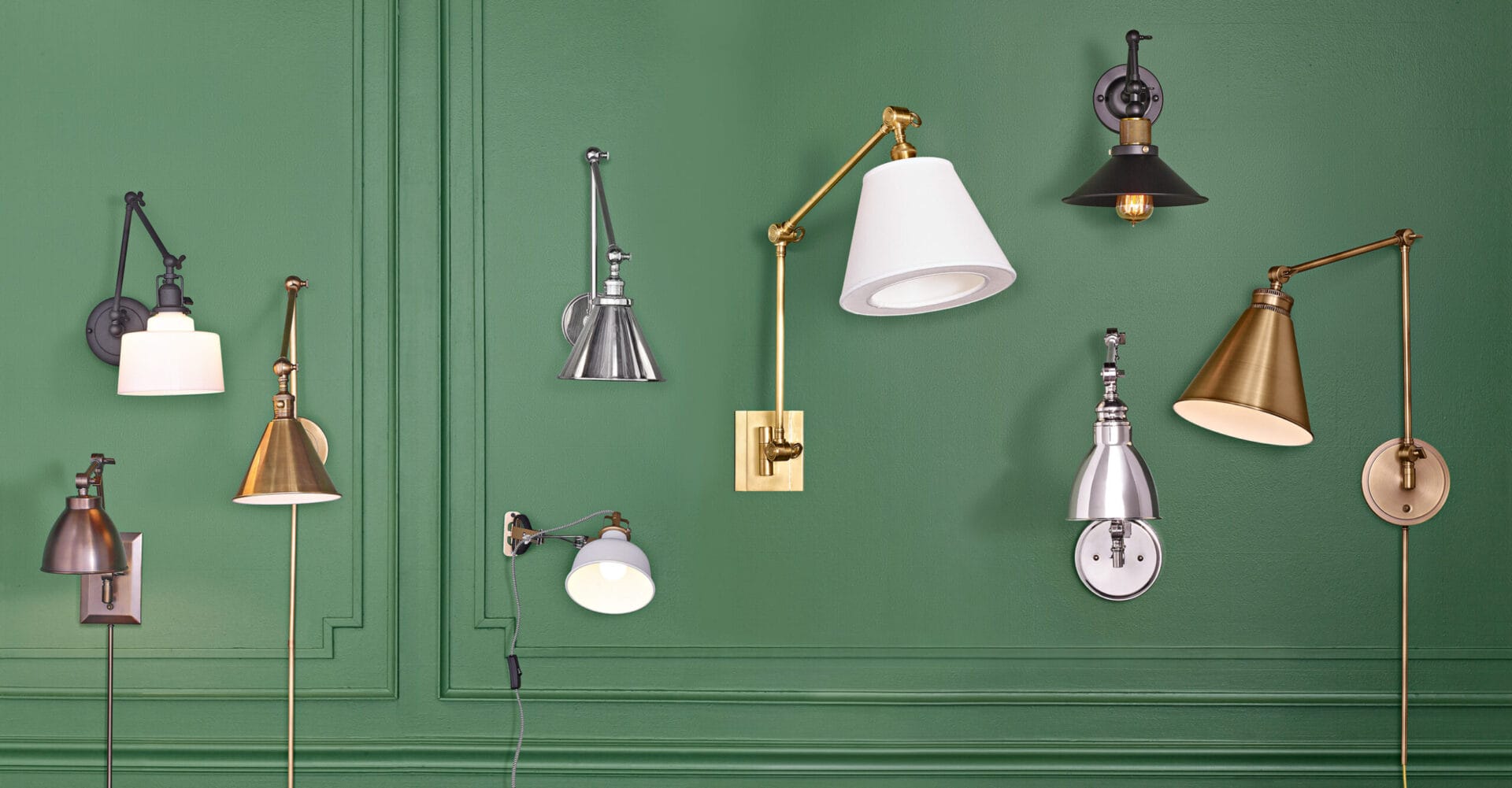
An articulating library light is a wall-mounted or occasionally shelf-mounted fixture built with one or more movable joints. Depending on the design, the arm may swing sideways, extend outward, fold back against the wall, or allow the shade itself to rotate. Some models resemble classic library sconces, while others borrow the mechanical vocabulary of drafting lamps, workshop lights, and midcentury task lighting.
The word articulating is the important part. A conventional wall sconce is largely stationary. An articulating sconce has moving connections that allow the user to change the position of the light source. That seemingly simple feature can dramatically improve how a reading corner, bookshelf wall, or home office functions.
Common Types of Adjustable Library Lighting
Single-arm swing lights offer a clean appearance and usually pivot horizontally. They work well beside reading chairs and above narrow desks.
Double-arm fixtures extend farther from the wall and often provide greater positioning flexibility. They are especially practical above deeper built-ins or seating areas.
Accordion or scissor-arm lights have an industrial personality and can extend significantly. They are useful when the light needs to disappear close to the wall when not in use.
Adjustable picture and bookshelf lights tend to have a more streamlined profile. Some illuminate book spines and decorative objects, while models with deeper articulation can also provide useful reading light.
Plug-in articulating sconces offer many of the visual and functional benefits of hardwired fixtures without opening a wall for new electrical wiring. They can be especially useful for renters or for rooms in which the furniture layout may change.
Why Articulating Lights Work So Well in a Library
They Put Light Where You Actually Need It
A ceiling fixture can make a room bright without necessarily making a book easy to read. The difference is direction. General lighting fills the room; task lighting concentrates useful illumination on a page, desk, or work surface.
An adjustable library sconce can be pulled toward a chair when reading, aimed toward a desktop when writing, or turned toward shelves when the room is being used for entertaining. That versatility is particularly valuable in multifunctional spaces. A home library today may also be an office, music room, guest room, study zone, or emergency hiding place from whoever decided to start vacuuming.
They Save Floor and Table Space
Traditional reading lamps need somewhere to stand. A floor lamp occupies floor area, while a table lamp requires a table large enough to support it. Wall-mounted adjustable reading lights leave both surfaces available for books, coffee, notebooks, plants, and the impressive stack of unread novels that everyone insists they are “getting to soon.”
This space-saving quality makes articulating sconces especially effective in small apartments, narrow studies, window seats, and compact reading nooks.
They Add an Architectural Layer
Lighting fixtures are visible whether they are turned on or off, so they function as part of the room’s design. Articulating arms add lines, joints, and mechanical details that can make a blank wall feel more considered.
Brass library lights can bring warmth to dark green, navy, charcoal, or wood-paneled rooms. Black metal fixtures can sharpen a modern library. Aged bronze works beautifully in traditional interiors, while polished nickel can make built-in bookshelves feel cleaner and more tailored.
How to Choose the Right Articulating Library Light
Start With the Job, Not the Finish
It is easy to fall in love with a handsome brass fixture and only later discover that its arm moves approximately half an inch. Before choosing a style, decide what the light must accomplish.
Will it illuminate book spines? Provide direct reading light? Serve a desk? Highlight artwork? Reach over the arm of a deep chair? The required range of movement should guide the fixture choice.
For active task lighting, look at the arm’s extension, the direction of its pivots, the shade’s adjustability, and whether the joints remain securely in position. A fixture that slowly droops after being adjusted is less “classic library” and more “tired robot.”
Pay Attention to Lumens
Brightness is measured in lumens, while watts describe energy use. Modern bulb shopping is therefore easier when brightness is compared by lumen output rather than by assuming that higher wattage automatically means more light.
The ideal output depends on the fixture, distance from the page, shade design, surrounding ambient light, and personal vision needs. A tightly focused beam may provide useful task illumination with less total output than a bare bulb trying to light an entire corner.
Choose a Comfortable Color Temperature
Color temperature, expressed in Kelvin, influences how warm or cool white light appears. Lower Kelvin values generally look warmer and more golden, while higher values appear cooler and bluer.
For a traditional home library or evening reading nook, many homeowners prefer warm or warm-neutral light because it complements wood, leather, textiles, and brass. A home office that doubles as a library may benefit from a somewhat more neutral appearance. The goal is not to chase one supposedly perfect number but to create light that supports the room’s use and feels comfortable beside the other light sources.
Consider Color Quality
Books are colorful objects. So are paintings, wood finishes, textiles, and the decorative treasures that somehow migrate onto every available shelf. A lamp with good color rendering can help those materials look natural rather than dull or strangely tinted.
This is particularly useful when library lights also illuminate art, collections, or carefully styled shelves. Good lighting should reveal the room, not make a red book jacket look as though it has been through an emotional crisis.
Choose LED Lighting Thoughtfully
LED technology is widely used because it can provide substantial energy efficiency and long service life compared with older incandescent technology. LEDs also make compact fixture designs and dimming options possible, although actual performance varies by product.
For replaceable-bulb fixtures, check the manufacturer’s maximum wattage, recommended bulb shape, dimmer compatibility, and shade clearance. For integrated LED fixtures, consider the rated life, light output, color temperature, warranty, and whether the light source or driver can be serviced.
Where to Place Articulating Library Lights
Above Built-In Bookshelves
Mounted along the upper portion of built-ins, adjustable library lights can create a handsome rhythm across a wall. Their beams can emphasize books and objects while adding a warm layer of evening illumination.
Spacing should respond to the width of the bookcases and the spread of each fixture rather than following an arbitrary formula. Before electrical boxes are permanently installed, mock up the positions with painter’s tape. Better yet, test the anticipated beam angle. A perfectly symmetrical row of fixtures is less impressive when half the shelves remain in darkness.
Beside a Reading Chair
This is where articulation earns its keep. Mount the light so the arm can move toward the reading position without becoming an obstacle at head height. The shade should direct illumination toward the page while keeping the bright bulb or LED source out of the reader’s direct line of sight.
For shared seating areas, think about which hand usually turns the fixture on and how the arm will move around nearby furniture. A beautiful light that requires standing up, moving a side table, and performing a small yoga pose every time it is adjusted is not particularly functional.
Over a Desk
An articulating wall light can replace a desk lamp and free valuable work surface. OSHA workstation guidance recommends positioning task lighting to avoid unwanted reflections on computer screens, so the ability to change the angle is particularly helpful in a library-office combination.
Mounting the light slightly to one side rather than directly behind the screen often provides more control. The exact position should account for whether the user is right- or left-handed, where paper documents are placed, and how daylight enters the room.
Inside a Reading Nook
Small reading nooks benefit enormously from wall-mounted task lights. A swing-arm fixture can serve a built-in bench without requiring a floor lamp, and it can be folded away when the space is not being used.
In a bedroom reading nook, a dimmer can be especially useful. Bright illumination may be welcome while reading, while a softer setting creates a calmer atmosphere later in the evening.
Layer Articulating Lights With Other Lighting
Even an excellent task light should not be expected to illuminate an entire room by itself. The strongest library lighting plans usually combine several layers.
Ambient lighting provides general visibility through ceiling fixtures, indirect light, or other broad sources. Task lighting serves reading and work. Accent lighting highlights bookshelves, art, architectural details, or decorative objects.
An articulating library light may contribute to both task and accent lighting, but the room will usually feel more comfortable when it is not surrounded by complete darkness. Extreme contrast between a bright page and a black room can feel visually tiring. A softly illuminated background creates a more balanced environment.
Think About Books as Well as Readers
Light may help people enjoy books, but excessive light exposure is not particularly kind to paper, bindings, photographs, and other sensitive materials. The Library of Congress advises minimizing direct or intense light exposure for books, and preservation guidance consistently recognizes that light damage can be cumulative.
That does not mean a home library must resemble a cave. It means lighting should be intentional. Avoid blasting valuable books with unnecessary intense light all day. Keep especially sensitive materials away from direct sunlight, and turn task or display lights off when they are not needed.
Articulating fixtures can actually help because their beams can be redirected. A lamp can illuminate the reading surface during use and then be aimed away or switched off afterward. Dimmers and lighting controls provide additional flexibility.
Hardwired, Plug-In, or Rechargeable?
Hardwired Fixtures
Hardwired articulating sconces usually create the cleanest finished appearance because wiring is concealed within the wall. They are a natural choice for new construction, major renovations, or custom built-ins.
Permanent electrical work should comply with applicable codes and manufacturer instructions and is generally best handled by a qualified professional when new wiring or electrical boxes are required.
Plug-In Fixtures
Plug-in sconces can be installed with far less disruption. They are useful for renters and for people who want to test a lighting location before committing to permanent electrical work.
The visible cord becomes part of the design challenge. Cord covers, deliberate routing, or a neatly arranged exposed cord can make the installation look intentional rather than temporary.
Rechargeable Lights
Battery-powered and rechargeable fixtures can solve difficult installation problems, but product quality matters. Battery capacity, charging hardware, run time, mounting security, and heat management deserve attention. Portable lighting products have been the subject of safety recalls over issues such as overheating and electrical faults, so consumers should follow manufacturer instructions and check relevant recall information when appropriate.
Common Mistakes to Avoid
Installing the Light Before Testing the Reach
A fixture may look large in a product photo but extend far less than expected. Compare actual dimensions with the depth of the shelves, desk, chair, or built-in.
Mounting the Fixture Too High
A library light positioned mainly for visual symmetry may fail as a reading light. Design from the task outward. A mock-up can reveal problems before holes are drilled or wiring is finalized.
Creating Glare
The brightest part of the lamp should not shine directly into the user’s eyes or bounce aggressively off a screen. Adjustable shades, thoughtful mounting positions, and dimming controls can make a major difference.
Using One Light Source for Everything
A row of gorgeous sconces may still leave the room gloomy, while a powerful ceiling fixture may flatten the atmosphere. Layered lighting is usually more adaptable.
Ignoring the Fixture When It Is Folded Away
An articulating light has at least two visual identities: extended and closed. Check both. A fixture that looks elegant when stretched outward may become an awkward tangle of metal when pushed against the wall.
Styling Ideas for Articulating Library Lights
For a classic library, pair aged brass or bronze lights with painted built-ins, warm wood, leather seating, and shaded table lamps.
For a modern study, try matte black or dark bronze fixtures against pale oak, white walls, or monochromatic cabinetry.
For an industrial interior, exposed joints, scissor arms, dark metal, and utilitarian shades can become part of the room’s character.
For a small reading nook, a single compact swing-arm sconce can provide both decoration and practical illumination without consuming a square inch of floor space.
For built-in bookshelves, repeating identical fixtures creates order. However, not every shelf wall requires a perfectly symmetrical arrangement. One carefully positioned articulating light can also function as a deliberate focal point.
My Experience With Articulating Library Lights: What Makes Them Worth Living With
The most revealing thing about articulating library lights is that their usefulness becomes clearer after the novelty wears off. At first, the moving arm is the star. You extend it, rotate the shade, fold it back, and generally behave as though you have just acquired a tiny piece of precision engineering. After a while, however, the fixture stops feeling like a gadget and starts quietly solving everyday problems.
One of the biggest lessons is that placement matters more than appearance. I have seen beautifully designed adjustable lights installed where their full range of motion was almost useless. A deep chair sat too far away. A bookshelf cornice blocked the arm. A desk monitor caught the beam and reflected it directly back at the user. The fixture was technically adjustable, but the room had given it nowhere useful to go.
The better approach is to simulate ordinary behavior before installation. Sit in the chair. Hold a book where you naturally hold it. Lean back. Put a laptop on the desk. Open a large hardcover. Then imagine the path the lamp must take. This feels slightly ridiculous while doing it, particularly if you are waving a tape measure around an empty wall, but it is much less ridiculous than paying to relocate an electrical box later.
The Joy of Moving the Light Instead of Moving Yourself
A well-positioned articulating light changes the small physical habits of a room. With a fixed lamp, people often unconsciously adapt themselves to the illumination. They lean forward, rotate the book, shift the chair, or abandon one seat for another. An adjustable fixture reverses that relationship. The lamp adapts.
That difference is subtle but satisfying. For casual reading, the light can sit farther back and create a broad pool of illumination. For fine print or detailed work, it can be brought closer. When the room is being used socially, the fixture can be folded back and aimed toward the shelves, becoming part of the atmosphere rather than a spotlight on someone’s novel.
The Best Fixtures Feel Solid
Another practical lesson is that joint quality matters. Articulating lights are touched, moved, tightened, and repositioned far more often than decorative sconces. A beautiful finish cannot compensate for an arm that wanders downward or a shade that refuses to stay aimed.
The most satisfying fixtures have movement with resistance. The arm should not feel frozen, but it should not swing around like a weather vane either. Controls should be reachable. Hinges should hold their position. The mounting surface should feel secure enough that regular adjustment does not make the entire fixture wobble.
This is one reason specifications deserve more attention than glamour photographs. Extension length, pivot points, shade movement, switching location, and installation method tell you more about daily usability than a beautifully styled room where nobody appears to have ever opened a book.
Warm Light Changes the Mood More Than Expected
In a library setting, the character of the light is nearly as important as the fixture. A warm, controlled beam can make wood grain richer, bring depth to dark paint, and turn rows of books into part of the evening atmosphere. Too much brightness, on the other hand, can make a cozy study feel like a waiting room.
Dimming has proven especially valuable. Reading needs vary, daylight changes, and not every evening requires maximum output. The ability to lower the intensity allows the same fixture to shift from serious task light to quiet background glow.
They Encourage Better Use of Forgotten Corners
Perhaps the most interesting experience is how one good wall light can change the purpose of a neglected space. A chair in a dark corner is decoration. Add a reachable articulating sconce, a small table, and convenient access to books, and the same corner becomes a place people actually use.
That is the strongest argument for articulating library lights. They are not merely nostalgic accessories designed to make a home look scholarly. At their best, they make rooms more adaptable. They free surfaces, direct illumination precisely, support reading and work, and contribute visible character even when switched off.
And yes, they also make it look as though you may know the difference between a first edition and the paperback you bought at an airport. Lighting cannot guarantee intellectual credibility, but apparently it can help with the set design.
Conclusion
Articulating library lights succeed because they combine movement, focused illumination, space efficiency, and architectural style. A well-chosen fixture can serve bookshelves one moment, a reading chair the next, and a desk later in the day.
The key is to choose according to function first. Consider the arm’s reach, joint movement, beam direction, brightness, color temperature, mounting method, glare control, and relationship to the rest of the room’s lighting. Test placement before installation and remember that sensitive books and paper materials do not benefit from unnecessary intense illumination.
Done well, adjustable library lighting feels both traditional and completely modern. It gives a room the charm of an old reading room while providing the flexibility contemporary homes need. In other words, it is a rare design feature that can look intelligent and actually behave intelligently too.
Note: This article was developed from a synthesis of established U.S. guidance and reporting on task lighting, workstation ergonomics, LED efficiency, light-bulb selection, book and paper preservation, lighting safety, home libraries, reading nooks, and adjustable wall sconces.