If your home has ever gone from “cozy” to “crime scene” in the span of one busy week, you’re not alone.
The problem isn’t that you’re bad at cleaning. The problem is that cleaning loves to show up like a pop quiz:
random, rude, and always when you have plans.
A 30-day cleaning checklist fixes that by turning “I should deep clean the whole house” (ha!) into
small, winnable tasks you can do in 15–30 minutes a day. You’ll build momentum, knock out grime before it
becomes a personality trait, and end the month with a home that feels lighter, calmer, andyessparkly.
Why a 30-day checklist works (and panic-cleaning doesn’t)
Big cleaning days fail for the same reason New Year’s resolutions fail: they ask too much, too fast, and
leave you sore in places you didn’t know could get sore. A month-long plan spreads effort across time,
so you’re not trying to scrub baseboards at 11:42 p.m. because someone is “just stopping by.”
Better yet, you’ll stop re-cleaning the same obvious spots (hello, kitchen counters) while ignoring the
sneaky culprits (hello, fridge shelves and faucet handles). This checklist is designed to rotate through
the whole home so nothing gets a free pass.
Before Day 1: Set yourself up for easy wins
Build a simple “cleaning caddy”
Keep your basics together so you’re not scavenger-hunting for supplies mid-task.
- Microfiber cloths (a few), plus an old toothbrush for tiny corners
- All-purpose cleaner (or mild dish soap + warm water for many surfaces)
- Glass cleaner (or a damp microfiber + dry buff for mirrors)
- Disinfectant (used thoughtfullymore on that below)
- Baking soda (for deodorizing and gentle scrubbing)
- Trash bags + a “donation box” for decluttering drive-bys
- Vacuum and mop (or a microfiber flat mop)
Use the golden order: declutter → dust → wash → floors
Declutter first so you’re not wiping around piles. Dust before you wet-clean so you don’t turn dust into
paste. Save floors for last because gravity is undefeated.
Cleaning vs. disinfecting (aka: when to bring out the “lab coat” energy)
Most of the time, regular cleaning with soap and water or a household cleaner is enough for routine mess.
Disinfecting is most useful after someone’s been sick, for high-touch surfaces, and for specific
contamination moments (like raw meat juice on the counternature’s jump-scare).
Whatever you use, follow label directions, ventilate when needed, and never mix cleaners. Seriously:
your goal is a sparkling home, not a chemistry experiment that ends with everyone standing outside
waving towels at the windows.
The 30-Day Cleaning Checklist (15–30 minutes a day)
How to use this: set a timer, do only the day’s task(s), and stop when the timer ends. If you miss a day,
don’t “double up” like you’re cramming for finalsjust pick up where you left off. The checklist is a
guide, not a courtroom.
Week 1: Reset + Kitchen Confidence
-
Day 1: Entryway + “launch pad” reset
Clear clutter, wipe surfaces, shake out rugs, and set a simple drop zone (keys/mail/shoes).
Why it matters: The entry is your home’s first impressionand your mess’s favorite hangout. -
Day 2: Kitchen counters + sink
Empty counters, wipe, scrub sink, and clean the faucet handles. Finish by drying with a clean cloth. -
Day 3: Fridge quick-clean
Toss expired items, wipe sticky shelves, and group like with like. Put a small box inside for “use first”
items so leftovers don’t vanish into the yogurt dimension. -
Day 4: Microwave + stovetop
Steam-clean the microwave (bowl of water, a few minutes), wipe inside, then tackle stovetop grease. -
Day 5: Cabinet fronts + handles
Spot-clean drips and fingerprints where hands land most. Bonus points for the trash can lid. -
Day 6: Kitchen floors (weekend-friendly)
Vacuum/sweep thoroughly, then mop. Don’t forget under the table and the “crumb belt” by the stove. -
Day 7: Pantry + trash/recycling zone
Straighten pantry shelves, wipe obvious spills, and wash/air out bins if needed. Replace a funky sponge
or sanitize it properly.
Week 2: Bathrooms + Laundry That Doesn’t Multiply Overnight
-
Day 8: Bathroom surfaces sweep
Clear counters, wipe sink/counter, and tidy products into a bin. Fast is fineconsistent is magic. -
Day 9: Toilet deep-clean
Clean the bowl, wipe exterior high-touch areas (flush handle, seat hinges), and mop the area around it. -
Day 10: Shower/tub refresh
Treat soap scum, rinse, and squeegee. Hang towels to dry fully to prevent “mystery damp” smells. -
Day 11: Mirrors + fixtures
Clean mirrors, polish faucets, and wipe light switches/door handles on the way out. -
Day 12: Towels + bath mats
Wash and fully dry towels and mats. Wipe the towel bars and any sticky drawer fronts. -
Day 13: Laundry system reset (weekend-friendly)
Run one load start-to-finish, empty lint trap, wipe machine exteriors, and create a simple “dirty laundry”
boundary (basket or hamper per bedroom/bath). -
Day 14: Germy hotspots
Clean and sanitize the kitchen sponge/dishcloth routine, wipe high-touch spots (remote, doorknobs),
and give sink drains a refresh.
Week 3: Bedrooms + Living Areas (Where Dust Goes to Retire)
-
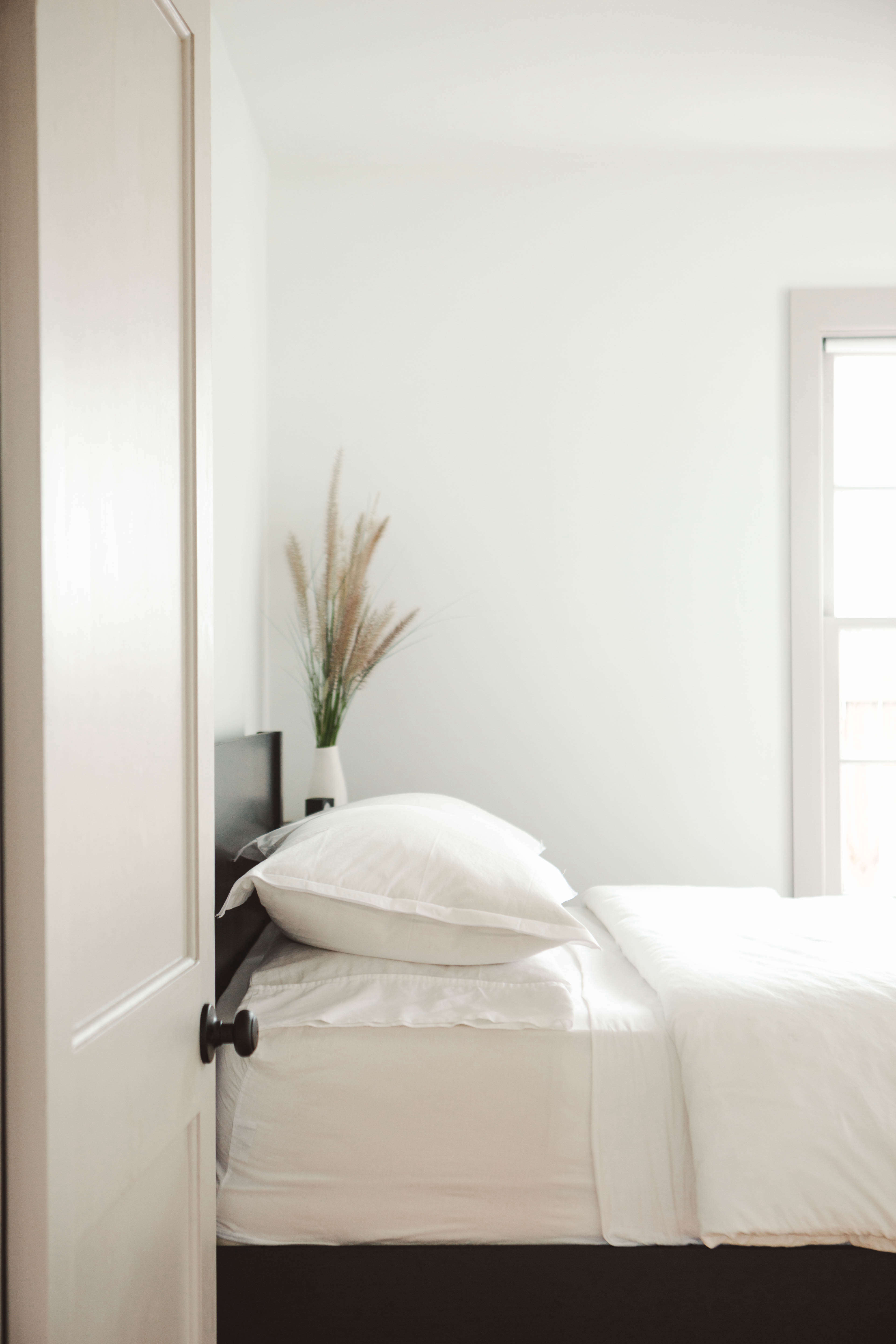
Day 15: Bedding reset
Change sheets, wash bedding, and make the bed. Instant “together person” vibes. -
Day 16: Dust high to low
Ceiling fan blades, vents, shelves, picture frames. Use a damp microfiber to trap dust instead of
launching it into the air like confetti. -
Day 17: Floors in bedrooms
Vacuum edges and under the bed. If you have allergies, prioritize a good filter vacuum and slow passes. -
Day 18: Closet quick-declutter
Do a 10-item purge: anything stained, uncomfortable, or emotionally exhausting goes into donate/trash.
(Yes, even the “almost fits” jeans.) -
Day 19: Living room reset
Clear surfaces, dust, vacuum upholstery, and do the “leave the room empty-handed” trick: every time
you exit, take one item with you that belongs elsewhere. -
Day 20: Screens + electronics (weekend-friendly)
Gently clean TV screens per manufacturer guidance, wipe remotes, keyboards, and phone cases.
(These are basically tiny germ condos.) -
Day 21: Windows + blinds quick-clean
Spot-clean fingerprints, wipe sills, and vacuum blinds with a brush attachment.
Week 4: Details + Deep-Clean Finish Line
-
Day 22: Baseboards + corners
Vacuum edges, wipe baseboards in high-traffic areas, and hit the “mystery dust triangles” in corners. -
Day 23: Doors, handles, switches
Wipe door frames where hands land, clean light switches, and spot-clean walls if needed. -
Day 24: Big appliances, small effort
Wipe fridge exterior, clean the oven door window, and run a dishwasher cleaner cycle or hot wash. -
Day 25: Bathroom deep details
Scrub grout lines, wipe inside cabinets, and clean the trash can (inside and out). -
Day 26: Upholstery + pillows refresh
Vacuum couch cushions, flip/rotate pillows, and wash removable covers if the label allows. -
Day 27: Whole-home floor day (weekend-friendly)
Vacuum thoroughly across main areas, then mop hard floors. Put chairs up for easier coverage. -
Day 28: Outdoor/entry “grit control” (weekend-friendly)
Shake entry mats, sweep porch/steps, wipe the front door, and reduce dirt tracked inside. -
Day 29: Final sweep + “one last weird spot”
Walk room to room and tackle one neglected area: behind the toilet, under the couch, or that shelf
that collects dust like it’s getting paid. -
Day 30: Set your maintenance plan + celebrate
Choose a simple weekly rhythm (below), restock supplies, and reward yourself. A sparkling home deserves
a sparkling treat.
Pro tips to make this checklist faster (and less miserable)
Use the timer like a boss
Set 20 minutes. Move quickly. Stop when it rings. You’re building a habit, not auditioning for a
cleaning-product commercial.
“Dry clean” first
Vacuum, sweep, and dust before you break out sprays and water. Wet-cleaning dusty surfaces creates
grime paste, and nobody asked for that.
Give everything a “home”
Clutter isn’t just stuffit’s stuff without a job. Bins, trays, and labeled baskets turn “random piles”
into “organized systems,” which is adulting with props.
Don’t over-disinfect
Target disinfection: high-touch surfaces, illness situations, and food-safety moments. Otherwise, regular
cleaning usually does the heavy lifting without leaving your house smelling like a hospital hallway.
Common cleaning mistakes that waste time
- Mixing products (dangerous) or layering too many cleaners (pointless and sticky).
- Using the wrong cleaner on the wrong surface (stone, wood, screensbe picky).
- Cleaning “around” clutter instead of removing it for 30 seconds first.
- Skipping ventilation when using strong products (your lungs deserve better).
- Using too much productmore cleaner often means more residue to wipe away.
After Day 30: Keep it sparkling with a lightweight weekly rhythm
The goal isn’t to live in a museum. The goal is to keep your home “company-ready-ish” without losing
every Saturday to scrubbing.
Simple weekly schedule
- Daily (5–10 min): dishes, quick counter wipe, clutter sweep, one small load of laundry (optional).
- Weekly (30–60 min): bathrooms, vacuum main areas, change sheets, mop kitchen floors.
- Monthly (60–90 min): fridge check, cabinet fronts, baseboards in high-traffic areas, vents/fans.
Real-world “experience” section: What 30 days of cleaning feels like (the honest version)
Here’s the part no checklist admits: the first few days can feel weirdly emotional. Day 1 is optimism.
You’re unstoppable. You might even buy a cute spray bottle because you’re a “systems person” now.
Day 3 is reality: you open the fridge, see a sauce container with a lid that doesn’t match anything,
and you realize you’ve been storing leftovers the way squirrels store acornsrandomly and with hope.
Around Week 2, something magical happens: you stop negotiating with yourself. Instead of “Ugh, I should
clean the bathroom,” it becomes “It’s Day 10; I’m doing the shower.” The decision is already made, which
is wildly calming. You’re not relying on motivationyou’re relying on a plan. This is the same reason
people love meal prep: fewer daily debates with your own brain.
You’ll also start noticing the “hidden effort” tasks that make a home feel clean even when it’s not
perfect. Clean sinks. Clear counters. Floors without crumbs. Fresh towels. A made bed. These are the
visual cues that signal “order,” and once you hit them consistently, the house feels dramatically better
without you scrubbing every inch daily.
Expect one slump. It usually shows up in Week 3, when dusting fans and vacuuming under beds feels less
glamorous than the early wins. This is where the timer saves you. Tell yourself, “I only have to do
20 minutes,” then sprint through the task like you’re trying to beat a game level. Put on a podcast,
make it a challenge, or bribe yourself with a fancy coffee afterward. You’re not above incentives; you’re
human.
Another common surprise: the checklist tends to expose tiny “systems” problems. Like how you don’t have a
good place for incoming mail, so it becomes a countertop barnacle. Or how your laundry baskets are too
small, so clothes stage a rebellion on the floor. The cleaning isn’t just cleaningit’s feedback. When you
fix one small friction point (a tray for mail, a hook for keys, a bin for cords), your house stays cleaner
with less effort. That’s the real prize: not perfection, but less work tomorrow.
By Day 30, you’ll probably notice you’re cleaning differently. You’ll wipe the faucet while your hands are
already soapy. You’ll toss trash as you walk out of a room. You’ll do a quick reset before bed because you
know Future You will wake up calmer. And when someone texts “On my way,” you won’t teleport into a panic.
You’ll just… open the door like a person who definitely has their life together (even if you still have
three baskets of clean laundry waiting to be folded).
Conclusion
A sparkling home isn’t built on one heroic cleaning day. It’s built on small, repeatable wins.
Use this 30-day cleaning checklist to reset your space, then keep the momentum with a simple weekly rhythm.
Your home will feel better, your brain will feel quieter, and your weekends can go back to doing literally
anything else.