Professional harvest knives may not get the same applause as tractors, irrigation systems, or that one farm dog who supervises everyone with heroic seriousness. But when harvest season starts moving fast, the humble knife becomes one of the most important tools in the field. A good harvest knife helps growers cut cleanly, move quickly, reduce crop damage, protect worker hands, and keep produce looking like it belongs at a farmers market instead of in a compost pile.
Whether you are cutting lettuce heads at sunrise, trimming broccoli in cool weather, harvesting herbs for restaurant orders, or sliding an asparagus knife below the soil line, the right blade matters. Professional harvest knives are designed for repetitive agricultural work: clean cuts, comfortable grip, easy sanitation, field visibility, and durability under muddy, wet, leafy, sometimes mildly chaotic conditions. In other words, they are built for the real world, where gloves get damp, harvest bins fill fast, and someone always misplaces the orange knife even though it is, somehow, bright orange.
What Are Professional Harvest Knives?
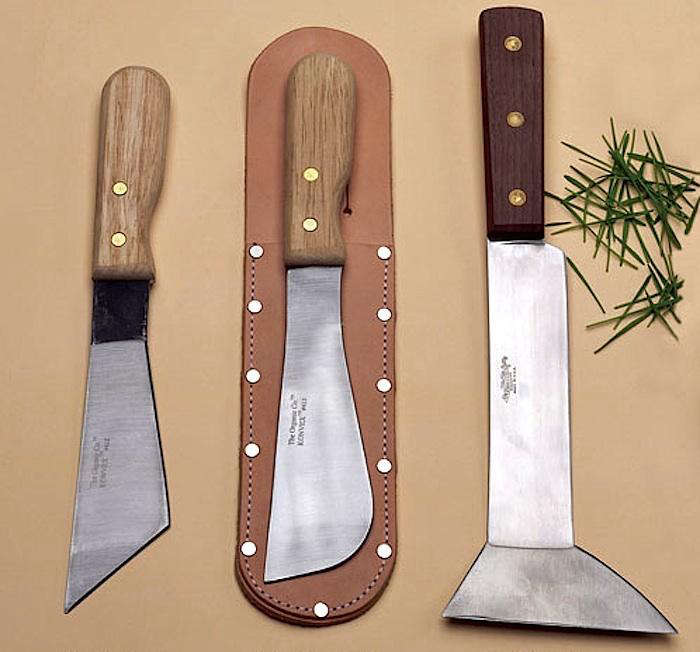
A professional harvest knife is a purpose-built cutting tool used to gather crops efficiently and cleanly. Unlike a general kitchen knife, pocketknife, or random “it was in the truck” blade, a true field knife is designed for agricultural use. It may have a serrated edge for fibrous stems, a curved blade for tight spaces, a dual-edge blade for lettuce, a long shaft for asparagus, or a compact shape for delicate produce.
The word “professional” is important here. It does not mean fancy for the sake of fancy. It means the knife supports daily work. A professional harvest knife should be easy to sharpen, easy to clean, safe to carry, comfortable over long shifts, and specific enough for the crop being harvested. In high-volume growing, small improvements matter. A knife that saves two seconds per cut can feel like magic by the time the crew has harvested hundreds of heads, bunches, stems, or spears.
Why the Right Harvest Knife Matters
Harvesting is not only about removing a crop from the plant. It is about preserving quality. A ragged cut can bruise stems, shorten shelf life, invite decay, or make produce look tired before it reaches the customer. Clean cuts help leafy greens, herbs, broccoli, cabbage, squash, melons, and flowers maintain a better appearance after harvest.
Efficiency matters too. During peak season, harvest windows can be short. Heat rises quickly, restaurant orders have deadlines, CSA boxes need packing, and market displays do not fill themselves. A sharp, crop-appropriate field knife helps workers cut without sawing aggressively, twisting stems, or fighting the plant like it owes them money.
Main Types of Professional Harvest Knives
1. Lettuce Field Knives
Lettuce field knives are built for speed. Many professional models feature a broad blade with two cutting edges: a long edge for slicing and a shorter front edge for push cuts at the base of lettuce heads. This design is especially useful for romaine, iceberg, butterhead, Salanova-style heads, and other leafy greens that need a quick, clean separation from the root.
A good lettuce knife usually has a non-slip handle and a blade long enough to reach the base of the plant without forcing the worker’s wrist into awkward positions. The best ones feel almost rhythmic in use: cut, trim, place, repeat. The worst ones feel like trying to harvest salad with a butter knife. Nobody deserves that.
2. Serrated Harvest Knives
Serrated harvest knives are popular for greens, herbs, fibrous stems, and soft produce. The tiny teeth on the blade help bite into material without requiring heavy pressure. Many growers like compact serrated knives for cutting baby greens, spinach, cilantro, parsley, basil, and similar crops.
Serrated blades can also hold usable cutting ability for a long time. However, they are not always as simple to sharpen as a plain edge. For many farms, the tradeoff is worthwhile because the knife keeps cutting through wet, leafy, flexible material with less slipping.
3. Broccoli, Cabbage, and Field Knives
Thicker crops call for more blade. Broccoli knives, cabbage knives, and general field knives often have longer, heavier blades. These tools are useful for cutting thick stems, trimming leaves, dividing perennials, slicing vines, and handling general farm maintenance tasks.
For broccoli, a gently curved blade can help guide the cut around the stem. For cabbage, a heavier field knife gives enough force to remove the head cleanly. The key is control. A professional knife should feel powerful but not clumsy. If the knife feels like a machete attending a job interview, it may be too much for delicate crops.
4. Grape and Precision Knives
Grape knives and compact curved knives are made for tight spaces. Their shorter blades allow workers to cut stems near fruit without damaging the crop or nearby plant tissue. These are helpful for grapes, peppers, summer squash, eggplant, melons, flowers, and other crops where precision matters.
A curved blade can hook around a stem and make a quick pull cut. This reduces accidental poking, tearing, or cutting into fruit. For high-value produce, precision is not a luxury. It is money saved one careful cut at a time.
5. Asparagus Knives
Asparagus knives are their own special species. Many feature a long shaft and cutting head designed to cut spears below or near the soil surface. Some designs include a pronged or angled blade, while others resemble a long-handled weeder. The goal is to cut the spear cleanly while avoiding damage to the crown and nearby developing spears.
Asparagus harvest requires judgment. Spears are often harvested when they reach usable length, and the worker needs to avoid disturbing future growth. A good asparagus knife allows a clean below-soil cut without turning the bed into a tiny battlefield.
Blade Materials: Stainless Steel vs. Carbon Steel
Stainless Steel
Stainless steel is popular for professional harvest knives because it resists corrosion, cleans easily, and works well in wet field conditions. That matters when a knife spends its day around sap, soil, plant juice, rinse water, sanitizers, and unpredictable weather. Stainless blades are especially useful where sanitation and appearance are priorities.
The downside is that stainless steel can be harder to sharpen than carbon steel, depending on the alloy and blade design. For many growers, that is a fair exchange for a knife that resists rust and survives heavy daily washing.
Carbon Steel
Carbon steel is loved because it sharpens easily and can take a very keen edge. Many experienced growers appreciate how quickly a carbon blade can be touched up during the season. A few passes on the right sharpener can bring it back to life.
However, carbon steel requires more care. It can rust if left wet, and it may discolor from plant acids or moisture. That does not necessarily hurt performance, but it does mean the knife needs drying, oiling when appropriate, and better storage habits. Carbon steel is a little like a talented employee who needs coffee and clear instructions: excellent results, but do not neglect maintenance.
Handle Design: Comfort, Grip, and Visibility
The handle is where a professional harvest knife proves whether it belongs on a working farm. A blade may be sharp, but if the handle slips, causes blisters, or disappears in the grass every fifteen minutes, the knife is not doing its job.
Plastic and polypropylene handles are common because they are durable, washable, and often brightly colored. Orange, yellow, and red handles are not fashion statements; they are survival features. A bright handle is easier to find in lettuce rows, on packing tables, in harvest totes, and under that mysterious pile of gloves no one admits creating.
Wood handles can feel comfortable and traditional, especially on carbon steel knives. They may offer a warm grip and classic look, but they require more cleaning attention because wood can absorb moisture. For food-contact tools, many farms prefer nonporous handles that are easier to wash and sanitize.
Choosing the Best Professional Harvest Knife for Your Crop
The best knife is not always the biggest, sharpest, or most expensive. It is the one that fits the crop and the workflow. For leafy greens, a serrated or dual-edge lettuce knife may be ideal. For broccoli and cabbage, a longer field knife makes sense. For herbs, a compact serrated knife or harvesting sickle can improve speed. For squash, peppers, grapes, and flowers, a short curved blade may prevent accidental crop damage.
Think about the cut itself. Are you slicing through a thick stem, trimming leaves, reaching into tight vines, or cutting below soil? Then think about the worker. Is the job repetitive? Will gloves be wet? Does the knife need to fit a sheath? Will the crew be carrying it all morning? A professional harvest knife should make the task easier, not turn every crop into a wrestling match.
Harvest Knife Safety: Sharp Is Safer Than Struggling
Knife safety starts with a simple truth: dull blades are dangerous. A dull knife requires more force, and more force increases the chance of slipping. Professional harvest crews should keep blades sharp, inspect tools regularly, remove damaged knives from use, and train workers to cut away from the body and away from nearby coworkers.
Good habits matter. Use a sheath or holder when carrying a knife. Do not drop a knife into a harvest bin where someone may reach in blindly. Do not leave knives on the ground, on tractor steps, or balanced on a packing table edge like a tiny disaster waiting for applause. Keep the non-cutting hand out of the blade path, and slow down when fatigue sets in. The fastest harvest is not fast if it ends with a bandage, paperwork, and everyone suddenly becoming very quiet.
Cleaning and Sanitizing Harvest Knives
Because harvest knives touch produce directly, cleaning is not optional. It is part of professional crop handling. Knives should be cleaned and sanitized at appropriate times, especially at the start and end of the harvest day, after contact with soil or contamination risks, and whenever they are set down on questionable surfaces.
Food safety guidance emphasizes that equipment and tools used with produce should be designed, maintained, cleaned, and, when needed, sanitized to reduce contamination risk. This is why many farms choose stainless blades, plastic handles, washable sheaths, and simple knife designs without unnecessary cracks or crevices. A beautiful knife with mystery gunk hiding in the handle is not charming. It is a science project with a blade.
A practical cleaning routine includes removing visible soil, washing with suitable detergent, rinsing, applying an approved sanitizer at the correct concentration, and allowing the tool to dry properly. Farms should follow label instructions for sanitizers and maintain standard operating procedures so every crew member handles tools consistently.
Sharpening and Maintenance
Professional harvest knives should be maintained before they become frustrating. Keep a sharpener or honing tool available, but make sure workers know how to use it safely. Plain-edge knives are usually easier to sharpen in the field. Serrated knives may need specialized sharpeners or replacement when worn down.
After washing, dry knives thoroughly. Store them in a clean, dry location. Inspect handles for cracks, blades for chips, and sheaths for trapped debris. Assigning knives to specific workers or harvest stations can also help with accountability. If a knife disappears every week, the farm may not have a tool problem; it may have a “where did I put that?” problem wearing muddy boots.
Professional Harvest Knives for Market Gardeners
Market gardeners often need a small set of versatile tools rather than one knife for every crop. A practical kit might include a serrated greens knife, a dual-edge lettuce knife, a compact curved knife, a heavier field knife, and a few washable sheaths. Add a sharpener, sanitizer bucket, and designated storage, and you have a reliable harvest system.
For small farms, the right harvest knife can reduce labor strain and improve presentation. Cleanly cut herbs look fresher in bunches. Lettuce heads trim faster. Squash stems can be clipped without bruising the fruit. Flowers can be harvested neatly without crushing stems. When a tool improves speed and quality at the same time, it earns its place.
Common Mistakes to Avoid
Using One Knife for Everything
A single knife can do many jobs, but it will not do every job well. Cutting basil, cabbage, and asparagus with the same blade is like wearing one pair of shoes to a wedding, a swamp, and a marathon. Technically possible. Not recommended.
Ignoring the Sheath
A sheath protects the blade and the worker. It also gives the knife a home when not in use. Washable nylon or plastic sheaths are useful because they can be cleaned more easily than improvised storage.
Buying Only by Price
Cheap knives can be useful, especially when crews need multiples. But the lowest price is not always the lowest cost. A knife that dulls quickly, rusts, slips, or breaks during harvest can waste more money in labor and damaged produce than it saves at checkout.
Forgetting Worker Comfort
Harvesting is repetitive. Handle shape, grip texture, blade length, and cutting angle affect fatigue. A comfortable knife helps workers stay accurate longer, which protects both hands and crops.
Field Experience: What Using Professional Harvest Knives Teaches You
Spend enough mornings harvesting crops, and you start developing strong opinions about knives. Not dramatic opinions, perhaps, but firm ones. The kind of opinions that make a grower say, “That handle is too slick,” with the seriousness of a Supreme Court ruling. In the field, harvest knives stop being products and become working partners. You learn quickly which blade glides through lettuce and which one makes every head feel like a personal argument.
One of the first lessons is that visibility matters more than beginners expect. A black-handled knife may look sleek on a workbench, but in a row of kale, under a harvest crate, or beside a pile of irrigation fittings, it becomes a hide-and-seek champion. Bright handles save time. Orange and yellow handles may not win design awards, but they get found before someone drives away, steps on them, or accidentally sends them to the wash station inside a bin of turnips.
The second lesson is that the “best” knife changes by crop. A serrated paring-style harvest knife can be wonderful for herbs and greens, but it may feel underpowered on thick broccoli stems. A heavy field knife can handle cabbage and vines, but it is too aggressive for delicate flowers. A grape knife is excellent in tight spaces, but no one wants to cut a whole bed of mature lettuce with a tiny curved blade unless they are trying to build character in the most inconvenient way possible.
Comfort becomes obvious after the first long harvest day. A handle that feels fine for five minutes can create hot spots after two hours. Wet gloves change everything. Mud changes everything again. A non-slip handle is not just a nice feature; it is the difference between steady, confident cutting and that unpleasant moment when the knife shifts in your hand and your brain suddenly plays emergency music.
Cleanliness also becomes part of the rhythm. Experienced crews know that knives do not belong on the ground, in dirty pockets, or floating loose in harvest tubs. A simple system works best: clean knives start the day in a designated area, used knives go back into a washable sheath or station, and anything dropped or contaminated gets cleaned before returning to use. The system does not need to be fancy. It needs to be consistent.
Sharpening is another field truth. A sharp blade feels calm. It cuts with less pressure, moves predictably, and reduces frustration. A dull blade turns workers into problem-solvers in the worst way: pushing harder, twisting stems, making ragged cuts, and muttering things that should not be printed on seed packets. Keeping a sharpener nearby and replacing worn-out blades before harvest season gets wild can prevent many small disasters.
Finally, professional harvest knives teach respect for simple tools. They are not glamorous, but they shape the quality of the harvest every day. The right knife helps produce look better, workers move smarter, and the whole farm run with fewer interruptions. It is a small tool with a big job, and when it works well, nobody notices. That is usually the sign of a tool doing exactly what it was made to do.
Conclusion
Professional harvest knives are essential tools for growers, market gardeners, greenhouse operators, florists, and produce crews who care about speed, safety, crop quality, and clean handling. The best harvest knife is not chosen by looks alone. It is chosen by crop type, blade shape, handle comfort, sanitation needs, sharpening requirements, and daily workflow.
For leafy greens, consider serrated or dual-edge lettuce knives. For broccoli, cabbage, and field cleanup, choose a heavier stainless or carbon steel field knife. For grapes, peppers, squash, flowers, and delicate crops, a compact curved blade can help prevent damage. For asparagus, use a specialized knife that allows careful below-soil cutting. Match the tool to the task, keep it sharp, clean it properly, carry it safely, and store it like it mattersbecause during harvest, it absolutely does.