Ranking Hayao Miyazaki movies is a little like ranking sunsets: technically possible, emotionally dangerous, and guaranteed to start an argument with someone holding a Totoro plush. Still, here we are. Miyazaki, the legendary co-founder of Studio Ghibli, has spent decades proving that animation is not a genre for children; it is a cinematic language capable of handling grief, courage, war, environmental collapse, growing up, flying machines, hungry spirits, and unusually expressive pigs.
The greatest Hayao Miyazaki films combine hand-drawn beauty with moral complexity. His heroes rarely “win” by punching the villain into next Tuesday. Instead, they listen, endure, forgive, change, and sometimes clean a disgusting river spirit because adulthood, apparently, starts with plumbing.
This list considers critical reputation, cultural impact, emotional power, animation craft, rewatch value, storytelling ambition, and how strongly each movie represents Miyazaki’s core themes: flight, nature, pacifism, childhood, memory, work, and wonder. The result is a countdown of the top 10 greatest films of Hayao Miyazaki, from beloved comfort movies to towering masterpieces of world cinema.
How This Ranking Was Chosen
Because Miyazaki’s filmography is unusually strong, this ranking is not simply a “highest score wins” contest. Critical ratings matter, but so do influence, originality, thematic depth, and the mysterious factor known as “I watched this once and now it lives rent-free in my soul.” The list includes both Studio Ghibli classics and earlier Miyazaki-directed works, with a focus on feature films that continue to shape animation, fantasy cinema, and global pop culture.
10. Ponyo
A tidal wave of childhood joy
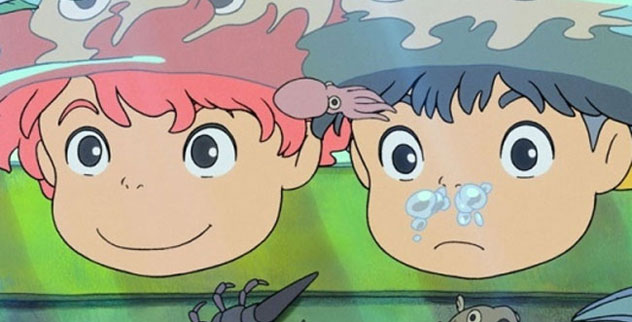
Ponyo may be one of Miyazaki’s gentlest films, but gentle does not mean small. Inspired loosely by fairy-tale transformation stories, the movie follows a magical fish-girl who wants to become human after meeting a boy named Sosuke. That premise could have become sugary enough to require dental insurance, but Miyazaki turns it into a glowing celebration of childhood curiosity.
The animation is loose, fluid, and deliberately simple compared with the grand architecture of Spirited Away or Princess Mononoke. Waves leap like living creatures. Fish race across flooded roads. The ocean feels less like scenery and more like a moody relative who has had too much coffee.
Ponyo earns its spot because it captures the emotional logic of being five years old: everything is huge, every promise matters, and love is not complicated yet. It is not Miyazaki’s most profound film, but it may be his purest burst of delight.
9. Porco Rosso
The flying pig with a broken heart
Only Hayao Miyazaki could make a movie about an Italian World War I pilot cursed to look like a pig and somehow turn it into one of cinema’s most stylish meditations on regret. Porco Rosso is romantic, funny, melancholy, and cooler than most live-action adventure movies that try much harder.
The film follows Porco, a bounty hunter and former fighter ace who battles air pirates over the Adriatic Sea. The aerial sequences are thrilling, but the soul of the movie lies in its sadness. Porco’s pig form is more than a visual joke. It suggests guilt, alienation, and a man who has survived war but not fully returned from it.
Compared with Miyazaki’s bigger fantasy epics, Porco Rosso is modest. Yet its charm is enormous. It has seaplanes, pirates, hotel glamour, a brilliant engineer named Fio, and one of the finest examples of Miyazaki’s lifelong obsession with flight. Also, the hero is a pig in a trench coat. Cinema peaked and forgot to tell us.
8. Castle in the Sky
The blueprint for Studio Ghibli adventure
Castle in the Sky was Studio Ghibli’s first official feature, and it already feels like the studio arrived with its bags fully packed. The film follows Pazu and Sheeta as they search for Laputa, a legendary floating city pursued by pirates, soldiers, and government agents with extremely poor boundaries.
This is Miyazaki in full adventure mode. There are sky pirates, ancient robots, glowing crystals, collapsing fortresses, and enough airborne machinery to make an aviation museum blush. But beneath the spectacle is a warning about power. Laputa is beautiful, but its technology becomes terrifying when separated from humility and care.
The movie’s greatness lies in its balance. It is fast, funny, visually inventive, and emotionally sincere. Many later animated adventures borrowed from its rhythm: two young heroes, a mysterious object, a lost civilization, and a climax that asks whether humanity deserves the wonders it creates. Spoiler: maybe, but only after some serious character development.
7. The Wind Rises
Miyazaki’s most adult dream
The Wind Rises is one of Miyazaki’s most controversial and emotionally complicated films. It is a fictionalized portrait of Jiro Horikoshi, the aeronautical engineer associated with the Mitsubishi A6M Zero fighter plane. In other words, Miyazaki made a gorgeous movie about the beauty of engineering while staring directly at the horror of what engineering can serve.
The film is not a simple biography. It is a dreamlike reflection on creativity, compromise, illness, love, and history. Jiro wants to build beautiful airplanes. The world wants to use them for war. That tension gives the film its ache. Miyazaki, a lifelong lover of aircraft and critic of militarism, does not let the audience relax into easy answers.
What makes The Wind Rises great is its maturity. It asks whether artists and inventors are responsible for how their creations are used. It also contains one of Miyazaki’s most moving romances, quiet and doomed without becoming manipulative. This is not the Miyazaki film to show a toddler unless that toddler is already writing a dissertation on moral ambiguity.
6. Nausicaä of the Valley of the Wind
The ecological epic before Ghibli fully took flight
Nausicaä of the Valley of the Wind was released before Studio Ghibli was officially founded, but spiritually it is pure Miyazaki. Set in a post-apocalyptic world poisoned by human violence and ecological disaster, the film follows Princess Nausicaä, a compassionate young leader who seeks peace between humans, insects, and a toxic jungle that everyone misunderstands.
Nausicaä is one of Miyazaki’s defining heroines: brave without being cruel, gentle without being weak, and curious enough to question the fear-driven assumptions of her society. She does not dominate nature; she studies it. She does not treat enemies as monsters; she tries to understand them. This makes her radical in a world addicted to panic.
The film’s environmental themes remain sharply relevant. Long before climate anxiety became a common phrase, Miyazaki was dramatizing the danger of treating nature as an opponent. Nausicaä is occasionally rougher than later Ghibli works, but its imagination is massive. Without it, the Studio Ghibli we know might not exist.
5. Kiki’s Delivery Service
The sweetest movie ever made about burnout
Kiki’s Delivery Service looks, at first, like a cozy coming-of-age story about a young witch who moves to a seaside city and starts a flying delivery business. And it is. But it is also one of the most honest films ever made about work, independence, loneliness, creative block, and the horrifying realization that being good at something does not mean you will always feel good doing it.
Kiki is not fighting an evil sorcerer. Her enemy is self-doubt. She loses her magic when she loses confidence, which is painfully relatable to anyone who has ever opened a laptop, stared at a blank document, and considered becoming a forest mushroom.
The film’s brilliance is its smallness. Miyazaki makes ordinary tasks feel heroic: delivering a pie, making friends, earning money, finding a room, learning how to be alone without becoming lonely. Kiki’s Delivery Service is charming enough for children and quietly devastating for adults who suddenly realize the broomstick was a metaphor for purpose all along.
4. The Boy and the Heron
A late-career labyrinth of grief and creation
The Boy and the Heron is one of Miyazaki’s strangest, densest, and most personal films. It follows Mahito, a boy grieving his mother during wartime, as he enters a fantastical world guided by a suspicious gray heron who behaves like a magical con artist with feathers.
The movie does not unfold like a tidy puzzle. It feels more like walking through someone’s memory palace while the walls rearrange themselves. There are echoes of Miyazaki’s childhood, his artistic anxieties, his relationship with legacy, and his recurring fascination with worlds that are beautiful, unstable, and impossible to control.
What elevates The Boy and the Heron is its refusal to simplify grief. Mahito’s journey is not about “getting over” loss. It is about choosing to live honestly in a damaged world. The film’s Academy Award win confirmed what many viewers already felt: even in his eighties, Miyazaki could still create animation that challenged, puzzled, and moved audiences on a global scale.
3. My Neighbor Totoro
The quiet miracle in the forest
My Neighbor Totoro has no traditional villain, no grand quest, and very little plot by blockbuster standards. It is about two sisters, Satsuki and Mei, moving to the countryside while their mother is ill. They discover forest spirits, including the enormous, furry, deeply nap-oriented Totoro.
That simplicity is exactly why the film is a masterpiece. Miyazaki captures childhood not as adults remember it in tidy scrapbook form, but as children experience it: mysterious, physical, emotional, and full of places where magic might be hiding behind a tree root.
Totoro himself became Studio Ghibli’s mascot for a reason. He is not a joke machine or a superhero. He is presence. He represents comfort, nature, mystery, and the kind of wordless reassurance children need when adults cannot fix everything. The Catbus, meanwhile, remains one of cinema’s greatest transportation concepts, despite being absolutely impossible to explain to a driving instructor.
My Neighbor Totoro is one of the greatest family films ever made because it respects children’s fears without exploiting them. It is soft, but not shallow. It is comforting, but not empty. It is a lullaby with roots.
2. Princess Mononoke
Miyazaki’s fierce environmental masterpiece
Princess Mononoke is Miyazaki at his most epic and morally complex. The film follows Ashitaka, a cursed young prince who becomes entangled in a conflict between the forest gods, the wolf-raised San, and Lady Eboshi’s Iron Town. A lesser movie would make one side good and the other evil. Miyazaki, being allergic to lazy storytelling, refuses.
Lady Eboshi destroys the forest, but she also protects lepers and gives women social power. San defends nature, but she is consumed by rage. Ashitaka’s task is not to defeat a villain; it is to “see with eyes unclouded by hate.” That line is not just a theme. It is the film’s entire moral engine.
The animation is muscular and unforgettable. The boar demons are terrifying. The forest spirits are eerie and delicate. The Great Forest Spirit is both beautiful and unsettling, like nature reminding humanity that it does not need our permission to be sacred.
Princess Mononoke deserves its near-top position because it expands what an animated film can do. It is violent, philosophical, political, spiritual, and emotionally gripping. It is not anti-human; it is anti-arrogance. That distinction is why the movie still feels urgent.
1. Spirited Away
The greatest Hayao Miyazaki film
Spirited Away stands at number one because it is the fullest expression of Miyazaki’s genius. The film follows Chihiro, a young girl trapped in a spirit world after her parents are transformed into pigs. To survive, she works in a bathhouse run by the witch Yubaba, gradually discovering courage, compassion, and her own name.
The movie is endlessly inventive. Every corner contains a creature, ritual, smell, rule, or mystery that suggests a world much larger than the story we are watching. No-Face, Haku, Lin, Kamaji, the soot sprites, the radish spirit, and the unforgettable Stink Spirit all feel specific enough to be real, even when they are completely bizarre.
But Spirited Away is not great merely because it is imaginative. It is great because its fantasy has emotional discipline. Chihiro does not become powerful through a chosen-one prophecy. She grows by working, paying attention, remembering, and choosing kindness when fear would be easier.
The film also offers sharp commentary on greed, consumption, pollution, identity, labor, and growing up. Its Academy Award for Best Animated Feature helped introduce many American viewers to Studio Ghibli, but its legacy goes far beyond awards. Spirited Away is one of the rare films that feels different at every age: scary when you are young, beautiful when you are older, and suspiciously accurate about workplace management when you are employed.
Honorable Mentions
Howl’s Moving Castle barely misses the top ten, which may cause several readers to throw decorative pillows in protest. It remains one of Miyazaki’s most beloved films, with a dazzling castle, anti-war themes, and a romance powered by magic, vanity, and excellent hair. The Castle of Cagliostro, Miyazaki’s feature directorial debut, is also essential viewing for fans who want to see his adventure instincts in early form.
Why Hayao Miyazaki’s Films Still Matter
The best Hayao Miyazaki movies endure because they trust viewers. Children are allowed to face fear. Adults are allowed to be foolish. Villains are allowed to have reasons. Nature is allowed to be more than wallpaper. Even food gets treated with more respect than some franchises give their main characters.
Miyazaki’s greatest films also understand that wonder and sadness are not opposites. A child can ride a Catbus while worrying about her mother. A witch can fly over the sea while struggling with burnout. A boy can enter a magical tower because grief has made the real world unbearable. His fantasy does not replace reality; it reveals it.
Personal Viewing Experience: What Watching Miyazaki Feels Like
Watching the top 10 greatest films of Hayao Miyazaki is not like checking movies off a list. It feels more like visiting different rooms in the same impossible house. One room smells like rain on a country road. Another has a boiler man with six arms. Another contains a cursed prince, a wolf girl, and a forest god who looks like it knows your browser history.
The first thing many viewers notice is the pacing. Miyazaki is not afraid of quiet. In a world where movies often behave as if silence is illegal, his films pause to let characters eat, walk, breathe, stare, sulk, recover, and think. These moments are not filler. They are the secret sauce. When Kiki sits alone, when Chihiro rides the train across the flooded landscape, when Satsuki waits at the bus stop in the rain, the films create emotional space. They let us feel time passing.
Another part of the experience is how physical everything feels. You can almost taste the food, smell the engine oil, feel the wet grass, and hear the wooden floors. Miyazaki’s animation has weight. Flying is not just movement; it is pressure, wind, balance, and risk. A broomstick dips. A glider trembles. A seaplane roars. Even magic obeys texture.
Then there is the emotional aftertaste. Some animated movies give you a clear moral and send you home neatly packaged. Miyazaki’s films linger in messier, richer ways. Princess Mononoke may leave you thinking about environmental conflict without offering a slogan. The Wind Rises may make you admire beauty and question its cost at the same time. The Boy and the Heron may leave you confused, moved, and oddly suspicious of large birds.
For families, Miyazaki films can become shared rituals. Parents may start with My Neighbor Totoro or Kiki’s Delivery Service, then slowly introduce deeper works as children grow. Teenagers may connect with the identity struggles in Spirited Away. Adults may return to Porco Rosso or The Wind Rises and realize Miyazaki has been talking about regret, compromise, and aging all along. Sneaky? Absolutely. Effective? Devastatingly.
The best viewing tip is simple: do not rush. Miyazaki rewards attention. Notice how characters treat animals. Notice who cleans, cooks, repairs, listens, and apologizes. Notice how often courage looks less like victory and more like responsibility. That is the magic. Not just dragons, spirits, castles, witches, and forest gods, but the idea that living well means paying attention to the world in front of you.
In the end, watching Miyazaki is a reminder that animation can be grand without being loud, wise without being preachy, and funny without elbowing you in the ribs. His films make ordinary kindness feel heroic. They make nature feel alive. They make flying look like freedom and responsibility at once. And occasionally, they make you crave ramen, sponge cake, or a perfectly animated fried egg. This is normal. Studio Ghibli hunger is a recognized emotional condition, at least in my household.
Conclusion
The top 10 greatest films of Hayao Miyazaki show a filmmaker who turned animation into poetry without losing the pleasure of adventure. From the ecological fury of Princess Mononoke to the comforting mystery of My Neighbor Totoro, from the working-girl courage of Kiki’s Delivery Service to the dreamlike grief of The Boy and the Heron, Miyazaki’s cinema remains generous, strange, and deeply human.
Spirited Away takes the top spot because it gathers so many of his gifts into one unforgettable journey: wonder, fear, labor, identity, memory, kindness, and a spirit bathhouse that desperately needs a better HR department. Yet the real joy of Miyazaki’s filmography is that almost any ranking can be debated. His movies do not sit in a neat hierarchy. They grow with the viewer, which is why returning to them years later often feels like finding a secret door you somehow missed the first time.