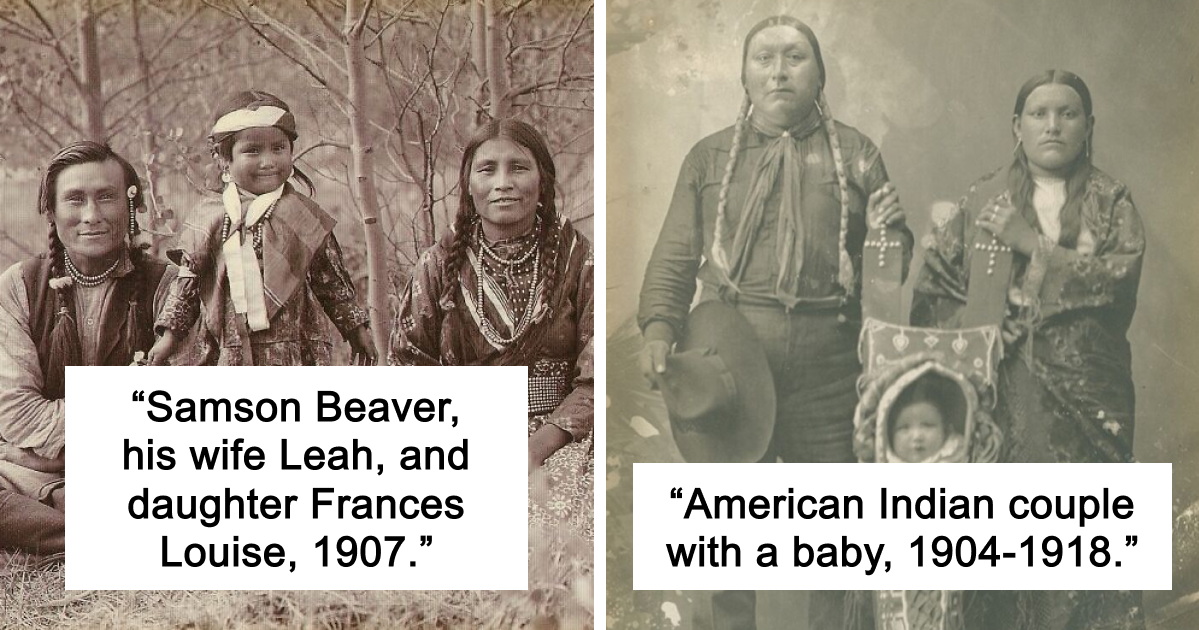
Note: Yes, the headline has a little old-school magazine sparkle. No, this article is not here to turn Native families into museum wallpaper. The real point is much better: vintage Native American family photos are some of the richest visual records of home life, kinship, survival, humor, fashion, adaptation, and identity in American history.
Spend even ten minutes with archival collections of Indigenous family portraits and you notice something important. These images are not just “historic Native American photos.” They are family photos. That distinction matters. A mother adjusting a baby’s cradleboard. A father standing beside a wagon. Grandparents planted in front of a lodge with the unmistakable expression of people who have already decided the photographer is taking too long. A child staring directly into the lens as if to say, “You done?” History can be serious, but family pictures have always had a way of sneaking real life into the frame.
That is why a collection of vintage Native American family photos hits differently. These pictures do not merely show clothing, jewelry, shelters, and landscapes. They show relationships. They show how Native communities kept family structure, cultural memory, and daily routines alive during periods of enormous pressure, including removal, allotment, assimilation campaigns, boarding school disruption, and the steady habit of outsiders pretending Native life was either “vanishing” or frozen in time. Spoiler alert: it was neither.
Across major archives, you find studio portraits, outdoor scenes, wagon travel, babies in cradleboards, families in front of brush shelters, households in Euro-American dress, and multigenerational groupings that quietly demolish the cliché that Native history is only about war chiefs and dramatic sunsets. Sometimes the strongest image in a collection is not the famous one. It is the family picture that looks almost ordinarybecause ordinary life is exactly what makes it extraordinary.
Why These Vintage Native American Family Photos Matter
First, they expand the story. Too much mainstream coverage of Native American history has treated Indigenous people as symbols instead of people with relatives, routines, jokes, chores, favorite clothes, and deeply specific communities. Family photographs restore that missing scale. They bring the big historical narrative down to human size.
Second, they reveal continuity as much as change. In many Indigenous family portraits, you can see traditional materials and beadwork beside store-bought fabrics, military jackets beside moccasins, or a brush shelter next to evidence of new technologies and trade goods. That does not mean culture disappeared. It means people adapted, which is what families do when history keeps barging through the door uninvited.
Third, these photographs are powerful research tools. Descendants, tribal historians, archivists, and community researchers use them to identify relatives, place names, clothing traditions, and connections across generations. A picture that once sat in a government file or museum drawer can become evidence of belonging, kinship, or survival. In other words, this is not nostalgia with sepia frosting. This is recordkeeping with a heartbeat.
How to Read Historic Native American Family Photos Without Missing the Point
1. Look for family structure, not just visual drama
A striking blanket or beaded garment may grab the eye first, but family photographs reward slower looking. Who is standing close together? Who is holding a child? Who is centered? Who appears formally posed, and who looks like they were lured into this photograph with the nineteenth-century equivalent of, “Come on, it’ll be quick”?
2. Treat captions with caution
Historic captions can be useful, but they can also be incomplete, biased, or flat-out wrong. Many archives now acknowledge that older labels reflect the attitudes of their time, including language that may be inaccurate or disrespectful. So the image matters, but so does the metadataand sometimes the metadata needs a serious side-eye.
3. Notice how “home” appears in the frame
Family photos often include more than faces. Look at wagons, brush shelters, tepees, log structures, cooking tools, baskets, horses, and the land itself. These details are not background decoration. They are clues about mobility, labor, economy, domestic life, and the physical environments families inhabited.
4. Remember that Native nations are not interchangeable
“Native American” is a broad umbrella, but archives document families from specific nations and communitiesDiné, Ute, Paiute, Salish, Jicarilla Apache, Crow, Northern Cheyenne, Ho-Chunk, Tlingit, and many more. A respectful reading avoids flattening everyone into one generalized “tribal” aesthetic. History gets clearer when specificity shows up.
What You Start Noticing in a Collection of 50 Photos
Once you move through enough historic Native American family photographs, patterns emerge. Some are visual. Some are emotional. Some are the kind that quietly wreck your afternoon in the best possible way.
- A mother and baby positioned with the kind of calm precision only parents can fake for a camera.
- A family posed in front of a tepee, as if home itself deserved equal billing.
- A wagon portrait where mobility looks practical, not romanticized.
- Children in clothing that blends local tradition with store-bought fabric.
- An infant in a cradleboard, already stealing the whole composition.
- A father holding a bow in a studio portrait that feels both formal and personal.
- A woman whose jewelry tells as much story as the caption.
- A couple standing shoulder to shoulder with the quiet confidence of long familiarity.
- A family group outdoors where the landscape acts like a second surname.
- A child refusing to look impressed by the entire business of photography.
- A portrait where the blanket carries status, warmth, and style at once.
- A household dressed partly in Euro-American fashion but fully in its own identity.
- A family in front of a brush shelter that instantly turns “shelter” into “home.”
- A mother breastfeeding outdoors, making history look unmistakably alive.
- Babies in beaded carriers that combine care, craftsmanship, and beauty.
- A grandparent seated in the middle, which tells you everything you need to know.
- A domestic scene where baskets are not props but proof of labor and skill.
- A portrait where shoes, moccasins, and hems reveal layers of adaptation.
- A group photo with one person smiling and three people absolutely not.
- A family standing near horses, the image humming with movement even while posed.
- A father leaning against a wagon wheel as if it were the front porch railing.
- A woman and child whose closeness makes the lens feel almost intrusive.
- A couple holding an infant with the solemnity of people preserving lineage.
- A scene where the background mesa quietly steals the show.
- A portrait with elk-tooth decoration that announces status without saying a word.
- A household posed with baskets, pottery, or tools that map work inside family life.
- A photo where braids, shawls, and hairpipe adornment carry social meaning.
- A family in front of a riverbank that turns geography into ancestry.
- Children in dresses and ribbons, reminding you that childhood style is eternal.
- A studio setup trying very hard to control the image while real personality leaks through.
- A group portrait where everyone looks composed except the baby, a timeless tradition.
- A picture of siblings with the unmistakable energy of mutual teasing.
- A multigenerational image where the oldest face anchors the youngest.
- A family arranged formally, yet their hands give away tenderness.
- A household scene where trade goods coexist with Native design traditions.
- A photo in which beadwork functions like biography.
- A picture that reveals a boarding school era shadow without surrendering the family story to it.
- A portrait where the caption is flimsy, but the dignity in the image is not.
- A family posed outside a mission, agency, or trading post, history pressing in from the edges.
- A mother whose expression says she has done enough for one day already.
- A father dressed for the camera, but not performing for it.
- A child centered in the frame because family memory always finds the youngest.
- A couple dressed partly for respectability politics and partly for themselves.
- A scene where domestic architecture matters as much as clothing.
- A portrait whose power lies in stillness, not spectacle.
- A family image that shows adaptation without asking permission from outsiders.
- A photograph where the land, the relatives, and the clothing all say the same thing: continuity.
- A group scene so ordinary it becomes unforgettable.
- A photo that makes you realize archives are full of people, not just subjects.
- A final image that leaves you with the oldest truth in photography: every family thinks this moment should be remembered.
Real Examples That Ground the Story
The beauty of these archives is that the examples are concrete, not imaginary. Collections include a Jicarilla Apache family in a studio portrait, a Navajo family seated in a wagon with mules hitched in front, an unidentified Ute family holding an infant, Paiute family scenes in front of brush shelters, Salish women and babies, mothers with infants in cradleboards, and named family portraits connected to leaders such as Quanah Parker and Sitting Bull. When you line these images up, the result is not one single Native American story. It is dozens of specific family stories, each with its own visual language.
Some collections also preserve photographs of reservation life taken for personal rather than commercial use. That matters because non-commercial family-oriented images often feel different from staged ethnographic photography. They are less theatrical, more intimate, and more likely to catch the texture of lived experience: who sat together, what was worn at home, how children occupied space, and which details the photographer considered worth saving.
Then there is the harder truth. Family photography from the late nineteenth and early twentieth centuries exists alongside boarding school history and federal assimilation policy. Some archives now make that context explicit, which is essential. You cannot fully appreciate Native family images from this era without recognizing that many families were under direct pressure from schools, agencies, missionaries, and bureaucracies designed to fracture language, ceremony, mobility, and kinship. The miracle is not that the photos exist. The miracle is how much family life still radiates through them.
Why These Photos Feel So Modern
Because family photos always cheat time. A hundred-year-old portrait can still feel current when a toddler wriggles, a parent looks tired, a teenager looks skeptical, or a grandparent sits like the moral center of the known universe. Different century, same family energy.
That is also why tribal photography archives are so valuable for readers today. They complicate simplistic ideas about the past. They show that Native people were never merely surviving history as passive figures. They were raising children, dressing for portraits, preserving relationships, traveling, working, laughing, and insistingsometimes quietly, sometimes powerfullyon being seen as families.
And honestly, if you have ever tried to get several relatives to look in the same direction at the same time, you already have something in common with these images. History, meet the universal chaos of group photos.
How to View and Share Native American Family Photos Responsibly
Respect begins with context. If a photo is identified by nation, community, family, or place, keep that information attached. Do not strip an image down to “Native family, old-timey, vibes immaculate.” That may work for bad social posts, but it is terrible history.
Second, avoid treating all visual differences as “traditional” and all mixed details as “assimilated.” Real life is messier than those categories. Families chose, adapted, exchanged, resisted, purchased, preserved, and repurposed. Clothing and domestic objects often reveal negotiation, not surrender.
Third, understand that some materials remain sensitive. Not every image should be circulated without thought. Many institutions now work with descendant communities and honor restrictions related to cultural materials or the public presentation of certain images. That is not censorship. That is stewardship with manners.
Finally, let the photographs be relational. When possible, read them as descendants and community researchers increasingly do: not as anonymous “types,” but as people connected to names, places, and living histories. Once that clicks, the entire archive changes shape.
The Experience of Looking at 50 Vintage Native American Family Photos
Spending time with 50 vintage Native American family photos is a strangely layered experience. At first, you think you are looking at history. Then, almost without warning, history starts looking back. A face catches your attention. A child’s posture feels familiar. A family grouping reminds you of every stiff holiday portrait ever taken in every decade since cameras were invented. The distance of time shrinks, and what seemed “archival” suddenly feels personal.
There is also a humbling quality to the experience. Many people approach old photographs expecting spectacledramatic regalia, famous names, cinematic landscapes, the kind of image that seems designed for a coffee-table book or a documentary voice-over. But family photos do something quieter and, in many ways, stronger. They ask you to notice ordinary life. A shawl draped just so. A baby who clearly has other plans. A pair of worn shoes. The way two adults angle toward the child between them. The fact that home, in these pictures, is not abstract. It is built from people standing together.
As you keep going, the emotional texture changes. You start seeing evidence of pressure as well as love. A background that suggests agency oversight. Clothing choices shaped by outside expectations. The shadow of boarding school history hovering over an era when many Native families were being pushed, cataloged, supervised, and misdescribed by institutions that rarely understood them. That can make the photographs difficult in the most important way: they ask for more than admiration. They ask for attention.
And yet the overwhelming feeling is not disappearance. It is persistence. Again and again, these images show Native families presenting themselves, preserving themselves, and carrying themselves through changing worlds. Some portraits are formal, some intimate, some awkward, some beautiful, some all four at once. Together they create an experience that is less like flipping through “old pictures” and more like entering a room where generations have been waiting patiently for someone to look carefully.
There is even a surprising warmth to it. Not fake sentimentality. Real warmth. You recognize parental pride, sibling restlessness, household order, fashion choices, inside jokes you can almost sense but never fully decode. The longer you look, the less these pictures behave like frozen relics and the more they behave like conversations interrupted by time.
That is why the experience stays with you. These are not just photographs of Native American history. They are photographs of Native American family life, and that difference changes everything. They remind you that archives are full of birthdays without cakes, babies without patience, elders with presence, parents with responsibility, and homes made visible for one fraction of a second. Fifty images later, you do not come away thinking, “What a distant past.” You come away thinking, “These families knew exactly what it meant to be remembered.”
Conclusion
50 Vintage Native American Family Photos You’ve Never Seen works as a catchy title, but the deeper truth is better than clickbait. These photographs matter because they return Native history to the scale of family: parents, children, grandparents, households, clothing, work, land, and memory. They resist flattening. They reward careful looking. And they remind us that the most powerful archival image is often not the most famous one, but the one where a family simply shows up as itself.
If you want to understand the long arc of Native American history, start with policy, law, land, and sovereignty. But if you want to feel it, learn from the family portraits. They hold the expressions, textures, improvisations, and stubborn continuities that formal documents usually miss. That is where the past stops sounding distant and starts sounding human.