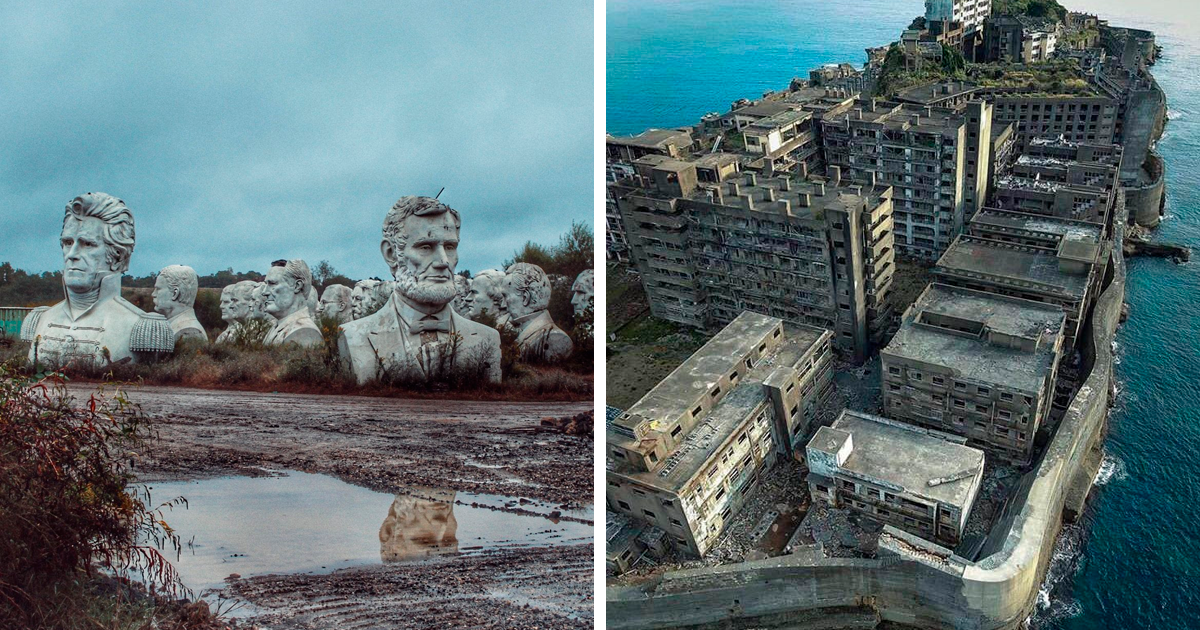
Some places do not disappear all at once. They fade politely, like an old photograph left near a sunny window. Paint peels, windows cloud over, vines get ambitious, and suddenly a ballroom, factory, hospital, or railway station looks as if history stepped out for coffee and never came back.
That is the strange magic behind “50 Of The Most Breathtaking Forgotten Places, As Shared By This Twitter Account.” Inspired by the viral fascination with abandoned places and forgotten architecture shared online by accounts such as Alex Menn’s “forgotten places” style feeds, this topic works because it scratches three human itches at once: curiosity, nostalgia, and the tiny dramatic voice inside us that whispers, “What happened here?”
Forgotten places are not just spooky backdrops for moody photography. They are museums without ticket counters, warnings without lectures, and accidental art installations curated by time, weather, economics, war, migration, disaster, and neglect. Some were once symbols of progress. Others were homes, theaters, prisons, hospitals, mines, hotels, churches, amusement parks, or towns that simply lost their reason to exist.
Why Forgotten Places Fascinate Us
The appeal of abandoned places is bigger than cracked walls and cinematic dust. A forgotten place gives viewers the rare feeling of standing between two timelines. One timeline says, “People lived, worked, celebrated, suffered, and dreamed here.” The other says, “Nature has the final edit.”
That contrast is irresistible. A grand staircase covered in leaves feels theatrical. A deserted schoolroom feels intimate. A rusting factory feels like a monument to ambition. Even a half-buried doorway in a desert can make the internet collectively lean forward and ask questions.
There is also a quiet moral lesson. These places remind us that no building, industry, empire, or trend is permanent. Today’s luxury resort can become tomorrow’s owl condominium. Today’s high-tech facility can become a rusted relic. Time has excellent comedic timing and absolutely no respect for real estate brochures.
50 Breathtaking Forgotten Places and What Makes Them Unforgettable
The following examples are not a copied list from any single social media thread. Instead, they reflect the types of real-world forgotten places that often appear in abandoned-place photography and historical features: ghost towns, decaying industrial sites, deserted hospitals, shuttered entertainment venues, and buildings slowly being reclaimed by nature.
1. Bodie, California
Bodie is one of America’s most famous ghost towns, preserved in a state of “arrested decay.” Its weathered wooden buildings, empty interiors, and dusty streets make it feel less like a tourist stop and more like a Western movie set that refused to clock out.
2. Ellis Island Hospital, New York
The unrestored hospital complex on Ellis Island once treated immigrants arriving in the United States. Today, select guided tours reveal wards, staff spaces, and corridors that show a more fragile side of the American immigration story.
3. Kennecott Mines, Alaska
Set inside Wrangell-St. Elias National Park and Preserve, Kennecott’s huge mill buildings and mining structures tell the story of copper, labor, engineering, and isolation. Few abandoned industrial sites look so dramatic against such wild scenery.
4. Eastern State Penitentiary, Pennsylvania
Once a revolutionary prison design, Eastern State later became an abandoned ruin before reopening as a historic site. Its long cell blocks, arched corridors, and crumbling surfaces give it a powerful atmosphere without needing cheap haunted-house tricks.
5. Kolmanskop, Namibia
This former diamond town is now famous for rooms filled with smooth desert sand. It is one of the most photogenic abandoned places on Earth, mostly because the Namib Desert appears to have moved in and redecorated.
6. Pripyat, Ukraine
Evacuated after the 1986 Chernobyl disaster, Pripyat remains one of the most haunting modern abandoned cities. Empty apartment blocks, schools, and amusement rides turned it into a global symbol of technological risk and human displacement.
7. Hashima Island, Japan
Also known as Battleship Island, Hashima was once a dense coal-mining community. Its concrete apartment blocks now stand exposed to sea wind, carrying both industrial history and difficult memories of wartime forced labor.
8. Bannerman Castle, New York
Perched on Pollepel Island in the Hudson River, Bannerman Castle looks like a fairy-tale ruin with a slightly suspicious résumé. Its decayed walls attract photographers, preservationists, and anyone who enjoys architecture with dramatic eyeliner.
9. Rhyolite, Nevada
Rhyolite boomed during the gold rush and faded quickly after financial trouble and declining prospects. Today, its ruins sit near the desert like a reminder that optimism once came with bank buildings, railroads, and very poor long-term planning.
10. Michigan Central Station, Detroit
For years, this massive Beaux-Arts train station symbolized Detroit’s decline. Its restoration has since turned it into a powerful example of how forgotten architecture can move from decay to renewal.
11. North Brother Island, New York
This closed island once held quarantine facilities and later other institutions. Now largely inaccessible to the public, it has become a rare urban wilderness where ruins and bird habitat share space.
12. Glenrio, Texas and New Mexico
Once a Route 66 stop, Glenrio declined after highway changes shifted traffic away. Its empty motel signs and roadside buildings capture the heartbreak of towns built around movement, then stranded by it.
13. Centralia, Pennsylvania
Centralia became famous because of an underground mine fire that forced most residents away. It is a sobering reminder that abandonment can come not from mystery, but from environmental danger and long-term risk.
14. Grossinger’s Catskill Resort, New York
Once a glamorous vacation destination, Grossinger’s later became an icon of resort decline. Empty pools and decaying recreation spaces show how leisure culture changes faster than concrete can keep up.
15. Salton Sea Resorts, California
The Salton Sea area contains remnants of mid-century resort dreams that faded under environmental and economic pressure. It is beautiful, strange, and a little like finding a postcard from a vacation that went sideways.
What These Places Reveal About History
Forgotten places are rarely abandoned for one simple reason. Usually, several forces team up like villains in a very slow movie. A mine runs dry. A railroad route changes. A factory becomes outdated. A disaster makes a town unsafe. A government policy shifts. A richer opportunity appears somewhere else. People leave, and buildings remain behind as physical evidence.
That is why abandoned places are so useful for storytelling. They compress huge historical movements into visible details. A rusting machine tells us about industrial labor. A cracked hospital tile tells us about public health. A silent railway platform tells us about migration, commerce, and changing transportation. A deserted amusement park tells us that fun, too, has an expiration date if the business model stops working.
The Beauty of Decay: Why Ruins Photograph So Well
Ruins are naturally dramatic because they mix structure with surprise. Architects design buildings to look finished. Decay makes them unpredictable. A roof hole becomes a spotlight. Moss becomes carpet. Tree roots become unauthorized structural engineers. Dust softens sharp edges. Broken glass turns sunlight into glitter with a tetanus warning.
This is why abandoned-place photography performs so well online. Each image feels like a mystery prompt. Viewers do not just look; they investigate. Why are the chairs still there? Who painted that ceiling? Why was this factory closed? Why does this schoolroom still have writing on the board? Social media turns every viewer into a detective, historian, and interior decorator with strong opinions about peeling wallpaper.
Urban Exploration, But Make It Responsible
The popularity of forgotten places has also created a problem: not every beautiful ruin is safe, legal, or appropriate to enter. Abandoned structures may contain unstable floors, exposed metal, mold, asbestos, lead paint, broken glass, contaminated soil, wildlife, or other hazards. Some are private property. Some are protected heritage sites. Some are closed for very good reasons, not because authorities hate good photography.
A responsible approach is simple: enjoy forgotten places through legal tours, official historic sites, museum archives, documentaries, photography books, and reputable online collections. If a place is closed, respect that. If a site offers guided access, follow the rules. The best kind of urban explorer is not the person who gets the riskiest photo; it is the person who helps the story survive without damaging the place.
Why Preservation Matters
Not every abandoned building should be saved exactly as it is. Some are too damaged. Some are unsafe. Some carry environmental contamination. But preservation and adaptive reuse can give old places new purpose. A former factory can become apartments. A school can become a community center. A church can become a performance space. A train station can become a civic landmark again.
This matters because old buildings contain embodied history and embodied materials. Demolishing everything old and starting fresh may look efficient, but it can erase identity. A city without old buildings can feel like a phone with all its photos deleted. Technically usable, emotionally suspicious.
Preservation is not about freezing communities in the past. It is about choosing which pieces of the past can still serve the future. The most successful projects do not simply polish ruins for Instagram. They ask: Who benefits? What story is being told? What harm needs repair? What can this place become without pretending it was never broken?
Forgotten Places as Warnings
Many abandoned places are beautiful, but they are not always romantic. Some represent displacement, dangerous labor, environmental damage, segregation, incarceration, war, disease, or economic collapse. A responsible article about forgotten places should leave room for both awe and discomfort.
Pripyat is not just an eerie city with an empty amusement park. It is tied to one of the worst nuclear disasters in history. Hashima Island is not just a cool concrete ghost island; it carries painful labor history. Old prisons and hospitals are not just spooky photo sets; they hold stories of real people who lived under difficult systems.
The best forgotten-place storytelling does not flatten these places into “creepy vibes.” It asks what happened, who was affected, and what the ruins can teach us now.
The Internet’s Role in Reviving Forgotten Places
Twitter, now X, along with Instagram, Reddit, TikTok, and photography blogs, has changed how forgotten places circulate. A single image of a vine-covered mansion or deserted theater can reach millions of viewers in hours. That attention can be shallow, but it can also spark research, preservation campaigns, tourism, and public interest.
The challenge is context. A stunning photo without explanation can become just another scroll-stopper. A stunning photo with history becomes a doorway. The best accounts sharing forgotten places understand this balance. They give people the visual hook, then encourage curiosity beyond the image.
Experiences Related to Forgotten Places: What It Feels Like to Encounter Ruins
Experiencing forgotten places, even through photographs or official tours, is different from ordinary sightseeing. A famous landmark usually tells you what to admire. A forgotten place asks you to assemble the meaning yourself. There is no polished lobby music, no cheerful sign saying “Stand here for the best selfie,” and no gift shop selling keychains shaped like existential dread. Instead, there is silence, texture, and the strange feeling that the building is still waiting for someone who is not coming back.
The first experience is visual. Your eyes search for clues. A row of windows suggests offices. A tiled room suggests a hospital or school. A stage suggests applause that ended long ago. These details make forgotten places feel personal. Unlike pristine monuments, ruins show the marks of use: worn stairs, faded paint, patched walls, old fixtures, and layouts designed around vanished routines. They remind you that history was not only made by presidents and generals. It was also made by nurses, miners, cooks, cleaners, ticket sellers, students, guards, engineers, immigrants, and families trying to get through another Tuesday.
The second experience is emotional. Forgotten places can feel peaceful and unsettling at the same time. Nature softens them, but it does not erase them. Ivy on brick is beautiful; it is also evidence that maintenance stopped. Sunlight through a collapsed roof can look heavenly; it also means the roof collapsed, which is less heavenly if you are standing under it. This mix of beauty and warning is what gives abandoned places their power. They are poetic, but they are also practical reminders that buildings need care, communities need investment, and progress can leave debris behind.
The third experience is imaginative. A forgotten theater invites you to picture the audience. A ghost town invites you to hear wagons, trains, gossip, arguments, and dinner plates. A closed factory invites you to imagine the rhythm of machines and shift whistles. Good abandoned-place photography activates the mind because it leaves just enough information missing. The viewer becomes part historian, part novelist, and part nosy neighbor with better lighting.
The fourth experience is ethical. Once you learn more about these places, the question changes from “How cool is this?” to “How should we treat it?” Responsible curiosity means not breaking in, not taking souvenirs, not spreading access details for restricted sites, and not reducing tragic places to spooky entertainment. It means supporting museums, local preservation groups, official tours, archives, and photographers who document places respectfully.
The final experience is reflective. Forgotten places make everyday life feel temporary in a useful way. They remind us that full parking lots, busy stations, crowded malls, and glowing office towers are not guaranteed forever. One day, even our most ordinary spaces may become strange to someone else. That thought is humbling, a little eerie, and oddly motivating. It says: notice where you are while it is still alive.
Conclusion
“50 Of The Most Breathtaking Forgotten Places, As Shared By This Twitter Account” is more than a collection of beautiful ruins. It is a reminder that abandonment is never just emptiness. Every forgotten place contains a before, an after, and a question mark.
From ghost towns and mining settlements to deserted hospitals, shuttered resorts, empty prisons, and industrial ruins, these places show how quickly human ambition can become archaeology. They are breathtaking because they are honest. They do not pretend that history is tidy. They show the cracks, the dust, the silence, and the stubborn beauty that appears when nature and memory begin sharing the same room.
Note: This article is written for cultural, historical, and SEO publishing purposes. It does not encourage entering restricted, unsafe, or private abandoned sites. Readers should explore forgotten places through legal tours, official heritage locations, reputable photography, museums, archives, and preservation resources.