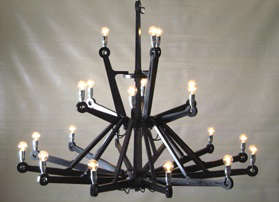
Shopper’s Diary: Piet Hein Eek at Studio Forbes is the kind of design story that begins with a simple retail discovery and ends with a bigger question: why do some pieces of furniture feel alive while others merely sit in the room, politely holding your coffee? Piet Hein Eek, the Dutch designer famous for turning scrap wood, leftover metal, and humble industrial materials into collectible furniture, has long belonged to the first category. His work has texture, wit, patience, and just enough rebellion to make a dining table feel like it has a passport and a good backstory.
When Studio Forbes helped make Piet Hein Eek furniture more accessible to U.S. shoppers, it mattered because Eek’s pieces had already earned cult status among design lovers in Europe. For American buyers who admired Dutch design from afar, the idea of sourcing his handmade scrapwood furniture without crossing the Atlantic felt like someone had finally opened a window in a very stylish room. Suddenly, the conversation was not just about admiring a designer online; it was about bringing a piece of sustainable design history into a real home, fingerprints, dinner parties, toy cars, and all.
Who Is Piet Hein Eek?
Piet Hein Eek is a Dutch designer known internationally for furniture and objects made from reclaimed materials, especially scrap wood. He graduated from Design Academy Eindhoven in 1990 with a now-iconic scrapwood cupboard, a project that pushed against the polished perfection and high-gloss luxury common in design at the time. Instead of hiding irregularity, Eek treated irregularity as the main event. Knots, color shifts, nail holes, and old paint became visual evidence that materials had already lived a little.
That philosophy became the foundation of his career. Rather than designing an object and then hunting for flawless materials to obey the drawing, Eek often starts with the material itself. A pile of demolition wood, a batch of metal pipes, or leftover blocks from another project can become the beginning of a cabinet, table, chandelier, vase, or wall surface. It is design by attention rather than domination. The material gets a vote. In a world where many products are engineered to look identical, that vote feels refreshingly democratic.
Why Studio Forbes Was the Right Match
Studio Forbes was associated with Rob Forbes, the founder of Design Within Reach and PUBLIC Bikes. Forbes built his reputation on making modern design more understandable, more visible, and more available to people who cared about how everyday objects shape everyday life. That made Studio Forbes a natural bridge for Piet Hein Eek’s work in the United States. Eek was not just selling tables and cupboards; he was selling a point of view. Forbes understood that good retail is not only about inventory. It is about context, storytelling, and helping shoppers see why an object deserves space in their lives.
In that sense, the Studio Forbes connection was not a random showroom listing. It represented a meeting of two design sensibilities: Eek’s belief in material honesty and Forbes’s belief in visual literacy. Both approaches ask shoppers to slow down. Look closer. Notice the grain, the proportion, the joinery, the shadow under the tabletop, the way a chair changes a corner. Modern retail often screams, “Buy now!” This kind of design whispers, “Look again.”
The Appeal of Piet Hein Eek Scrapwood Furniture
The main keyword here is Piet Hein Eek furniture, but the real magic phrase might be scrapwood furniture with soul. Eek’s cabinets, tables, benches, and objects are made from pieces that might otherwise have been ignored or discarded. The surfaces are often patched together in grids, stripes, blocks, or mosaic-like arrangements. From a distance, the work can look clean and architectural. Up close, it becomes more personal: old paint, exposed edges, subtle color changes, and evidence of handwork.
This dual personality is what makes the furniture so compelling. A Piet Hein Eek cabinet can suit a minimalist loft because its silhouette is disciplined. It can also suit a relaxed farmhouse kitchen because the materials feel warm and imperfect. It has enough design pedigree for collectors and enough human texture for people who simply want their home to feel less like a catalog page and more like a place where life happens.
It Is Sustainable, But Not Preachy
Sustainable design can sometimes arrive wearing a very serious expression, as if your sofa is about to give you a lecture. Eek’s work avoids that trap. Yes, it is rooted in reuse, waste reduction, and respect for materials. But the pieces do not feel like moral homework. They feel inventive, playful, and visually generous. A scrapwood table is not interesting merely because it is eco-conscious. It is interesting because it turns limitation into character.
Each Piece Has Built-In Individuality
Because the materials vary, no two pieces feel exactly alike. That matters in an age of mass production. When you buy a handmade reclaimed wood cabinet, you are not buying a perfect twin of something sitting in 10,000 other homes. You are buying a composition shaped by available materials, craft decisions, and happy accidents. It is furniture with a fingerprint.
What Shoppers Should Look For
If you are shopping for Piet Hein Eek pieces or design inspired by his approach, start with scale. His furniture can have a strong visual presence, especially the larger scrapwood cabinets and dining tables. Measure twice, then measure again, ideally before falling in love. Love is beautiful, but it does not widen your hallway.
Next, study the surface. The best reclaimed wood pieces reward close inspection. Look at how the colors are balanced, whether the composition feels intentional, and how the maker handles transitions between old and new elements. Eek’s work often succeeds because the irregularity is controlled without being over-managed. It feels spontaneous but not sloppy, rustic but not theatrical.
Finally, think about contrast. Piet Hein Eek furniture looks especially strong when paired with quieter surroundings: white walls, simple linen, stone floors, plain ceramics, matte black metal, or soft neutral upholstery. Let the piece breathe. If every item in the room is shouting, even a masterpiece starts looking for earplugs.
How to Style Piet Hein Eek at Home
A scrapwood cupboard can become the anchor of a dining room, living room, entryway, or office. Because the surface already has pattern and movement, keep nearby accessories restrained. A ceramic lamp, a stack of art books, or a simple vase of branches is usually enough. The goal is not to decorate the furniture into submission. The goal is to let it tell its story without placing twelve scented candles in front of the plot.
For dining spaces, a reclaimed wood table pairs beautifully with simple chairs in black, white, natural wood, or metal. Avoid trying to match the wood exactly. Matching reclaimed wood is like trying to coordinate socks after laundry day: technically possible, spiritually exhausting. Contrast is cleaner. Let the table be the textured centerpiece and use chairs to bring rhythm and calm.
For smaller homes, consider objects, lighting, mirrors, or wallpaper inspired by Eek’s scrapwood language. His design vocabulary has extended beyond furniture into surfaces and decorative objects, making it possible to bring the spirit of his work into a room without committing to a major furniture purchase. A scrapwood-style wall covering, for example, can add warmth to an entry or powder room while keeping the floor plan open.
Why This Shopper’s Diary Still Feels Relevant
The original excitement around Piet Hein Eek at Studio Forbes was about access. American shoppers could finally get closer to a designer whose work had been admired from afar. Today, the story has an additional layer: values. Consumers are more aware of sustainability, supply chains, craft, and the environmental cost of disposable interiors. Eek’s work was ahead of that conversation. He was making waste beautiful before “upcycling” became a lifestyle hashtag and before every product description started wearing a tiny green halo.
But the relevance is not only environmental. It is emotional. Many homes now suffer from what we might call smoothness fatigue. Too many perfect surfaces, too many anonymous objects, too many rooms that look as if nobody has ever misplaced keys in them. Piet Hein Eek’s furniture brings back friction in the best sense. It reminds us that beauty can include scars, repairs, fragments, and surprise.
The Studio Forbes Lesson: Retail as Storytelling
Studio Forbes matters in this story because it highlights how design retail can educate rather than merely transact. A good shop does more than display products. It edits the world. It says, “Here is something worth your attention, and here is why.” When the product is as layered as Piet Hein Eek’s work, that context is essential. Without explanation, a shopper might see only patchwork. With context, the same shopper sees craft, sustainability, Dutch design history, and a sharp critique of waste.
This is especially important for high-end handmade furniture. The price of such work is not only about material and labor, though both matter. It is also about authorship, process, scarcity, and longevity. A mass-produced cabinet may solve storage. A Piet Hein Eek cabinet solves storage while also starting conversations, warming the room, and quietly judging your disposable flat-pack bookcase from across the hall.
Buying Tips for Collectors and Design Lovers
Before purchasing a Piet Hein Eek piece, ask for detailed dimensions, condition notes, production details, and photographs from multiple angles. If the piece is vintage, one-of-a-kind, or made from reclaimed materials, small variations should be expected. Those variations are often the point, not the problem. Still, buyers should understand what is intentional character and what is actual damage.
Shipping is another key consideration. Reclaimed wood furniture can be heavy, and large cabinets or tables require careful handling. Ask about crating, insurance, delivery timing, and whether white-glove installation is available. The romance of Dutch design fades quickly if your dream cupboard is abandoned on the curb like a very expensive shipwreck.
Also consider long-term care. Avoid harsh cleaners, excessive moisture, and direct sun exposure that may alter finishes. Use coasters, pads, and common sense. Eek’s furniture is made to live, not to be placed behind velvet ropes, but living well includes not treating a handmade table like a cutting board unless the designer specifically invites that chaos.
Experience Notes: Shopping the Piet Hein Eek Way
Shopping for Piet Hein Eek at Studio Forbes, or even imagining that visit through the lens of a design diary, feels different from ordinary furniture shopping. It is less like browsing a showroom and more like entering a conversation between material, maker, retailer, and future owner. The first impression is visual: the patchwork surfaces pull you in. A cabinet might look orderly from across the room, but step closer and the surface opens up like a map. There are faded whites, warm browns, old painted blues, pale raw edges, and tiny signs of previous use. Suddenly, the furniture is not just furniture. It is evidence.
The best way to experience this kind of design is slowly. Do not rush from piece to piece as if checking off a grocery list. Stand in front of one object for a minute. Notice how the scraps are arranged. Notice whether your eye moves horizontally, vertically, or in little jumps. Look at the edges and the handles. Open a drawer if permitted. Good design often reveals itself in the less glamorous gestures: the way a door closes, the thickness of a shelf, the confidence of a proportion. This is where Eek’s work becomes persuasive. The charm is not pasted on afterward. It is built into the structure.
There is also a useful emotional test. Ask yourself whether the piece would still interest you after the trend has moved on. Piet Hein Eek’s strongest work passes that test because it is not dependent on trend language. It belongs to sustainable design, yes, but it also belongs to craft, modernism, Dutch practicality, and a kind of dry humor. It has the confidence to be imperfect without begging for compliments. That is rare.
In a home setting, the experience continues. A scrapwood table changes throughout the day as light moves across the surface. Morning sun may emphasize pale boards; evening light may deepen the old paint and shadows. Guests tend to ask about it, which is both delightful and dangerous if you are the sort of person who can talk about furniture for 45 minutes while the soup gets cold. The piece becomes a social object, not just a functional one.
My favorite way to approach the Piet Hein Eek style is to give it room and avoid over-curating. Pair a textured cabinet with plain walls. Put a rugged table under a simple pendant. Let a reclaimed wood surface sit near something crisp, like white stoneware or a black steel chair. The tension makes both sides better. Too much rusticity can turn the room into a theme restaurant; too much polish can make it feel afraid of real life. Eek’s work sits beautifully in the middle, reminding us that homes are better when they contain a little history, a little humor, and at least one object that looks as if it has survived more interesting parties than we have.
Conclusion
Shopper’s Diary: Piet Hein Eek at Studio Forbes is more than a retail note about where to buy designer furniture. It is a reminder that thoughtful shopping can connect us to bigger ideas: sustainability, craft, material honesty, and the pleasure of objects that refuse to be bland. Piet Hein Eek’s work continues to matter because it transforms leftovers into landmarks. Studio Forbes mattered because it helped American shoppers understand and access that vision. Together, they offered a lesson that still feels fresh: the best pieces in a home are not always the smoothest, newest, or loudest. Sometimes they are the ones made from fragments, assembled with care, and brave enough to show their seams.