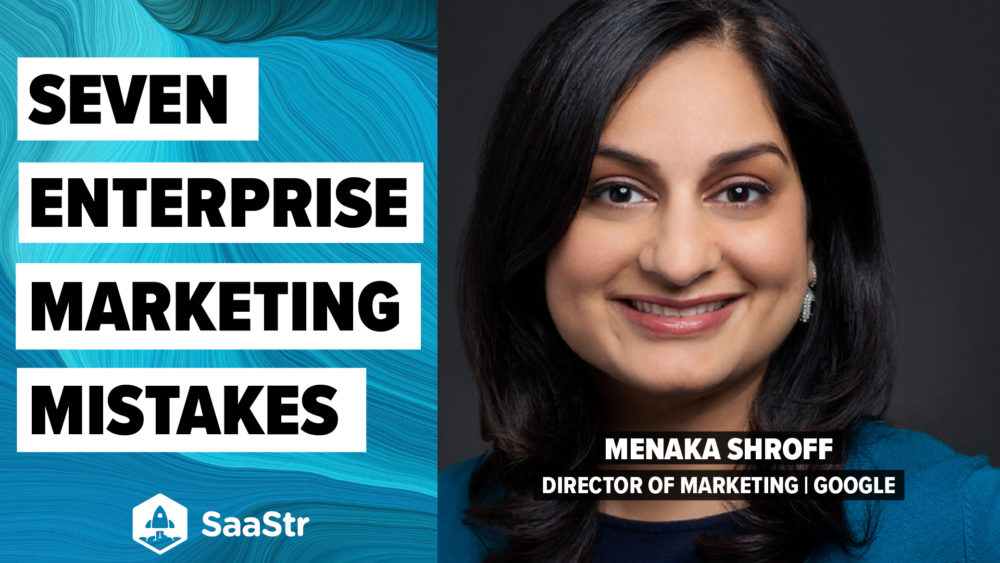
Note: This article is written as original web-ready content for publication, based on real enterprise marketing principles and the key themes discussed in SaaStr Podcast #423.
Introduction: Enterprise Marketing Is Not “Regular Marketing, But Wearing a Blazer”
Enterprise marketing looks glamorous from a distance. Bigger accounts. Bigger contracts. Bigger logos. Bigger meetings where someone inevitably says “alignment” three times before coffee arrives. But as SaaStr Podcast #423 reminds us, enterprise marketing is not just startup marketing with a fancier slide deck. It is a different game with different rules, longer buying cycles, more stakeholders, and a much lower tolerance for fluffy promises.
In the episode, Google’s Director of Global Marketing, Menaka “MK” Shroff, shares seven common enterprise marketing mistakes that can quietly slow growth, confuse sales teams, and turn promising campaigns into expensive confetti. The big idea is refreshingly practical: enterprise marketing succeeds when it respects how large companies actually buy. That means rational proof, buying committees, multi-touch journeys, landing after launch, imperfect data, strong partnerships, and better goals than simply “more leads, please.”
For SaaS founders, CMOs, demand generation teams, product marketers, and anyone trying to sell into larger organizations, these mistakes are more than academic. They show up in missed pipeline targets, bloated campaign budgets, weak conversion rates, and the classic “we got a lot of MQLs but no one bought anything” meeting. You know, the meeting where everyone stares at the dashboard like it owes them money.
This article breaks down the seven mistakes from SaaStr Podcast #423, adds practical examples, and turns the lessons into a usable enterprise marketing strategy.
What Makes Enterprise Marketing Different?
Enterprise marketing is built around complexity. Unlike a small-business purchase, where one owner may test a tool and buy it the same afternoon, enterprise buying usually involves multiple stakeholders. The end user cares about workflow. The IT team cares about security. Finance cares about cost. Legal cares about risk. Procurement cares about terms. Leadership cares about business impact. Somehow, marketing has to speak to all of them without sounding like a robot that swallowed a brochure.
That is why enterprise SaaS marketing needs more than catchy messaging. It needs credible proof, clear positioning, sales enablement, account-based marketing, customer stories, competitive differentiation, and content that helps buying committees make progress. A campaign that attracts clicks but does not help the committee justify a purchase is like a beautiful restaurant menu with no food behind it. Nice font, still hungry.
1. Mistake: Treating Enterprise Buyers as Purely Emotional Buyers
Emotion matters in B2B marketing, but enterprise buyers need logic they can defend. A great story may open the door, but a large company rarely signs a major SaaS contract because the homepage “felt inspiring.” Enterprise buyers need business cases, ROI models, implementation clarity, risk reduction, proof of adoption, and evidence that the vendor can support them at scale.
Why This Mistake Hurts
When marketers lean too heavily on emotional messaging, they may create interest but fail to create confidence. The champion inside the account might love the product, but that champion still has to persuade everyone else. If the campaign does not equip them with facts, they walk into the internal meeting armed with vibes. Vibes are lovely. Vibes do not usually survive procurement.
How to Fix It
Strong enterprise marketing blends emotional relevance with rational proof. Use clear value propositions, customer success stories, ROI calculators, comparison guides, security documentation, and executive-level messaging. The best enterprise content helps buyers answer three questions: Why change? Why now? Why this vendor?
For example, instead of saying, “Our platform helps teams collaborate better,” say, “Our platform reduces manual approval cycles by 32%, improves cross-functional visibility, and gives IT centralized governance.” The first message is pleasant. The second message can survive a budget meeting.
2. Mistake: Assuming Enterprise Sales Are Always Top-Down
Many teams believe enterprise sales begin and end with the C-suite. Yes, executive sponsorship matters. But enterprise deals often build momentum from the bottom up. Practitioners discover the product, team leaders test it, managers champion it, and executives approve it once there is enough proof.
This is especially common in SaaS, where product-led growth and enterprise sales can overlap. A team may start with a small trial, expand usage, prove value, and then create the internal pressure for a larger enterprise agreement.
Why This Mistake Hurts
If marketing only targets executives, it may miss the people who actually feel the pain every day. Executives approve strategic purchases, but users often create the urgency. A CIO may care about digital transformation, but the operations manager knows exactly which spreadsheet is ruining everyone’s week.
How to Fix It
Build messaging for multiple layers of the account. Create practitioner content that explains daily workflow improvements. Create manager content that shows team productivity gains. Create executive content that connects the product to business outcomes. Then connect these assets through an account-based marketing strategy.
A practical enterprise marketing plan might include how-to guides for users, ROI briefs for department heads, security pages for IT, and executive one-pagers for leadership. In other words, stop marketing to “the buyer” as if the buyer is one mysterious person sitting in a dark room with a purchase order.
3. Mistake: Underestimating Multi-Touch Marketing
Enterprise deals rarely come from one ad, one webinar, or one white paper. They come from repeated, relevant interactions across channels. A buyer might see a LinkedIn post, read a comparison page, attend a webinar, talk to a peer, visit a review site, download a guide, meet sales, share a case study internally, and then finally request pricing.
That sounds messy because it is. Enterprise marketing is not a straight hallway. It is more like a hotel floor where every door has a different stakeholder behind it asking, “But does it integrate with our existing system?”
Why This Mistake Hurts
Teams often launch disconnected campaigns and then judge each one in isolation. The webinar did not directly create a closed-won deal, so it gets called ineffective. The brand campaign did not generate immediate demo requests, so it gets cut. The thought leadership article influenced three target accounts, but attribution software shrugged and went to lunch.
How to Fix It
Measure enterprise marketing as a system. Track account engagement, buying group coverage, pipeline influence, sales conversations, opportunity progression, and deal velocity. A single touchpoint may not close the deal, but it can help move the buying group forward.
This is where ABM becomes useful. Instead of asking, “How many leads did this campaign generate?” ask, “Did this campaign increase engagement in target accounts? Did more stakeholders enter the conversation? Did sales get better meetings? Did pipeline move faster?” Those questions are harder to fit into a neat dashboard, but they are much closer to reality.
4. Mistake: Celebrating the Launch but Forgetting the Landing
Marketers love launches. Product launches have drama. There is a countdown, a press release, a landing page, a social campaign, maybe even a celebratory cupcake if the budget survived Q3. But in enterprise marketing, the launch is only the beginning. The real question is: did the product land?
Landing means the market understands the value. Sales knows how to sell it. Customers know how to adopt it. Analysts and partners can explain it. The target accounts connect it to a real business problem. Without landing, a launch becomes a brief burst of noise followed by silence.
Why This Mistake Hurts
A launch-only mindset creates activity without adoption. Teams focus on announcements instead of enablement. They publish the message but do not build the follow-through. Sales gets a shiny deck but no objection handling. Customer success gets excited customers but no adoption plan. The market hears “new feature” but not “important business outcome.”
How to Fix It
Plan the landing before the launch. Build sales enablement, customer onboarding assets, post-launch nurture campaigns, internal training, customer proof, and adoption metrics. Ask what should happen 30, 60, and 90 days after launch.
For example, a cybersecurity SaaS company launching a compliance feature should not stop at a product announcement. It should provide security briefs, compliance checklists, webinars for IT leaders, objection-handling guides for sales, and customer stories showing reduced audit preparation time. That is not just launching. That is helping the market catch the ball.
5. Mistake: Waiting for Perfect Data
Enterprise marketing data is rarely perfect. Attribution is incomplete. CRM fields are messy. Buying committees are hard to map. Offline conversations influence online behavior. Someone attends a webinar with a personal email address and then resurfaces six months later through procurement like a marketing ghost.
Waiting for perfect data before making decisions sounds responsible, but it often becomes a very professional form of procrastination.
Why This Mistake Hurts
If teams wait for perfect attribution, they may stop investing in valuable long-term activities because the data is not clean enough. Brand marketing, executive events, partner influence, dark social, and sales conversations may all contribute to pipeline without showing up neatly in last-touch reports.
How to Fix It
Use imperfect data wisely. Benchmark performance, look for directional trends, compare account behavior over time, and combine quantitative metrics with qualitative feedback from sales and customers. Data should guide decisions, not paralyze them.
A smart enterprise marketing team might combine CRM data, website engagement, intent signals, win-loss interviews, sales notes, and customer feedback. None of these sources tells the whole truth alone. Together, they create a useful picture. Think of it like assembling a puzzle while a toddler hides three pieces. Annoying, yes. Impossible, no.
6. Mistake: Treating Marketing as a Service Department
One of the strongest lessons from SaaStr Podcast #423 is that marketing should be a strategic partner, not an internal ticket desk. In some companies, marketing becomes the team that “makes things pretty,” sends emails, builds landing pages, and says yes to every request. That may feel helpful in the short term, but it weakens marketing’s strategic role.
Why This Mistake Hurts
When marketing acts only as a service function, it becomes reactive. Sales asks for a campaign, product asks for a launch, leadership asks for leads, and marketing tries to satisfy everyone. The result is scattered work, unclear priorities, and campaigns that do not connect to business strategy.
How to Fix It
Marketing must earn and protect its seat at the strategy table. That means asking hard questions: Who is the ideal customer? Which accounts matter most? What problem are we solving? What stage of the buying journey are we influencing? What metric proves this work matters?
Sometimes, strong marketing leadership means saying no. Not rudely. Not with a dramatic cape. Just clearly. “No, we should not run that campaign because it targets the wrong segment.” “No, we should not launch without sales enablement.” “No, lead volume is not the right goal for this enterprise ABM program.” When the no is backed by strategy, it builds trust.
7. Mistake: Choosing the Wrong Goals
Many B2B teams still worship at the altar of lead volume. More leads must mean more revenue, right? Not always. In enterprise marketing, lead quantity can be a very shiny distraction. A thousand low-fit leads are not better than twenty engaged stakeholders from target accounts.
Enterprise marketing goals should match the buying motion. Sometimes the right goal is not leads. It may be target account engagement, buying committee coverage, pipeline velocity, opportunity creation, expansion revenue, sales-qualified account progression, or executive meeting generation.
Why This Mistake Hurts
If marketing is measured only by lead volume, the team will optimize for forms, downloads, and cheap conversions. That can produce impressive reports and disappointing revenue. Sales then complains about lead quality. Marketing complains sales did not follow up. Everyone updates the dashboard. Nothing improves.
How to Fix It
Set goals that reflect enterprise reality. For an ABM campaign, measure target account reach and engagement. For a product launch, measure adoption and influenced pipeline. For executive marketing, measure strategic meetings and opportunity movement. For content, measure assisted pipeline, sales usage, and stakeholder engagement.
The right enterprise marketing dashboard should answer one main question: are we helping the right accounts move toward revenue? If the answer is yes, the program deserves attention. If the answer is no, even a mountain of MQLs is just a mountain wearing a name tag.
How These Seven Mistakes Connect
The seven mistakes are not separate accidents. They are connected by one core misunderstanding: enterprise marketing is not about creating isolated campaigns. It is about helping a buying group make a confident decision over time.
That requires rational proof because committees need defensible logic. It requires bottom-up and top-down messaging because influence comes from multiple levels. It requires multi-touch strategy because buyers do not move in a straight line. It requires landing, not just launching, because adoption matters more than announcement. It requires benchmarking because data will never be perfect. It requires partnership because marketing must shape strategy. And it requires better goals because lead volume alone does not equal enterprise growth.
Once you see the pattern, the solution becomes clearer: build marketing around the buying process, not around internal convenience.
Practical Enterprise Marketing Examples
Example 1: The Over-Gated Content Problem
A SaaS company wants enterprise leads, so it gates every useful asset behind a form. The result? Lots of form fills from students, vendors, and people using fake emails. Meanwhile, actual enterprise buyers avoid the friction and research elsewhere. A better approach is to ungate educational content, reserve forms for high-intent offers, and use account-level engagement to identify serious interest.
Example 2: The One-Person Persona Trap
A company creates all content for the VP of Operations, but the purchase also needs IT, finance, legal, and end-user support. Deals stall because internal stakeholders do not have the information they need. A stronger strategy maps content to the full buying committee, including security documentation, ROI summaries, integration guides, and user adoption resources.
Example 3: The Launch With No Sales Enablement
A product marketing team announces a major new feature, but sales does not know how to position it. Reps improvise, messaging becomes inconsistent, and buyers get confused. The fix is simple but often skipped: launch with battlecards, demo talk tracks, objection handling, customer use cases, and clear qualification criteria.
of Experience: What Enterprise Marketing Really Feels Like in Practice
In real enterprise marketing work, the biggest lesson is that patience and pressure live in the same room. Leadership wants pipeline now. Sales wants better accounts now. Product wants market excitement now. Buyers, however, move on their own timeline. They research quietly, compare options, ask peers, build internal consensus, disappear for three weeks, return with legal questions, and then ask for a security document you definitely sent them already. Twice.
One practical experience many marketing teams share is the painful discovery that “busy” does not mean “effective.” It is easy to fill a quarter with webinars, newsletters, paid campaigns, trade show booths, analyst briefings, and content downloads. Everyone is working hard. The calendar looks heroic. But when the pipeline review arrives, the hard question appears: did any of this help the right accounts move forward?
The best enterprise marketers learn to slow down before speeding up. They spend more time with sales calls, customer interviews, win-loss notes, and CRM patterns. They ask what objections appear repeatedly. They study which stakeholders block deals. They listen for the exact words buyers use when describing pain. This research may not feel as exciting as launching a campaign, but it makes every campaign sharper.
Another real-world lesson is that enterprise marketing requires internal diplomacy. Marketing cannot succeed alone. Product must clarify value. Sales must share field feedback. Customer success must explain adoption challenges. Finance must align on revenue goals. Leadership must support long-term brand and demand creation, not just short-term lead capture. Without this cross-functional partnership, marketing becomes a very expensive megaphone pointed in the wrong direction.
There is also a humility lesson. Your first enterprise message is probably not the final message. The market will correct you. Buyers will misunderstand something you thought was obvious. Sales will discover objections you did not expect. A competitor will reposition. A new category term will appear. The best teams treat messaging as a living system, not a stone tablet carried down from Mount Branding.
Finally, enterprise marketing teaches that trust compounds. A useful article, a strong customer story, a clear pricing conversation, a helpful sales rep, a smooth security review, and a credible executive presentation all build confidence. No single moment wins the deal alone. But each moment reduces uncertainty. That is the real job: not to shout louder, but to make the buying committee feel smarter, safer, and more confident choosing you.
Conclusion: The Best Enterprise Marketing Helps Buyers Buy
SaaStr Podcast #423 is a valuable reminder that enterprise marketing is not about louder campaigns or prettier funnels. It is about understanding how complex organizations make decisions. The companies that win enterprise deals are not always the ones with the flashiest messaging. They are the ones that help buyers build consensus, prove value, reduce risk, and move forward with confidence.
Avoiding the seven common enterprise marketing mistakes means thinking beyond emotional appeal, beyond the C-suite, beyond single-touch attribution, beyond launch day, beyond perfect data, beyond reactive service work, and beyond lead volume. It means building a marketing engine that supports real enterprise buying behavior.
That may sound less glamorous than a viral campaign, but it works. And in enterprise marketing, working is the part that eventually gets budget.