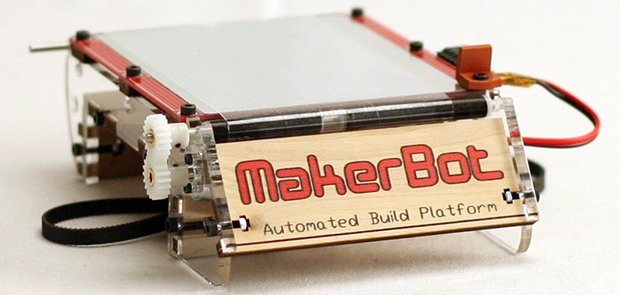
Desktop 3D printing has become impressively smart in all the places that make good demo videos. Printers can level their beds, detect filament runout, resume jobs after power loss, stream camera feeds, and sometimes behave like tiny factory robots wearing plastic hats. Yet one stubbornly ordinary problem remains: when the print finishes, the machine usually sits there waiting for a human to remove the part.
That is where the idea behind an open source automated build platform becomes so compelling. Imagine a 3D printer that finishes a part, clears its own build surface, starts the next job, and keeps going without a tired maker standing nearby with a scraper in one hand and coffee in the other. This is not science fiction. The concept has existed for years in the form of conveyor-belt beds, ejector plates, print queues, and print farm workflows. What is still missing is a widely adopted, community-driven, open standard that brings the whole idea together.
The original call for an automated build platform was simple and wonderfully maker-ish: if the desktop 3D printing world can build open firmware, open slicers, open motion systems, and open printer designs, why not build an open mechanism for continuous printing too? The answer is partly mechanical, partly legal, partly software-related, and partly because 3D printers enjoy humbling us whenever we get too confident.
What Is an Automated Build Platform?
An automated build platform is a system that removes finished 3D prints from the build area so the next print can begin automatically. In its most familiar form, it uses a moving belt instead of a fixed build plate. The printer completes a part, the belt advances, the object peels away or drops into a collection bin, and the machine returns to work.
That sounds easy until you remember that 3D printing is basically controlled chaos with a nozzle. The platform must provide enough adhesion during printing, easy release after cooling, stable motion, heat resistance, accurate leveling, and enough durability to survive repeated use. It also needs firmware and software support so the machine knows when to eject, when to pause, when to recover from failure, and when to stop before it confidently manufactures a spaghetti sculpture at 3 a.m.
The Main Jobs of an Automated Build Platform
A useful open source automated build platform should do four things well. First, it should hold the print securely while the part is being made. Second, it should release the finished object without damaging it. Third, it should reset the build surface for the next job. Fourth, it should communicate with the printer control system so the entire process can be queued, monitored, and interrupted safely.
That fourth job is where modern 3D printing has an advantage over earlier attempts. Today, open source tools such as OctoPrint, Klipper, Moonraker, Marlin, Mainsail, and Fluidd already provide much of the software vocabulary needed for remote control, monitoring, APIs, macros, and print queues. The missing piece is not intelligence. The missing piece is a dependable open hardware pattern that many people can build, test, improve, and trust.
Why This Idea Still Matters
Most hobbyists start with a single printer. They load a file, watch the first layer like it is a medical scan, leave the room for ten minutes, return in panic, and eventually remove the finished part. That workflow is fine for one dragon, one bracket, or one replacement knob for a drawer that has been emotionally unavailable since 2014.
But once the goal becomes batch production, the fixed build plate becomes a bottleneck. A school lab printing classroom projects, a small business making jigs, an Etsy seller producing custom parts, or a workshop printing replacement components needs repeatability. The human operator becomes the slowest and most expensive part of the machine. That is not an insult. Humans are excellent at creativity, troubleshooting, and eating snacks. We are less excellent at removing 80 identical cable clips from a printer every 47 minutes.
An open source automated build platform could turn low-cost desktop printers into more capable production tools. It would not replace industrial additive manufacturing, but it could create a practical middle ground: affordable, repairable, locally controlled automation for makers, educators, labs, and small manufacturers.
The Open Source 3D Printing Tradition
The case for an open automated build platform is stronger because 3D printing grew up with open source DNA. The RepRap movement helped prove that a community could design, improve, and distribute low-cost machines that print many of their own parts. Marlin became one of the most important open source firmware projects in desktop 3D printing. OctoPrint gave users a browser-based way to monitor and control machines. Klipper changed the conversation by combining a host computer with printer microcontrollers, opening the door to more advanced motion control and macro-driven workflows.
In other words, the community already knows how to collaborate on complicated systems. We have open firmware, open printer frames, open slicer projects, open calibration tools, open spool managers, open dashboards, and enough GitHub repositories to make any weekend disappear mysteriously. A standardized open build automation layer would fit naturally into that ecosystem.
Open Hardware Needs More Than Files
To succeed, the platform cannot be just a folder of STL files and a hopeful README. It needs documentation, test procedures, safety guidelines, bill of materials options, firmware profiles, reference macros, maintenance schedules, and design notes explaining why certain decisions were made. A good open source automated build platform should be reproducible, not mythical.
That means contributors should be able to answer practical questions. What belt material works best with PLA, PETG, ABS, and TPU? How does bed temperature affect release? What angle helps parts detach without warping? How many cycles can the belt survive? What sensors are needed to detect failed ejection? How does the machine prevent a new job from starting when the previous part is still clinging to the bed like it pays rent?
The Mechanical Challenge: Adhesion vs. Release
The central drama of every automated build platform is the old 3D printing argument between sticking and unsticking. During printing, you want the part to adhere firmly enough to resist warping and nozzle forces. After printing, you want it to release gracefully. Unfortunately, plastic does not always appreciate nuance.
A conveyor belt platform must handle heat, repeated bending, surface wear, and dimensional stability. If the belt stretches, print accuracy suffers. If the surface is too slick, parts detach early. If it is too sticky, the automated platform becomes a very expensive decorative treadmill. If the belt is uneven, the first layer becomes a topographical map of regret.
Possible Build Surface Approaches
An open design could explore multiple surface strategies. A textured belt might work for everyday PLA. A coated belt could improve adhesion for specific materials. A removable flexible layer might simplify maintenance. A hybrid system could combine a rigid heated plate with a moving release film. The key is not to declare one universal answer too early. The open source advantage is experimentation.
Community testing could produce material charts, recommended temperatures, cleaning methods, and part geometry guidelines. For example, tall narrow objects may need different handling than flat brackets. Flexible materials may release differently than rigid ones. Parts with huge contact patches may require cooling time, belt motion profiles, or a mechanical scraper. The best platform would treat print removal as a controlled process, not a magical shove.
The Software Challenge: From Print Job to Print Queue
A single 3D print is a task. Automated production is a workflow. That distinction matters. Once a printer can clear its own bed, the software must manage queues, priorities, failures, notifications, and recovery steps.
Open source tools already point the way. OctoPrint provides remote monitoring and a plugin ecosystem. Klipper supports macros that can define custom behavior at the end of a print. Moonraker exposes APIs that allow external applications to interact with Klipper. Marlin remains deeply important for countless printers. These projects show that printer automation does not need to be trapped in a closed cloud account. It can be local, inspectable, scriptable, and community-improved.
What the Workflow Could Look Like
A practical open system might work like this: the user uploads several G-code files, assigns material and priority, confirms that the correct spool is loaded, and starts the queue. After each print, the printer cools to a release temperature, advances the build platform, verifies that the part has cleared, checks that the belt returned to a known position, and begins the next job. If anything looks wrong, the system pauses and sends an alert instead of boldly turning a minor issue into a plastic lasagna.
This workflow should also include logs. Print farms need data: job duration, filament used, temperatures, ejection success, belt cycle count, failure images, and maintenance reminders. The more visible the process becomes, the easier it is to improve. Automation without feedback is just confidence wearing a blindfold.
Why Closed Systems Are Not Enough
Commercial 3D printing has moved rapidly toward polished ecosystems. That has benefits. Many users want printers that work out of the box, connect to apps, sync with slicers, and avoid the old ritual of tuning everything manually. There is nothing wrong with convenience. Convenience is lovely. Convenience is why microwaves exist.
The problem appears when convenience becomes dependency. If a printer’s best features rely on closed servers, proprietary authentication, or vendor-approved software, users may lose control over machines they purchased. Recent debates around third-party access and cloud-based control show that local ownership and open interfaces still matter. For an automated build platform, those concerns become even bigger. A machine that can run unattended should be transparent, controllable, and auditable.
An open source automated build platform would give makers a path that does not depend on a single company’s cloud, product roadmap, or mood on a Tuesday. It would let users repair the system, modify the hardware, inspect the software, and share improvements. That is not nostalgia. That is resilience.
Design Principles for an Open Source Automated Build Platform
1. Use Common Parts When Possible
The design should rely on widely available components: standard bearings, stepper motors, aluminum extrusion, printable brackets, common belt materials, replaceable surfaces, and inexpensive sensors. If the bill of materials requires one mysterious part from a discontinued machine, the project will become an archaeological hobby.
2. Support Multiple Printer Architectures
The platform should not be limited to one printer model. A modular approach could support Cartesian bedslingers, CoreXY machines, and custom frames. Mounting standards, adjustable belt widths, and configurable firmware profiles would make adoption easier.
3. Build in Failure Detection
Automation must assume that failures will happen. A camera can help detect stuck parts. A simple limit switch can confirm belt movement. Current sensing can reveal jams. Weight sensors, optical sensors, or computer vision could verify whether the part actually dropped into the bin. The system does not need to be fancy at first, but it should be honest.
4. Keep Local Control First
Cloud dashboards can be useful, but the core system should work locally. Users should be able to run it on a local network, with documented APIs and no required subscription. A build platform that stops working because a remote server sneezed is not automation; it is suspense.
5. Document Real-World Testing
The community should publish test results, not just glamorous success videos. How many cycles did the belt survive? What failed first? Which materials were tested? What maintenance was required? Did the printer survive a week of batch jobs? Did it attempt to build a modern art installation out of failed Benchies?
Specific Examples of Where It Would Help
A school makerspace could queue student name tags overnight and have a bin full of finished parts in the morning. A robotics club could print repeated brackets while team members focus on assembly. A small repair shop could produce appliance clips, cable guides, and custom spacers in batches. A product designer could run iterative prototypes while spending less time babysitting the build plate.
For print farms, the value is even clearer. Many farms already use multiple printers to make production more flexible. But if every job still requires manual part removal, the farm is only semi-automated. An open source automated build platform could reduce idle time, improve throughput, and make smaller farms more competitive without locking them into proprietary hardware.
The Patent and Prior Art Problem
Any serious open hardware effort must be careful about intellectual property. Automated build platforms and conveyor-based 3D printing have a long history, including commercial products, public prototypes, and patent filings. That does not mean the community should give up. It means the project should be designed with awareness, legal caution, and a strong focus on documented prior art and original engineering.
Open projects can also explore alternatives that are not simply copies of earlier commercial designs. A sliding plate, tilting surface, flexible removable sheet changer, robotic part sweeper, or modular ejector could be viable. The goal is not to recreate one old idea exactly. The goal is to solve the broader problem: automatic, reliable, open print removal and job continuation.
The Best Version Is Bigger Than a Belt
The phrase “automated build platform” often makes people think of a conveyor belt, but the larger opportunity is a complete open automation layer. That includes hardware, firmware, queue management, safety checks, maintenance tracking, user interface design, and data standards.
A mature project could define an open job format for automated production. It could include metadata such as material, nozzle size, estimated print time, required bed surface, cooling delay, ejection method, and inspection requirements. Print management tools could read that data and decide whether the machine is ready. This would make 3D printing feel less like starting a file and more like running a small manufacturing cell.
Community Experience: What Working With 3D Printers Teaches You
Anyone who has spent real time with 3D printers learns humility. The machine may be a robot, but it has the emotional range of a cat. It works beautifully when conditions are right, ignores you when it feels like it, and occasionally knocks something over just to remind you who owns the room.
In practical use, the biggest lesson is that automation does not remove the need for understanding. It raises the level of responsibility. When a single print fails, you lose a few hours and some filament. When an automated queue fails, you may lose a whole night of production. That is why an open source automated build platform must be designed around recovery, not perfection.
From hands-on printing experience, the first layer remains the king of the kingdom. If the first layer is poor, no amount of automation will save the job. A good automated platform should make first-layer consistency easier, not harder. That means the belt or surface must stay flat, clean, and predictable. It also means the printer needs reliable probing or calibration routines that account for the moving build surface.
Another lesson is that part geometry matters. Small parts with modest contact areas are usually easier to eject. Huge flat parts may grip the surface like they have signed a long-term lease. Tall parts may wobble during printing if belt motion or surface texture is not stable. Rounded edges, chamfers, brims, and part orientation can all affect automated removal. A successful platform should include design-for-automation guidelines so users know how to model parts that release cleanly.
Maintenance is also part of the story. Belts wear. Adhesive surfaces collect dust. Nozzles ooze. Filament leaves residue. Screws loosen because vibration is sneaky. A good open design should treat maintenance as normal, not embarrassing. Replaceable belt sections, easy tension adjustment, accessible rollers, and clear cleaning instructions would make the system far more usable.
There is also a psychological shift. Once a printer can run multiple jobs, users start thinking differently. Instead of asking, “Can I print this one object?” they ask, “Can I produce this reliably?” That question leads to better slicing profiles, better part orientation, better material choices, and better quality control. Automation nudges hobby printing toward manufacturing discipline, but without removing the playful maker spirit that made desktop 3D printing exciting in the first place.
The most encouraging part is that the community already has the right mindset. Makers share failures, remix designs, write macros, build dashboards, and publish weird fixes that somehow work beautifully. An open source automated build platform would benefit from exactly that culture. One person tests belt materials. Another writes Klipper macros. Someone else builds an OctoPrint plugin. A teacher documents classroom use. A print farm operator stress-tests the system for 10,000 cycles. Slowly, the project becomes less of a clever gadget and more of a dependable tool.
That is the real promise. Not a magic printer that never fails, because that printer lives next door to the unicorn farm. The promise is a transparent, repairable, community-owned automation system that makes desktop 3D printers more useful, more productive, and more independent.
Conclusion: The Build Plate Should Not Be the Finish Line
Desktop 3D printing has advanced enormously, but the fixed build plate still anchors many workflows to manual labor. An open source automated build platform could change that. By combining reliable print removal, local software control, queue management, failure detection, and community documentation, makers could create a practical path toward continuous desktop manufacturing.
The challenge is not small. The mechanics are tricky, the software must be careful, and the design must be tested honestly. But the reward is worth it: a platform that helps printers do what machines are supposed to do bestrepeat useful work while humans focus on better ideas.
The next great improvement in 3D printing may not be a faster hotend, a fancier enclosure, or a slicer button labeled “make perfect.” It may be something humbler: a build surface that knows when the job is done and politely moves on.
SEO Tags
Note
This article is written for web publication in original American English and synthesizes real public knowledge about open source 3D printing, automated build platforms, conveyor-belt printers, firmware ecosystems, and local printer control without copying source text.