Note: This is original, publish-ready content written in standard American English and based on real bedroom organization practices from reputable U.S. home, design, and organizing sources.
A peaceful bedroom should not look like your laundry basket exploded, your nightstand lost a fight with three charging cables, and your closet is quietly developing its own weather system. Yet for many people, the bedroom becomes the final dumping ground for everything we do not want to deal with: clothes, books, extra bedding, beauty products, shoes, paperwork, and that mysterious chair pile that somehow renews itself overnight.
The good news is that you do not need a mansion-sized primary suite or a custom closet with museum lighting to create a more organized sleeping space. The smartest bedroom storage ideas are usually practical, flexible, and surprisingly simple. They use the space you already have: under the bed, behind the door, above the closet rod, beside the bed, and even inside furniture that used to do only one job.
Below are 25 bedroom storage ideas that can help you reduce clutter, make better use of small spaces, and turn your room into a calmer place to rest. No judgment, no perfectionism, and no requirement to fold fitted sheets like a professional hotel elf.
Why Bedroom Storage Matters More Than You Think
Your bedroom is not just another room. It is where your day begins and ends. When it is crowded with visual clutter, your brain has to process all of that information: the pile of clothes, the shoes near the door, the books stacked like a leaning tower of bedtime ambition. Better bedroom organization makes daily routines smoother and helps create a quieter, more restful environment.
The best approach is not to buy random bins and hope for magic. First, decide what actually belongs in the bedroom. Then match each category with a smart storage zone. Clothing should be easy to reach. Seasonal bedding can live farther away. Everyday accessories need small compartments. Display items should be intentional, not accidental. Once every item has a home, tidying becomes less of a dramatic event and more of a two-minute reset.
25 Bedroom Storage Ideas for a More Organized Sleeping Space
1. Use Under-Bed Storage for Seasonal Items
The space under your bed is prime real estate. Use flat bins, rolling drawers, fabric bags, or lidded containers to store off-season clothes, extra sheets, blankets, gift wrap, or rarely used shoes. Choose clear containers if you want to see what is inside, or labeled fabric bins if you prefer a softer look.
2. Choose a Bed Frame With Built-In Drawers
If you are buying a new bed, consider one with storage drawers underneath. This is especially useful in small bedrooms where a separate dresser may feel too bulky. Built-in drawers can hold pajamas, sweaters, workout clothes, or spare linens while keeping the floor open.
3. Try a Storage Headboard
A storage headboard gives you a landing spot for books, glasses, phone chargers, tissues, and small decor. Some models include shelves, hidden compartments, or sliding panels. It is a great solution if your room is too narrow for traditional nightstands.
4. Replace Bulky Nightstands With Floating Shelves
Floating shelves make excellent bedside storage when floor space is limited. Install one shelf for your phone and a small lamp, or stack two or three for books and accessories. Add a wall-mounted sconce to free up even more surface area.
5. Pick Nightstands With Drawers
If you prefer traditional bedside tables, choose nightstands with drawers or cabinets. Open nightstands look pretty in photos, but closed storage hides the less glamorous bedtime essentials: lip balm, earplugs, charging cords, reading glasses, and the emergency chocolate you pretend is not there.
6. Add a Storage Bench at the Foot of the Bed
A storage bench offers seating and hidden storage in one piece. Use it for throw blankets, extra pillows, bags, or out-of-season bedding. It also gives you a place to sit while putting on shoes, which is much better than hopping around the room like a determined flamingo.
7. Use Slim Hangers to Create More Closet Space
Matching slim hangers can instantly make a closet feel more organized. They take up less room than bulky plastic or wooden hangers, help clothes hang evenly, and create a cleaner visual line. The goal is not perfection; it is simply making your closet easier to use every morning.
8. Install a Double Closet Rod
If your closet has one high rod with wasted space below, add a second rod. Shirts, jackets, pants, and skirts can often be arranged in two hanging rows. Reserve full-length hanging space for dresses, coats, or long garments that actually need it.
9. Use the Top Shelf of the Closet Wisely
The top shelf often becomes a danger zone where bags, hats, and mystery boxes go to retire. Instead, use labeled bins or baskets for seasonal clothing, luggage accessories, extra bedding, or keepsakes. Put the least-used items highest and keep daily items within easy reach.
10. Add Shelf Dividers for Sweaters and Jeans
Shelf dividers keep folded stacks from collapsing into fabric landslides. They are ideal for sweaters, denim, handbags, towels, and bedding. If your closet shelves are deep, place less-used items behind everyday pieces so you do not have to excavate your wardrobe every Tuesday.
11. File-Fold Clothes in Drawers
Instead of stacking T-shirts and leggings on top of each other, try file-folding them vertically. This lets you see everything at once and prevents the classic drawer problem: wearing the same three shirts because everything else has vanished into cotton darkness.
12. Use Drawer Dividers for Small Items
Drawer dividers are perfect for socks, underwear, belts, scarves, sleep masks, and workout accessories. They stop small items from becoming one tangled drawer soup. Adjustable dividers are especially helpful because they can change as your wardrobe changes.
13. Hang Hooks Behind the Door
The back of a bedroom or closet door can hold robes, bags, hats, tomorrow’s outfit, or lightly worn clothes. Hooks are one of the easiest bedroom organization ideas because they are affordable, quick to install, and useful in almost any room size.
14. Use Wall Hooks for Accessories
Empty wall space can become a mini accessory station. Install decorative hooks for hats, purses, necklaces, scarves, or belts. This works especially well near a mirror or dresser, where you naturally get ready.
15. Add an Over-the-Door Organizer
Over-the-door organizers are not just for shoes. Use one for beauty products, hair tools, rolled scarves, socks, small bags, winter accessories, or craft supplies. Choose a style with clear pockets if you want quick visibility.
16. Use Baskets to Control Visual Clutter
Baskets are the friendly disguise of the storage world. They make random items look intentional. Place baskets on shelves, under benches, inside closets, or beside dressers to corral blankets, slippers, bags, magazines, or laundry supplies.
17. Create a Drop Zone for Daily Items
Every bedroom needs a small drop zone for everyday essentials. This might be a tray on the dresser, a small wall shelf, or a bowl for watches and jewelry. Without a drop zone, small items spread across the room like they have tiny legs and big dreams.
18. Use a Dresser as a Nightstand
In a small bedroom, one larger piece can sometimes work better than two smaller ones. A compact dresser beside the bed can replace a nightstand and provide serious storage for clothing, books, or bedding.
19. Go Vertical With Tall Shelving
When floor space is limited, think upward. Tall bookcases, wall-mounted shelves, or stacked cube organizers can hold books, decor, folded clothes, storage boxes, and baskets. Keep heavier items low and lighter items higher for safety and balance.
20. Build Storage Around the Bed
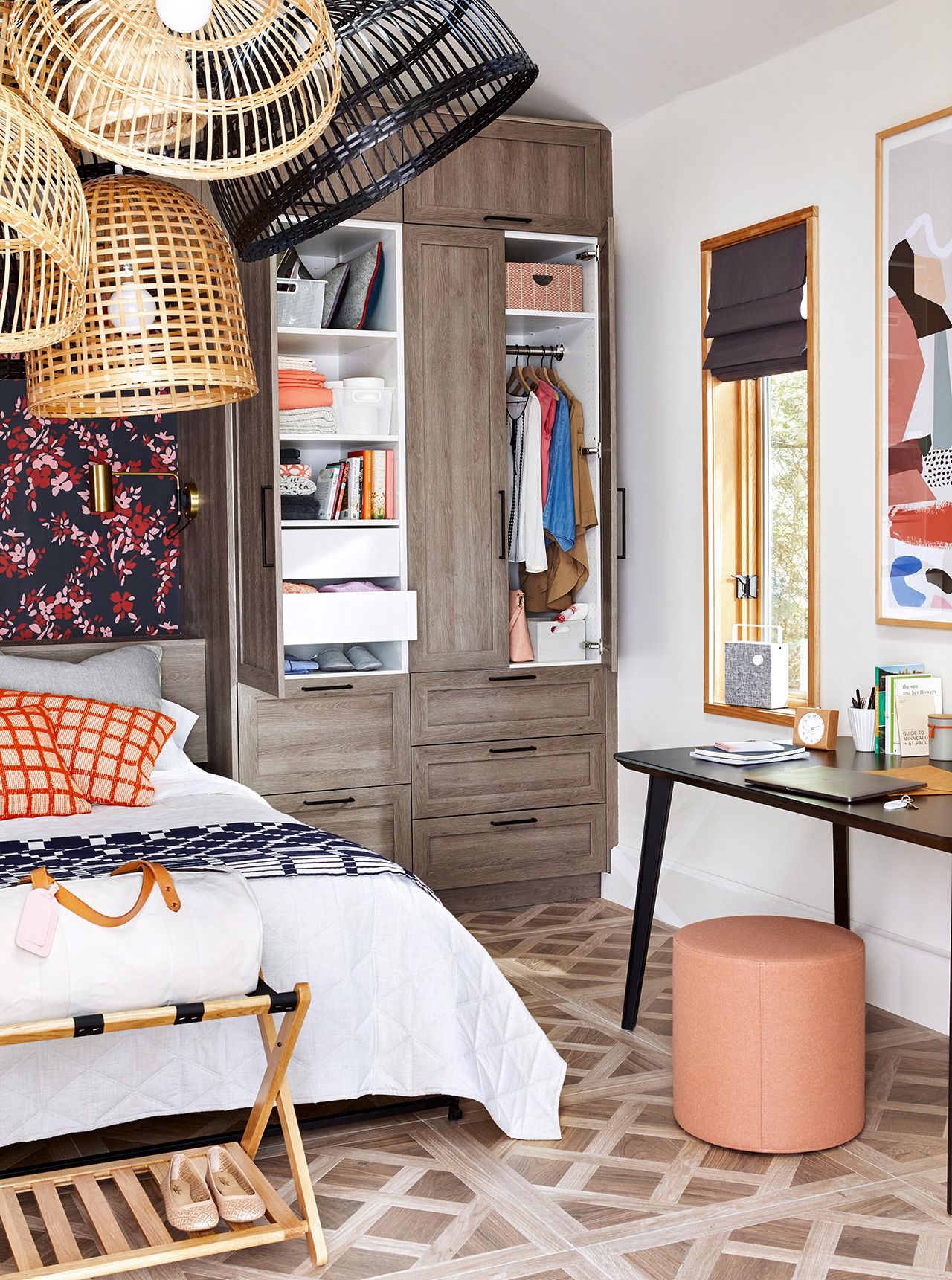
If you have the budget or DIY confidence, consider built-ins around the bed. Cabinets, shelves, and wardrobes can frame the sleeping area while adding huge amounts of storage. This works beautifully in small rooms because it turns one wall into a complete storage system.
21. Use a Garment Rack for Overflow Clothing
A garment rack can help if your closet is too small or nonexistent. Use it for capsule wardrobe pieces, work outfits, coats, or items you plan to wear soon. Keep it edited and intentional so it feels like a boutique display, not a laundry confession booth.
22. Store Shoes in Clear Boxes or Cubbies
Shoes can quickly take over the bedroom floor. Clear shoe boxes, cubbies, vertical racks, or under-bed shoe organizers keep pairs together and easy to find. Store special-occasion shoes higher or farther away, and keep daily shoes near the entrance or closet.
23. Add Hidden Storage in a Window Seat or Nook
If your bedroom has a bay window, alcove, or awkward nook, turn it into storage. A window seat with drawers or lift-top storage can hold bedding, books, or seasonal clothing while creating a cozy reading corner.
24. Use Vacuum Bags for Bulky Bedding
Comforters, extra pillows, and winter blankets take up a lot of space. Vacuum storage bags can compress bulky fabric items so they fit under the bed, on a closet shelf, or inside a storage bench. Use them for items you do not need every week.
25. Declutter Before You Organize
No storage product can save a bedroom from too much stuff. Before buying bins, take a serious look at what you own. Donate clothing you do not wear, recycle broken items, remove things that belong in other rooms, and keep only what supports your life now. Organization works best when storage follows decluttering, not the other way around.
Small Bedroom Storage Tips That Make a Big Difference
Small bedrooms reward strategy. Start by choosing furniture that earns its footprint. A bed with drawers, a dresser-nightstand, a wall-mounted desk, or a storage ottoman can reduce the number of pieces you need. Then look for unused vertical space: above the bed, above the dresser, behind the door, and inside the closet.
Keep the floor as clear as possible. A visible floor makes a small room feel larger, even when the square footage has not changed. Floating shelves, hooks, and wall lights all help by lifting storage off the floor. When you do use floor storage, choose pieces that close, roll, or tuck away neatly.
Finally, avoid overfilling every surface. Bedroom storage should make the room easier to live in, not turn it into a warehouse with pillows. Leave breathing room on shelves, dressers, and nightstands. Negative space is not wasted space; it is what makes the room feel calm.
Closet Organization Ideas for a More Functional Bedroom
A well-organized closet can transform the entire bedroom. Begin by grouping clothes by category: shirts, pants, dresses, jackets, workout clothes, and sleepwear. Then arrange each category by frequency of use. Daily items should be easiest to reach. Special-occasion pieces can live higher, lower, or farther back.
Use matching hangers, shelf dividers, drawer bins, and labels to make the system simple. If your closet has wasted space, consider adding a second rod, stacking drawers, or a shoe rack. If the closet is extremely small, move some items outside it intentionally. A dresser, garment rack, or under-bed bin can act as overflow storage without making the room feel chaotic.
The best closet system is the one you can maintain when you are tired. If a setup requires twelve steps and the patience of a monk, it will fail by Thursday. Make it easy to put things away, and your bedroom will stay organized longer.
Budget-Friendly Bedroom Storage Ideas
You do not have to spend a fortune to organize a bedroom. Start with what you already own. Shoeboxes can become drawer organizers. Spare baskets can hold accessories. A tray can turn dresser clutter into a tidy display. Hooks can create instant storage for bags and robes. Even rearranging furniture can reveal space you did not know you had.
When you do buy storage products, measure first. This is the least glamorous advice in the world, but it prevents heartbreak. Measure the space under the bed, the depth of drawers, the width of shelves, and the height of the closet. Storage that almost fits is just clutter wearing a price tag.
Choose versatile pieces when possible. Clear bins, neutral baskets, adjustable dividers, and modular shelves can move with you and adapt to different rooms. Trendy organizers are fun, but flexible storage wins in the long run.
Personal Experience: What Actually Works in Real Bedrooms
The biggest lesson from organizing bedrooms is that storage has to match real habits, not imaginary habits. Many people design systems for the person they wish they were: the person who folds laundry immediately, never drops clothes on a chair, and calmly labels every bin on a Sunday afternoon. That person sounds lovely. Most of us have never met them.
In real life, the best bedroom storage ideas are forgiving. For example, a lidded basket near the closet can hold clothes that have been worn once but are not ready for the laundry. This prevents the famous chair pile from becoming a permanent roommate. A small tray on the nightstand can hold the items you use every night, such as lip balm, glasses, a watch, and a phone charger. Without the tray, those items spread. With the tray, they look intentional. It is basically clutter with manners.
Under-bed storage is another solution that works when it is used correctly. The mistake is shoving random objects under the bed and calling it organization. The better method is to assign the space a clear purpose. One bin for winter sweaters. One bin for spare bedding. One bin for sentimental items. Label each one, and make sure the bins are easy to pull out. If accessing the storage requires Olympic-level crawling, you will not use it.
Closets also become easier when the most-used items are placed at eye level and within arm’s reach. Some people organize by color, which looks beautiful, but category usually works better for daily life. Put work shirts together, casual tops together, pants together, and outerwear together. If you want a prettier look, organize by color within each category. That gives you function and style without making mornings feel like a boutique inventory audit.
For small bedrooms, one of the most effective changes is removing unnecessary furniture. Two nightstands may look balanced, but if one of them blocks a closet door or makes the walkway too tight, it is not helping. A wall shelf, narrow dresser, or floating nightstand can do the same job with less bulk. The room should support movement, not require side-stepping like you are navigating a laser security system.
Another practical experience: labels are useful, but only when they are simple. “Winter bedding” works. “Textile-based seasonal sleep accessories” does not. Use plain language. The goal is to help your future tired self find things quickly.
Finally, the most organized bedrooms are maintained with small resets. Spend two minutes before bed returning items to their zones: clothes in the hamper or basket, books on the shelf, water glass out of the room, jewelry in the tray. This tiny routine prevents clutter from becoming a weekend project. Bedroom organization is not about creating a perfect showroom. It is about making your sleeping space easier to use, easier to clean, and nicer to wake up in.
Conclusion
A more organized bedroom does not require a dramatic makeover. It requires smart decisions about where things live. Use under-bed storage for seasonal items, add hooks where clutter gathers, choose furniture with hidden compartments, make your closet work harder, and give everyday items simple homes. When storage fits your habits, your bedroom becomes calmer, cleaner, and much easier to maintain.
The best part is that you can start small. Clear one drawer. Add one basket. Install one hook. Measure one shelf. Every improvement reduces visual noise and helps your bedroom feel more like a restful retreat and less like a storage unit with a pillow.