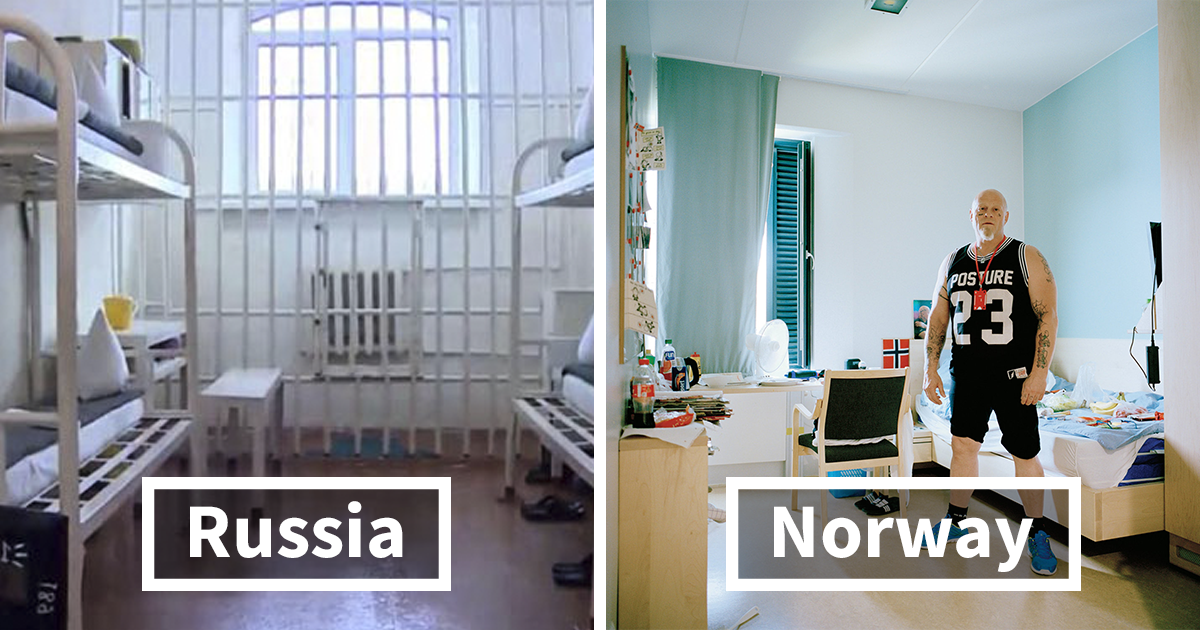
When most people picture a prison cell, they imagine the movie version: steel bars, a narrow bunk, a toilet in the corner, and exactly zero interior-design awards. Real prison cells do sometimes look like that. But around the world, the truth is far more varied, and often more revealing. A prison cell can look like a concrete box built for sensory deprivation, a crowded holding pen where privacy is basically a myth, or a simple but clean room with a window, desk, and even a small refrigerator.
That range is not random. It reflects something much bigger than architecture. It reflects what a country thinks prison is for. Is it mainly about punishment? Temporary containment? Total control? Rehabilitation? Cost-cutting? Political theater? In a way, a prison cell is a country’s justice philosophy squeezed into one room and handed a metal door.
This is why prison cells around the world can feel shockingly different. In some systems, especially in parts of Northern Europe, cells are designed to preserve dignity and resemble ordinary living spaces as much as security rules allow. In others, especially where overcrowding is severe, cells become less like rooms and more like compression chambers for human beings. Some are sparse but orderly. Others are chaotic, hot, loud, and packed beyond anything most people would consider remotely humane.
So if you have ever wondered what prison cells look like around the world, the short answer is this: they look like policy decisions made visible. The longer answer is far more interesting, and honestly, a lot less comfortable.
Why Prison Cells Look So Different From Country to Country
The design of a prison cell depends on several forces colliding at once. First, there is the country’s legal and political culture. Systems focused on rehabilitation tend to create cells with more privacy, natural light, and access to ordinary routines. Systems focused on deterrence and tight control often produce harsher, more stripped-down spaces.
Second, there is money. Prisons are expensive to build, staff, and maintain. Wealthier countries can invest in better-designed facilities, but even rich nations do not always choose to do so. A sleek cell is never just a budget issue; it is also a values issue.
Third, there is overcrowding, which changes everything. A country may have rules on paper about sanitation, bedding, and square footage, but once too many people are pushed into too little space, the cell stops functioning as intended. The room may still have walls and a door, but the experience becomes something else entirely: less room, less air, less sleep, less privacy, less calm.
And finally, there is classification. Even within one country, prison cells are not one-size-fits-all. A minimum-security facility may use dorm-style housing. A medium-security prison may rely on shared cells or cubicles. A high-security prison is more likely to use single- or double-occupancy cells with tighter movement controls. Solitary confinement or restrictive housing creates another category altogether, with cells designed not for living, but for isolation.
The Main Types of Prison Cells Around the World
Single-Occupancy Cells
These are the classic one-person prison rooms. In more humane systems, they may include a bed, desk, private toilet, shelving, and a decent window. In harsher systems, the same category can mean a concrete room with very little furniture, limited light, and almost no meaningful activity.
Shared Cells
Many prisons around the world place two or more people in one cell. That can range from manageable to miserable in a hurry. A shared cell might be simply compact, or it might be severely overcrowded, noisy, and tense. Once occupancy climbs too high, the room stops being a cell and starts acting like a pressure cooker.
Dorm-Style Housing
Some lower-security facilities use dormitories, cubicles, or barracks-style units instead of traditional cells. In the United States, for example, lower-security federal institutions often rely on dormitory or cubicle housing, while higher-security facilities use cell-type housing. Dorms can feel less restrictive, but they also reduce privacy and can be difficult to manage when staffing is thin.
Restrictive Housing or Solitary Cells
This is the harshest end of the spectrum. These cells are often small, sparse, and designed for near-total separation from others. The problem is not just the room itself, but the regime around it: little human contact, limited property, reduced stimulation, and long hours alone. In practical terms, the architecture and the schedule team up to make the experience punishing.
What Prison Cells Look Like in the United States
The United States does not have one standard prison cell. It has a whole menu, and not all of the options are good. At the federal level, minimum-security camps often use dormitory housing with fewer barriers and more program orientation. Low-security facilities also tend to use dorms or cubicles. Medium-security prisons shift toward cell-type housing, and high-security penitentiaries often use multiple- and single-occupant cells with tighter controls and more fortified perimeters.
That means an American prison “cell” might be a bunk in an open dorm, a two-man room behind a solid door, or a single concrete enclosure in restrictive housing. The contrast is dramatic, and so are the conditions.
In restrictive housing, the image becomes much darker. Cells are often small, bare, and isolated, with limited natural light and little sensory stimulation. People may spend around 23 hours a day in the cell, with only brief time outside for exercise, often in another confined space. Even in jails, some people who are not officially in solitary are effectively kept in their cells 22 hours or more a day because of space limits and staffing patterns. So when people ask what prison cells look like in America, the honest answer is: sometimes a room, sometimes a warehouse slot, and sometimes a concrete pause button on a human life.
Norway and the Scandinavian Model: Cells That Resemble Real Rooms
Now for the prison equivalent of plot twist music. In Norway, some prison cells look less like cages and more like spare dorm rooms. The most famous example is Halden Prison, where rooms have been described as including flat-screen TVs, mini-fridges, desks, and design choices meant to bring in more natural light. Shared kitchens and common areas are also part of the model in some units, reinforcing the idea that prison should prepare people for life outside, not just punish them inside.
This approach comes from a philosophy often called “normalization.” The basic idea is that life inside prison should resemble life outside as much as safely possible. Prisoners are still deprived of liberty, but not of every ordinary human routine. That means less visual hostility, more privacy, and a stronger emphasis on education, work, and reintegration.
To many outsiders, these cells look almost too decent. Cue the inevitable “that looks nicer than my first apartment” joke. But the point is not luxury. It is function. If prison is supposed to reduce future harm, environments that maintain dignity and routine may work better than environments built to humiliate. Not every Scandinavian facility looks identical, and even Norway has faced recent pressure from understaffing and longer lock-in times. Still, the broader model remains a global contrast point.
Japan: Sparse, Orderly, and Intensely Controlled
Japanese detention cells, at least in some widely reported facilities, show another model entirely. These rooms are typically austere and highly organized. A solitary cell may contain only the basics: a toilet, folded bedding, a shelf, a sink, and a small window showing a patch of sky. Meals are simple, and the overall aesthetic is less “comfortable room” and more “strictly controlled minimalism.”
What stands out in Japan is not overcrowded visual chaos or Scandinavian coziness. It is discipline. The room itself can appear clean and orderly, yet emotionally cold. It communicates rules before comfort. For some observers, that makes the space look less brutal than the harshest examples elsewhere. For others, it feels sterile in a way that still underscores confinement and psychological pressure.
So yes, some prison cells in Japan may look more polished than the grimmest facilities in other countries, but the spare design should not be confused with softness. Minimalism can still be strict. A clean room can still be a very controlled room.
Brazil: Overcrowding Changes the Entire Meaning of a Cell
Brazil shows what happens when prison cells are overwhelmed by overcrowding and gang power. In these conditions, it almost stops making sense to discuss a cell as an individual room, because the defining feature becomes density. Overcrowded prisons turn sleeping, eating, washing, and surviving into a shared struggle.
Reports from Brazil have long described prisons where crowding feeds violence and gang recruitment. In that kind of environment, the question is not whether the room has a desk or enough light. The question is whether there is floor space, air circulation, or any realistic measure of safety. A cell built for a certain number of people becomes a cramped ecosystem of heat, noise, tension, and hierarchy.
This matters because overcrowding does not just make prison cells look worse. It changes what they do. The room becomes a place where disease spreads faster, sleep becomes harder, and control can shift away from the state and toward stronger prisoners or gangs. Once that happens, the “cell” is no longer just a room assigned by administrators. It is territory.
El Salvador: Cells Built for Mass Confinement
If Norway represents the dignity-first model, El Salvador’s CECOT has become the global symbol of the opposite instinct: maximum control, maximum spectacle, maximum capacity. The mega-prison was built to hold tens of thousands of people, and reported descriptions of the cells emphasize large-capacity confinement rather than personal space. In some accounts, each cell can hold roughly 65 to 70 prisoners.
That number tells you almost everything. These are not cells designed around privacy, daily routine, or rehabilitation. They are designed around containment. The visual message is stark and unmistakable: this is incarceration as mass discipline. Whether one sees that as effective, alarming, or both, the architecture itself is part of the politics. The cell is the message.
And that is why images from El Salvador travel so widely online. They are not just pictures of prison. They are political branding with concrete floors.
Western Europe Beyond Norway: Privacy, Bathrooms, and Daily Life
Norway is the celebrity example, but it is not the only European country where prison cells look different from the American stereotype. In parts of Western Europe, prisoners may sleep in individual rooms with private bathrooms, wear their own clothes, cook food, and live in facilities that try to mimic ordinary life more closely. The rooms are still secure, of course, but the design aims to reduce degradation rather than intensify it.
This does not mean European prisons are perfect. They are not. Some countries in Europe are also struggling with overcrowding, staffing shortages, and rising pressure on prison systems. But the overall comparison still matters. A cell with a bathroom door, a proper window, and room to think sends one message. A bare box with constant surveillance sends another.
What Cell Design Reveals About a Justice System
Prison cells are never just about furniture. They reveal what a justice system thinks a person deserves once convicted or detained. If the room includes privacy, light, and some ordinary daily routines, the system may be signaling that incarceration is the punishment, not the beginning of endless humiliation. If the room is tiny, overcrowded, windowless, or isolation-heavy, the signal is different: control comes first, and human dignity is negotiable.
That difference matters because prison architecture shapes behavior. Cells affect sleep, stress, hygiene, mental health, conflict, and a person’s ability to regulate emotion. They also affect staff. A tense, noisy, overcrowded housing unit is not only harder on prisoners. It is harder on the officers working there, which can create a feedback loop of fear, burnout, and stricter control.
In other words, a prison cell is not just where punishment happens. It is where future outcomes begin. The room can support routine and reentry, or it can intensify trauma and instability. Walls matter.
Common Myths About Prison Cells Around the World
Myth 1: All prison cells are basically the same
Not even close. A high-security single cell in the United States, a minimalist detention room in Japan, a private room in Norway, and a severely overcrowded cell in Brazil or El Salvador represent completely different living realities.
Myth 2: A nicer-looking cell means prison is easy
No. A humane room is still a prison room. The loss of freedom remains real. The difference is that some systems do not add unnecessary degradation on top of that punishment.
Myth 3: Harsh cells automatically create safer societies
The evidence is far more complicated than the political slogans. Brutal conditions may satisfy public anger, but they can also worsen mental health, fuel violence, and make successful reentry harder.
Myth 4: Overcrowding is just an inconvenience
Overcrowding is not a minor comfort issue. It affects sanitation, sleep, access to healthcare, safety, and the basic function of the prison itself. Once too many people are placed in too little space, the architecture stops doing its job.
Experiences Inside Prison Cells Around the World
To understand what prison cells look like around the world, it helps to go beyond the floor plan and think about daily experience. A room is never just a room when someone cannot leave it. The same square footage can feel radically different depending on what happens inside it, how long someone stays there, who shares it, and whether the space allows even a sliver of privacy or calm.
In solitary or restrictive housing, the experience is often defined by repetition and sensory deprivation. The cell may be small, concrete, and sparsely furnished, with hard surfaces, little color, and limited natural light. Time starts to behave strangely in a space like that. Hours stretch. Small sounds become enormous. The clank of doors, the shuffle of boots, the buzz of lights, and the absence of conversation can feel louder than a crowd. Even when the room itself is technically clean, it can feel psychologically airless. The problem is not just what is in the cell. It is what is missing: movement, touch, meaningful human contact, and the ordinary friction of daily life that reminds people they still belong to the world.
In overcrowded prisons, the experience flips. Instead of too little stimulation, there is too much. Too much noise, too little sleep, too many bodies, too little air. A crowded cell can feel hot, restless, and permanently tense. Privacy disappears almost immediately. Eating, sleeping, using the toilet, and trying to think all happen under the pressure of other people’s presence. In some of the harshest reported conditions, people describe improvised bathroom arrangements, vermin, sickness, and the physical discomfort of being packed together for long periods. In those settings, the cell stops feeling like a room and starts feeling like survival machinery.
Then there are systems where the room is intentionally designed to reduce stress. In parts of Scandinavia and Western Europe, the prison cell may have a proper bed, a desk, a window that lets in real daylight, and a bathroom with some measure of privacy. That does not erase the punishment of incarceration, but it changes the rhythm of daily life. A person can read at a desk instead of balancing a book on a bunk. They can sleep without constant crowd noise. They may prepare food, speak more normally with staff, and move through routines that resemble outside life. That can sound modest, even boring, but boring is underrated. In prison, boring can mean stable. Stable can mean safer. Safer can mean a better chance of returning to society without carrying quite so much damage.
What people remember most about cells is often surprisingly basic: light, noise, smell, temperature, and the ability to use the toilet without humiliation. Those details do not make headlines as often as escape attempts or crime crackdowns, but they define the lived reality of confinement. A narrow window showing a bit of sky can matter. So can a door on a bathroom. So can being able to sleep without someone six inches away on the floor. These are not luxury upgrades. They are the building blocks of dignity.
That is the strangest and most important thing about prison cells around the world: they may look like architecture, but they are really experiences. They shape whether incarceration feels like strict routine, grinding chaos, or near-total isolation. And once you understand that, the room starts to look less like background scenery and more like one of the main characters in the story.
Final Thoughts
So, what do prison cells look like around the world? They look like wildly different answers to the same question: what should happen to a person once the door closes?
In some countries, the answer is order with dignity. In others, it is austerity and discipline. In others still, especially where overcrowding dominates, the cell becomes a blunt instrument of compression and control. The differences are physical, yes, but they are also moral and political.
That is why prison-cell comparisons matter. They do not just show us which countries have nicer rooms or harsher facilities. They show us how justice gets translated into walls, windows, toilets, bunks, and the tiny daily details that shape a person’s life behind bars. And once you see that, a prison cell no longer looks like just a room. It looks like a system in miniature.