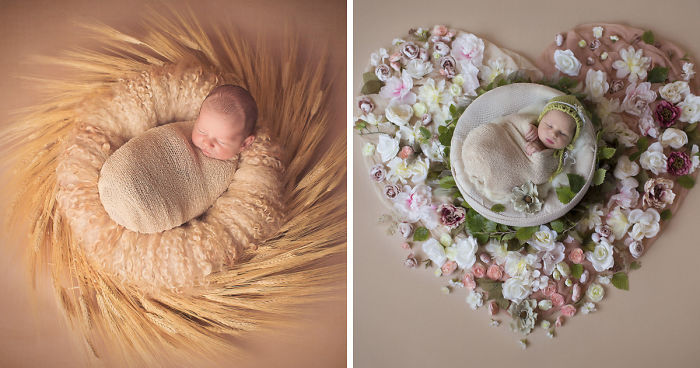
There is something quietly magical about a sleeping baby placed at the center of a handmade mandala. The whole scene feels like a tiny universe: soft cheeks, curled fingers, petals, fabric, leaves, shells, yarn, and color moving outward in perfect balance. It is part newborn photography, part handmade art, and part “please nobody sneeze near my flower arrangement.”
When I photograph babies surrounded by my handmade mandalas, I am not simply decorating a background. I am building a visual story around a new life. A mandala naturally pulls the eye toward the center, and in these portraits, the baby becomes that center: calm, delicate, loved, and beautifully present. The circular shape suggests wholeness, family, beginnings, and the gentle rhythm of life. That symbolism is exactly why mandala newborn portraits feel so emotional, even before anyone explains them.
This style of creative newborn photography combines careful planning, safe baby handling, handmade design, color theory, and patience. Lots and lots of patience. Babies do not read mood boards. They do not care that the peach flowers match the ivory wrap. They will yawn, stretch, hiccup, wiggle, and occasionally make the kind of face that says, “I have reviewed your artistic concept and would prefer milk.”
What Makes Baby Mandala Photography So Special?
Baby mandala photography is different from a standard newborn session because the set is built as a complete art piece. Instead of using only a blanket, basket, or simple backdrop, the photographer creates a circular arrangement around the baby. The design may include handmade paper flowers, soft textiles, seasonal leaves, dried botanicals, lace, shells, wooden beads, felt shapes, or other carefully chosen props.
The result is a portrait that feels intentional from edge to edge. Every petal, fold, and curve points back to the baby. The mandala does not compete with the newborn; it frames the baby’s innocence. A strong mandala setup can turn a simple sleeping pose into a keepsake that feels almost ceremonial.
The Meaning Behind the Mandala
The word “mandala” is often associated with circular designs used in spiritual, artistic, and meditative traditions. In visual terms, mandalas are built around balance, repetition, symmetry, and a central point. In baby portraits, that central point becomes deeply symbolic. A newborn represents a beginning, and the circle around the baby can suggest protection, connection, love, hope, and family unity.
That is why handmade mandala newborn photography works so well emotionally. Parents are not just seeing a cute baby photo. They are seeing their child surrounded by care. The pattern becomes a visual hug. And honestly, if a photograph can look like a hug, it has done its job.
How I Design Handmade Mandalas for Newborn Photography
Every mandala begins before the baby arrives. I usually start with a theme, a color palette, and a feeling. Some families want soft neutrals: cream, beige, pale gray, and dusty pink. Others love bold seasonal color, such as autumn gold, spring green, lavender, or ocean blue. The best setups are not random piles of pretty things. They are planned like a painting.
First, I choose the central wrap or blanket where the baby will rest. This base must be soft, clean, and comfortable. Then I build outward in rings. The first ring might include delicate fabric folds or handmade paper petals. The second ring may introduce texture, such as lace, felt, dried leaves, or small flowers placed safely away from the baby’s face and hands. The outer ring usually carries the strongest visual rhythm, helping the whole portrait feel complete.
Choosing Colors That Flatter the Baby
Color matters more than most people think. Newborn skin can have pink, red, yellow, or peach tones depending on age, lighting, and temperature. Soft, muted colors usually photograph beautifully because they do not overpower the baby. Cream, oatmeal, sage, blush, dusty blue, and warm beige are reliable favorites.
That does not mean bright colors are forbidden. A mandala with coral flowers, golden leaves, or deep teal fabric can be stunning when balanced carefully. The trick is to let the baby remain the star. If the first thing people notice is the prop instead of the child, the design needs editing. In newborn photography, restraint is not boring; it is elegant.
Using Natural and Handmade Elements
Handmade baby photography props add warmth because they feel personal. Paper flowers, crocheted circles, hand-cut stars, felt leaves, and folded fabrics create texture without needing heavy or unsafe objects. Natural materials can also work beautifully, especially flowers, leaves, shells, feathers, and smooth stones placed well away from the baby.
However, “natural” does not automatically mean safe. Fresh flowers may have pollen. Dried plants can crumble. Small shells or beads can become choking hazards. Anything used in a baby mandala setup must be clean, stable, and positioned so it cannot touch the baby’s mouth, nose, eyes, or fingers. The photograph may look dreamy, but the safety checklist should be extremely awake.
Newborn Photography Safety Comes First
No portrait is worth making a baby uncomfortable or unsafe. The most important rule in newborn mandala photography is simple: the baby is always more important than the picture. If the baby needs feeding, changing, soothing, or a break, the camera can wait. The mandala will survive. The photographer’s ego will also survive, though it may need a snack.
During a session, a parent or assistant should always stay within arm’s reach of the baby. The baby should never be left unattended on a posing surface. Props should be lightweight, clean, and placed securely. The baby’s head, neck, and body must be supported at all times. Any pose that requires force, pressure, or awkward positioning should be skipped immediately.
Comfort, Warmth, and Cleanliness
Newborns are sensitive to temperature, light, sound, and handling. The room should be comfortably warm, but not overheated. Blankets and wraps should be breathable and not too tight. Hands should be washed before handling the baby, and fabrics should be freshly laundered with baby-safe practices in mind.
Soft bedding, loose blankets, and decorative props used in photography should never be confused with safe sleep recommendations. A styled photo setup is a supervised, temporary environment for a portrait only. Once the photo is done, the baby should return to a safe sleep space following pediatric guidance: on the back, on a firm, flat surface, without loose bedding or soft objects.
Why Simple Poses Often Work Best
The beauty of mandala newborn photography is that the design does much of the storytelling. The baby does not need to be folded into complicated positions. A simple wrapped pose, side-lying pose, or relaxed back pose can be more powerful than an elaborate arrangement. Natural newborn posture is already beautiful. Tiny hands near the chin, sleepy lips, curled feet, and soft breathing are enough.
Simple poses also help keep the session calm. A peaceful baby photographs better than a baby who has been moved too much. The best newborn portraits often happen when everyone in the room slows down.
Lighting for Handmade Mandala Baby Portraits
Lighting can make or break a mandala portrait. Soft light works best because it flatters newborn skin and preserves the gentle mood of the image. Window light, diffused studio light, or bounced light can create a smooth look without harsh shadows. Direct sunlight is usually too strong, especially for delicate baby skin and pale props.
Because mandala setups are often photographed from above, even lighting across the whole arrangement is important. If one side of the circle is bright and the other is dark, the design may look uneven. I like to check the entire frame before placing the baby in the center. It is much easier to fix a shadow before a newborn is settled than after the baby finally falls asleep and everyone in the room is moving like they are defusing a tiny adorable bomb.
Composition: The Baby Is the Center of the Story
A mandala naturally creates a strong composition because it leads the viewer’s eye inward. Still, the camera angle must be precise. Shooting from directly above gives the cleanest circular effect. The camera should be level, the baby should be centered, and the outer rings should be balanced on all sides.
Negative space can also be helpful. Not every inch of the frame needs decoration. A little breathing room around the design makes the portrait feel softer and more professional. Overcrowding the mandala can make the image look busy, and nobody wants a newborn portrait that visually shouts, “Craft store explosion, aisle seven.”
Creative Newborn Mandala Ideas
There are endless ways to personalize handmade mandala baby photos. The best ideas usually come from the family’s story, the season, or the baby’s nursery colors. Here are a few examples that work beautifully:
Seasonal Mandala Portraits
A spring mandala might use soft greens, white blossoms, and pale yellow accents. A summer setup could include airy linens, tiny shells, and ocean-inspired blue tones. Fall is perfect for warm leaves, burnt orange, mustard, cream, and cinnamon-colored fabric. Winter mandalas can feel magical with ivory textures, silver-gray details, and snowflake-like paper patterns.
Family-Inspired Mandalas
Some mandalas can quietly reflect a family’s heritage, hobbies, or favorite places. A family who loves the beach may choose shells and sandy neutrals. Gardeners may prefer flowers and leaf shapes. Musicians might include soft visual hints like circular paper notes placed safely in the outer ring. The key is subtlety. A baby portrait should not become a garage sale of family interests.
Minimalist Mandalas
Not every mandala needs hundreds of pieces. A minimalist design with one wrap, one floral ring, and a clean background can be breathtaking. Sometimes the simplest handmade mandalas feel the most timeless because they let the baby’s features shine.
Editing Without Losing the Handmade Feeling
Editing is important, but it should not erase the real beauty of the scene. I prefer gentle retouching: softening temporary redness, adjusting exposure, balancing color, and cleaning small distractions. The goal is to polish the image, not turn the baby into a porcelain doll or the mandala into digital wallpaper.
One reason handmade mandalas are so charming is that they are not perfectly mechanical. A petal may tilt slightly. A fabric fold may curve in a unique way. These tiny imperfections make the portrait feel human. They remind viewers that someone made this scene by hand, with care, time, and probably a floor covered in craft supplies.
Why Parents Love Mandala Newborn Portraits
Parents love these images because they feel meaningful. The newborn stage passes quickly. Babies change from one week to the next, sometimes from one nap to the next. A mandala portrait freezes that fleeting softness inside a design that feels permanent and symbolic.
These portraits also make beautiful wall art. A circular composition looks striking in a nursery, hallway, or family gallery wall. Unlike trendy props that may feel dated later, a well-designed mandala can remain timeless because it is built on balance, emotion, and simplicity.
My Experience Photographing Babies Surrounded by Handmade Mandalas
My experience with handmade mandala baby photography has taught me that the best images are created long before the shutter clicks. They begin with listening. I ask parents about colors they love, nursery details, meaningful flowers, family traditions, and the feeling they want the portrait to carry. Some parents want calm and angelic. Some want joyful and colorful. Some say, “We trust you,” which is both flattering and mildly terrifying because now my brain immediately opens 47 creative tabs at once.
Once I have a direction, I start building the mandala in my mind. I think about the baby as the center, then imagine how each ring will support that center. I may test paper flowers on the floor, swap fabrics three times, remove half the props, then add one tiny detail that suddenly makes the whole design click. Handmade mandalas are slow work. A setup can take hours, especially when symmetry matters. But that slow process is part of the joy. It feels almost meditative.
On session day, flexibility becomes just as important as planning. Babies have their own schedule, and it is usually not synced with mine. I have learned to prepare everything before the baby is placed in the setup. The lighting is tested, the camera settings are ready, the wrap is chosen, and the mandala is arranged. That way, once the baby is settled, I can work calmly and efficiently.
Some of my favorite moments happen between the planned shots. A baby opens one eye as if inspecting the artwork. A tiny hand escapes the wrap and lands perfectly near the cheek. A parent whispers, “That looks like her grandmother’s garden.” Those are the moments that remind me this work is not only about photography. It is about memory.
I have also learned that less can be more. Early on, it is tempting to add every beautiful object within reach. Flowers! Ribbons! Leaves! More flowers! Suddenly the baby looks like a very sleepy centerpiece at an ambitious wedding. Over time, I discovered that strong design needs editing. Every item must earn its place. If a prop does not support the baby, the color palette, or the story, it has to go.
Safety has become the foundation of my process. I never place small objects near a baby’s mouth or hands. I avoid heavy props close to the body. I keep the room comfortable, watch for signs of stress, and pause whenever the baby needs care. A beautiful photo is wonderful, but a calm and protected baby is the real success.
The most rewarding part is seeing parents react. Many arrive tired, emotional, and still adjusting to life with a newborn. When they see their baby resting peacefully at the center of a handmade mandala, their faces soften. The image gives shape to what they already feel: love, awe, gratitude, and the slightly stunned realization that this tiny person has rearranged the entire universe.
That is why I continue creating these portraits. Handmade mandalas allow me to combine craft, symbolism, photography, and storytelling in one frame. Each session is different because each baby is different. The colors change. The flowers change. The season changes. But the center remains the same: a new life, surrounded by love.
Conclusion
Photographing babies surrounded by handmade mandalas is more than a creative newborn photography trend. It is a thoughtful way to celebrate new beginnings, family connection, and the delicate beauty of early life. A well-made mandala portrait combines safe posing, soft lighting, handmade details, balanced composition, and emotional storytelling.
The magic comes from the contrast: a tiny newborn at the center of a carefully built world. The baby brings softness. The mandala brings structure. Together, they create a portrait that feels peaceful, personal, and full of meaning. And yes, sometimes the baby will wake up exactly when the final petal is placed. That, too, is part of the art.
Note: Decorative mandala photography setups should always be supervised and used only for portrait sessions. They are not safe sleep environments.