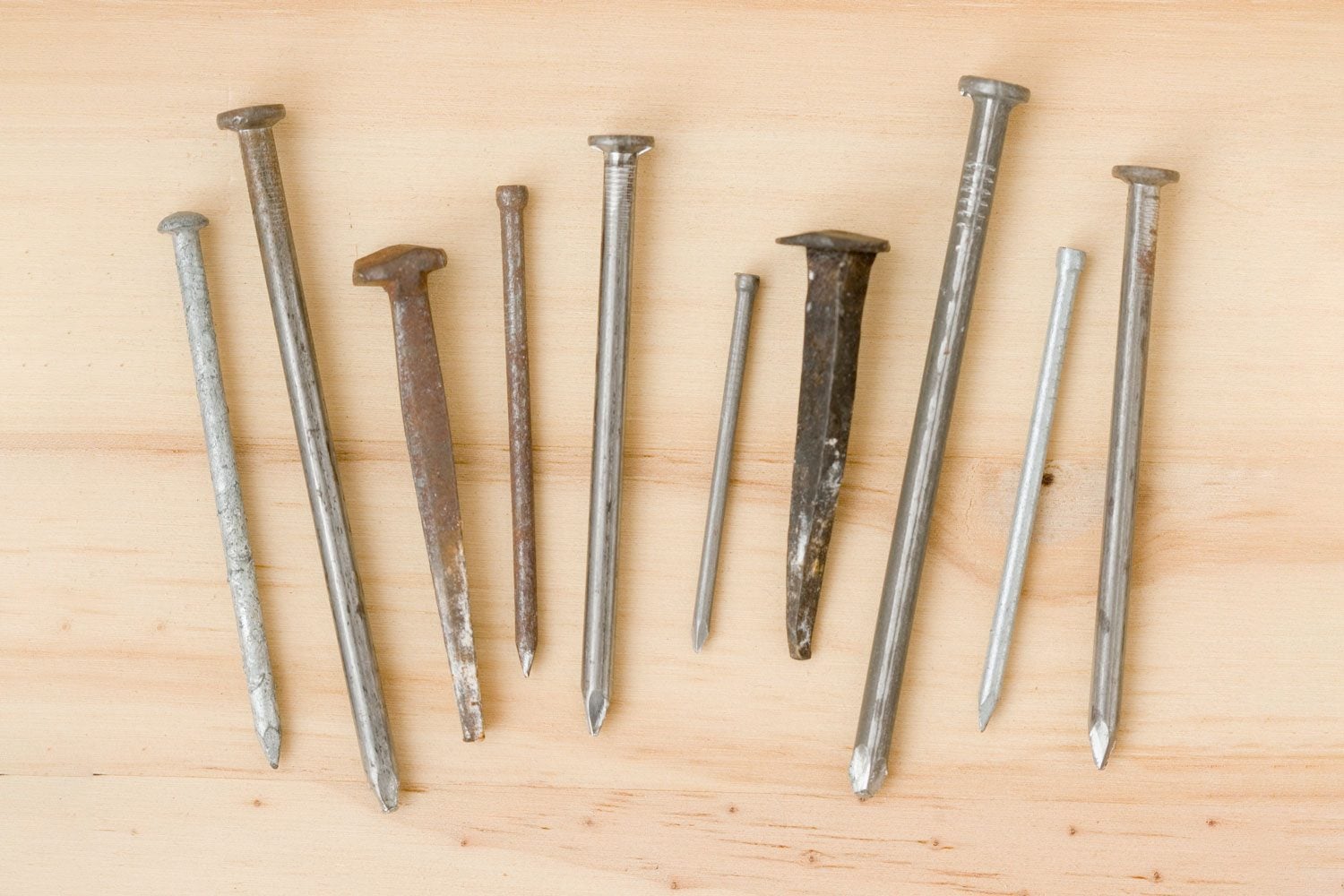
Walk into the fastener aisle and you may feel like you have accidentally opened a secret carpenter codebook. There are 8d nails, 10d nails, 16d nails, box nails, common nails, finish nails, sinkers, galvanized nails, ring-shank nails, and enough tiny metal points to make your shopping cart nervous. The most confusing little character in the whole lineup is usually the letter “d.” What does it mean? Diameter? Depth? “Don’t hit your thumb?”
Here is the short answer: the “d” in nail sizes stands for “penny.” A 16d nail is called a sixteen-penny nail. An 8d nail is called an eight-penny nail. The letter comes from the old abbreviation for penny, which traces back to the Latin word denarius, a Roman coin. Today, the penny system is mainly a traditional way to describe nail length, not the price of nails.
That tiny letter has a long history, but it still matters in modern woodworking, framing, remodeling, and DIY projects. Understanding it helps you choose the right nail without guessing, overbuilding, splitting boards, or standing in the hardware store pretending to read the label while secretly Googling it under fluorescent lighting.
The Meaning of “D” in Nail Sizes
In nail sizing, “d” is pronounced “penny.” So when a package says 8d common nails, it means eight-penny common nails. A package labeled 16d sinker nails means sixteen-penny sinker nails. The number before the “d” generally increases as the nail gets longer.
The “d” does not stand for diameter, depth, duty, density, or deluxe. It is not a modern engineering abbreviation. It is a leftover from older British money notation, where “d” represented pennies because of the Roman denarius. That old abbreviation traveled into the nail trade and somehow survived into modern American hardware stores like a tiny historical fossil hiding on a box of fasteners.
In practical terms, the penny system gives you a quick length reference. For example, an 8d nail is typically 2 1/2 inches long, while a 16d nail is typically 3 1/2 inches long. Larger penny numbers usually mean longer nails, although diameter and shank style can vary by nail type.
Why Are Nails Measured in Pennies?
The penny system dates back to a time when nails were handmade and sold by quantity. One common explanation is that the penny number originally referred to the cost of a hundred nails. Under that idea, one hundred 8-penny nails cost eight pence, and one hundred 16-penny nails cost sixteen pence. Larger nails required more iron and more labor, so they cost more.
Another historical explanation connects the penny number to weight, such as how many pounds a thousand nails weighed. Either way, the system began as a pricing or trade shorthand, not as a clean modern measurement system. Over time, the original pricing meaning faded, but the names stuck. Carpenters kept saying “8d” and “16d,” manufacturers kept printing it, and now we all get to enjoy a small medieval accounting lesson every time we build a shed.
Common Nail Penny Sizes and Lengths
Today, penny size most often refers to nail length. The chart below shows common nail sizes and their typical lengths. Always check the package, because specialty nails, collated nails, sinkers, and certain manufacturer-specific products may vary.
| Penny Size | Spoken As | Typical Length | Common Uses |
|---|---|---|---|
| 2d | Two-penny | 1 inch | Small trim, crafts, delicate work |
| 3d | Three-penny | 1 1/4 inches | Light trim and small woodworking |
| 4d | Four-penny | 1 1/2 inches | Trim, molding, light fastening |
| 5d | Five-penny | 1 3/4 inches | Cabinet work and small boards |
| 6d | Six-penny | 2 inches | Light framing, trim, thin boards |
| 8d | Eight-penny | 2 1/2 inches | Sheathing, subflooring, general fastening |
| 10d | Ten-penny | 3 inches | Framing, fencing, general construction |
| 12d | Twelve-penny | 3 1/4 inches | Heavier framing and structural fastening |
| 16d | Sixteen-penny | 3 1/2 inches | Framing walls, studs, plates, joists |
| 20d | Twenty-penny | 4 inches | Heavy framing and timber work |
| 30d | Thirty-penny | 4 1/2 inches | Posts, beams, heavy lumber |
| 40d | Forty-penny | 5 inches | Heavy timber construction |
| 60d | Sixty-penny | 6 inches | Large timbers and heavy-duty work |
Does Penny Size Tell You Nail Diameter?
Not exactly. Penny size gives a traditional length category, but it does not tell the whole story. A nail also has a gauge, shank diameter, head style, point, coating, and sometimes rings or threads. These details matter because they affect holding power, splitting risk, corrosion resistance, and whether the nail is right for the job.
For example, a 16d common nail is usually 3 1/2 inches long and has a thicker shank than a 16d box nail. A 16d sinker may be slightly shorter and thinner than a 16d common nail, depending on the product. A 16d finish nail has a much smaller head because it is made to disappear into trim, not to hold wall framing together like a tiny steel bodybuilder.
This is why the full label matters. “16d” alone is helpful, but “16d common,” “16d box,” “16d sinker,” and “16d finish” are not identical fasteners. They may share a penny size, but they are built for different tasks.
Common Nails vs. Box Nails vs. Sinker Nails
Common Nails
Common nails are the sturdy workhorses of framing and general construction. They have a relatively thick shank and a flat head. Because of their thickness, they offer strong shear resistance and holding power, but they can also split thinner or more delicate lumber if used carelessly.
Box Nails
Box nails are thinner than common nails of the same penny size. That thinner shank makes them useful when splitting is a concern, such as with thinner boards or lighter construction. The trade-off is that they generally have less strength than common nails of similar length.
Sinker Nails
Sinker nails are popular for framing, especially when using a hammer. They often have a coating that helps them drive more smoothly and may add a bit of holding power. Many sinkers are slightly thinner than common nails, and some are slightly shorter for the same penny size. This is why builders pay attention to both penny size and exact dimensions.
Finish Nails
Finish nails are designed for appearance. They have small heads that can be set below the wood surface and covered with filler. They are great for trim, casing, baseboards, and molding, but they are not meant for structural framing. A finish nail is the polite guest at the woodworking party; a common nail is the one carrying the refrigerator.
How to Choose the Right Nail Size
Choosing the right nail is not just about grabbing the biggest one in the bin. Bigger is not always better. Too short, and the nail may not hold. Too long, and it may poke through the other side like an unwanted metal whisker. Too thick, and it may split the wood. Too thin, and the connection may be weak.
A useful rule for many non-engineered woodworking jobs is to choose a nail long enough to pass through the thinner piece and bite securely into the thicker piece. Many DIYers use the “three times the thickness” rule as a rough guide: the nail should be about three times as long as the top board is thick. For example, when fastening 1/2-inch material, a 1 1/2-inch nail may be a reasonable starting point. However, structural work, decks, framing, roof sheathing, and code-regulated projects should follow local building codes, approved plans, or manufacturer instructions.
When in doubt, read the label carefully. Look for the penny size, length in inches, shank diameter, nail type, coating, and intended use. If you are working with treated lumber or exterior materials, choose nails with proper corrosion resistance, such as hot-dipped galvanized or stainless steel, depending on the project requirements.
Practical Examples: What Size Nail Should You Use?
For Wall Framing
Sixteen-penny nails are commonly associated with framing because a 16d common nail is typically 3 1/2 inches long. That length works well for joining 2x framing members in many traditional applications. Some framers use 16d sinkers or pneumatic framing nails, but exact dimensions matter, especially when a code table or engineered plan specifies a particular nail.
For Sheathing
Eight-penny nails are often used for wall, roof, or subfloor sheathing. A typical 8d common nail is 2 1/2 inches long. In structural panel work, spacing also matters. The required pattern may call for certain spacing at panel edges and field areas. Translation: the size of the nail matters, but so does where you put it.
For Trim and Molding
Smaller nails, brads, or finish nails are better for trim. You usually want a clean appearance and enough hold without splitting the wood. In this world, gauge and head style may be more useful than penny size. A finish nailer may list nails by inches and gauge rather than by the old penny system.
For Fences and Outdoor Projects
Outdoor work brings moisture, weather, and corrosion into the conversation. Galvanized or stainless nails are often used for fences, decks, siding, and exterior trim. The right nail length still matters, but the coating may be just as important. A nail that rusts too quickly can stain wood, weaken the connection, and make your project look older than a haunted barn.
Why the Penny System Can Be Confusing
The penny system is useful because it is short and familiar to builders, but it is not perfectly intuitive. A 10d nail is not ten inches long. A 16d nail does not have a 16-inch diameter. A higher number generally means a longer nail, but nail type changes the diameter and sometimes even the exact length.
The system also overlaps with modern product labels. Many nails today are sold with both penny size and inch length, such as “8d x 2 1/2 in.” Pneumatic nailer fasteners may be listed primarily by length, diameter, collation angle, shank style, and coating. That is often more precise than penny size alone.
The best way to avoid confusion is to treat penny size as the quick nickname and the actual dimensions as the final answer. If the box says 10d, great. If it also says 3 inches by 0.148 inch, even better. That is the kind of detail that keeps projects sturdy and inspectors calm.
Quick FAQ About the “D” in Nail Sizes
What does 16d mean?
It means sixteen-penny. A typical 16d common nail is 3 1/2 inches long and is widely used in framing and other heavy construction tasks.
What does 8d mean?
It means eight-penny. A typical 8d nail is 2 1/2 inches long and is commonly used for sheathing, subflooring, and general fastening.
Is the “d” uppercase or lowercase?
Traditionally, it is lowercase: 8d, 10d, 16d. Many product labels use uppercase “D,” especially in retail packaging, but the meaning is the same.
Does “d” mean pennyweight?
People sometimes call the system pennyweight, but in nail sizing it is best understood as the traditional penny designation. It is not a precise modern measure of weight, diameter, or gauge.
Are penny sizes still used?
Yes, especially in the United States. However, many manufacturers also list nail length in inches and diameter in decimal inches because those measurements are clearer.
Field Notes: Real-World Experiences With Nail Sizes
The first lesson many people learn about nail sizes is that the “right” nail is rarely the one that simply looks toughest. A 16d common nail looks wonderfully confident in the box. It has that “I build houses before breakfast” energy. But use it on thin trim, and it can split the wood so dramatically that your simple weekend project suddenly becomes a lesson in wood filler, sanding, and emotional recovery.
A common experience in DIY projects is buying nails by habit instead of by application. Someone may hear that 16d nails are standard for framing, then use them everywhere. That works about as well as wearing work boots to a wedding: technically possible, but not always appropriate. For framing a wall, 16d nails make sense. For fastening quarter-round molding, they are wildly overqualified. Smaller finish nails or brads will usually create a cleaner result with less splitting and less repair work afterward.
Another practical lesson shows up when working with plywood or sheathing. An 8d nail may not sound impressive compared with a 16d nail, but it is often the better choice for panel fastening. The goal is not always maximum length. The goal is the right combination of length, diameter, spacing, and holding power. A nail that is too long may blow through material, miss the framing, or create a rough underside. A nail that is too short may not bite deeply enough. The humble 8d nail earns its keep because it often lands in that practical middle zone.
Then there is the classic confusion between common, box, and sinker nails. Two boxes may both say 16d, yet the nails may not be identical. The common nail is thicker. The box nail is thinner. The sinker may drive easier and may have a coating. On a real job, those differences can matter. A thinner nail may reduce splitting, while a thicker nail may be required for strength. That is why experienced builders do not stop reading at “16d.” They look at the full description and dimensions.
Outdoor projects teach another memorable lesson: nail size is only part of the story. Build a fence with the wrong coating, and the nails may rust, streak, or weaken faster than expected. The same 8d or 10d size can perform very differently depending on whether it is bright steel, electrogalvanized, hot-dipped galvanized, or stainless steel. Moisture is not sentimental. It will find the cheapest fastener in your project and start a long-term relationship with it.
Finally, nail sizes become much easier once you stop trying to decode them like a mystery and start treating them like nicknames. Think of 8d as “about 2 1/2 inches,” 10d as “about 3 inches,” and 16d as “about 3 1/2 inches.” Then check the package for the exact type, shank, coating, and diameter. That small habit saves time, money, and the particular embarrassment of pulling out a nail that went completely through the board and is now waving at you from the other side.
Conclusion
The “d” in nail sizes means penny, and it comes from an old abbreviation tied to the Latin denarius. In modern nail sizing, the penny system is mostly a traditional way to describe nail length. An 8d nail is typically 2 1/2 inches long, a 10d nail is typically 3 inches long, and a 16d nail is typically 3 1/2 inches long.
Still, penny size is only the beginning. Nail type, shank diameter, head style, coating, and project requirements all matter. A 16d common nail is not the same as a 16d finish nail. An exterior project may need corrosion-resistant fasteners. A structural connection may require a specific nail size and spacing. The best approach is simple: use penny size to understand the general length, then confirm the exact dimensions and application on the package or in the project specifications.
Once you know what the “d” means, the fastener aisle becomes much less mysterious. It may still contain 400 kinds of nails, but at least one tiny piece of the code has been cracked. And no, sadly, “16d” still does not mean the nails cost sixteen pennies. If only hardware shopping were that merciful.