Note: This article discusses publicly reported drone technology, radio transmission limits, and responsible FPV operation. It is intended for education and analysis, not as instructions to bypass local laws, aviation rules, or radio regulations.
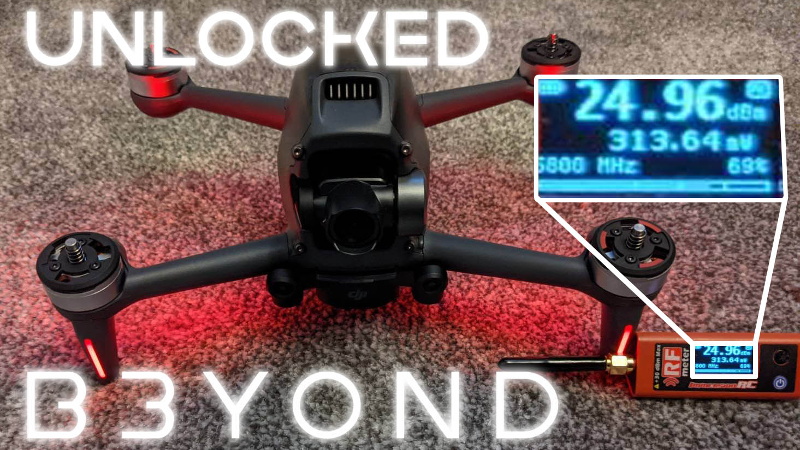
DJI’s FPV drone already looked like the result of a camera drone sneaking into a racing drone gym and refusing to leave. It came with goggles, fast acceleration, immersive video, a dramatic “I am definitely in a sci-fi movie” flying style, and enough speed to make cautious pilots clutch their landing pads like security blankets. Then came a web-based tool that claimed to unlock stronger transmission power by pushing the drone into FCC Mode, and the FPV community immediately did what the FPV community does best: debate range, legality, firmware, risk, and whether “just one quick test” counts as a personality trait.
The phrase “web tool cranks up the power” sounds almost too casual, like adjusting a desk lamp. In reality, this story sits at the intersection of consumer drone design, browser-based hardware access, radio regulations, and the never-ending hobbyist desire to squeeze more performance out of expensive flying robots. The DJI FPV drone was built to give pilots a ready-to-fly first-person-view experience without soldering tiny wires at midnight. Tools like B3YOND showed that even polished consumer drones still live in a world where software settings, regional rules, and hardware capability are tightly connected.
What Happened With the DJI FPV Web Tool?
The short version: a browser-based utility called B3YOND was reported to communicate with DJI FPV Goggles through a computer browser and send a command associated with FCC Mode. FCC Mode refers to the higher transmission-power profile used in regions such as the United States, where DJI’s official specs list stronger EIRP limits than in CE regions such as much of Europe. The tool attracted attention because it did not require a traditional desktop app download. The browser itself became the bridge between the user and the hardware.
That was the clever part. Instead of asking users to install a complicated utility, the tool leaned on the Web Serial API, a browser technology that allows websites to communicate with serial devices when permission is granted. For drone hobbyists, that felt like discovering the browser had a secret garage door opener hidden behind the bookmarks bar. For developers, it was a reminder that modern web apps are no longer just forms, shopping carts, and cookie banners begging for attention. They can talk to physical devices.
For regulators and safety-minded pilots, however, the story raises a different issue: stronger transmission power is not automatically legal everywhere. Radio limits exist because many devices share the same airwaves. A drone is not flying through a magical private Wi-Fi kingdom; it is operating in crowded spectrum where other drones, routers, wireless cameras, public systems, and nearby electronics may be affected. More power can mean a more stable signal, but it can also mean more interference if used outside approved conditions.
Why DJI’s FPV Drone Was Already a Big Deal
Before discussing unlock tools, it helps to understand why the DJI FPV drone earned so much attention in the first place. Traditional FPV flying has usually required a mix of parts, repairs, radio knowledge, tuning, and a willingness to accept that crashing is not a possibility but a recurring subscription. DJI packaged much of that into a ready-made system with an aircraft, goggles, controller, camera, battery, and software ecosystem.
The drone combined features that casual pilots understood with performance that felt closer to FPV racing. It offered a super-wide field of view, 4K video recording, low-latency live view through the goggles, GPS positioning, emergency braking, and different flight modes for varying skill levels. For many pilots, it was the first FPV drone that felt less like building a flying science project and more like buying a finished product.
FPV Flying Is About Trust in the Video Link
In a normal camera drone, losing video is annoying. In FPV, losing video is a small heart attack with propellers. The pilot flies from the drone’s perspective, so the video feed is not just a preview; it is the primary sense of direction. When the image stutters, breaks up, or disappears, the pilot’s confidence evaporates faster than a cheap battery in cold weather.
This is why transmission power matters so much to FPV pilots. A stronger and more stable link can reduce dropouts, improve confidence, and make flights feel smoother in challenging environments. DJI’s digital FPV system already helped move the hobby away from fuzzy analog feeds and into cleaner, more cinematic live video. A tool that claimed to unlock higher regional power settings naturally became interesting, especially to pilots who felt their drone had unused performance locked behind software rules.
FCC Mode vs. CE Mode: Why Regional Power Limits Exist
DJI products are configured to meet different regional radio standards. In simplified terms, FCC Mode generally allows higher transmission power than CE Mode. The official DJI FPV specifications show different maximum transmission distances and transmitter-power figures depending on the regulatory standard. That does not mean the drone is physically different in every region. Often, the same or similar hardware can operate under different software-controlled limits.
This is not unique to drones. Wi-Fi routers, wireless microphones, RC systems, smart devices, and many other products follow country-specific radio requirements. The invisible world of radio spectrum is a shared public resource, not a playground where every gadget can shout at full volume because it feels emotionally ready. Regional limits help reduce harmful interference and keep devices operating within legal boundaries.
The controversy begins when a tool claims to make a drone behave as though it is in a different region. Technically, that may increase available transmission power. Legally, it depends on where the drone is being used, what permissions the operator has, and which rules apply. A setting that is normal in one country can be restricted in another. That is why responsible coverage of this topic should discuss the engineering without pretending every pilot has a green light to use maximum power everywhere.
How a Browser Became a Drone Configuration Tool
The most fascinating part of the B3YOND story is not just the power increase claim. It is the delivery method. The modern browser has quietly become a powerful hardware interface. Through APIs such as Web Serial, supported browsers can communicate with compatible devices over serial connections after the user grants permission. That opens the door for web-based tools that configure microcontrollers, 3D printers, development boards, radio gear, and, in this case, FPV equipment.
For users, browser-based tools feel convenient. There is no installer to hunt down, no mysterious ZIP file named something like “final_final_v7_real.exe,” and less friction between curiosity and action. For developers, it lowers the barrier to distributing hardware utilities. For security experts, it creates a clear reminder that convenience must be paired with permissions, transparency, and caution.
When a website can communicate with hardware, trust becomes critical. Users should understand what the site is asking to access, what it claims to change, and what risks may follow. A browser prompt is not a magic safety shield. It is a doorbell. The person still has to decide whether opening the door is a good idea.
The Benefits Pilots Care About
The appeal of stronger transmission power is easy to understand. FPV pilots want a clear feed, fewer signal warnings, and more confidence when flying in open environments. A stronger link may help in areas with interference, trees, buildings, or distance-related signal loss. It can make the drone feel less nervous and more connected, especially when the pilot is flying smoothly and needs consistent visual feedback.
For cinematic FPV, signal stability matters as much as camera quality. A beautiful dive shot is not very useful if the pilot loses confidence halfway through and turns the maneuver into an aerial interpretive dance called “Panic Near a Tree.” Better transmission reliability can help pilots plan more precise lines, maintain smoother motion, and avoid abrupt corrections.
However, power is only one piece of the signal puzzle. Antenna orientation, interference, line of sight, firmware behavior, environmental conditions, battery level, and pilot discipline all matter. A higher-power setting cannot turn a bad flight plan into a good one. It cannot bend physics around a concrete building. It cannot make a pilot immune to poor judgment. It simply changes one factor in a larger system.
The Risks Nobody Should Ignore
There are three major risk categories: legal, technical, and operational. The legal risk is the most obvious. Using a radio mode not approved in your location can violate local regulations. Many countries enforce limits on unlicensed radio transmission, and drone operators are expected to follow both aviation and radio rules. “The button was right there” is not a strong legal defense, although it may be a strong summary of the internet.
The technical risk is more subtle. Changing settings outside official support can create firmware conflicts, warranty concerns, or unpredictable behavior after updates. DJI’s ecosystem is tightly integrated. The aircraft, goggles, controller, battery, app, and firmware all work together. A change that appears simple may have side effects, especially as software updates evolve.
The operational risk is the one pilots often underestimate. A stronger signal can encourage overconfidence. A pilot may fly farther, lower, or behind more obstacles simply because the feed feels more stable. But aviation safety is not only about whether the video works. It is also about airspace awareness, visual line of sight, emergency planning, weather, people nearby, and the ability to return safely. A better video link should not become an excuse for worse decision-making.
Why This Story Matters Beyond DJI
The DJI FPV web tool story is bigger than one drone. It shows how consumer hardware increasingly depends on software-defined limits. The same product can behave differently depending on region, firmware, account settings, connected accessories, or regulatory databases. That gives manufacturers flexibility, but it also gives hobbyists a mystery to investigate.
It also shows how browsers are becoming serious tools for hardware communities. The gap between web development and physical devices is shrinking. A website can configure a flight controller, flash a microcontroller, read sensor data, or interact with equipment that once required dedicated software. That is exciting, but it also means users must treat web-based hardware tools with the same caution they would apply to desktop utilities.
For publishers and tech writers, the story is a great example of responsible coverage. The interesting part is not “go do this.” The interesting part is how regional radio profiles, DJI’s FPV ecosystem, browser APIs, and hobbyist culture collided in one small but noisy corner of the drone world. That is where the real analysis lives.
Responsible FPV Flying Still Comes First
Whether a pilot flies DJI FPV, Avata, a custom 5-inch quad, or a tiny whoop that sounds like an angry electric toothbrush, the fundamentals remain the same. Know the rules. Keep the aircraft under control. Respect people, property, wildlife, and airspace. Understand your equipment before pushing limits. Do not confuse range claims with safe operating distance.
DJI’s published transmission-distance numbers are measured under specific open-environment conditions. Real-world results vary. Trees absorb signal. Buildings block signal. Urban areas are noisy. Hills are rude. Even the pilot’s body can affect antenna performance. A specification sheet is useful, but it is not a promise that every flight will behave like a laboratory test wearing sunglasses.
For U.S. pilots, FAA requirements such as registration, TRUST for recreational flyers, Remote ID compliance when applicable, visual line-of-sight rules, and airspace restrictions remain important. Pilots outside the United States must follow their own local aviation and radio regulations. The safest approach is simple: treat stronger technical capability as something that requires more responsibility, not less.
Experience Notes: What This Topic Feels Like in the Real World
Anyone who has spent time around FPV pilots knows that signal quality becomes part of the conversation almost immediately. The first few flights with a digital FPV system can feel magical. The image is clearer than old analog static, the goggles make the flight feel immediate, and the drone responds quickly enough that your brain starts believing you have temporarily become a very expensive bird. Then the first signal warning appears, and suddenly the romance becomes a technical meeting.
In real flying sessions, pilots often learn that range is not just distance. A drone 300 feet away behind wet trees may feel less reliable than a drone much farther away in clean open air. Flying near metal structures, dense neighborhoods, power lines, or busy Wi-Fi environments can change the experience dramatically. That is why pilots talk about “link confidence” rather than only maximum range. The question is not “how far can it go?” The better question is “how predictable does the connection feel during the kind of flying I actually do?”
A stronger transmission profile can feel reassuring because the video link may hold up better under stress. The pilot may notice fewer brief stutters, more stable bitrate behavior, or fewer moments where the goggles seem to say, “Good luck, tiny human.” But the best pilots do not treat that as permission to fly recklessly. They use extra reliability as a safety buffer. They scout the area, plan the route, avoid people, keep emergency options open, and resist the temptation to turn every flight into a superhero trailer.
There is also a psychological side. When pilots believe the connection is stronger, they may relax, fly smoother, and make better camera movements. Smooth flying often comes from confidence. But confidence has an evil twin named complacency. The moment a pilot assumes the system cannot fail is usually the moment a tree, hill, battery warning, or confused pigeon enters the plot. FPV rewards humility. The air does not care how expensive the goggles were.
For content creators, the practical lesson is to focus on reliability, legality, and repeatability. A clean FPV shot is not only about raw power. It is about preparation: checking antennas, updating gear carefully, reading local rules, choosing safe flight lines, monitoring battery voltage, and having a spotter where required. The web tool story is exciting because it reveals hidden capability, but the best flying experiences still come from boring habits done well. In FPV, boring habits are not boring. They are what allow the fun part to survive.
Conclusion
The story of a web tool cranking up the power on DJI’s FPV drone is a perfect modern tech tale: part browser innovation, part drone culture, part regulatory headache, and part “wait, a website can talk to my goggles?” It highlights how much performance in modern hardware is controlled by software and how easily curiosity can run into legal and safety boundaries.
For readers, the takeaway is not that every DJI FPV pilot should chase maximum output. The smarter lesson is that transmission power, regional compliance, browser-based hardware tools, and FPV safety are all connected. Stronger signal can be useful, but responsible flying is still the real upgrade. Power may help the link, but judgment keeps the drone out of trouble.