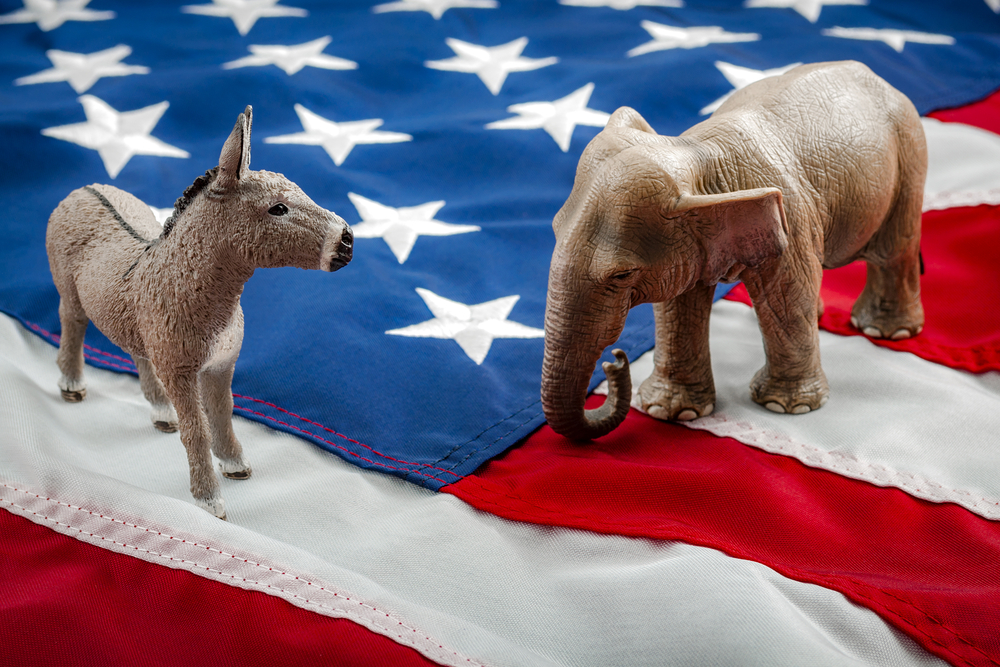
Somewhere between the family group chat, the Thanksgiving table, the office break room, and the comment section that should have been shut down by a responsible adult, many Americans began forgetting a simple truth: people are not walking campaign buttons. We are not born as red states or blue states. We are not raised by algorithms, although some of us now behave suspiciously like we were. We are human beings firstmessy, hopeful, worried, funny, stubborn, generous, and occasionally convinced that our neighbor’s lawn sign is a personal attack.
The sentence “We are not trying to be conservative or liberal. We are human.” is not a surrender of values. It is not a request to stop caring about justice, freedom, safety, faith, family, fairness, or opportunity. It is a reminder that political identity should never become a substitute for human dignity. A person can hold strong opinions without becoming a mascot for a tribe. A person can disagree without declaring war on Thanksgiving gravy. A society can debate hard questions without forgetting that the people across the aisle also pay bills, love their children, worry about the future, and sometimes lose the remote control in the couch cushions like everyone else.
Why This Message Matters in a Polarized America
Political division in the United States is not imaginary. Surveys and civic research have repeatedly shown that Americans are not only divided on policy; many believe people on the other side cannot even agree on basic facts. That is a serious problem because democracy depends on more than elections. It depends on trust, shared reality, and the ability to speak without treating disagreement like a contagious disease.
Yet the deeper danger is not disagreement itself. Disagreement is normal. It is the national sport, right after football and arguing about whether pineapple belongs on pizza. The real danger is dehumanization: the habit of seeing people with different beliefs as stupid, evil, dangerous, or beyond redemption. Once that happens, conversation ends. Curiosity disappears. Every headline becomes ammunition. Every debate becomes a trial. Every neighbor becomes a suspect.
Being human means we can do better than that. It means we can care about politics without becoming consumed by politics. It means we can hold convictions while still holding the door open for someone who votes differently. It means refusing to let ideology shrink the size of our hearts.
Politics Is Important, But It Is Not the Whole Person
Political labels are convenient. They help people organize ideas, vote, advocate, and understand broad patterns. But labels are terrible at capturing the full story of a human life. “Conservative” does not tell you who stayed up all night caring for a sick parent. “Liberal” does not tell you who volunteers at the food pantry. “Independent” does not tell you who quietly helps a neighbor fix a fence after a storm. Political categories can describe opinions, but they cannot measure character.
One person may support stricter border policies because they worry about security and law. Another may support expanded immigration pathways because they think of families seeking safety and opportunity. These two people may disagree strongly, but both may be motivated by moral concerns. If they begin by assuming the worst about each other, the conversation collapses before it starts. If they begin by asking, “What are you afraid of losing?” or “What are you trying to protect?” they may still disagree, but they will understand more.
Human motives are often more complicated than political slogans
Slogans are short because they are built for speed, not wisdom. Real life is slower and more complicated. A parent may care about school choice because their child is struggling. A teacher may defend public education because they see what happens when schools are underfunded. A small business owner may worry about regulation. A worker may worry about wages and benefits. These are not cartoon villains. These are people trying to survive, provide, and make sense of a noisy world.
When we reduce people to political teams, we stop listening for the story beneath the opinion. That is when America becomes less like a community and more like a badly moderated sports rivalry, except the jerseys are invisible and the referee appears to have left the building.
The Cost of Seeing Each Other as Enemies
Political hostility does not stay neatly inside voting booths. It follows people home. It shows up in friendships, marriages, workplaces, churches, schools, and online communities. It can turn small disagreements into identity battles. It can make people avoid family gatherings, silence themselves at work, or assume every conversation is a trap.
Stress research has shown that national politics, the economy, and the future of the country are major sources of anxiety for many Americans. That emotional pressure matters. When people are tired, scared, or overloaded, they are more likely to react defensively. They scroll more, listen less, and type comments that should have stayed in the drafts folder. Fear narrows the imagination. Contempt hardens it.
There is also a media problem. Americans increasingly consume different news sources, trust different messengers, and live in information environments that reinforce existing beliefs. This does not mean all sources are equal or that facts are optional. Facts matter. Evidence matters. But when people receive completely different versions of reality every day, it becomes harder to talk across differences. The first step is not pretending the problem is easy. The first step is admitting that our information habits shape our emotional habits.
Human Dignity Is Not Political Neutrality
Some people hear “be human first” and worry it means “stop fighting for what matters.” That is not the point. Human dignity is not the same as silence. It does not require moral laziness, false balance, or smiling politely at harmful behavior. It simply says that even when we challenge an idea, policy, or action, we do not need to erase the humanity of the person involved.
You can oppose a policy with passion and still avoid calling every supporter a monster. You can defend your rights without mocking someone’s fear. You can correct misinformation without performing a public dunk contest. You can say, “I think that argument is wrong and harmful,” without saying, “You are worthless.” This distinction is not weakness. It is discipline.
Disagreement can be firm without being cruel
A healthy society needs disagreement. Good disagreement tests ideas, exposes blind spots, and prevents any one group from confusing power with truth. But disagreement works best when people believe they still belong to the same moral universe. When contempt takes over, persuasion becomes almost impossible. Nobody becomes wiser while being insulted. People may go quiet, but silence is not the same as understanding.
In practical terms, this means replacing “How could you believe that?” with “What led you to that view?” It means replacing “People like you are the problem” with “Here is why I see the issue differently.” It means asking one more question before launching the verbal fireworks show.
What We Share Is Bigger Than What the Algorithm Shows
Algorithms are very good at finding what makes us angry. They are less skilled at reminding us that most people are not extremists. Outrage travels fast because it is emotionally sticky. A calm, thoughtful conversation rarely goes viral because it does not make anyone throw cereal at the screen. But offline, many Americans share more than they realize.
Most people want safe neighborhoods. Most want children to have a decent future. Most want fair treatment under the law. Most want meaningful work, affordable groceries, honest leadership, clean water, good schools, and the freedom to live with dignity. The arguments begin when we debate how to achieve those goals, who is responsible, what trade-offs are acceptable, and whose pain has been ignored.
That shared ground does not erase real conflict. It gives us a place to stand while we work through conflict. Without shared ground, every debate feels like falling through the floor.
How to Stay Human in Political Conversations
Staying human is not a mood. It is a practice. It requires habits that can survive stress, disagreement, and that one uncle who begins every sentence with “I saw a video online.” Here are a few practical ways to protect dignity without abandoning your beliefs.
1. Start with the person, not the position
Before debating someone’s opinion, remember that they have a life you cannot fully see. Ask about their experience. What shaped their view? What are they worried about? What outcome do they hope for? This does not mean you must agree. It means you are gathering the human context behind the political statement.
2. Use slower language
Fast language attacks. Slow language clarifies. Instead of saying, “That is ridiculous,” try, “I see that differently.” Instead of “You people always,” try, “When I hear that argument, I worry about…” Slower language gives the other person room to stay in the conversation rather than prepare a defensive courtroom speech.
3. Separate facts, values, and fears
Many political arguments mix three things together: what is true, what matters, and what people fear. A conversation improves when you separate them. Ask: What evidence are we using? What value are we prioritizing? What are we afraid could happen if we are wrong? Suddenly the debate becomes less like a food fight and more like a map.
4. Admit when your side gets it wrong
Credibility grows when people can criticize their own team. No political group has a lifetime membership card for wisdom. Every side has blind spots, bad messengers, lazy arguments, and moments when the group chat should have taken a nap. Admitting this does not weaken your values. It makes you trustworthy.
5. Protect real relationships from online behavior
Do not let social media train you to treat relatives, friends, and coworkers like anonymous avatars. Online conflict rewards performance. Real relationships require patience. Before cutting someone off, ask whether the relationship is unsafe or simply uncomfortable. Some boundaries are necessary. But not every hard conversation is a five-alarm emergency.
Examples of Humanity Over Ideology
Across the country, bridge-building groups, local civic organizations, interfaith coalitions, schools, libraries, veterans’ groups, and neighborhood associations have experimented with structured conversations between people who disagree. The most effective models do not ask participants to water down their beliefs. Instead, they ask them to speak honestly, listen carefully, and avoid contempt.
Imagine a rural gun owner and an urban parent discussing safety. The conversation could explode in thirty seconds if each assumes the other is either careless or authoritarian. But if both begin with love of family, fear of violence, and concern for freedom, the conversation changes. They may still disagree on laws. Yet they can recognize that both are trying to protect something precious.
Or consider a debate about climate policy. One person may worry about environmental damage and future generations. Another may worry about energy costs, jobs, and rural communities. A human-centered conversation does not deny science or economics. It asks how solutions can be truthful, practical, and fair to people who feel ignored.
The same approach applies to debates about policing, education, health care, taxes, religion, speech, gender, and immigration. The goal is not to make every issue soft and cozy. Some issues are painful because real lives are affected. The goal is to keep people morally visible while the issue is being debated.
Why “Human First” Is Good for Democracy
Democracy is not only a system of government. It is a social skill. It asks millions of people to lose arguments, accept outcomes, keep participating, and try again without burning down the shared house. That requires more than laws. It requires civic character.
When people see opponents as fellow citizens, democracy has room to breathe. When people see opponents as enemies, every election feels like the end of the world. A healthy democracy needs passionate voters, responsible leaders, independent journalism, trustworthy institutions, and citizens who can tell the difference between disagreement and destruction.
Being human first does not solve every policy dispute. It does something more basic: it keeps the door open. And in a divided country, an open door is not a small thing.
Personal Experiences: Learning to See the Person Behind the Opinion
Most of us do not learn humanity in a lecture hall. We learn it in awkward, ordinary moments: a tense family dinner, a surprising conversation with a coworker, a neighbor who helps during a storm, a friend who votes differently but shows up when life falls apart. These moments teach us that people are bigger than their opinions.
Think about a family gathering where politics sneaks into the room like an uninvited raccoon. One person makes a comment about the election. Another person sighs. Someone reaches for the mashed potatoes with the seriousness of a hostage negotiator. The old habit would be to argue until dessert tastes like regret. But a human-first approach changes the rhythm. Instead of attacking, someone asks, “What makes that issue feel so important to you?” The answer may reveal fear about retirement, concern for children, frustration with government, or a personal experience nobody knew about. The room may not agree, but it may soften.
In workplaces, the same lesson appears in quieter ways. A colleague may hold a view that feels completely foreign to you. It is tempting to place them in a mental folder labeled “wrong” and move on. But then you work late on a difficult project together. You see their patience with a stressed customer. You hear them talk lovingly about their family. You realize that one political disagreement, even a serious one, is not the only truth about them. That realization does not force agreement. It simply prevents laziness. Human beings deserve more than lazy conclusions.
Neighborhood life offers another example. During a power outage, nobody checks voter registration before sharing flashlights. When a tree falls across the street, people do not form committees based on ideology before dragging branches away. In crisis, the human layer often returns quickly. People become practical. They ask, “Are you okay?” They offer water, tools, phone chargers, and help. The tragedy is that it sometimes takes an emergency to remind us we belong to one another.
Online life, unfortunately, teaches the opposite lesson. It encourages instant judgment. A stranger posts one sentence, and suddenly we think we know their education, morals, childhood, news diet, and entire destiny. That is not insight. That is imagination wearing boxing gloves. A healthier habit is to pause before responding. Ask whether the reply will create understanding or simply entertain people who already agree. Ask whether the person on the other side would hear your words differently if you said them face to face. Ask whether being right is worth becoming cruel.
Another powerful experience comes from listening to someone explain the pain behind their politics. A veteran may talk about national security with memories that are not theoretical. A single mother may talk about health care with fear in her voice. A small farmer may talk about regulation after years of thin margins. A young activist may talk about justice after watching friends mistreated. These stories do not automatically settle policy questions. But they make it harder to dismiss people as slogans. They restore depth.
The human-first approach is not magic. Some conversations will still fail. Some people will argue in bad faith. Some views must be challenged firmly. Boundaries matter, especially when speech becomes abusive, threatening, or degrading. But even then, we can choose not to let contempt become our permanent language. We can step away without hatred. We can protect ourselves without losing our moral center.
In the end, the most meaningful experience is this: when we treat someone as human, we often become more human ourselves. We become more patient, more curious, more honest, and less addicted to the cheap sugar rush of outrage. We remember that the goal of civic life is not to win every argument at maximum volume. The goal is to build a society where truth matters, dignity survives, and people can disagree without forgetting how to care.
Conclusion: We Can Be Principled Without Being Poisoned
“We are not trying to be conservative or liberal. We are human.” This sentence is not a political escape hatch. It is a civic challenge. It asks us to bring our full humanity into a public life that often rewards the opposite. It asks conservatives, liberals, independents, and the politically exhausted to remember that no ideology has permission to cancel compassion.
America does not need citizens with no beliefs. It needs citizens whose beliefs are strong enough to be expressed with dignity. It needs people who can argue without humiliating, vote without hating, and advocate without dehumanizing. It needs fewer instant enemies and more difficult conversations. It needs less contempt dressed up as courage and more courage expressed through patience.
We will not agree on everything. We were never going to. But we can choose whether disagreement makes us smaller or wiser. We can choose whether politics becomes a tool for public service or a machine that eats our relationships. We can choose to see the person before the label.
That choice will not trend every day. It may not win the loudest comment thread. But it may save a friendship, repair a family dinner, strengthen a neighborhood, and remind a tired country that beneath the labels, arguments, yard signs, and headlines, we are still human.