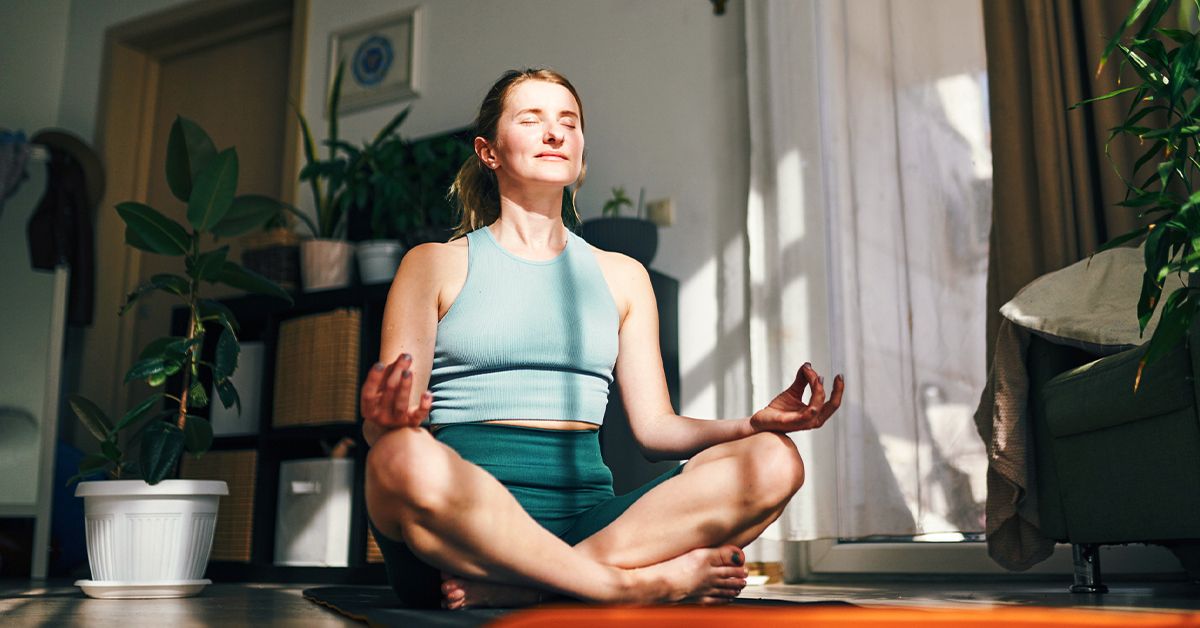
Irritable bowel syndrome has an inconvenient talent for arriving precisely when it is least welcome. A quiet dinner becomes a search for the nearest restroom. A morning commute turns into a negotiation with your colon. Then the worry about symptoms creates more stress, which may make the gut even louder. It is a miserable little feedback loopand your digestive system never asks whether this is a good time.
Mindfulness meditation for IBS will not magically erase every cramp, prevent every urgent bathroom trip, or make onions behave themselves. However, it may help change how your nervous system responds to uncomfortable sensations, anxious thoughts, and the anticipation of symptoms. The best way to begin is not with a silent retreat or a heroic 45-minute session. Start with one small step: two minutes of calm, curious attention.
Why IBS Is More Than a Food Problem
Irritable bowel syndrome is a chronic disorder involving abdominal pain and changes in bowel movements, including constipation, diarrhea, or a mixture of both. Bloating, cramping, gas, urgency, and the sensation of an incomplete bowel movement are also common. IBS can be disruptive and painful, but it does not damage the digestive tract or increase the risk of colon cancer.
Although food can trigger symptoms, IBS is not simply a case of eating the wrong lunch. Medical experts describe it as a disorder of gut-brain interaction. The digestive tract and nervous system continuously exchange signals, influencing intestinal movement, pain sensitivity, stress responses, and the way bodily sensations are interpreted. The American College of Gastroenterology recognizes this gut-brain connection as an important part of IBS management.
Stress does not mean IBS is imaginary. The pain is real, the diarrhea is real, and the emergency restroom calculations are extremely real. Stress can influence how quickly or slowly material moves through the intestines, how strongly intestinal muscles contract, and how intensely the brain perceives signals from the gut. Johns Hopkins Medicine notes that stress may affect both the frequency and severity of IBS symptoms.
What Is Mindfulness Meditation?
Mindfulness means intentionally paying attention to the present moment with less judgment and less automatic reaction. During mindfulness meditation, you may focus on breathing, sounds, physical sensations, or thoughts as they arise. The goal is not to empty the mind. Minds produce thoughts the way stomachs produce noises during an important meeting: automatically and with questionable timing.
Instead of fighting every sensation or immediately predicting disaster, you practice noticing what is happening. A cramp may be labeled “tightness.” A worried thought may be recognized as “planning” or “fear.” You then gently return attention to your chosen anchor, such as the breath.
Mindfulness-based stress reduction, commonly called MBSR, is a structured approach that combines meditation with practical strategies for responding to stressful experiences. It is more extensive than the brief exercise in this article, but both approaches develop present-moment awareness and a less reactive relationship with discomfort.
What Does the Research Say About Mindfulness and IBS?
The Findings Are Promising
A randomized controlled trial involving women with IBS compared mindfulness training with a support-group program. Immediately after treatment, the mindfulness group reported a 26.4% reduction in IBS symptom severity, compared with a 6.2% reduction in the comparison group. At the three-month follow-up, the reductions were 38.2% and 11.8%, respectively. Improvements in quality of life and psychological distress became more noticeable at follow-up, suggesting that mindfulness may work more like skill training than an instant relaxation button.
A separate 2020 study found that an MBSR program was associated with substantial improvements in gastrointestinal symptoms and related difficulties among participants with IBS. Researchers suggested that maintaining present-moment attention and acting with greater awareness could be particularly relevant to symptom improvement.
A 2022 systematic review and meta-analysis examined six randomized trials. Mindfulness interventions were associated with better IBS-related quality of life and lower pain scores. Overall symptom severity also moved in a favorable direction, although that result narrowly missed statistical significance, and several included trials had methodological limitations.
Mindfulness Is Helpful, Not Magical
The evidence is not strong enough to declare meditation a cure for IBS. The National Center for Complementary and Integrative Health has noted that some analyses found little difference between mindfulness meditation and control groups, with the available evidence judged to be low quality. Study sizes, meditation formats, treatment lengths, participant characteristics, and outcome measures vary considerably.
Professional guidelines are more confident about the broader category of gut-directed psychological therapies, especially cognitive behavioral therapy and gut-directed hypnotherapy. The American College of Gastroenterology conditionally suggests gut-directed psychotherapy for global IBS symptoms, while the American Gastroenterological Association encourages recognition of the brain-gut axis and referral for appropriate behavioral therapies.
The practical conclusion is balanced: mindfulness meditation for IBS is reasonable as a complementary strategy, particularly when stress, symptom anxiety, or hypervigilance plays a role. It should be part of a personalized plan rather than a substitute for medical evaluation, dietary guidance, medication, or evidence-based therapy.
One Small Step: A Two-Minute IBS Meditation
You do not need special clothing, scented candles, perfect posture, or a room that looks like a wellness advertisement. You need two minutes and a reasonably safe place to sit.
-
Get Comfortable
Sit in a chair with your feet supported. Let your hands rest on your thighs or place one hand lightly over your abdomen. Keep your eyes open, softly focused, or closedwhichever feels safer.
-
Take One Natural Breath
Do not force an enormous breath into a bloated abdomen. Breathe naturally. Notice where breathing is easiest to feel: the nostrils, chest, ribs, or belly.
-
Notice What Is Present
Silently acknowledge sensations without trying to fix them. You might notice warmth, pressure, movement, tightness, gurgling, or nothing obvious. “Nothing obvious” is also a perfectly respectable meditation experience.
-
Name the Reaction
When thoughts appear, use a brief label: “worrying,” “remembering,” “planning,” or “judging.” A label creates a small amount of space between the thought and your response.
-
Return to the Breath
Bring your attention back to one gentle inhale and one gentle exhale. Wandering is not failure. Returning is the exercise.
-
End Without Grading Yourself
After two minutes, notice how you feel. You do not need to be calm, symptom-free, or spiritually glowing. Completing the practice is enough.
How Mindfulness May Support IBS Management
It Can Interrupt the Gut-Brain Alarm Loop
An intestinal sensation may trigger the thought, “This is going to be terrible.” That thought can increase tension and vigilance, making the sensation feel even more threatening. Mindfulness creates a pause between sensation and interpretation. Instead of immediately moving from “I feel pressure” to “My entire afternoon is ruined,” you practice staying with the information available right now.
It May Reduce Symptom Hypervigilance
People with recurring digestive symptoms understandably monitor their bodies. The problem begins when monitoring becomes a full-time security operation. Constantly checking for cramps, urgency, or bloating may increase anxiety and amplify normal digestive sensations. Mindfulness teaches flexible attention: you can notice the gut without making it the main character in every scene.
It Can Change Your Relationship With Discomfort
Meditation does not require you to enjoy pain or pretend bloating is delightful. Acceptance means acknowledging the current experience without adding unnecessary mental resistance. “This sensation is uncomfortable” is different from “I cannot cope with this, and it will never end.” That change in wording may look small, but it can influence behavior, emotional distress, and confidence.
It May Make Other Treatments Easier to Follow
A calmer, more observant approach may help you notice patterns involving meals, sleep, stress, and bowel habits without responding with panic or imposing an unnecessarily restrictive diet. IBS treatment often requires experimentation because different people respond to different combinations of diet, lifestyle changes, medicine, and psychological support.
A Seven-Day Beginner Plan
Consistency matters more than ambition. Use this simple schedule to build the habit without turning meditation into another exhausting health project.
- Day 1: Practice for two minutes after waking up.
- Day 2: Repeat the practice before lunch or dinner.
- Day 3: Add a body label such as “pressure,” “warmth,” or “tightness.”
- Day 4: Practice when symptoms are mild rather than waiting for a flare.
- Day 5: Try three minutes and notice sounds as well as breathing.
- Day 6: Use one mindful breath before entering a stressful situation.
- Day 7: Review what was realistic, helpful, irritating, or difficult.
You can track the practice with three short notes: how long you meditated, your stress level before and after, and one observation. Avoid recording every digestive twitch. The purpose is to identify broad patterns, not to turn your colon into a data analytics department.
Common Mindfulness Mistakes
Trying Too Hard to Relax
Relaxation may happen, but forcing it often creates more tension. Let the breath remain comfortable and allow the body to feel as it feels. Mindfulness is awareness first; relaxation is a possible side effect.
Expecting Immediate Symptom Relief
Meditation is a learned skill. One session may feel soothing, boring, uncomfortable, or all three in rapid succession. Clinical programs generally involve repeated practice over several weeks, and meaningful changes may emerge gradually.
Meditating Only During an Emergency
Trying mindfulness for the first time during severe urgency is like learning to swim after falling off the boat. Practice when symptoms are manageable so the technique is familiar when stress rises.
Using Meditation to Avoid Medical Care
Mindfulness should not be used to diagnose IBS or dismiss new symptoms. The NCCIH specifically advises people not to replace conventional care or delay seeing a healthcare provider because they are using meditation or another complementary approach.
Combine Meditation With a Complete IBS Plan
IBS treatment is usually personalized. Depending on your symptoms, a clinician may recommend soluble fiber, carefully supervised dietary changes, medications for diarrhea or constipation, peppermint oil, physical activity, improved sleep, cognitive behavioral therapy, gut-directed hypnotherapy, or relaxation training. A low-FODMAP diet may help some people, but it is generally intended as a structured, temporary elimination-and-reintroduction process rather than a permanent list of forbidden foods.
Mindfulness can sit beside these treatments. Think of it as one instrument in the IBS orchestra. It may not play the entire concert, but it can keep the percussion section from panicking every time the stomach makes a noise.
When Digestive Symptoms Need Medical Attention
Seek medical evaluation for persistent changes in bowel habits, especially when you have not received an IBS diagnosis. Symptoms such as unexplained weight loss, rectal bleeding, nighttime diarrhea, iron-deficiency anemia, unexplained vomiting, or pain that is not relieved by passing gas or having a bowel movement may indicate a condition other than IBS.
New, severe, or rapidly worsening symptoms also deserve professional attention. Mindful observation is useful; silently observing a medical emergency is not.
Can Mindfulness Ever Feel Uncomfortable?
Meditation is generally considered low risk, but it is not completely risk-free. A review summarized by the NCCIH found that some participants reported negative experiences, most commonly increased anxiety or depression. People with trauma histories, panic symptoms, severe depression, or other mental health concerns may benefit from working with a qualified clinician or trauma-informed instructor.
Stop or modify the practice if focusing inward increases distress. Keep your eyes open, shorten the session, focus on external sounds, or practice mindful walking instead. The right meditation is not the one you heroically endure. It is the one you can use safely.
A Two-Week Mindfulness Experience With IBS
The following is a composite example based on common experiences reported in mindfulness programs. It is not a claim about one identifiable patient and does not predict individual results.
Days 1–3: “Am I Doing This Wrong?”
Imagine Maya, an office worker whose IBS symptoms tend to intensify before meetings and during long commutes. She starts with a two-minute meditation after breakfast. On the first morning, she notices three breaths, remembers an email she forgot to send, wonders whether coffee was a terrible decision, and checks the timer twice.
She does not feel transformed. Her stomach still gurgles. She writes one sentence in her notes: “My mind is louder than my gut.” That observation is useful because she had assumed meditation meant producing a completely blank mind. By the third day, she understands that noticing distraction and returning to the breath is the practicenot evidence that she is bad at it.
Days 4–7: Separating Sensation From Prediction
Before an afternoon presentation, Maya feels pressure in her lower abdomen. Her usual thought is immediate: “I will need the bathroom halfway through, everyone will notice, and this will be a disaster.” She pauses for one minute and labels what is actually happening: “pressure, warmth, worry.”
The sensation does not disappear, but the catastrophic story becomes less convincing. She checks where the restroom is, which is practical, and then returns to preparing her notes. The meeting goes normally. On another day, she does need to leave the room, but she handles it without treating the event as proof that her body cannot be trusted.
This becomes an important distinction. Mindfulness is not giving her control over every bowel movement. It is helping her respond to uncertainty with a little more flexibility.
Days 8–11: The Practice Meets a Flare
During the second week, Maya eats a restaurant meal and develops bloating, cramps, and loose stools. Meditation does not stop the flare. She is disappointed and briefly decides the entire experiment is nonsense wrapped in calm background music.
Still, she tries a three-minute practice with her eyes open. She feels her feet on the floor, notices the cramping, and reminds herself, “This is unpleasant, and I can take the next useful step.” She drinks fluids, follows the symptom-management plan discussed with her clinician, and postpones a nonessential errand.
The flare lasts about as long as similar flares have lasted before. The difference is that she spends less time searching the internet for frightening explanations and less time blaming herself for eating the “wrong” meal.
Days 12–14: A Small but Meaningful Change
At the end of two weeks, Maya is not cured. She still has IBS, still carries emergency supplies, and still knows the location of every restroom within a five-mile radius. However, she reports fewer moments when a mild sensation immediately becomes a full mental emergency.
She decides to continue with five minutes of mindfulness most mornings. Her measure of success is no longer “Did I have zero symptoms?” Instead, she asks, “Did I notice what was happening and choose a helpful response?” That goal is more realistic, more compassionate, and much easier to practice consistently.
This kind of experience captures the value of one small step. Mindfulness may not silence the gut, but it can reduce the amount of extra alarm added by fear, resistance, and prediction. For a condition shaped partly by communication between the brain and digestive system, that quieter response may matter.
Conclusion: Begin With One Breath, Not a Perfect Routine
Mindfulness meditation for IBS is not a replacement for medical treatment, and the research remains limited. Still, clinical studies and reviews suggest that mindfulness-based practices may improve pain, quality of life, symptom reactivity, and the emotional burden of living with an unpredictable digestive system.
The most useful starting point is intentionally small. Sit down. Notice one natural breath. Name one sensation without judging it. Return when your attention wanders. Repeat tomorrow.
Two minutes may not look impressive on a wellness schedule, but sustainable habits rarely begin with impressive schedules. They begin with something small enough to do on an ordinary Tuesdayeven when your gut has opinions.