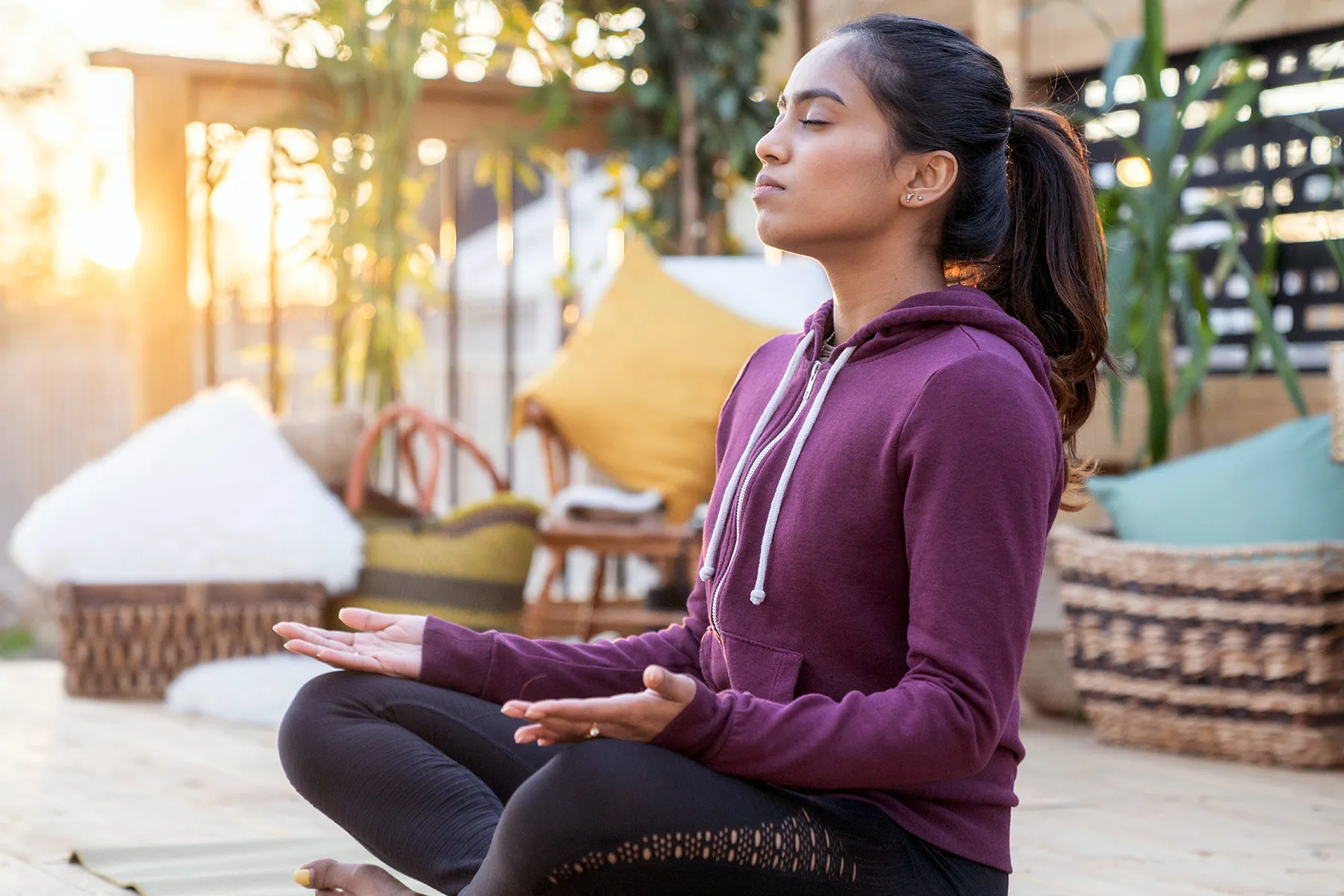
Some wellness habits ask you to drink something green, wake up before the sun, and develop a suspiciously intense relationship with a blender. Transcendental Meditation, often called TM, asks for something simpler: sit down, close your eyes, and give your mind a break from its usual 47 open browser tabs.
TM is one of the best-known forms of mantra meditation. People practice it for stress relief, improved emotional balance, better sleep, focus, and, in some cases, support for healthy blood pressure. But like every health practice that has been promoted with enthusiasm, celebrity endorsements, and an occasional cloud of mystery, it deserves a practical look. What is the actual Transcendental Meditation technique? What benefits are supported by research? And what should a beginner realistically expect?
What Is Transcendental Meditation?
Transcendental Meditation is a standardized form of silent mantra meditation. It was popularized internationally by Maharishi Mahesh Yogi and is generally taught through trained TM instructors. During a session, the practitioner sits comfortably with closed eyes and uses a personally assigned mantra silently and gently.
The official TM approach is commonly practiced for about 20 minutes twice a day. Unlike some meditation styles, it does not ask you to closely monitor your breathing, visualize a beach, chant aloud, hold a difficult pose, or battle your thoughts like they are tiny argumentative squirrels. The central idea is to let attention settle naturally rather than forcing concentration.
That distinction matters. In Transcendental Meditation, thoughts are not considered proof that you are “doing it wrong.” A busy mind is expected. When attention drifts, practitioners are taught to return easily to the mantra without criticizing themselves for having remembered an awkward conversation from seventh grade.
TM is sometimes described as a relaxation practice, but it is more specific than simply sitting quietly. It is a particular method of mantra meditation with a structured teaching system. The official TM organization describes the practice as seated, eyes closed, and usually completed twice daily for 20 minutes.
How Transcendental Meditation Differs From Other Meditation Styles
Meditation is an umbrella term, not a single activity. Saying “I meditate” is a little like saying “I exercise.” You might be jogging, lifting weights, dancing in your kitchen, or attempting yoga while your dog uses your mat as a personal nap zone.
TM vs. mindfulness meditation
Mindfulness meditation usually emphasizes awareness of the present moment. A person may observe the breath, physical sensations, sounds, emotions, or thoughts without judgment. Transcendental Meditation, by contrast, centers on silent use of a mantra. The goal is not to continuously observe every thought but to use the mantra gently whenever the mind notices it has wandered.
TM vs. guided meditation
Guided meditation involves following spoken instructions from a teacher, app, recording, or class. You may be asked to imagine a calm setting, relax different parts of your body, or focus on a theme such as gratitude. TM is usually practiced silently and without an audio guide during the session.
TM vs. breathing exercises
Breathing practices intentionally alter the breath by slowing it, lengthening exhalations, or using a set pattern. TM does not require breath control. Your breathing may become quieter as you relax, but the technique itself does not depend on counting breaths or breathing in a particular rhythm.
Potential Benefits of Transcendental Meditation
The most honest answer is that TM may help some people, especially when it becomes a consistent part of an overall healthy routine. The strongest claims should be viewed carefully, because meditation research can be difficult to study. Expectations, instructor support, lifestyle changes, group connection, and the simple act of taking regular quiet time can all influence results.
Stress reduction and emotional resilience
Stress is one of the most common reasons people try Transcendental Meditation. A regular pause from notifications, deadlines, noise, and the spiritual burden of deciding what to eat for dinner can help the nervous system shift out of constant high alert.
Research suggests that meditation programs may reduce certain dimensions of psychological stress, and some studies of TM have found improvements in stress-related outcomes. However, results vary by study design, population, and comparison group. In a randomized trial involving health care workers, TM was associated with lower burnout scores, although the improvement in overall psychological distress was not significantly greater than the control group. That is encouraging, but it is not a guarantee that a mantra will make every Tuesday feel like a spa day.
Blood pressure and heart-health support
Some evidence suggests that Transcendental Meditation may help lower blood pressure in people who have elevated readings or increased risk of hypertension. The National Center for Complementary and Integrative Health has highlighted research in which TM practice was associated with blood-pressure improvements in higher-risk groups, along with changes in psychological distress and coping.
Still, TM should be viewed as an addition to evidence-based cardiovascular care, not a replacement for it. A person with high blood pressure still needs appropriate medical monitoring, medication when prescribed, movement, nutrition support, sleep, and follow-up care. The American Heart Association has described meditation as a potentially reasonable complement to established heart-health habits, while also noting that major questions remain about its ability to prevent cardiovascular disease.
Anxiety and mood support
Many people report feeling calmer after practicing TM, and some research suggests it may be useful for anxiety symptoms. But “may help” is not the same as “treats every anxiety disorder.” The evidence for Transcendental Meditation in clinically diagnosed anxiety disorders is still limited by small or underpowered studies, making firm conclusions difficult.
For everyday worry, mental overload, or stress-related tension, meditation can be a healthy coping tool. For panic attacks, severe depression, trauma symptoms, obsessive thoughts, substance-use problems, or thoughts of self-harm, professional care is essential. Meditation can sit beside treatment; it should not be asked to do treatment’s entire job while everyone else goes out for coffee.
Sleep, focus, and daily recovery
Some people use TM because it helps create a predictable pause during the day. This may make it easier to transition between work, school, family responsibilities, and rest. General meditation research has found potential benefits for well-being, stress management, and sleep-related quality of life, although those results do not automatically apply equally to every meditation technique or every person.
The practical benefit may be wonderfully unglamorous: twice a day, you step away from your phone. Your email survives. The group chat survives. The coupon for 18% off socks survives. Your attention gets a short vacation.
What Does the Transcendental Meditation Technique Look Like?
Official TM instruction is traditionally taught in person or through an approved training program. Because the method uses an individualized mantra and specific guidance, learning the official technique usually involves a certified teacher rather than copying a random mantra from a social-media post.
A typical TM session is often described like this:
- Choose a quiet, comfortable place to sit.
- Close your eyes and allow the body to settle.
- Use the assigned mantra silently and gently.
- Allow thoughts to come and go without wrestling them.
- When attention drifts, return easily to the mantra.
- After the session, take a moment before jumping back into normal activity.
The key word is easily. TM is not supposed to feel like an exam. You are not trying to create a perfectly blank mind. You are not expected to reach instant bliss, levitate near your coffee table, or emerge with the answer to every life decision. A session may feel calm, sleepy, restless, boring, pleasant, emotional, or ordinary. Consistency matters more than chasing a dramatic experience.
Can You Learn TM on Your Own?
You can certainly practice meditation independently, including general mantra meditation, mindful breathing, guided relaxation, or quiet sitting. However, official Transcendental Meditation instruction is typically taught by certified TM teachers and involves a structured course. That instruction model is part of what distinguishes TM from simply repeating a word you found on a motivational poster.
This does not mean other meditation styles are inferior. It means they are different. Someone who prefers structured audio guidance may enjoy guided meditation. Someone who likes paying attention to the breath may prefer mindfulness meditation. Someone who wants a silent, mantra-based technique may be drawn to TM.
What Research Cannot Yet Promise
The conversation around Transcendental Meditation sometimes becomes overly dramatic. Supporters may describe it as life-changing. Critics may dismiss it as overpriced sitting. Reality is usually less cinematic and more useful.
Meditation research faces several challenges. Studies may use small samples, short follow-up periods, self-reported outcomes, or comparison groups that do not match the time and attention provided by a formal training program. It can also be difficult to separate the effects of a mantra from the benefits of resting quietly, receiving support from an instructor, changing routines, or expecting improvement.
Large reviews of meditation programs have found modest benefits for some outcomes, especially anxiety, depression, pain, and stress-related symptoms, but effects are not universal and evidence quality varies. The best approach is to see TM as one tool in a larger personal-health toolkit, along with sleep, nutrition, physical activity, supportive relationships, medical care, and therapy when needed.
Who Should Use Extra Caution?
Meditation is generally considered low risk for healthy people, but “low risk” does not mean “risk-free for every brain in every situation.” Some people experience increased anxiety, uncomfortable memories, intrusive thoughts, fear, or emotional distress during quiet practices. Research on adverse effects is still limited, which means experts cannot make absolute safety promises.
Speak with a qualified health professional before making meditation your main coping strategy if you have severe anxiety, a history of trauma, symptoms of mania or psychosis, epilepsy, major depression, or a mental-health condition that feels unstable. If a practice makes you feel worse, pause it. A wellness tool should not become a contest of endurance.
How to Build a Realistic TM Routine
The ideal TM schedule is often presented as 20 minutes twice a day. For many people, the bigger challenge is not understanding the technique. It is finding two pockets of time that are not already occupied by work, school, commuting, family needs, laundry, or the noble pursuit of doom-scrolling.
Make the routine boringly convenient
Link practice to something you already do. For example, meditate before breakfast and before dinner, or after arriving home from work and before starting your evening routine. A regular cue reduces the number of daily decisions required.
Protect the transition time
Give yourself a few minutes after meditation before returning to a meeting, driving, studying, or handling a difficult conversation. Think of it as putting your mind back into gear gradually instead of slamming it from “quiet room” directly into “Why is the printer making that sound?”
Track patterns, not perfection
Rather than judging each session, notice broader changes over several weeks. Are you sleeping more consistently? Reacting less sharply to stress? Taking more breaks? Feeling no different? Honest observation is more useful than forcing a positive review.
Experiences With Transcendental Meditation: What Practice May Feel Like
The following experiences are realistic composite examples, not medical promises or personal testimonials. People often start TM expecting a dramatic “before and after” moment. They may imagine sitting down, closing their eyes, and emerging 20 minutes later with perfect posture, glowing skin, and the ability to answer every email without sighing. In reality, early sessions are often much more ordinary.
A new practitioner may notice how noisy the mind feels. The first few attempts can bring a parade of thoughts: tomorrow’s errands, unfinished work, a song lyric that refuses to leave, worries about money, memories from years ago, and the sudden belief that the laundry must be addressed immediately. This does not mean the practice is failing. It often means the person is noticing mental activity that was already there.
Some people describe the beginning of a routine as physically restful. Their shoulders may loosen, their jaw may relax, and they may become more aware of how much tension they carry during the day. Others feel sleepy, especially if they are sleep-deprived. A 20-minute quiet session is not a substitute for adequate sleep, but it may reveal that the body has been quietly begging for rest for quite some time.
After a few weeks of regular practice, a person may not report feeling “transcendent” every day. Instead, the changes can be subtle. They may notice a slightly larger pause before reacting to a stressful message. They may take fewer emotional detours after a frustrating meeting. They may become more aware of the moment when stress is building, rather than realizing it only after they have snapped at someone over a missing charger.
For a busy parent, student, worker, caregiver, or business owner, the most valuable experience may simply be having protected quiet time. TM can create a boundary between one part of the day and the next. A person may use an afternoon session to reset before picking up children, beginning evening work, studying for an exam, or dealing with household responsibilities. The benefit may feel less like fireworks and more like clearing a cluttered desk.
Some practitioners find the routine easy to keep because it is simple and does not require a gym, special clothing, flexibility, or a soundtrack featuring ocean waves and a suspiciously cheerful flute. Others struggle with consistency. Travel, illness, deadlines, holidays, and changing schedules can interrupt the habit. Missing sessions does not erase every possible benefit. It simply means the routine needs to be restarted without drama.
There can also be difficult experiences. Quiet time may bring up uncomfortable emotions or memories. A person with anxiety may initially become more aware of racing thoughts. Someone who expects every session to feel peaceful may become frustrated when a session feels restless. In these situations, it helps to reduce pressure, discuss concerns with a qualified instructor or clinician, and remember that meditation is a skill, not a performance review.
Ultimately, the most realistic TM experience is personal. One person may feel calmer. Another may sleep more soundly. Another may appreciate the break from screens. Another may decide that mindfulness, therapy, exercise, or a different meditation style fits better. The goal is not to force yourself into a particular story about meditation. The goal is to notice whether the practice supports your health, routines, and life in a meaningful way.
Conclusion
Transcendental Meditation is a structured mantra-based meditation technique that typically involves sitting quietly with closed eyes for about 20 minutes twice a day. Its potential benefits include stress reduction, emotional balance, and support for healthy blood pressure in some people. Research is promising in several areas, but it is not a shortcut around medical care, therapy, exercise, sleep, or daily life’s inconvenient responsibilities.
The best reason to try TM is not because it promises a perfect mind. It is because a regular period of calm may help you respond to life with a little more space, patience, and perspective. In a world determined to keep everyone busy, that is already a fairly impressive trick.