Good news: you do not need a luxury gym membership, a garage full of iron, or a treadmill that slowly becomes a laundry shelf to stay fit. Your home is already packed with surprisingly effective workout tools. A chair can become a squat target. A towel can turn into a slider. A backpack can impersonate a kettlebell. Two soup cans can become beginner dumbbells. Suddenly, your living room is less “place where snacks happen” and more “budget-friendly fitness studio with questionable décor.”
The best part? Household item workouts are practical, affordable, and flexible. They help you build strength, improve balance, boost endurance, and move more consistently without waiting for perfect conditions. Fitness does not begin when you buy equipment. It begins when you use what you already have, clear a safe space, and decide that your couch is no longer the boss of you.
This guide breaks down the top 10 ways to stay fit using only household items, with beginner-friendly examples, safety tips, and simple ways to make each move easier or harder. Whether you live in a tiny apartment, a family home, a dorm room, or a place where every square foot is already occupied by mysterious cables, these ideas can help you create a realistic home workout routine.
Why Household Item Workouts Actually Work
Your muscles do not know whether resistance comes from a shiny dumbbell or a backpack filled with books. They respond to tension, control, range of motion, and consistency. If an object is stable, easy to grip, and appropriate for your strength level, it can help you train effectively.
A complete household workout should include four main elements: strength, cardio, balance, and mobility. Strength training helps your muscles work harder than usual. Cardio raises your heart rate. Balance work improves stability and body control. Mobility keeps your joints moving comfortably. Put those together and you have a home fitness plan that does more than make you sweat into your carpet.
Before starting, inspect every item you plan to use. Avoid wobbly chairs, slippery rugs, glass containers, rolling furniture, and anything that could break, leak, or turn your workout into a slapstick emergency. Wear supportive shoes when needed, keep water nearby, and start with controlled movements before increasing speed or weight.
Top 10 Ways To Stay Fit Using Only Household Items
1. Use Water Bottles or Soup Cans as Light Dumbbells
Water bottles, soup cans, and small jars are perfect for beginner upper-body exercises. They are light, easy to hold, and available in most kitchens. Use them for biceps curls, shoulder presses, lateral raises, front raises, and bent-over rows.
For a simple routine, hold one bottle in each hand and perform 12 biceps curls, 10 shoulder presses, and 12 bent-over rows. Rest for 30 to 60 seconds, then repeat for two or three rounds. Move slowly and keep your wrists straight. If your shoulders start climbing toward your ears like they are trying to escape, reduce the weight or reps.
To make the workout harder, fill bottles with sand, rice, or coins. To make it easier, use empty bottles and focus on form. This method is especially useful for beginners, older adults, or anyone returning to fitness after a break.
2. Turn a Backpack Into a Weighted Training Tool
A backpack is one of the most versatile pieces of “not gym equipment” in your home. Fill it with books, towels, or bags of rice, then use it for squats, lunges, step-ups, deadlifts, rows, or loaded carries. The adjustable weight makes it easy to progress gradually.
Try wearing the backpack during bodyweight squats. Stand with your feet about shoulder-width apart, push your hips back, bend your knees, and lower until your thighs are near parallel to the floor or as far as comfortable. Press through your heels to stand. Aim for 8 to 12 reps.
You can also hold the backpack by the top handle for suitcase carries. Walk slowly across the room while keeping your torso tall and your core engaged. Switch hands and repeat. This trains grip strength, posture, and core stability. It also makes you look like you are late for class in the most athletic way possible.
3. Use a Sturdy Chair for Lower-Body Strength
A stable chair can help with squats, step-ups, incline push-ups, seated leg lifts, and triceps dips. Choose a chair without wheels. If the chair slides, place it against a wall. Your fitness routine should challenge your muscles, not test your furniture’s commitment to friendship.
Chair squats are excellent for beginners. Stand in front of the chair, lower yourself until your hips lightly touch the seat, then stand back up without collapsing into a full sit. This builds leg strength and teaches good squat mechanics.
For step-ups, place one foot firmly on a low, sturdy step or chair only if it is extremely stable and safe. Drive through the front heel to stand, then step down with control. If a chair feels too high or unstable, use a bottom stair instead. Quality matters more than height.
4. Make Towels Work Like Sliders
On smooth floors, small towels can act like exercise sliders. Place one towel under each foot for reverse lunges, mountain climbers, hamstring curls, or plank knee tucks. On carpet, paper plates may slide better. Either way, test the movement slowly before going full superhero.
For towel hamstring curls, lie on your back with knees bent and heels on towels. Lift your hips into a bridge, slowly slide your feet away, then pull them back in. This targets your hamstrings, glutes, and core. Start with 6 to 8 controlled reps.
Towels also work for upper-body isometric exercises. Hold a towel with both hands at shoulder width and pull outward as if trying to rip it in half. Hold for 10 to 20 seconds while keeping your shoulders down. This creates tension through the arms, shoulders, upper back, and chest.
5. Use Stairs for Cardio and Leg Power
If you have stairs, you have a built-in cardio machine that does not require a monthly fee or a confusing touchscreen. Stair climbing can raise your heart rate quickly while strengthening your glutes, thighs, and calves.
Start with a simple stair interval. Walk up one flight at a comfortable pace, walk back down slowly, and rest as needed. Repeat for 5 to 10 minutes. As your fitness improves, increase the number of rounds or add a backpack for extra resistance.
Safety is everything. Use the handrail, keep your eyes on the steps, avoid jumping if you are a beginner, and never rush down the stairs. The goal is fitness, not recreating an action movie scene in socks.
6. Use a Wall for Push-Ups, Sits, and Posture Work
A wall is underrated workout equipment. It is free, sturdy, and usually does not judge your form. Wall push-ups are a great beginner-friendly way to build chest, shoulder, and arm strength. Stand facing the wall, place your hands at chest height, bend your elbows to bring your body toward the wall, then press back.
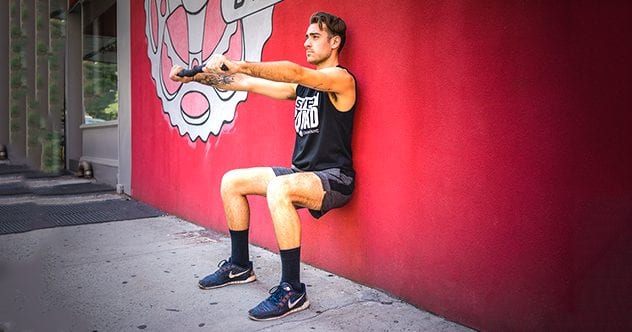
Wall sits are another simple but spicy option. Stand with your back against the wall, slide down until your knees are bent, and hold. Keep your knees over your ankles and your back against the wall. Start with 15 to 30 seconds and build gradually.
You can also use the wall for posture drills. Stand with your head, upper back, and hips lightly touching the wall. Gently tuck your chin and breathe. This helps remind your body that “computer shrimp posture” is not your permanent destiny.
7. Turn Laundry Detergent Jugs Into Kettlebell Substitutes
A sturdy laundry detergent jug with a secure cap and handle can work as a heavier resistance tool. Use it for goblet squats, deadlifts, rows, or farmer carries. Make sure the lid is tightly closed. Nobody wants “fresh linen explosion” as a workout fragrance.
For a jug deadlift, place the container between your feet. Hinge at your hips, bend your knees slightly, grip the handle, and stand tall by squeezing your glutes. Keep your back neutral and the jug close to your body. Lower with control. Perform 8 to 12 reps.
A jug can also be used for one-arm rows. Place one hand on a sturdy chair or countertop for support, hold the jug in the other hand, and pull your elbow toward your rib cage. This strengthens the upper back, arms, and posture muscles.
8. Use Pillows for Core and Balance Training
Pillows are not just for sleeping through your alarm. They can add instability to balance and core exercises. Stand on a firm pillow while practicing single-leg balance, or place a pillow under your forearms during planks for comfort.
Try a pillow balance drill. Stand near a wall or counter, place one foot on a pillow, and lift the other foot slightly. Hold for 10 to 20 seconds, then switch sides. Keep your knees soft and your core engaged. If you wobble, that is not failure; that is your stabilizing muscles receiving an invitation to the party.
For core work, place a pillow between your knees during glute bridges. Squeeze the pillow gently as you lift your hips. This adds inner-thigh activation and improves control through the lower body.
9. Use a Countertop for Incline Exercises
A kitchen counter can support incline push-ups, standing mountain climbers, calf raises, and supported lunges. Incline exercises are easier than floor versions because your body is more upright, making them useful for beginners or anyone building strength gradually.
For incline push-ups, place your hands on the counter, step your feet back, keep your body in a straight line, and lower your chest toward the edge. Press back up with control. Aim for 8 to 15 reps. The farther your feet are from the counter, the harder the move becomes.
Counter support also helps with single-leg exercises. Hold the counter lightly while doing reverse lunges or standing side leg lifts. Use the support for balance, not as a full-body leaning station.
10. Use Household Chores as “Exercise Snacks”
Not every workout needs to be a formal 45-minute session with dramatic music and a towel toss. Short bursts of movement, sometimes called exercise snacks, can add up across the day. Household chores can become mini workouts when done with intention.
Vacuum with long steps. Carry laundry baskets with good posture. Do calf raises while waiting for coffee. Perform 10 counter push-ups before opening the fridge. Do five squats every time you finish a work email. Congratulations, your inbox is now a personal trainer.
The key is consistency. Small movement breaks help fight long sitting periods, improve circulation, and make fitness feel less like a giant event and more like a normal part of daily life.
Sample 20-Minute Household Item Workout
Here is a simple full-body routine you can do two or three times per week. Warm up first with 3 to 5 minutes of marching in place, arm circles, gentle squats, and shoulder rolls.
Beginner-Friendly Circuit
- Chair squats: 10 reps
- Wall or counter push-ups: 10 reps
- Backpack rows: 10 reps per side
- Water bottle shoulder presses: 10 reps
- Towel hamstring curls: 6 to 8 reps
- Stair walking or marching in place: 60 seconds
- Pillow balance hold: 15 seconds per side
Complete one to three rounds depending on your fitness level. Rest whenever your form starts to fade. A good workout should challenge you, but it should not turn your knees, back, or shoulders into angry customer service representatives.
How To Progress Without Buying Equipment
Progressive overload simply means making your workouts a little more challenging over time. You can do this without buying anything. Add more reps, slow down the lowering phase, pause at the hardest part of a movement, increase range of motion, reduce rest time, or add a little weight to your backpack.
For example, if chair squats become too easy, hold a backpack to your chest. If counter push-ups feel simple, move to a lower surface like a sturdy table. If water bottles feel light, use larger bottles or fill them with rice. Small changes create steady improvement.
Safety Tips for Household Item Fitness
Household workouts are convenient, but safety still matters. Clear your workout area before starting. Check that chairs, counters, stairs, and floors are stable. Avoid using objects with sharp edges, loose lids, or awkward grips. Start light and increase difficulty gradually.
Pay attention to pain. Muscle effort is normal; sharp pain is not. If you have a medical condition, injury, balance concerns, or are returning after a long break, consider asking a qualified health professional for guidance before starting a new exercise routine.
Finally, remember that consistency beats intensity. A safe 20-minute workout you repeat every week is more valuable than one heroic session that leaves you walking like a baby giraffe for four days.
Real-Life Experiences: What Household Item Fitness Feels Like
The first time many people try a household item workout, they underestimate it. A pair of soup cans looks harmless. A towel seems innocent. A chair appears friendly. Then, ten minutes later, your legs are negotiating peace terms and your shoulders are asking who approved this meeting.
That is one of the best lessons of at-home fitness: simple does not mean easy. You can build a surprisingly effective workout from ordinary objects when you use control, repetition, and intention. A backpack squat feels different when the bag is loaded evenly and held close to your chest. A towel slider lunge feels smooth at first, then suddenly asks your core to participate like it has been dodging rent. Wall sits look boring until your thighs start writing dramatic poetry.
One practical experience many beginners share is that home workouts remove excuses. You do not have to drive anywhere, wait for machines, feel awkward around mirrors, or remember whether leg day is socially acceptable on a Monday. You can exercise while dinner is in the oven, while laundry is running, or during a 15-minute break between meetings. Fitness becomes less like a special event and more like brushing your teethexcept sweatier and with more squats.
Another helpful experience is learning how to match exercises to energy levels. On high-energy days, stairs, backpack squats, and towel mountain climbers can create a challenging session. On low-energy days, wall push-ups, chair squats, stretching, and gentle balance drills still count. This flexibility helps people stay consistent because the workout adapts to real life. Real life, as we know, enjoys throwing schedule confetti everywhere.
Household item workouts also build confidence. When someone realizes they can create resistance training from water bottles and a backpack, fitness feels less intimidating. There is no perfect outfit, perfect machine, or perfect playlist required. You learn the basics: hinge, squat, push, pull, carry, brace, and breathe. Those movements support everyday tasks like lifting groceries, climbing stairs, carrying kids, moving boxes, or rescuing that one pan from the back of the cabinet.
Of course, there are funny moments. The dog may think your floor exercises are an invitation to join. A child may ask why you are lifting beans. A roommate may walk in while you are squeezing a pillow between your knees and decide not to ask questions. These moments are part of the charm. Home workouts are not always glamorous, but they are honest, accessible, and surprisingly effective.
The biggest takeaway from experience is this: staying fit with household items works best when you keep it simple. Pick five or six movements, repeat them consistently, and progress slowly. You do not need to destroy yourself. You need to show up. Over time, the backpack gets heavier, the wall sit gets longer, the stairs feel easier, and your body becomes stronger in ways you notice during ordinary life.
That is the real win. Fitness is not just about looking athletic during a workout. It is about feeling capable when carrying groceries, standing up from a chair, playing with your kids, cleaning the house, or taking stairs without bargaining with your lungs. Your home already has the tools. Your job is to use thempreferably after checking that the chair is not on wheels.
Conclusion
Staying fit using only household items is not a backup plan. It is a smart, budget-friendly, flexible approach to building strength, endurance, balance, and mobility at home. With water bottles, towels, chairs, backpacks, stairs, pillows, walls, counters, and daily chores, you can create a complete fitness routine without spending a fortune or waiting for the “perfect” time to start.
The secret is to train safely, progress gradually, and stay consistent. Begin with simple movements, focus on good form, and choose exercises that fit your current ability. Your living room may not look like a gym, but with a little creativity, it can absolutely act like one.